The Rolex Oyster – 100 years and beyond
The coveted brand celebrates the milestone with a new Oyster Perpetual and other novelties, including a new Cosmograph Daytona
 Add BT as a preferred source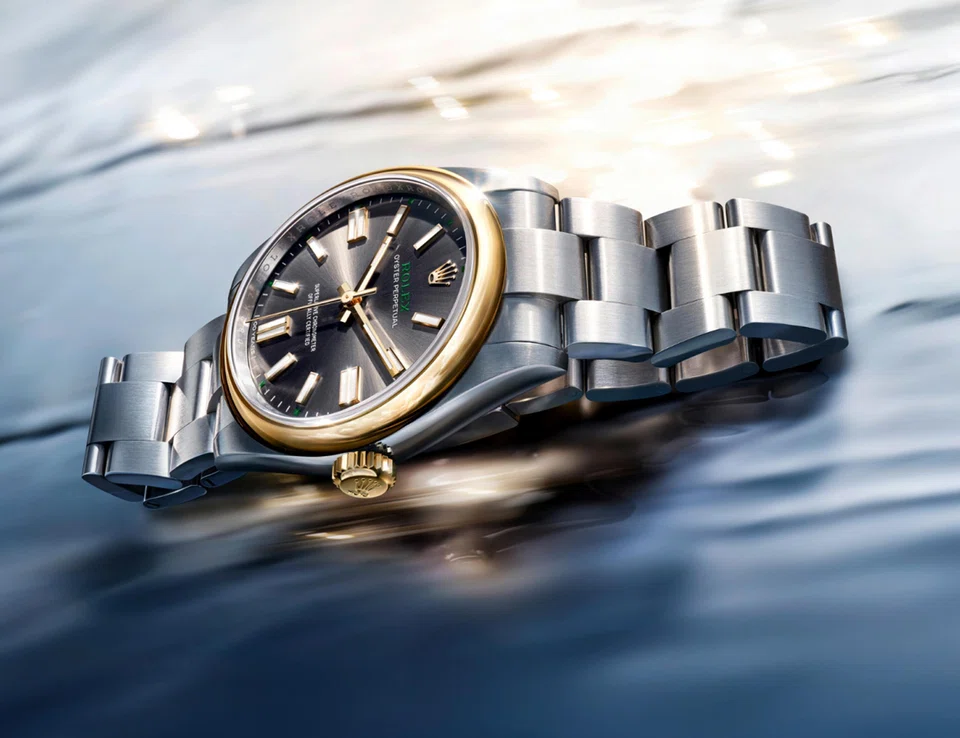
MENTION “ROLEX” AND THE NEXT word that comes to mind is invariably “Oyster”. That’s the power of the Rolex Oyster, which has defined the world of watchmaking since its debut 100 years ago, becoming one of the most important timepieces ever made.
Apart from the classic Perpetual 1908, every Rolex watch is an “Oyster”. “Rolex Oyster Perpetual” appears before the model name, be it a Cosmograph Daytona, Day-Date or Submariner. Beyond amplifying each watch’s distinctive qualities in timekeeping, it also cements the Oyster’s overriding significance.
The Oyster originated as the name of the case, which was a major breakthrough in watchmaking. It was the first waterproof and dustproof wristwatch case, attached with a screw-down bezel, case-back and crown to form a hermetic seal.
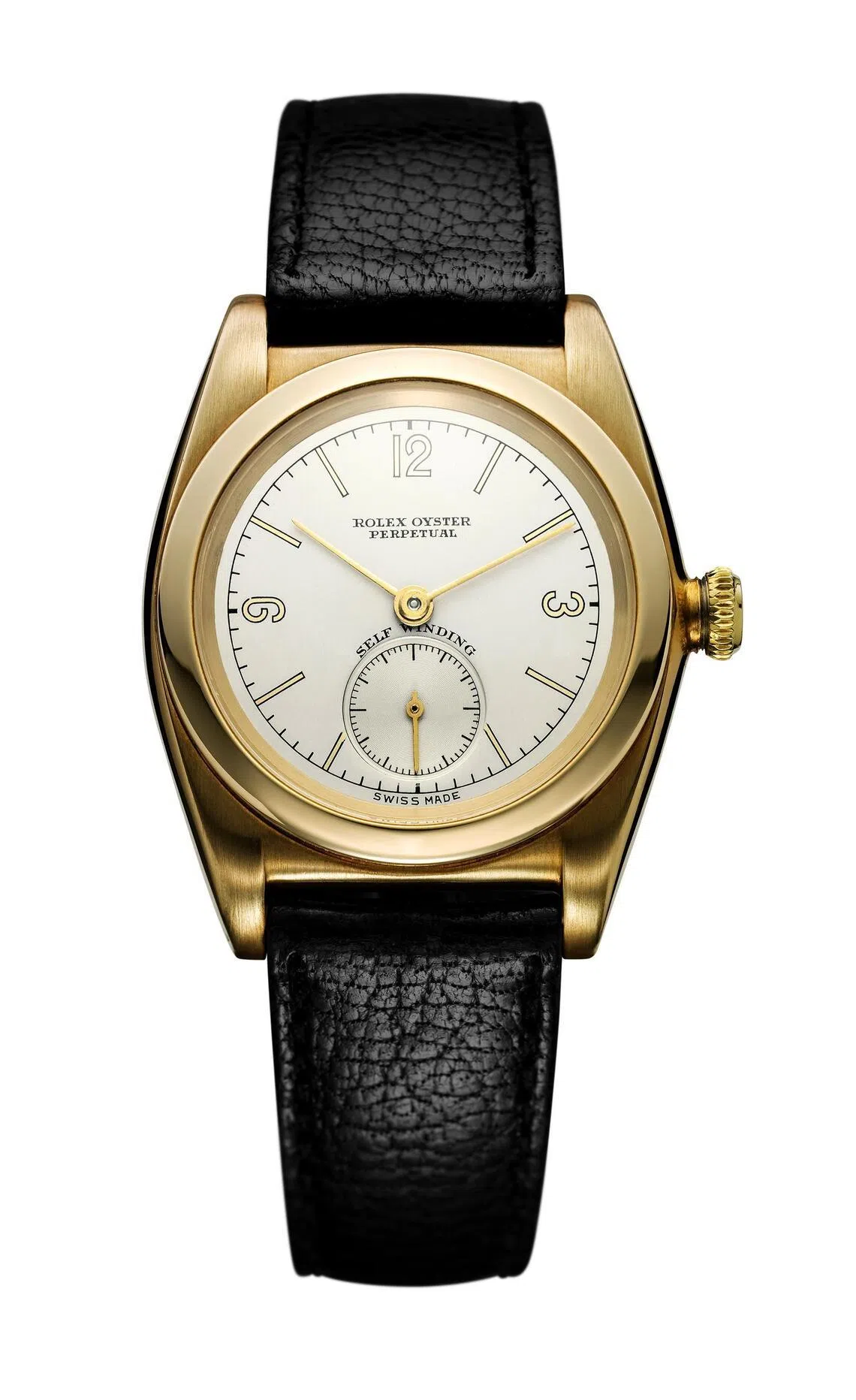
Then came Rolex’s invention of the Perpetual rotor, a self-winding system with a free rotor, patented in 1931. In other words, it’s an automatic movement with an inexhaustible source of energy. The words “Perpetual” and “Oyster” have been linked from then on.
The Rolex Oyster of 1926 and the Oyster Perpetual of 1931 have together spawned a family of watches upon which Rolex has built its name. The Explorer, Submariner, GMT-Master II, Day-Date, Datejust, Yacht-Master II, Sea-Dweller, Sky-Dweller and the new Land-Dweller – all descended from the same bloodline.
The Oyster itself is robust and durable enough to withstand years of real-life use, having accompanied explorers, scientists, athletes, pilots, seafarers, mountaineers and divers in their adventures. As Rolex’s founder, Hans Wilsdorf, once pointed out: “Rolex Oysters have flown over Everest … crossed deserts at record speed, withstood the humidity of jungles and resisted the cold of the Arctic – without ever altering the precision of their movement.”
Navigate Asia in
a new global order
Get the insights delivered to your inbox.
The Oyster has come a long way. While it has helped to enlarge the Rolex collections, the Oyster has also grown into many models. Watches in the Oyster Perpetual line now come in many sizes, designs, materials and colours. There are sufficient variations to ensure it will be around for another 100 years.
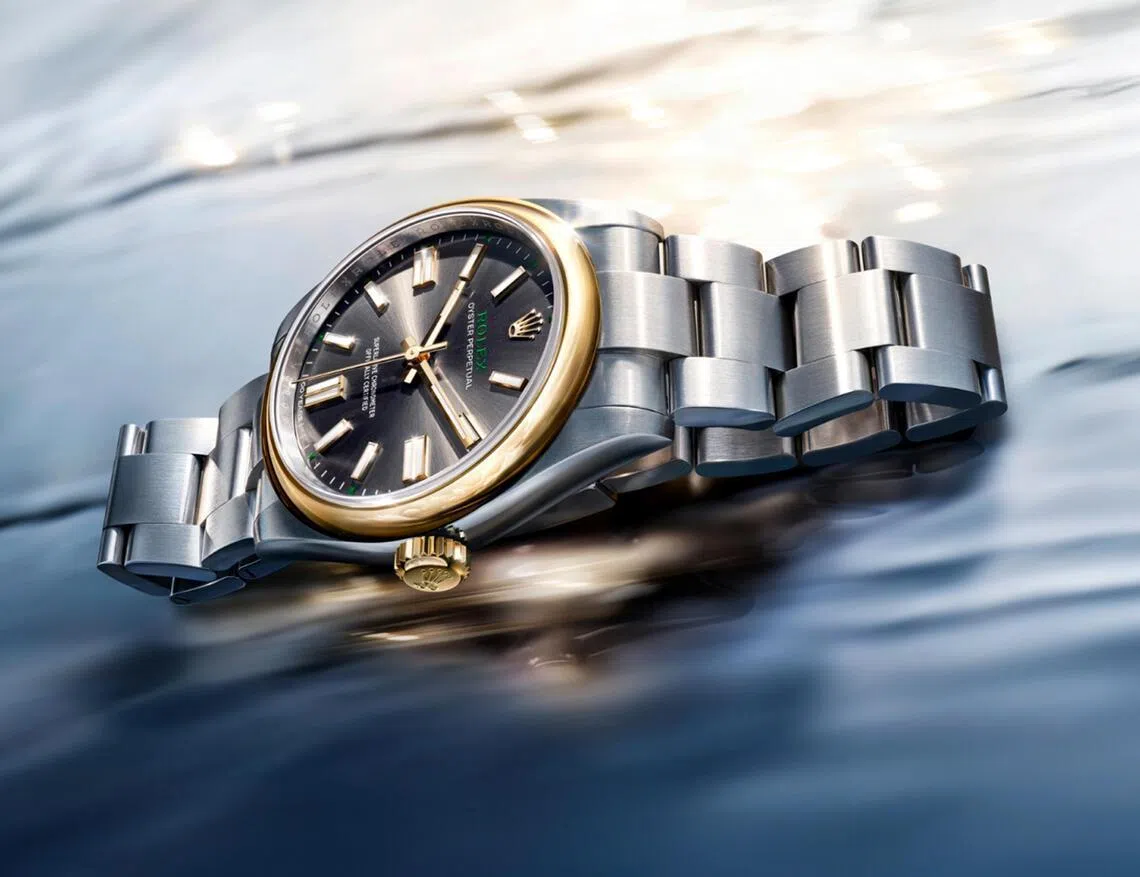
Oyster Perpetual 41
This commemorative watch for the Oyster’s 100th birthday is a little bit different from the usual Rolesor – Rolex-speak for gold and Oystersteel combined – model.
The new Oyster Perpetual 41 is a yellow Rolesor watch – a mix of yellow gold and Oystersteel (Rolex’s special stainless steel). The bezel and winding crown are yellow gold, while its bracelet, including the middle links, is in the same Oystersteel. Typically, the centre links of the bracelet in a yellow Rolesor are in yellow gold.
“An unprecedented configuration that expresses with strength, simplicity and elegance, the quintessential of a watch according to Rolex,” the brand says.
Details evoking the Oyster’s centenary are evident. The number 100 is etched on the crown. Inscribed on the dial at 6 o’clock is “100 years”, instead of the usual “Swiss Made” marking. Each five-minute interval on the minute track on the dial is denoted by a green square, Rolex’s house colour. The name “Rolex” is also pad printed in the same green.
The Oyster Perpetual 41 is an example of a Rolex model that meets the brand’s strengthened Superlative Chronometer certification, which comes into force this year. This in-house certification attests to the excellent performance of a Rolex watch.
In its relentless pursuit of excellence, the brand now requires its new watches to also meet three more testing criteria: resistance to magnetism, reliability and sustainability.
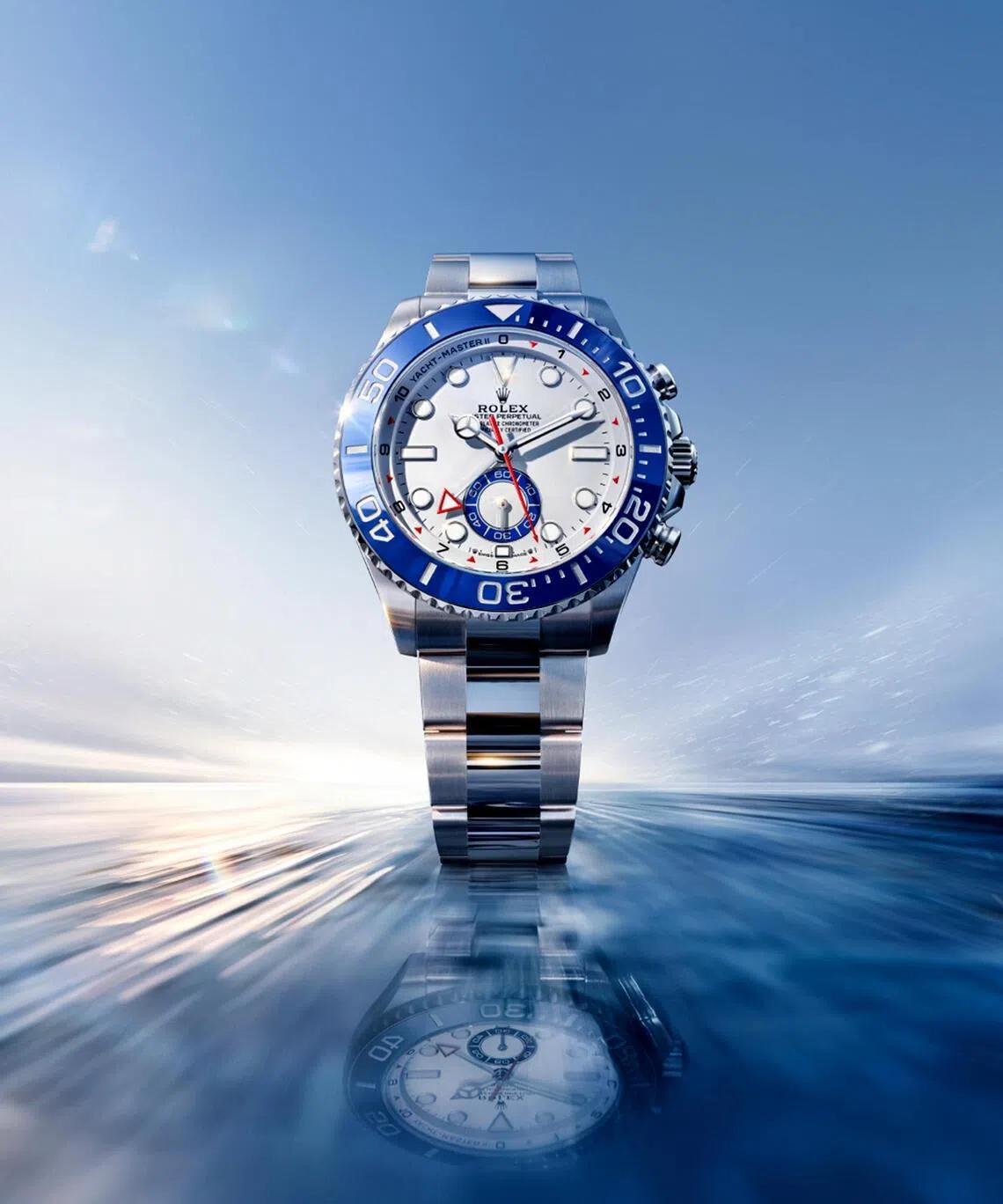
Yacht-Master II
Another complication watch in Rolex’s catalogue is the Yacht-Master II. While it is highly complicated, this fully redesigned new timer used in regattas is easy to read and manipulate.
It is at least easier than the previous model. In particular, the countdown scale – which is critical to a race – now appears on a flange. The function is programmed and operated simply with two side pushers – and not via the rotatable bezel and Ring Command system of the earlier Yacht-Master II.
The countdown minute and seconds hands of the new 44 mm watch, which comes in Oystersteel or 18 ct yellow gold, also turn counterclockwise – a first for Rolex. This makes the information they display, which is the time counting down towards zero, clearly readable.
Distinctive design elements are also added that reinforce the Yacht-Master II identity. The dial is coated with a new white lacquer – matte, to reduce reflections – and carries the applique index hour markers typical of professional-category timers.
The flange dedicated to the countdown function is positioned very precisely on the middle case – a feature for which a patent application was filed.
Cosmograph Daytona
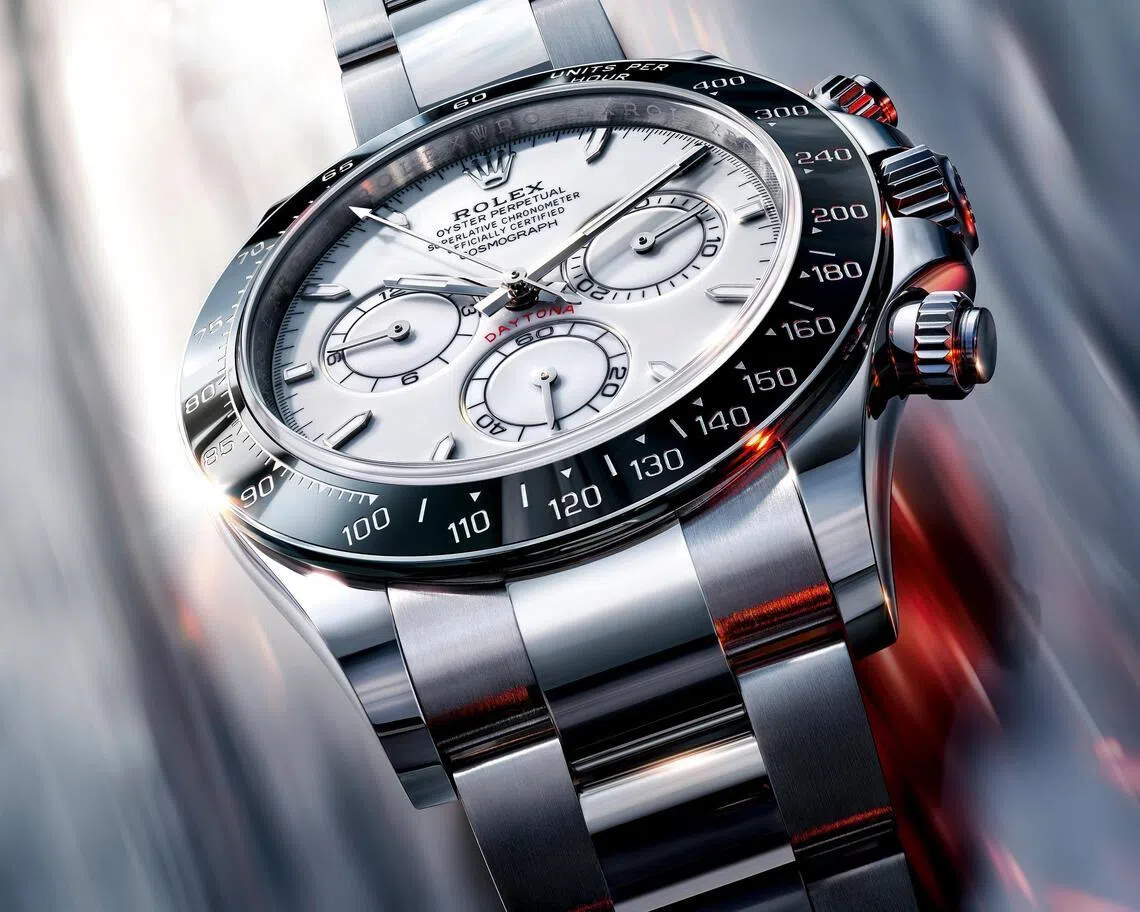
This new model marks the first Cosmograph Daytona to appear in Rolesium – Oystersteel and platinum. The watch is crowned with a Cerachrom bezel in the colour of anthracite – a new shade – with a restyled tachymetric scale.
The bezel, resting on a 40 mm Oyster case in Oystersteel, shines with an especially striking metallic gleam – an effect obtained by a specific type of ceramic that has zirconia enriched with tungsten carbide.
The redesigned graduation on the tachymetric scale, which is moulded into the bezel, has the numerals displayed horizontally – just like the original 1963 Cosmograph Daytona. These “suspended” numerals are inscribed in a thoroughly contemporary font.
The transparent sapphire crystal case-back, which has an anti-reflective coating, has a platinum case-back ring screwed down against the middle case. The band of metal encircling the Cerachrom bezel is also made from platinum.
Decoding Asia newsletter: your guide to navigating Asia in a new global order. Sign up here to get Decoding Asia newsletter. Delivered to your inbox. Free.
Copyright SPH Media. All rights reserved.