A study in enterprise risk management
Lee Kuan Yew's governance gives several case studies of enterprise risk management: Risks were identified, assessed, responded to, controlled, and monitored.
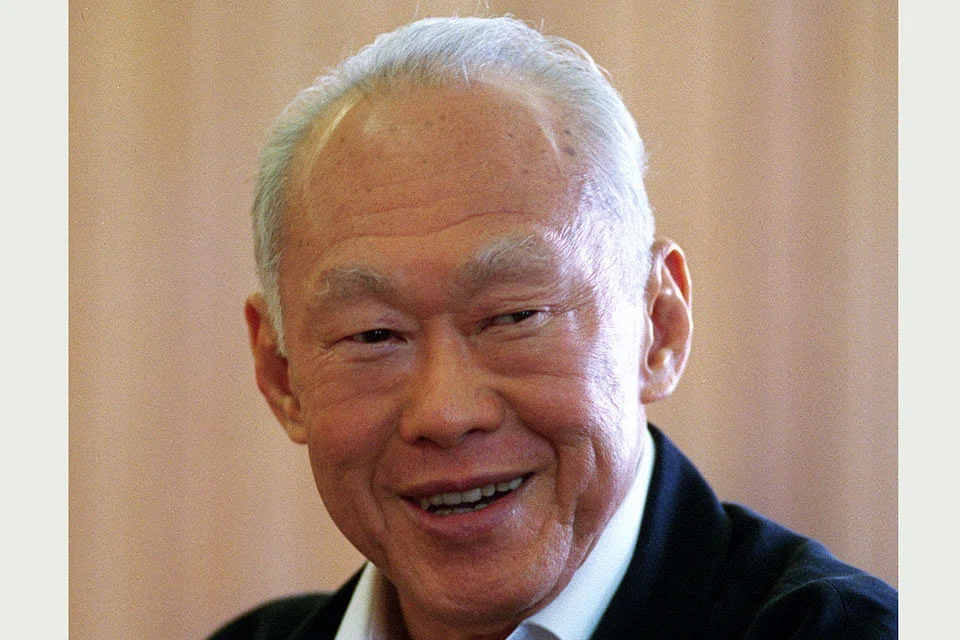
MR LEE Kuan Yew's governance of Singapore was often likened in the American and other international press to the way a company is managed. Perhaps that may have been in part due to how Chairman and CEO Lee had challenged his management team to deliver results. One area in particular was in the implementation of an effective enterprise risk management (ERM) process to accomplish Singapore Inc's strategic goals and operational objectives.
ERM can be broadly defined as managing uncertainty - both the risk and opportunity arising therefrom - to create, sustain and grow value. The inaugural 1995 framework on ERM concepts and techniques based on existing risk management ideas and processes was a joint Australian-New Zealand effort. Among others that followed, two in particular are more widely used. One is the American Enterprise Risk Management - Integrated Framework published in 2004. ISO 31000:2009, Risk Management - Principles and Guidelines was released five years on.
Mr Lee could arguably have contributed to the development of the ERM framework. Part I of From Third World to First: The Singapore Story, 1965-2000 reads in many areas like a primer on ERM concepts and techniques. Some examples from the early days of Singapore Inc are discussed here to illustrate. The leadership team applied ERM concepts and techniques that included event identification, risk assessment, risk response or risk treatment, controls and monitoring. A little historical background to set the scene:
Emergent uncertainty
The road to Singapore's independence from Britain commenced in 1946, initially as a separate Crown Colony before partial, and then full self-government by 1955 and 1959 respectively. At the time of total independence from Britain in 1959, the economy was too dependent on entrepot trade - which comprised about 70 per cent of the gross domestic product in the colonial days. This situation was further aggravated by high unemployment, the communist threat and union unrest, among other social problems that included a growing population. The leadership team embarked on an industrialisation policy to diversify the economy, but achievement of Singapore Inc's business plan was limited by market size.
Singapore and Malaya, its northern neighbour, were historically governed as one British territory before Singapore became a separate Crown Colony. The leadership team recognised the compelling economics of reunification with the Malayan hinterland. This would then provide the common market Singapore Inc needed to support its port economy and manufactured products. Lured by her pressing economic need for a hinterland which out-weighed residual post-union risks, Singapore joined Malaya, Sabah and Sarawak to form Malaysia in 1963. Nevertheless, sensitive and explosive race issues surrounding racial composition and meritocracy re-surfaced. These issues ultimately led to irreconcilable disagreements between Malaya and Singapore, resulting in the island's ouster from Malaysia two years later. After expulsion from the Federation of Malaysia in 1965, Singapore was once again without an economic hinterland.
"Foreign press comments immediately after independence, all predicting gloom, added to my gloom." So noted Mr Lee in his memoirs. Viewed through the lens of ERM however, he astutely recognised that Singapore Inc's uncertain future presented not only risks but opportunities as well.
Risk identification and assessment
Three risks facing Singapore Inc at independence that the leadership team identified are highlighted as examples. These risks were assessed to be critical, given the certain likelihood of occurrence and their catastrophic impact.
Risk A was survival without an economic hinterland. Risk B centred on guanxi or personal relationships in business transactions. Risk C was the prevalent toleration of money politics accepted as common practice and part of the regional political culture.
Risk A arose from the uncertainty of the new nation's survival without an economic hinterland following Singapore's expulsion from Malaysia. Risk B and Risk C, attributable to history and culture, threatened achievement of the strategic goals and operational objectives arising from Risk A. The leadership team saw both Risk A and Risk B as road blocks. These risks precluded good corporate governance essential to attract foreign direct investments to support Singapore Inc's early industrialisation goals.
Responses to risks
There are four possible options to respond to, or treat, identified and assessed risks. They are to: accept (do nothing), avoid (exit the business), reduce (manage the risks through controls and monitoring), or share (pass, or transfer) the risks.
Rising to Mr Lee's reputation as a fighter, the leadership team neither accepted nor avoided the risks, but opted for risk reduction and sharing.
To mitigate Risk A, the leadership team identified the opportunities presented by the uncertainty of survival without an economic hinterland. These opportunities were channelled to business planning. A plan and strategy re-emerged, Mr Lee wrote, to "leapfrog the region", link up with developed nations, and "create a First-World oasis in a Third-World region". The key operational objective was to build Singapore Inc's own economic hinterland, bring about transformational change and prove the prognosticators wrong.
Responding to Risk B and Risk C to achieve comparative advantage in a region known for corruption, the leadership team embraced the rule of law. Built on the legacy British legal system, the law was implemented under a culture of efficient, effective and honest enforcement. This served to encourage the inflow of investments and to protect investors. The action comported with the ERM concept and technique to use controls, together with monitoring, as a risk response or risk treatment. Control was in the form of laws, regulations and rules to mitigate the identified cultural risks. Monitoring came from the enforcement of rules efficiently, effectively and honestly.
Kudos to Mr Lee, the improbable turned possible.
Residual risk is post-risk response or risk treatment action. It is after the inherent risk, that is, the condition before risk response or risk treatment, had been treated by controls reinforced with monitoring. Singapore Inc, under Mr Lee's able and fearless leadership, successfully reduced and shared the three critical inherent risks. These risks arising from macro-environmental and industry factors were mitigated to an acceptable residual risk level.
Through four decades in the 1960s to 1990s, manufacturing activities progressed from labour-intensive to skills-intensive; to capital- and knowledge-intensive; and technology-intensive. By the 2000s, economic focus was firmly on promotion of innovation and further advancement in the knowledge and research front. Singapore Inc had not only overcome the post-independence economic survival quandary, she emerged well equipped to participate in the global economy in which a hinterland was less crucial to its survival.
Singapore Inc and companies in the private sector will continue to face uncertainties, posing challenges to managing the risks and opportunities. The legacy of Mr Lee and his pioneer generation of leaders in facing uncertainty with capacity, sagacity and gumption is an inspiration to managers in this endeavour.