Cambodia needs to restore balance in ties with US, China
It cannot afford to alienate America as it needs international trade and investments; Washington should also engage Phnom Penh with much greater sensitivity.
THE influence of the United States in South-east Asia is decreasing, with Cambodia turning away from Washington because of its stinginess and interventionist policies to embrace the more generous and accommodative Beijing. The US is losing strategic space in the region because the Philippines is also distancing itself from Washington and allying with Beijing.
Cambodia has been maintaining a facade of balancing relations with the two major global powers, the US and China, even as it has been deepening its alliance with the latter, while its relations with the former have lacked substance. It is now publicly tilting the scales in a risky shift towards China, while scrapping US military aid and joint exercises, preferring joint exercises with the Chinese military instead.
With these bold moves, Cambodia has decided that its prosperity lies not with the US, which is anyway an insignificant provider of aid and investment, but with its major investor, China. In April, Phnom Penh ended a US military project that had run for nine years, asking the US Navy Mobile Construction Battalion that was conducting community service projects to leave. Cambodia also cancelled joint military exercises with the US earlier this year.
Cambodia's closeness to China is seen most obviously in its support for Beijing's militarisation of the disputed areas of the South China Sea, in return for Chinese investments. Phnom Penh has not been shy of demonstrating its divergence from the Asean position on the issue. Phnom Penh appears to have erred in allying so openly with China. Currently, Cambodia is feeling the pinch of a slowdown in the inflow of Chinese investment funds following strict capital controls imposed by the Chinese central bank for the past two years. The controls are creating difficulties for Chinese investors considering investing in Cambodia.
The shift towards China is taking its toll. In May, there were indications that Beijing would lift the suspension on foreign funds raising money in China to invest overseas as early as June, apparently under pressure from investors impatient about taking their capital abroad. In June, however, the Chinese authorities began tightening control over the yuan, raising its value to restore market confidence and reduce risks of capital outflows and slower growth.
The Phnom Penh Post reported in June that several Chinese investments in Cambodia had fallen through as Chinese investors are hobbled by delays in getting clearance from the Beijing authorities to take funds overseas. Among the major casualties is a Hong Kong-listed real estate developer, Guangzhou R&F Properties, that declared in March that Beijing's capital controls were impeding its luxury hotel projects worth US$3 billion in Cambodia.
The squeeze on Chinese funds is potentially damaging to Phnom Penh as China is the largest single investor in Cambodia, accounting for about 44 per cent of the US$19.2 billion in foreign direct investment inflows between 1994 and 2014, according to the Cambodian government. Yet, Cambodia may receive preferential access to Chinese funds because it possesses tremendous geopolitical importance to Beijing's "One Belt, One Road" initiative. Chinese investors, thus, may get approval to take funds to Cambodia over smaller countries that do not offer strategic advantages.
The swing away from the US demonstrates that Cambodia runs the risk of over-dependence on any country, and would create a mockery of its so-called neutrality.
AID AND INVESTMENTS
Cambodia does not rank the US highly on its foreign policy priority because American government aid and private investments are negligible compared to China's. Phnom Penh is, therefore, willing to adhere to the Chinese position in global affairs in return for funds. The US is moving even lower in Cambodia's policy calculations because the State Department is cutting its foreign aid to Cambodia by 70 to 100 per cent next year, down from about US$34 million in 2016, under deep reductions to its budget. Cambodia is among 77 countries facing cuts in US aid along with Indonesia, Thailand, Laos and the Philippines.
It came as no surprise when Cambodia postponed its annual "Angkor Sentinel" military exercise with the US in January for two years, claiming its military was busy with an anti-drug crackdown and local elections in June. A US embassy official explained that military exchanges and training programmes were not affected by the postponement of Angkor Sentinel that has been held in Cambodia for almost a decade.
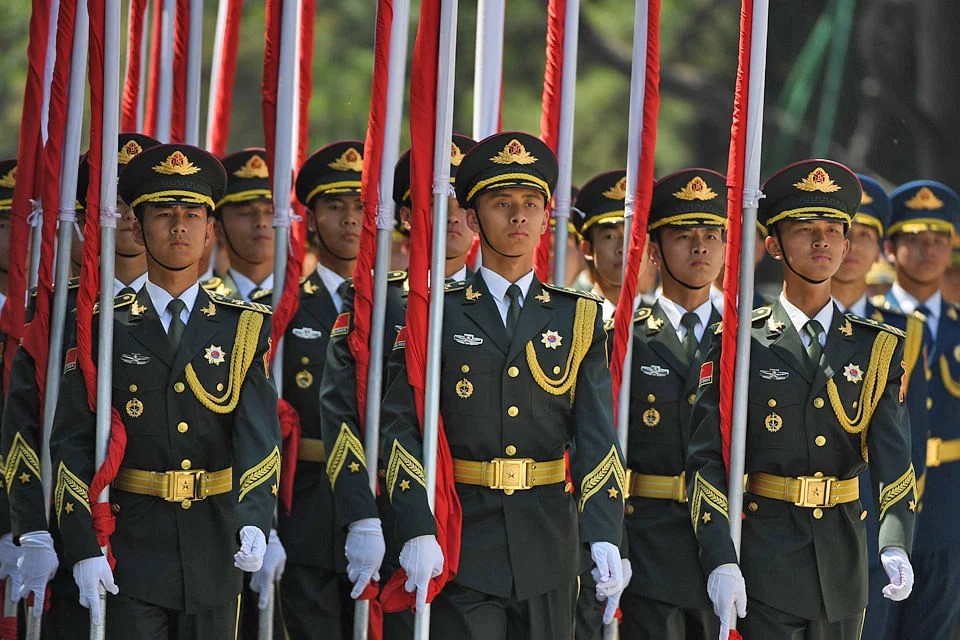
In December 2016, Cambodia held the first "Golden Dragon" joint military manoeuvres with China. The exercises deepened the involvement of the Chinese military in Cambodia, such as the construction of a new deepwater port, and sale of helicopters and shoulder-fired anti-aircraft missiles. The government of Prime Minister Hun Sen has long helped suppress criticism within Asean of China's maritime territorial claims, while also maintaining relations with the US.
After the Trump administration took office, Mr Hun Sen renewed calls for the cancellation of US loans worth about US$500 million extended to the Washington-backed Lon Nol regime, which took power in a coup against Prince Norodom Sihanouk in 1970.
Mr Hun Sen holds the US responsible for its interventionist policies such as its bombing of Cambodia as part of its war against North Vietnam in the 1960s and 1970s. The bombardment aroused popular anger against the US, fuelling the rise of the Khmer Rouge, which overthrew Lon Nol's government in April 1975 and launched a genocide that killed at least a quarter of the population. Mr Hun Sen has repeatedly voiced his frustration at constant US criticism of his governance, and now appears to have reached the limit of his tolerance.
Nonetheless, Cambodia should shed its historical baggage as it needs international trade and investments from all sides. Its national debt stood at US$5.8 billion at the end of 2016, equalling nearly a third of its gross domestic product, according to the Cambodian Ministry and Economy and Finance.
The Hun Sen government needs to restore balance in its relationship with the US and China, on the lines of the policy pursued by most other Asean countries. For a country that needs access to international loans and investments, Cambodia cannot afford to alienate the US. Washington also needs to engage Phnom Penh with much greater sensitivity.