

Challenges for new SGX CEO to boldly tackle
If he chooses to do so, Loh Boon Chye can radically transform the local bourse and take it to great heights.
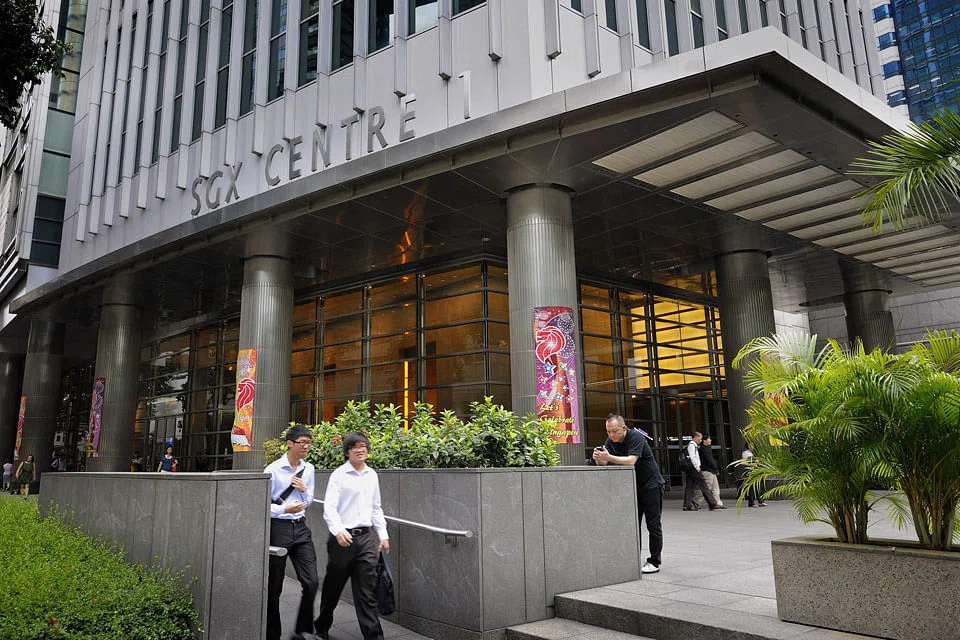
MUCH is expected of new Singapore Exchange CEO Loh Boon Chye, as the wish-list published in the media reveals. Various concerns raised have been largely about the market: the challenge of increasing participation by investors, low trading volumes, lack of good listings, and improving market valuation. It's not an easy job, given the many issues pending resolution and competing interests of several stakeholders to be balanced. Many are expecting Mr Loh to provide solutions to the current problems.
How can SGX increase investor participation? The Exchange needs to urgently address liquidity issues. Internally, there is S$56 billion lying in fixed deposits earning returns that aren't even enough to cover inflation. Depositors are not growing their money. They need to know that they have to invest. Much has been said about this and yet there is great reluctance by Singapore citizens to enter the stock market.
Is there a lack of appropriate products suitable for Singapore's risk-averse investors? Not really. The recent announcement by the Monetary Authority of Singapore (MAS) to introduce a savings bond is a good start. But that alone is insufficient. It is largely ignorance about investment products and how to access them. There is a lack of skills in managing risks in the products and also lack of advisory services to help retail investors make informed decisions. They are generally left to themselves. Although SGX has introduced several initiatives to educate the public through online and physical programmes like roadshows, more must be done.
To help improve liquidity, SGX has also introduced a minimum board lot size of 100 shares to enable ordinary citizens to start their investment journey - especially in blue chips, which have been beyond the reach of many Singaporeans. This initiative has improved the securities turnover by 6.2 per cent, compared with a drop of 32.4 per cent the previous year. These are all good developments and must be supported.
SGX needs to also look at certain aspects affecting our market's integrity. Confidence and trust can be further improved. Many retail investors have their investments stuck in several companies suspended by SGX with no updates, their investee companies delisted with investments reduced to little or no value. There have also been no updates or conclusions on criminal investigations by the Commercial Affairs Department into a number of listed companies; in other cases, the outcomes were known only after a prolonged period. A good example is China Sky. This stock was suspended four years ago for failure to comply with SGX's listing rule requiring special audit. Criminal investigations also commenced concurrently. Today, the stock remains suspended without any updates. There could well be good reasons for delay in some of these cases but more transparency is needed to keep investors informed. This is only one of several disappointments retail investors in Singapore are facing. One needs only to look across the Causeway at the Bank Negara website to see how investors there are kept updated regularly on the status of cases being investigated.
It should therefore be apparent enough why many investors are sitting out the market; it is fear and the loss of confidence. To them, caveat emptor means nothing and they tend to hold SGX responsible. The need to bring confidence back to the market has to be an area of concern for the new CEO. Investors also need to be educated, and SGX must work more with platforms like Securities Investors Association (Singapore) (SIAS) to reach out to more ordinary citizens to help them understand not only how to invest but also the investing environment relating to their investee companies.
Externally, SGX should work on bringing more investors from Asean, which has a total population of over 625 million. A recent Merrill Lynch study says Asean population trends hold greater promise and prospects than that of China or India over the next decade. China's labour force is expected to shrink from 2020 onwards, whereas the labour force in Asean is expected to keep growing. While India's labour force will grow faster than Asean's, Asean will still produce a greater number of skilled workers because of the huge difference in adult literacy levels. The Asean Trading Link, started in 2012, gave much hope to our market and companies. But it came to a grinding halt. There is an urgent need to revive it. I am confident the new CEO will be able to bring the parties back to the table. With more investors in the Singapore market, our listed companies will be able to grow.
SGX must think out of the box and transform itself. It should be completely commercial and not have any regulatory function. It should concentrate on business and facilitate mergers and acquisitions, helping Singapore listed companies tie up with foreign partners. As a private banker, Mr Loh is well placed to spearhead this.
The crucial question is: Where does the future of SGX lie? If it remains where it is today, it will never grow. So what should it grow into?
The only way it can grow is to understand where the companies listed on SGX are growing. China is obviously one answer everyone gives but it has come to a plateau now. There has to be a growth market like India which is just equivalent to the size of China. The question investors should ask board directors at meetings is: Where are the next big frontiers? The next big frontiers are India and Africa. If companies are moving into India and Africa, as we see happening already, then the bourse must also help these companies. Ascendas, Singtel, PSA and Temasek have all successfully made forays into India and Africa. In fact, Temasek has infused more than S$1 billion into Indian companies in the first quarter of the current fiscal year, matching its investment in all of last year, as it increases its bets on Asia's third largest economy.
How then can SGX help companies listing on its bourse? There are a few ways. There could be joint ventures or business dealings between the Singapore listed company and the overseas entity. On a commercial level, SGX is at the moment unable to get involved due to its regulatory role. However, SGX, being a listed company itself, must also think of where its next frontier is. The next frontier cannot be digital and technology, which are already here. SGX needs to create volume and mass. That can only come through having a stake in larger exchanges.
It currently has a small stake in the Bombay Stock Exchange. But Singapore is small and India is big. I don't think Singapore would want to buy a big stake in the National Stock Exchange (NSE) of India, but it could be the other way around. This is where the regulators may have to step up and say that our future lies with India, and we need to tie up with it in a bigger way. Perhaps that is the angle Mr Loh should look at - to try and sell a meaningful stake of SGX to NSE and to facilitate the exchange and fast-tracking of companies listed on both bourses. The companies floated on NSE will have to realise that if they want to tap foreign capital, they will have to go to a transparent jurisdiction like Singapore. If they are connected somehow with Singapore, then US and European flow of funds into India via Singapore will become another avenue. As more companies use Singapore as an avenue for fund-raising, or list in Singapore, that can only raise Singapore's market valuation and make it more attractive for quality listing.
US and European investors have limitations investing in emerging economies. Most of them have criteria for where they invest their funds, and Singapore can play a facilitating role to attract these funds to emerging markets by bridging the gap of investor needs through its established regulatory regime. For example, the recent Singapore listing of a corporate bond by Bharti (the third largest telco operator in the world) raised US$1 billion globally. About 66 per cent was allocated to the US - the highest allocation to US investors in any Indian deal. It was oversubscribed twice, reflecting the demand for such listings in our market.
It also confirms the strong interest Indian companies have in Singapore due to its solid reputation as an Asian financial centre. Singapore has a strong and stable government, policy certainty, zero tolerance for corruption, and a transparent market with strong liquidity. Businesses also say, despite the challenges, they see growth opportunities in various sectors, as India seeks new digital heights. According to recent media reports, Singapore is a frontrunner to fulfil Indian Prime Minister Narendra Modi's pet project of building 100 "Smart Cities" across the country. Where is SGX in all these?
My suggestion may sound radical but could be timely and necessary for the growth of our market. SGX should discontinue its traditional role of being a listing authority, regulator as well as a listed company. Many have questioned the current dual role of SGX. It is time to relieve SGX of its regulatory role and allow MAS to be the sole regulator. This would allow SGX to concentrate fully on its own growth as well as the growth of companies listed on it.
The Exchange also needs to balance the needs of all stakeholders. For example, one such group is remisiers, with strong concerns about the introduction of all-day trading. Mr Loh will have to actively engage and find solutions to help remisiers implement all-day trading. Nevertheless, it is also the responsibility of remisiers themselves to actively seek to improve their service to clients and retail investors in general, while investors on their part must also respond to the call to invest with knowledge. The new CEO should communicate regularly with all stakeholders to find common ground to enlarge and prosper the market.
Finally, SIAS agrees with MAS deputy MD Ong Chong Tee that industry stakeholders should work together to achieve a robust and vibrant securities market.
TRENDING NOW

VietJet hit with global asset freeze in FitzWalter dispute

FCT, NLB to turn Causeway Point’s former cinema space into reading hub in mall revamp
Family offices ‘kept captive’ by relationship managers turn to independent advisers, direct deals

Olivia Lum, ex-CFO not giving evidence in their Hyflux trial

