

China's high-stakes game poses major challenge to US
The One Belt One Road initiative will see Beijing extending its influence over S-E Asia and dominating the region's trade lanes.
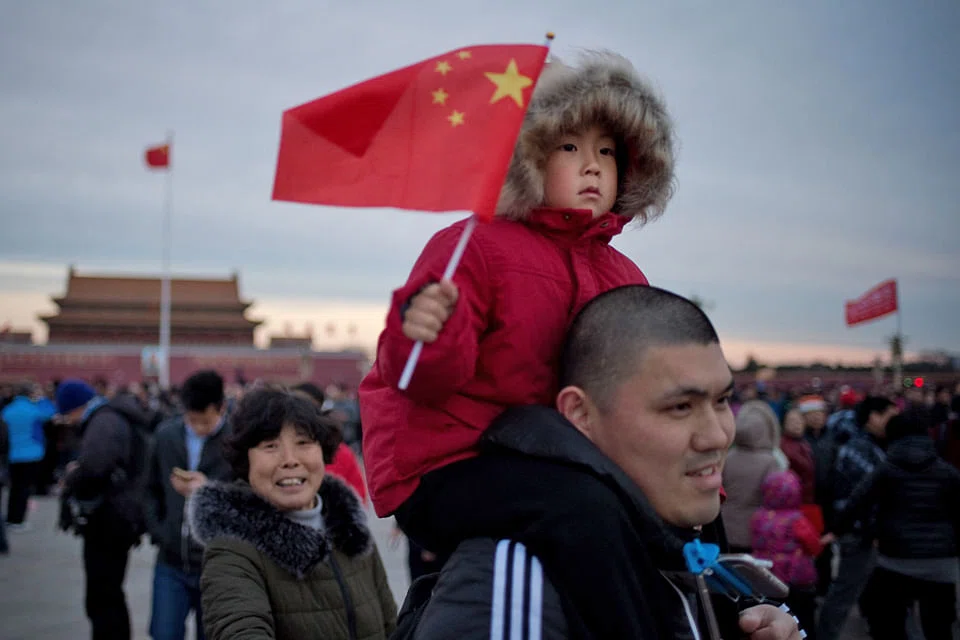
IT IS widely recognised that the Trump administration has yet to fill key Asia policy posts. Whether this is a consequence of intention or gross negligence is not clear, but it has left many Asian leaders wondering how they can reach out to Washington and, equally if not more important, the future direction of its foreign policy in the region.
Meanwhile, hardly a day passes without news of China's activities in the South China Sea or machinations on the Korean peninsula. These two issues will certainly capture most of the attention of the White House and future Cabinet members with Asia portfolios.
Yet, there is a larger high-stakes game being played out by China that deserves a much closer look and a strategic response from Washington: the so-called One Belt One Road initiative, or OBOR, which was formalised at a summit on May 14-15 in Beijing that was attended by top leaders from 28 countries.
OBOR - a modern-day land and maritime-based Silk Road that would link Asia, Africa and Europe - can be thought of properly as China's Great Leap Outward in the 21st century. Its grandiose ambition and scale, if realised, will require the deployment of more than US$1 trillion over the coming decade.
Seen through the lens of OBOR, Beijing's forays in the South China Sea could be viewed as a "capture" of the logistics of South-east Asia, where it is already the dominant economic power. China dominates trade with the South-east Asian and Indian Ocean littoral states, and its strategy now is to dominate the land and sea lanes by which that trade is conducted.
This constitutes one part - the geographically closest and arguably "easiest" - of Beijing's larger plan to implement OBOR.
The other parts of the plan involve capturing the supply chain beyond the Indo-Pacific as far as the Mediterranean and East Africa plus a push across the heartland of Eurasia in an effort to remake it into another hinterland by creating physical linkages where they have been absent via rail, road and pipeline.
"Supply chain" in this context refers to all the infrastructure that is required for a modern, developed economic system: ports, pipelines, logistics hubs, warehousing, land, telecoms, finance, power and energy, transport and trade. For examples, look at the Pakistan China Economic Corridor or the US$45 billion that China recently committed to Malaysia for high-speed rail, power assets, cross-peninsula transport corridors and ports.
China long ago recognised the strategic importance of the Indo-Pacific and Eurasian markets to its own growth trajectory. It also has the strategic vision, financial reserves, human talent and technical expertise to implement large parts of the OBOR initiative, even if not 100 per cent of it is realised.
In fact, Beijing has already started putting massive amounts of investment capital into OBOR-related projects. Last year alone the China Development Bank and China ExIm Bank lent more than US$50 billion - several times what any global multilateral bank did.
Historically speaking, many countries - including the United States and Argentina in the 19th century - built their national infrastructure using foreign debt capital. The only difference in the 21st century is the source of that capital now emanates from Beijing rather than Britain.
LARGEST TRADING PARTNER
What Washington should understand is with investment comes influence. Already most of South-east Asia has "leaned" towards China in their foreign policy. Chinese influence will only continue to accelerate in this region with which China has long historic connections.
And with the OBOR initiative, China is on the verge of reorienting a part of the world that for a millennium has been dependent upon maritime trade with distant powers to a rail and road network in which trade flows north by land. China is already the largest trading partner for each country in the region - in the future, most of its infrastructure will actually reflect this fact.
But it is not only political influence that China's investment brings as its dominance of supply chains grows; at some point, it may dictate the terms under which outside parties operate and compete in these markets.
One interesting example of how this might come to play out is Chinese port investments in the Straits of Malacca, which is one of the most heavily travelled shipping channels in the world.
China is currently pouring large amounts of capital into port development in Melaka, Malaysia, which sits halfway along the Straits. At the same time, China is apparently setting its crosshairs on the Indonesian side of the Straits, in the city of Medan, in North Sumatra. According to well-placed sources, a Medan business group owning a large plot of land on the Straits coastline is positioned to sign an agreement in the near future with China's Ministry of Industry to develop a large port.
Once the potential consequences of OBOR are understood properly within these contexts, then America's future prospects in Asia can be better assessed.
The Obama administration's pivot strategy addressed, in part, the long-term challenge of how to compete with China and maintain the US's historic role as a Pacific power. By removing the US from the Trans-Pacific Partnership, President Donald Trump has weakened America's potential for strengthening economic ties not only of commercial but geopolitical importance, as well.
Meanwhile, as OBOR progresses, there is a dire need for Mr Trump and his Asia team to devise a strategy that will serve America's and its allies' interests in the region. Southeast Asia, in particular, is the most immediate and critical part of the region where Washington needs to focus its attention.
There is a confluence of politicians and business groups there with large monetary incentives to favour China over the US. At the same time, there are more neutral parties who want to see the Trump administration engage more heavily in the region for the purpose of providing them with a hedge against an increasingly influential China. As one former Indonesian politician recently remarked in private: "In truth it is in nobody's better interests for South-east Asia to become part of a Chinese lake. Now it is up to President Trump to do something about it".
TRENDING NOW

The only common thing in S-E Asia is that we all eat rice: Cisco’s Asean president

‘How many will survive?’: Bubble fears arise as China’s humanoid robotics face reality check
Green fuels, autonomous ships: How Singapore is future-proofing its shipping industry

Could stablecoins be the future of money?

