

Financial inclusion - new paradigm shift for Asean
Predictive data analytics can help extend lending opportunities and advance financial inclusion for underserved consumers and businesses with little or no credit history.
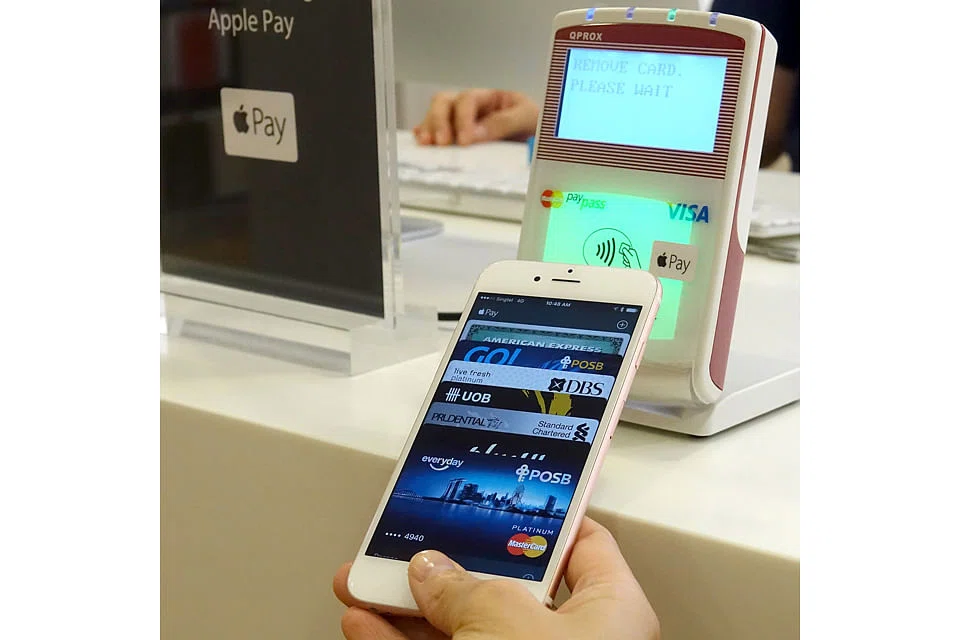
MOBILE money, mobile points of sale and digital payments have largely dominated the conversation around digital finance in recent years. Indeed, digital finance, powered through mobile technologies, has opened up new channels to access financial services at lower transaction costs.
For the emerging economies of the region, this carries tremendous potential to unlock economic opportunities for individuals and small businesses, many of whom are unbanked and have no credit access.
It is widely cited that nearly 80 per cent of adults in emerging economies had a mobile phone in 2014, while only 55 per cent had financial accounts. According to GSMA's State of the Industry Report on Mobile Financial Services released in 2016, mobile money is available in 85 per cent of emerging economies with the majority of their populations short of access to banking facilities.
From an infrastructure standpoint, financial technology certainly plays a vital role in driving inclusive growth for emerging markets without the need for major capital expenditure and with an existing extensive and highly scalable mobile and digital infrastructure. The relatively high levels of Internet and mobile penetration, compared with levels of financial inclusion, has presented financial institutions with an unprecedented opportunity to serve a wider segment of the unbanked population in the global emerging markets.
KEY HURDLES
However, for microfinance institutions and consumer lenders to remain commercially sustainable while working towards advancing financial inclusion at unprecedented levels, there is a critical market demand for creating instruments that address the barriers to entry for widespread financial inclusion cited by financial institutions.
According to the Center for Financial Inclusion, a lack of capacity to analyse financial data and a lack of willingness for parties to share data, as well as a lack of connectivity and infrastructure, have been cited among the top barriers to financial inclusion by banking institutions.
In the light of this, a key issue to address is to support microfinance institutions and commercial lenders in making better credit decisions, especially when it comes to expanding credit access to hard-to-reach underserved populations and small businesses at low cost and risk.
This necessitates putting the right technology and instruments in place to help with the credit-risk assessments of borrowers without transactional history and data. Looking at small businesses, for example, if the first-time owners have never had any credit and have no credit history, they are immediately viewed as unqualified or "risky" borrowers.
Traditionally, lenders need to gain access to and evaluate the applicant's transactional data and history to help them understand and determine the borrower's ability to take on credit and, of course, their ability to pay it back. However, without this necessary data, the small businesses do not have the opportunity to lend, and they will have difficulty expanding and growing, inhibiting their success, hindering job creation and, ultimately, impeding the economy's potential.
This raises the question: How can we extend lending opportunities and advance financial inclusion for underserved consumers and businesses with little or no credit history? The simple answer is: through predictive data analytics. At current levels of mobile penetration in emerging markets, financial institutions are presented with a new opportunity to integrate mobile data into their credit-assessment process. We are seeing a new world of data analytics where the mobile phone can be used to collect character data on the borrower. Character data, also "traditionally" referred to as credit history, is one of the key criteria lenders use to assess qualified borrowers.
Behavioural data that can be collected via the mobile phone includes mobile usage, use of roaming, frequent locations and mobile behaviour, including the ratio of incoming and outgoing calls. These characteristics are then seen as predictive factors as they help determine the borrower's behaviour, which represents lifestyle, which therefore is a proxy of how much the individual can actually borrow and pay back.
To create predictive credit risk assessments of those with limited or no credit history, financial technology can be used to extract completely anonymised digital footprints of this behavioural data from mobile phones. These digital footprints can be developed into highly predictive digital credit scorecards using proprietary technology and know-how, expanding opportunities for the previously underserved populations.
With this new possibility of turning behavioural digital data into useable data for predictive credit-risk assessment, commercial lenders and microfinance institutions can actually expand their pool of qualified borrowers with little or no credit history. The benefit of delivering financial services by mobile technology could be significant. Up to two billion individuals and 200 million small and medium enterprises in emerging markets lack access to savings and credit today.
With digital finance, we are looking at achieving inclusive growth that could add up to US$3.7 trillion to the gross domestic product of global emerging economies within a decade. Although Asia is home to three of the five top global financial centres, the region also has some of the highest rates of the unbanked populations, including Indonesia, Vietnam and Myanmar.
Compared to Singapore and Hong Kong - both of whichhave an unbanked population rate of 4 per cent - Asean's emerging markets are seeing some of the highest percentages of unbanked populations - 77 per cent in Myanmar, 69 per cent in Vietnam and the Philippines, 64 per cent in Indonesia, 22 per cent in Thailand and 19 per cent in Malaysia. These numbers are worrying as without financial inclusion, individuals in these markets will continue to struggle with and in poverty.
NEXT WAVE OF GROWTH
While we have seen the number of people with bank accounts rise globally over the past few years, many are still financially excluded, lacking basic access to financial services such as bank accounts, insurance and access to credit.
As we celebrate the 50th anniversary of Asean, ensuring and expanding financial inclusion in emerging markets across South-east Asia is critical for its next wave of growth. Not only does it empower individuals to come out of poverty and help businesses expand and grow but, on a national level, it also helps with job creation and availability that is much needed for the region to accelerate inclusive growth.
While the region's emerging markets are housing some of the largest unbanked populations, its promising levels of digital inclusion could now point to a lateral shift to financial inclusion. With such high mobile penetration rates in the region, there is no better time for regulators and financial institutions to collectively seize the digital opportunity to fill the void created by the banking infrastructure and logistical challenges in the developing world.
TRENDING NOW

How Vietjet’s US$250 million global asset freeze complicates its 600-aircraft financing plans

Work Permit holders increase by 10,900, but S Pass, EP holders decline by 900 each in Q2: Jasmin Lau

US midterms: What investors can expect after Democrats shatter Republican strongholds

The AI frenzy gets a reality check

