For a merger to succeed, don't forget the people
When communication with employees breaks down, it can make a deal look poorly planned and executed
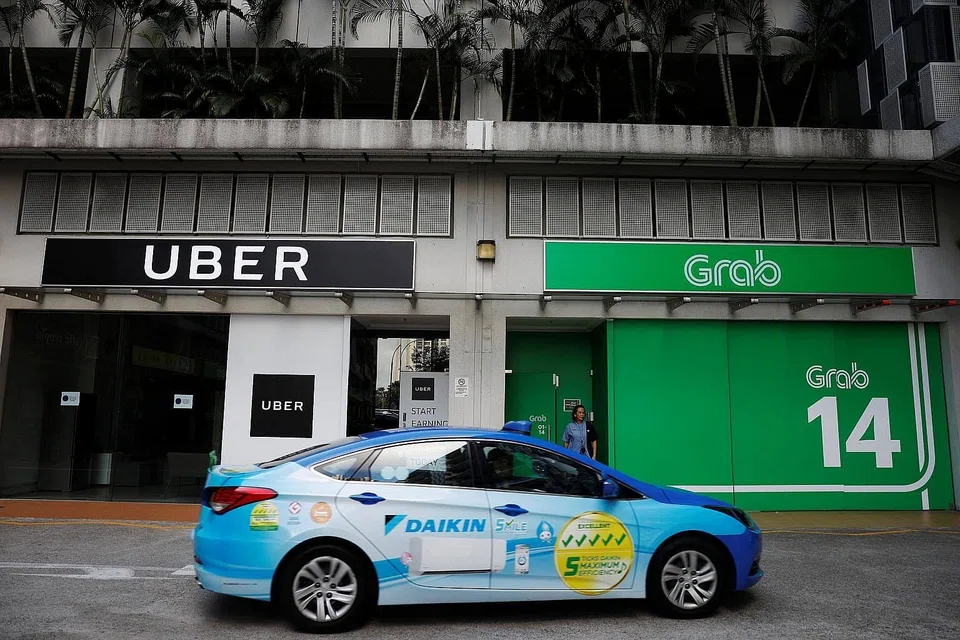
IN the exhilaration that comes with a merger and acquisition (M&A), especially one as significant as the recent Grab-Uber deal, it is easy for companies to focus on the headline numbers - the value, stake involved, costs, and the new market share.
But in a rush to secure the deal, there is a tendency for companies to lose sight of the human dimension, as observed from the unfolding of Grab's buyout of Uber's Southeast Asian business.
The Business Times has found that several kinks, especially with regards to the migration of people, have yet to be ironed out.
While Uber Southeast Asia staff - over 500 of them - were assured by their top management on Monday that they will all be offered new roles at Grab, there was no explicit pledge on the side of Grab.
A statement by a Grab spokesperson on Tuesday only said that they are "committed to try and find everyone a home at Grab".
Grab's Head of People Ong Chin Yin also could not guarantee that there will be no layoffs after the next three months, only stating that "there are no layoffs as of today (March 26)". One contract employee spoke to the paper on the condition of anonymity, describing the events on Monday as "stressful" and "emotional".
She revealed that staff at the Guoco Tower office were officially told the news on Monday during an "all-hands" meeting at 10am.
During the meeting, top management promised staff that all jobs would be kept, she said. They were also told that they were all going to be put on paid leave and Grab will reach out to them in the next three months with a job offer.
After that, they were given till 4pm to pack, contrasting from online accounts which said only two hours were given. However, as there are several Uber offices such as in Anson Road, she could not be sure what happened elsewhere.
"All of us were more sad than angry. We were mostly in shock. People cried when we realised that it is possibly the last day that we would be colleagues," she said, describing the process as "brutal".
They also had to help pack for colleagues who were away on holiday. "It just looked like a massive retrenchment, as we were all carrying boxes of stuff out the building. People were carting out their potted plants," she added.
But as a contract worker, she is uncertain if the paid leave benefits or the potential job offer applies to her. After the episode, she is unsure if she wants to join Grab as the experience has "left a bad taste" in her mouth.
Grab's Ms Ong appeared in a LinkedIn video on Monday night, where she sombrely addressed Uber employees and urged them to attend a townhall the next day.
Even as one feels a measure of sympathy for the task she has at hand, there is also the sense that the integration of people has not been thoughtful enough.
For example, Ms Ong had earlier said on Monday that the company had not reached out to Uber employees because it did not "have the email addresses of Uber employees" yet. It is certainly not far-fetched to assume that such preparations could be made earlier.
Observers say it is common for people matters to be sidelined in a merger or an acquisition.
Leong Chee Tung, CEO of HR startup EngageRocket, and former Gallup consultant, pointed out that while it is likely that HR was under a gag order, they should have had sufficient time to prepare a communication plan.
"Having a clear people transition plan which is executed immediately would display strong leadership and care for people on both sides," he said.
Associate Professor Lawrence Loh, director, Centre for Governance, Institutions & Organisations (CGIO), NUS Business School, explained that M&A deals are often executed in "lightning speed" by top executives due to commercial sensitivity.
"In most cases, many parts of the company may be unaware and are left to catch up with the decisions. In the Grab acquisition of Uber, it is clear that many of the issues in people and regulation had not been sorted out. They might have been deemed issues of post-merger integration," he said.
Ian Lim, partner and Employment & Labour Practice Head, TSMP Law Corporation, said that early engagement is key.
"When communication with employees breaks down, it can make the entire deal look poorly planned and executed. This can have a negative impact on how stakeholders and external authorities, and certainly the general public, view the deal as a whole."
Ultimately, all these actions determine the success of the merger itself.
Mr Loh warned: "The benefits may not be fully captured if there are misalignments in culture and human resource practices. Or worse still, there may be regulatory roadblocks."
It remains to be seen if the Competition Commission of Singapore (CCS) will give its stamp of approval on the merger, as Singapore's competition law prohibits mergers that may result in a substantial lessening of competition.
A query sent to Uber's HR was not answered by press time.