Going beyond the 'global city' paradigm
Singapore should strive to be a unique regional city.
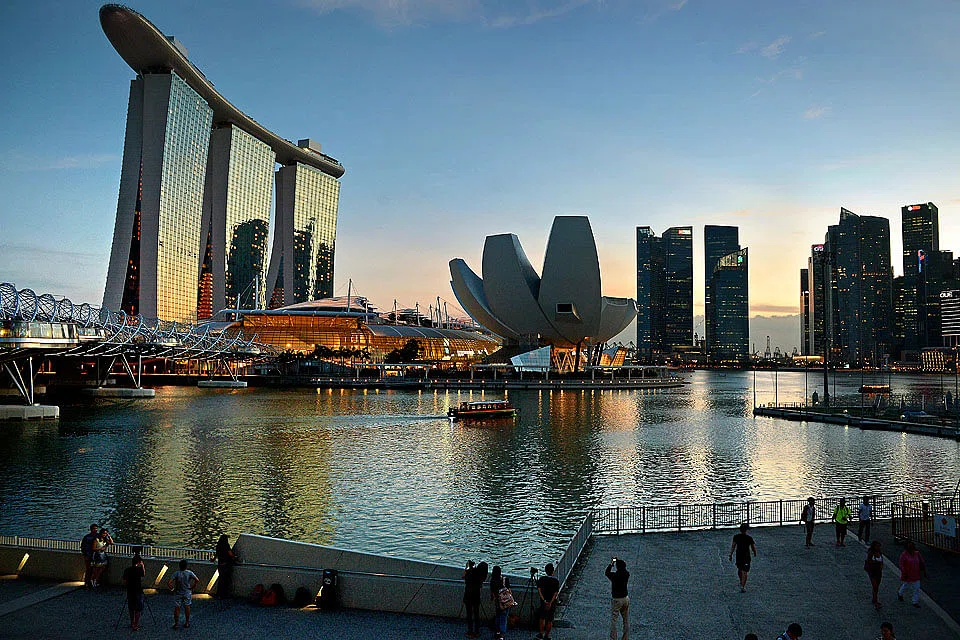
AFTER independence in 1965, Singapore's government embarked on a development strategy of manufacturing for export to the world market, a major part of the new nation's transformation from a South-east Asian regional port-city to a "global city".
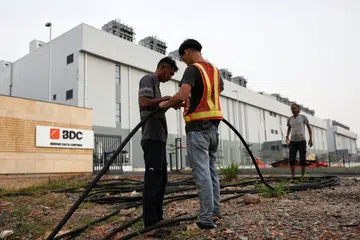
A relative abundance of labour gave Singapore a resource-based comparative advantage in the export of labour-intensive goods and services - chiefly electronics assembly offshored by multinationals such as Texas Instruments and Hitachi, and shipbuilding and repair undertaken by government-linked companies such as Keppel and Sembawang.
The success of electronics exports was facilitated by favourable trade policy in destination markets, particularly the US, and technological developments enabling sub-division of the semiconductor and consumer electronics value-chains.
Singapore's export competitiveness was also enhanced by strategic industrial and social policy that built on our already established assets of good location, deep-water port, free trade and capital flows, and commercial and physical infrastructure, to create competitive advantage. These policies included tax benefits, subsidised industrial estates, a streamlined bureaucracy and domestic health, education, housing and labour policies that dovetailed nicely with the internationally-focused economic strategy by raising labour productivity, reducing costs, and ensuring "political stability" and (more controversially) "labour peace".
This strategy was so successful that in less than a decade, "surplus labour" had been absorbed, labour shortages appeared, and a "second industrial revolution" was launched in 1979. The goal here was to increase productivity and wages, and reduce reliance on low-skilled and foreign labour which had been imported to preserve comparative advantage in labour-intensive activities.
Comparative and competitive advantages are dynamic, changing with external and internal market and policy developments. Singapore's small size and high growth meant that shifts in international competitiveness happened very rapidly, with comparative advantage in labour-intensive activities yielding quickly to skill and capital-intensity. Through the 1980s and 1990s, government policy continued to add location-specific competitive advantages - primarily infrastructure, education and investment incentives - to support the move up the value chain in manufacturing for global markets, still overwhelmingly conducted by multinational corporations.
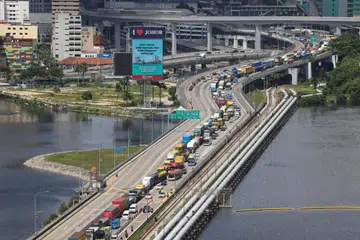
Becoming a "global city", and specifically a "node" in the evolving global supply-chains of multinationals, was the best and only path to economic development that Singapore could have followed, 50 years ago. It succeeded because external global forces - including multilateral trade liberalisation and the information and communications technology revolution - and internal domestic policies and outcomes were conducive. Things on both fronts are very different today, presenting both challenges and opportunities for the future.
First, there will be a slowdown if not a reversal in the pace of globalisation in the next 50 years: World trade growth has fallen to or below world GDP growth, which it dramatically outpaced in previous decades. The reasons for what some have called "de-globalisation" include, on the supply side:
On the demand side we see:
All these add up to slower growth in output, a lower ratio of goods to services in output, a lower ratio of manufacturing to services value-added in goods, and a greater localisation of goods and services production, occurring at much lower levels of per capita income than in the present-day developed world. Welcome to the post-industrial society on a global scale.
For Singapore, these global trends indicate a need for transformation beyond the "global city" paradigm of the past 50 years. There are also today many more "global cities" competing for this role. The gap in every dimension (physical infrastructure, income levels, social amenities, shopping, cultural activities) between the first-tier global cities of Shanghai and New York has dramatically narrowed, while Shanghai's share of world GDP has increased as New York's has shrunk. The same will eventually be true of the gap between Bangkok and Singapore.
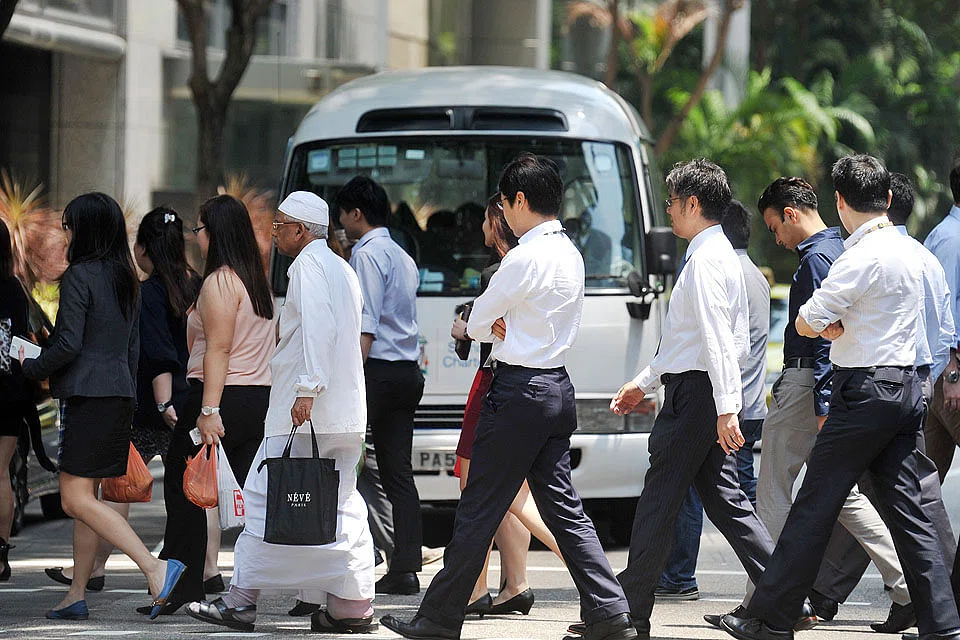
Domestically, our comparative advantage has already shifted decisively away from labour to capital and skills-intensity - despite decades of this market adjustment being slowed by compensating policy-created competitive advantages such as a liberal foreign-labour-and-talent policy. Such policy advantages will be ever more difficult to sustain given heightened competition and spreading global norms such as reduced acceptability of tax-avoidance incentives for multinationals.
Fortunately, in addition to the physical, financial and human capital built up over the past 50 years, we benefit from an excellent geographical location in the centre of South-east Asia - the next large emerging regional market to which global multinationals are already turning their investment attention. For homegrown Singapore companies, Asia is already the top source of overseas revenue, with Asean particularly important for SMEs.
The tapering off of the 20th century development model of manufacturing for export through multinational networks to rapidly-ageing, slowly-growing, distant rich markets will be replaced by domestic consumption-led growth in faster-growing nearby middle-income markets such as China and the more-youthful India and Indonesia.
Market research studies in these markets show strong demand growth for a range of value-added services - finance, education, health-and-wellness, recreation - that Singapore already provides to the world's and region's wealthy. Going forward, we need to cater more explicitly to the much larger numbers just slightly further down the regional income distribution, who are likely to consume similar services and at similar price-points to the vast majority of Singaporeans.
Put simply, we will move from manufacturing physical goods for customers richer than we are to providing services to customers poorer than we are. The good news is that services for our regional neighbourhood are more location-specific and scalable; less capital and energy-intensive than manufacturing for distant markets; less reliant on rare specific technical skills unlikely to be found in adequate scale among our small population; and more open to small entrepreneurs with different levels of formal education, providing a channel for employment creation, upward mobility and reduced inequality.
This transition from being one of many global cities to becoming a one-of-a-kind regional city requires shifts in Singaporean mindsets, educational choices, labour market behaviours and government policies that directly or indirectly influence and incentivise them.
Chief among these is an entrepreneurial spirit that will enable us to create our own jobs rather than slot ourselves into the declining number of jobs that will emanate from large foreign companies (such as Facebook - which with annual revenues of US$12 billion and a market capitalisation exceeding US$200 billion serves 1.5 billion customers with only 8,000 employees worldwide).
Our pre-independence ancestors' commercial success as multilingual, multicultural entrepreneurs, intermediaries and service providers for South-east Asia, without the benefit of the resources and expertise we have accumulated over the past 50 years, suggests that we can do it.