

How to stop Grexit
London
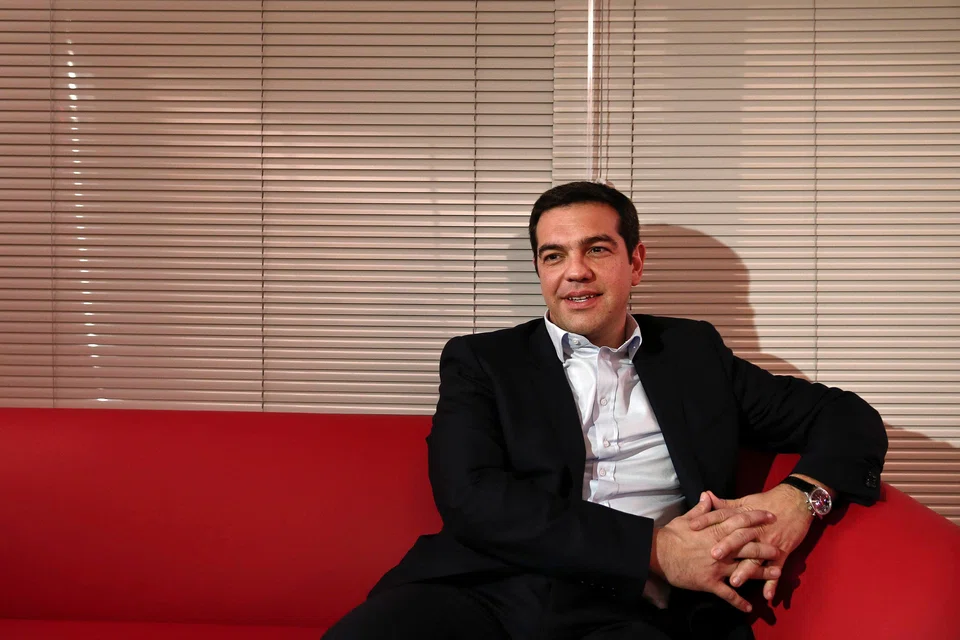
SYRIZA's resounding election victory has pushed Greece closer to quitting the eurozone. But a so-called Grexit is still not the most probable outcome, as the radical left group should be able to cut a deal with its European creditors to avoid bankruptcy - provided both sides show maturity. Alexis Tsipras, Syriza's leader, has made a host of promises that he will not be able to deliver while sticking within the constraints of the country's mega bailout programme. He wants to increase pensions and the minimum wage sharply, rehire sacked civil servants, reverse the liberalisation of the labour market and cut Athens' vast debts to other eurozone countries.
The problem is that Greece's creditors, led by Germany, are not prepared to keep lending Athens money if it does not make further progress in reforming its economy and balancing its budget. If everyone was rational, there would be scope for a compromise. After all, a large majority of Greeks want to stay in the euro. They rightly fear that quitting it might lead to a downward spiral, in which impoverishment and political strife fuel one another.
Meanwhile, no head of government in the other euro countries wants Greece to leave. This would be a huge political failure, with the risk that Athens could also quit the European Union and maybe even drift into Russia's sphere of influence. Despite the many measures taken to shore up other euro countries in recent years, there is also still a possibility of contagion. A Grexit would be such a unique event that nobody really knows where the chain reaction would lead.
The good news is that Mr Tsipras' victory speech was reasonably conciliatory. The bad news is that the Syriza leader seems likely to choose the Independent Greeks, a right-wing anti-bailout party, as his partner. His next priority should be to ask for an extension of the bailout programme, which runs out at the end of February. If he does that, the European Central Bank (ECB) will continue to provide liquidity to Greece's banks. That is important because deposits have been fleeing the banking system in the past week.
For their part, the other eurozone countries should agree to extend the programme for several months if Mr Tsipras asks nicely so that there can be a proper discussion on a new deal. It would not be right to bring the banking system crashing down on a newly elected leader's head.
The other leaders should also accept Mr Tsipras' request for a high-level meeting to discuss his plans rather than force him to deal immediately with the officials from the Troika - the European Commission, the ECB and the International Monetary Fund (IMF). The Troika will have to be involved eventually, but it would be a red rag to a bull to insist on it being involved prominently from the start given how hated it is in Greece.
Such emollience should, though, be conditional on Mr Tsipras himself not doing anything inflammatory before the leaders meet. He should not, for example, try to create a fait accompli by pushing through a hike in the minimum wage. Such things should be left to the negotiation. It is also important that, once in office, Syriza avoids the fiery rhetoric that it used during the campaign. Yanis Varoufakis, who is tipped to be finance minister, needs to watch his tongue.
He was recently quoted by a French newspaper to the effect that Jean-Claude Trichet, the former ECB boss, would burn in hell. This is not the way to win friends and influence people. Beyond that, there is the making of a deal on the long-term debt. Syriza is now indicating that it will not ask for a haircut, but will instead propose linking its debt servicing to how rapidly the Greek economy grows.
The European countries, meanwhile, are suggesting that they could extend the amount of time that Athens has to repay its loans.
The snag is that long-term debt relief is not the only issue. The state will run out of cash in March when a big dollop of IMF money comes due. The best solution would be to let the government sell some more treasury bills to the country's banks provided it commits itself to serious negotiations.
That will not, however, solve the medium-term liquidity problem which comes to a head in June when a series of bonds owned by the ECB need to be repaid. It is hard to see how Athens can avoid default then without borrowing more money from the euro countries - and they will not agree to that unless Syriza commits to reform the economy and fill a hole in this year's budget.
But if the Syriza leader is not prepared to compromise, Greece will default and will have to impose capital controls to stop the banks collapsing. If the people then forced the government to backtrack, there would be one final chance to stay in the euro. Otherwise, the drachma would beckon.

READ MORE:
TRENDING NOW
Stocks to watch: Keppel, Seatrium, OUE Reit, Wilmar and more
Hidden value: Why SGX consumer stocks deserve a closer look
Keppel’s RigCo, Seatrium to complete four offshore rigs in deal worth over S$500 million

Decision fatigue, complexity stop people from investing despite growing retirement needs: BlackRock

