

Is Trump turning America into 1960s Brazil?
His determination to resort to import substitution and "make it in America" will only repeat the well-known economic mistakes of Latin America.
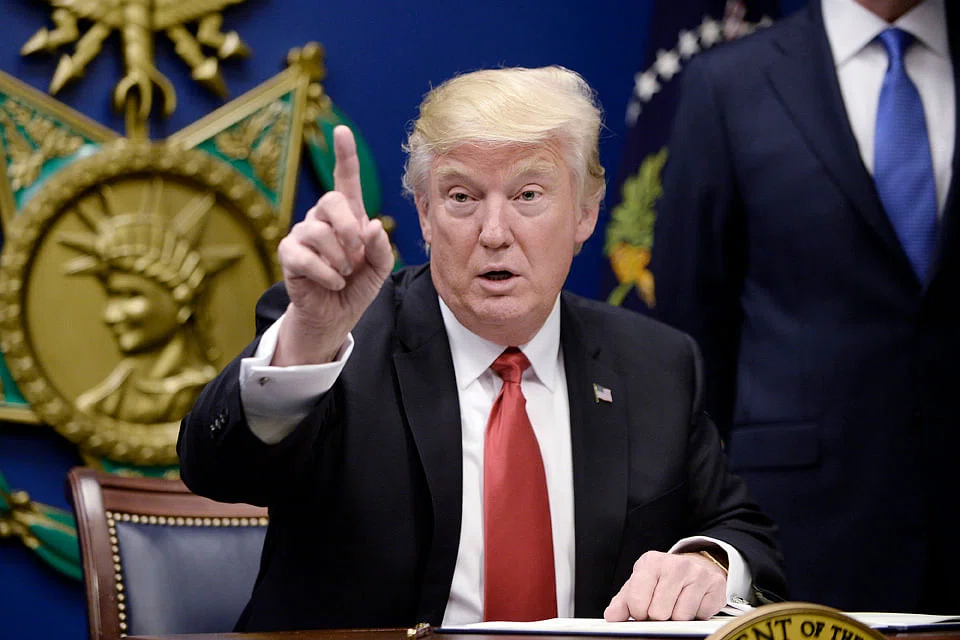
IN CHOOSING a cure to the United States' economic problems, president-elect Donald Trump seems determined to apply a well-known Latin American medicine, the strategy of import substitution. He is adamant about pursing an economic policy that gives strong preference to domestic production over buying goods from abroad.
Alluringly simple as this sounds, the validity of the concept has been disproven many a time. As emerging market countries, notably Brazil in the 1960s, found out, relying on such an approach usually only drives up costs for consumers and industrial end users, while doing little, if anything to improve a nation's productivity.
Moreover, most of Mr Trump's analyses (and hence prescriptions) appear to be based on competitiveness problems related to low wage costs and "currency manipulation" by China. Those factors, however, are no longer the main factors explaining the competitive gap of China.
Now, other more structural factors are at play: Producers in China and other emerging economies actually benefit from building a national infrastructure and logistics that have surpassed many OECD nations, particularly when compared to the US and its decades of underinvestment in the public sector.
In addition, China as well as other emerging market nations are beginning to reap the fruit of their investments in education and R&D. Relying on a young and eager population, these countries are creating innovation in several sectors of the global economy that are key for overall competitiveness.
China may have joined the ranks of the world's 25 most-innovative economies in the Global Innovation Index - produced by Cornell University, Insead and the World Intellectual Property Organisation - only in 2016. However, the pace of its catching up is extraordinary: China ranked only in 43rd place in 2009-10 and 29th in 2015).
According to a recent publication of the US Council of Competitiveness (A Competitiveness Agenda for the 45th President of the United States, December 2016), China is already second in the world in scientists per million people.
It has also already reached No 1 ranking on the 47th edition of the Top 500 list of the world's top supercomputers, with a new system built entirely using processors designed and made in China.
To be sure, there are some drawbacks and caution notes that apply to such statistics. However, once this innovation capacity is applied to the manufacturing sector, then literally, the sky is the limit for China's competitiveness.
While manufacturing is thus on the ascent in the emerging market world, rich countries - from the US to France and Italy to Japan - are coping with a bout of "manufacturing decadence".
In fact, reading that writing on the wall, policymakers in virtually all major economies were only able to avoid the immediate onset of the destructive consequences of this "manufacturing decadence" by maintaining domestic consumption artificially high.
There were also efforts by corporate giants like GE seeking to retrace their own glory by heralding a "manufacturing renaissance" that basically happened in glitzy ads only.
The Fed's policy of money pumping and negative interest rates also helped. Jobs were brought back, but generally only low-paid service jobs; and credit was extended mostly only to the better off, which didn't help the broader economy. Since structural issues were not addressed, the US economic recovery continues to be a fragile one.
THE GAMBLER ENTERS THE STAGE
Enter Mr Trump. Greatly experienced in taking risky gambles on his corporate and personal balance sheets, he was prepared to call the bluff of eternal soothsaying. He simply said that the "emperor" (the manufacturing sector) really had no clothes.
While he is correct on the analysis, what about his prescriptions? It is puzzling to see that he seems willing to adopt some policies that look very much like the early import substitution policies of Brazil, notably:
Of all the various policies proposed by Mr Trump, increasing the levels of investments in infrastructure and logistics seems to be a good way to address the competitiveness challenge.
However, without significant improvements - and more public investment - in the educational and innovation systems (and just opting for more school "choice" and privatising public education certainly doesn't address the core of the problem), infrastructure improvements will not be enough.
Of course, Mr Trump can always opt to seek yet more recourse to a "double wall". He could, as he has pledged, build a physical one (closing the borders to the south) and a tariff one (threatening the US producers that insist to make the cheap imports in places like China).
Both propositions are "full of sound and fury", but in the real world, if successful at all, would only help bring back low-wage jobs. Yes, more goods would be produced domestically, but - as with China until now - they would have comparatively little value added.
Mr Trump's supposedly "patriotic" approach is thus a recipe for a mediocre future for the US manufacturing sector. It does next to nothing about his presumed real goal - bringing back well-paying jobs.
As Brazilians and other developing countries learnt the hard way in decades past, there is no easy way to get to manufacturing "heaven" - a productive economy that generates solid jobs and good incomes.
What is needed is a long-term commitment to improving education, innovation, infrastructure and logistics. For all the lip service they like paying to these issues, when it comes to authorising real money, that is a hard agenda for conservative Republicans in the United States to swallow.
Mr Trump now presides over the world's largest economy. But he had better heed the emerging markets' lesson that shooting for import substitution is futile.
If he does not, then his own warnings during the 2016 campaign - that the US increasingly resembles a developing country - will ring far more true than he could be bargaining for.
TRENDING NOW

South-east Asia has lost Nvidia’s best salesman

Higher rates, weaker spending: Is the Philippines entering stagflation?

Who is Leo KoGuan, the Singapore-based billionaire backing Nvidia’s Jensen Huang?

Demand, tech capabilities position Apac and AI as Skyscanner’s next growth frontiers: CEO Bryan Batista

