

Lee family feud - a test of Singapore's political maturity
The crux is whether Singaporeans stay open to new information and ideas about their past and future
Singapore
IF the letter of Lee Kuan Yew's final will is not honoured, at least its spirit should be.
The Lee family feud is a test of Singapore's political maturity. The first step towards dealing with this highly polarising debate is to acknowledge its complexity. This is not a multiple-choice question with a clear right and wrong, no matter how convinced each side is of its own arguments.
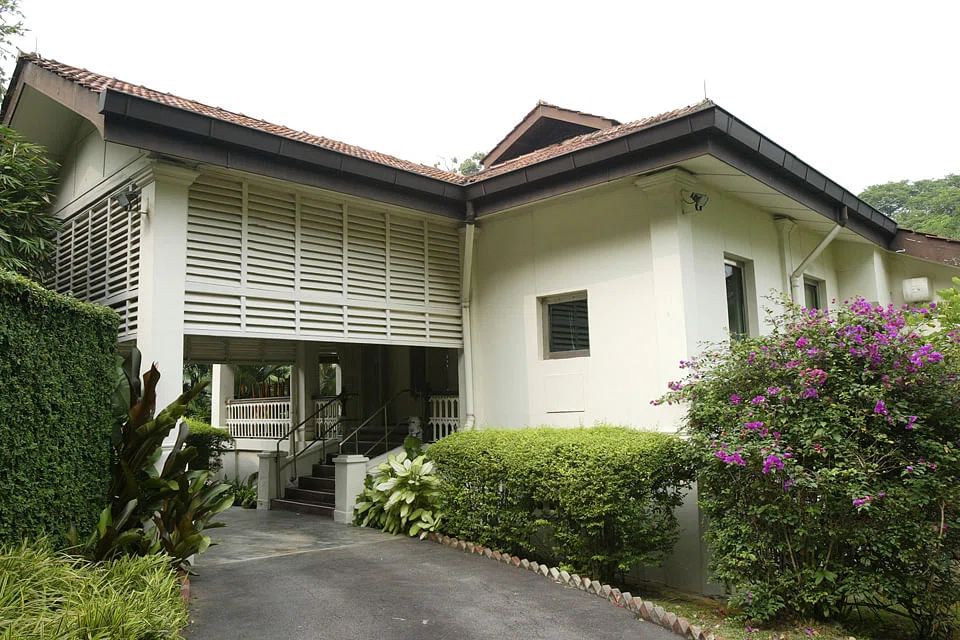
And although 38 Oxley Road is just a house, it is not just a space. It is a place, invested with meaning by a family and a nation. If we treat places like mere spaces and subject them to cold calculation, we'll rob them of emotion and memory, and lose a bit of what turns a collection of people into a community. We need to approach the matter with open hearts and minds.
Furthermore, Mr Lee's own views about legacy and governance do not make it easy to come to a consensus about what to do with the house. On the one hand, we have on record his strong personal desire that the family home be demolished. It's not hard to understand how determined two of his children, Lee Wei Ling and Lee Hsien Yang, are to fulfil their parents' wishes.
But on the other hand, the system he built never allowed individual preferences to stand in the way of the public good, as interpreted by the government of the day.
Nowhere is this principle more apparent than in Mr Lee's land policies. Countless patriarchs' plans for their property holdings have been dashed by his all-powerful land acquisition laws - freehold leases be damned. Countless others, who would have undoubtedly preferred their final resting places to be exactly that, have been dug up from their graves when the state decided their cemetery plots were needed for other purposes. If everyone else's voice from the grave can be vetoed by the government, it's not clear why Mr Lee's should be the exception - especially when the government's hard-nosed, unsentimental approach to such matters is utterly in his own image.
By Singapore standards, therefore, it's not necessarily sacrilegious for the government to consider the option of conserving Mr Lee's storied bungalow, no matter how firmly he would have opposed the idea. Part of the challenge of maturing our polity is to get used to the idea of operating by the rule of law, not by the rule of Mr Lee.
But maturation also demands that we pay close attention to the reasons he gave when he said, repeatedly, that he wanted his house flattened. This was in line with his well-known abhorrence of emotional pulls in politics, whether in the form of race, religion, language or charismatic personality. He wanted to build legitimacy around performance, not identity, and to train Singaporeans to exercise a more clinical, legal-bureaucratic rationality.
You don't need to be a disciple of Mr Lee to recognise this as a worthy principle for Singapore governance. Nor do you have to be a traitor to Prime Minister Lee Hsien Loong to acknowledge the risk, red-flagged by his siblings, that this principle will be compromised by preserving their house as a monument, against their father's wishes.
Lee Wei Ling and Lee Hsien Yang fear that such a plan is being hatched to carry forward the family name to benefit the future political career of PM Lee's son. The prime minister and his wife have absolutely denied having any such dynastic ambitions.
The dynasty factor aside, though, we should remain wary of encouraging a political culture obsessed with personality. A people who are taught to credit their nation's past progress to Great Men will long for more Great Men to solve future problems. That way lies the kind of populism and demagoguery that is rampant in today's world.
The government should treat these concerns seriously if it's contemplating overriding Mr Lee Kuan Yew's wishes. Even if the two younger Lee siblings' most pointed allegations are unfounded, their broader concern is legitimate. The public interest should be insulated from the political interests of any individual or group.
The government would lose nothing but short-term pride if it were to dissolve its ministerial committee immediately and provide the assurance that any new body tasked to make recommendations will be constituted only after the prime minister has left Cabinet. It serves nobody to allow any perception to linger that a government decision on the house is being influenced by the prime minister's private interest in capitalising on his father's name.
The conflict of interest question can also be addressed by ensuring that any such committee is chaired by an independent eminent historian, and not by a politician or civil servant. It should be obliged to consult widely, especially with the Heritage Society and other relevant groups.
But it's impossible to prevent a third- or fourth-generation member of the Lee family from milking an LKY monument for personal advantage down the line. Citizens of sound mind have a right to stand for election, and it is hard to think of a reasonable way to stop any candidate from talking about his or her family heritage.
In the first place, though, I wonder if we're getting carried away with the fate of the house. Yes, 38 Oxley Road is an iconic site. But we need a sense of proportion. It is not what Jerusalem is to People of the Book. Nor is it Mount Doom in The Lord of the Rings - the place where the One Ring was forged, the only place it can be destroyed, and where the entire fate of Middle Earth hangs in balance.
No, the Lee family home is neither a necessary nor a sufficient possession for anyone determined to use or abuse the power of Mr Lee's memory for selfish reasons. Even if it's demolished, a replica could be erected elsewhere (including in Gardens by the Bay, still my choice of site that should be named after LKY). Alternatively, an augmented reality version could be reconstructed digitally, allowing people to put on a 3D headset for an immersive experience that, with the right music and narration, could be even more emotive - and manipulative - than a real-life visit to the actual site.
What's more, since the vast majority of Singaporeans have no idea what the house looks like, a proposed monument doesn't even need any connection to that address. For that matter, it doesn't need to be a building. Even if the younger Lee siblings succeed in their bid to demolish No 38, it's not going to stop any individual or group from memorialising the LKY name through educational resources, books, movies, cartoons, songs, plays, paintings, exhibitions, t-shirts, stickers and other paraphernalia. The Estate could attempt to block commercially exploitative uses of the Lee name and likeness, but efforts to keep Brand LKY out of politics will probably be futile.
Indeed, the painful truth for the younger Lees is that the ship has probably already sailed. It weighed anchor at Mr Lee's funeral, when most Singaporeans were moved by the sight of PM Lee having to bear his prime ministerial duty to lead a mourning nation through its loss while at the same time dealing with his own grief as a son. In coldly political terms, this was the moment that being the son of LKY became a clear asset instead of a potential liability. A few months later, during the 2015 general election campaign, the prime minister went so far as to channel his father in his Fullerton rally speech - "This is not a game of cards! This is your life and mine!" PAP critics may have been unimpressed, but to the party faithful, it was a goosebump-worthy moment.
All in all, it is simply unrealistic to try to stop anyone - least of all any member of the Lee family - from feeding an LKY cult, either deliberately or inadvertently. Instead, the more effective counter-strategy would be to build up Singaporeans' critical thinking skills so we can resist simplistic Great Man accounts of history.
The core of this effort must be led by academic historians, who are best placed to help us develop a more contextual understanding of our heritage, fed by multiple and even competing narratives. Also able to help develop society's antibodies against demagoguery are filmmakers, playwrights and artists who, through their factual and fictional stories, have been trying to surface Singaporean narratives neglected by mainstream history. Sadly, some of the most thought-provoking creations in this genre - such as Tan Pin Pin's To Singapore, With Love and Sonny Liew's The Art of Charlie Chan Hock Chye - have been treated as dissident works instead of the loving, nation-building reflections they really are. We should let historical discussions and debates flow, unimpeded by OB markers or censorship.
A more mature attitude to our history and politics can allow us to have the best of both worlds. We can honour and, yes, even monumentalise what is truly remarkable about our first prime minister, while avoiding the trap of deifying any mortal leader. Whether or not 38 Oxley Road remains standing isn't really the issue. It's whether we keep the doors and windows open to the fresh air of new information and ideas about our past and future.






