

Making 'heroes' core of innovation push
Heroes are the handful of products for any particular brand that shoppers will look for and that contribute the bulk of sales and profits for both the manufacturer and the trade.
CONSUMER goods companies need an innovation in innovation. The largest companies invest an average of US$1.4 billion in research and development (R&D), typically 2-5 per cent of their net sales, each year to bring new products to market. When they factor in costs beyond R&D, however, such as advertising investments and supply chain enhancements, companies may find themselves devoting up to 30 per cent of their resources to innovations.
Unfortunately, far too often, there is little to show for the huge investment. For example, a study of new products introduced in Western Europe in 2011-2013 determined that only 15 per cent survived after their second year.
Executives at these companies often see sales growth drop for their top products and become convinced that those best sellers have maxed out their potential. They may then attempt to compensate by unleashing a host of variations of new products or brands, with the hope that at least one will eventually catch on. However, excessive innovation can actually hurt overall growth by shifting resources away from supporting their pipelines of existing winners. In essence, innovation ends up causing more bleeding to the core portfolio.
Identify the heroes
We advise executives to make their "heroes" the focus of their innovation strategy. Heroes are the handful of products for any particular brand that every shopper will know and look for and that contribute the bulk of sales and profits for both the manufacturer and the trade.
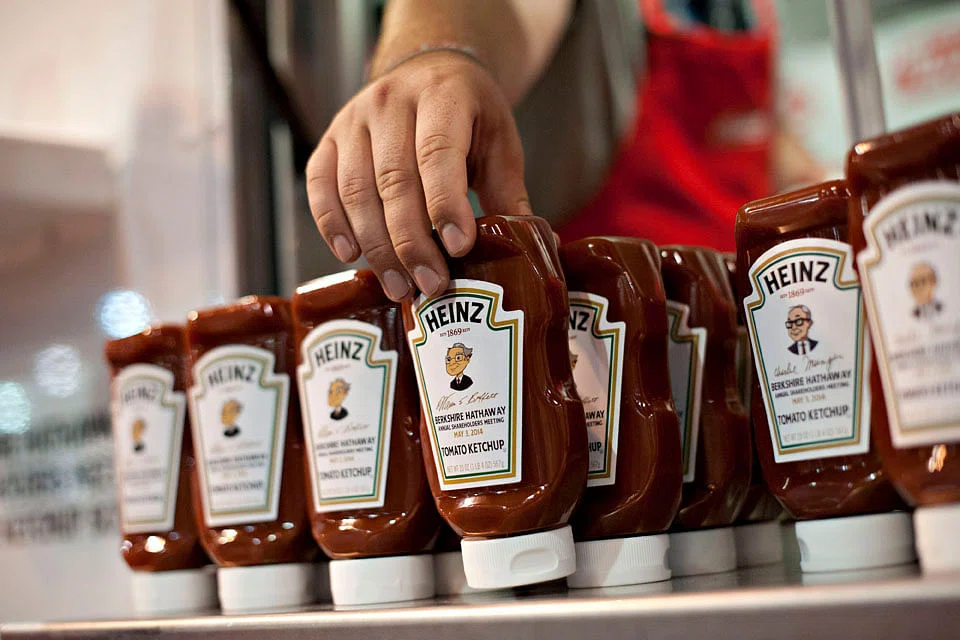
Consider Heinz. In 2002, the company introduced its famous ketchup in an upside-down bottle. This move boosted sales by 6 per cent when the rest of the category grew by only 2 per cent. It proved that innovations can happen even to products that have long been on shelves - and, in this case, that shoppers will pay more for increased convenience.
Most companies underestimate the profitability and full potential of hero products. But the best brands make the most of heroes in the following three ways: they innovate to keep heroes fit; they turn them into superheroes; and they give birth to new heroes.
Keep existing heroes fit
Winners use innovation to keep their strongest products in the best possible shape, continuously upgrading them to introduce new and concrete consumer benefits. That may mean slightly improving the formula by replacing or adding newly available ingredients to improve a product's taste or to make it healthier. Such improvements strengthen a product over private labels or competing brands that may be gaining market share.
Brands stay fit to appeal to the trade, too. For instance, companies can alter a product to provide easier logistics. Also, brands can bolster their products to make them more profitable by making them cheaper to produce.
Some of these moves seem simple, but they usually address a pressing consumer need. For instance, ubiquitous lubricant WD-40 introduced a "smart straw" that is permanently attached to a newly designed cap, eliminating the consumer frustration of lost straws. Not only did WD-40 solve a common complaint but it also was able to sell its innovatively packaged product at a significant premium over the original.
At times, a brand may launch seasonal pack variations of all-star products without changing the recipe. Keeping a hero fit can also take the form of audacious marketing, with only on-pack graphics changes required. Coca-Cola used customised technology to print 150 of the most popular Australian names on its bottles and promoted the beverage for a core consumption occasion across the country: share a Coke with a friend. The effort contributed to a 7 per cent rise in consumption by young adults - a target market - and the company expanded the innovation to 80 countries.
Turn your heroes into superheroes
In addition to making continuous improvements to their hero products, companies can take a major leap by turning them into superheroes, elevating penetration levels into the 20-50 per cent range. Brands achieve these gains by strategically expanding usage among existing consumers through new needs or occasions and by recruiting new consumers.
In the UK, Innocent controlled as much as 70 per cent of the bottled smoothie market with its 250-ml and 750-ml sizes. Introducing smaller, single-portion 160-ml bottles enabled Innocent to expand its grocery store coverage with positioning on the "meal deals" shelves of Sainsbury and Tesco. At the same time, this innovation allowed Innocent to sell its drinks at an average volume price that was 75 per cent more than that of its larger sizes.
Nivea has also managed to turn a hero into a superhero by expanding its product range in multiple ways. Take its anti-age Q10 cream. Over time, the cream was successfully extended across the time of usage (day and night), texture (cream, serum and lotion), facial area (face and eyes), product function (moisturiser, cleansing), and strength (regular, light and energy).
Give birth to a new hero
Most companies focus their efforts on giving birth to a new hero. While this approach may occasionally deliver high returns, it is also the riskiest innovation horizon. That is why we advise companies to concentrate on the first two horizons while cautiously investigating how innovation can help them conquer untapped territory that does not stray too far from their core.
Dannon created a new hero in the booming US market for Greek yogurt. In the early 2000s, the company bought 85 per cent of organic yogurt maker Stonyfield Farm. In 2007, it launched Stonyfield Oikos organic Greek yogurt, which it rebranded as Dannon Oikos. The company used Greek colours and a Greek-American actor as its spokesman to establish a consistent Greek image. It made a huge advertising push with an NFL partnership and Super Bowl commercials. Within two years, Dannon Oikos became the brand's top-selling product - a new hero.
Five rules to live by
As companies refocus innovation on their heroes, those that come out ahead will adhere to five rules.
Again, brands should aspire to use innovation to push their best brands as far and high as possible, and not resolve to marginal product launches that don't move the needle in terms of sales.
A logical consequence of aiming high is that you will need to support launches accordingly.
Determine which new products can win with shoppers and how many can reasonably be implemented in the store, and then work backwards to develop those products.
New technologies give companies the opportunity to turn heroes into superheroes with new packaging concepts and many other options. For example, 3-D printing and rapid prototyping enable brands to break the old model of taking 2-3 years to get to market.
Finally, winners recognise when they lack the necessary internal capabilities to aim big. That's when an acquisition can be the best approach to innovation.






