

Managing risk is about raising society's resilience
Role of risk management is not to impede people's ability to do business, but to enhance their awareness about the dangers they face.
FOLLOWING the Global Financial Crisis and the failure of many institutions to grasp the risks they were taking, the concept of risk and its consequences in terms of management have become central with regulators and more generally within society. Even though risk is an old concept, its perception has changed over the ages.
As early as in the 18th century, philosophers realised that risk contains two aspects as summarised by French thinker Etienne Bonnot de Condillac (1714-1780) who qualified risk as "the chance of incurring a bad outcome, coupled with the hope, if we escape it, to achieve a good one". This notion of risk would become prevalent in finance and economics during the 20th century. Taking risks is the defining trait of entrepreneurs or investors. They do so in search of a future good outcome. Their motivation for risk taking is the hope to produce a surplus either industrial or financial. The stochastic nature of future outcomes had been noticed earlier, with the creation of the first mortality table in the 17th century. However, a proper treatment of risk was not generalised before the second half of the 20th century with the advances of mathematics and economic theory.
The notion of risk is often confused with uncertainty. In economics, Frank Knight (1921) laid the foundation for distinguishing risk from uncertainty. "Risk" is defined as the randomness with knowable probabilities (measurable uncertainty), while "uncertainty" is the randomness with unknowable probabilities (unmeasurable uncertainty). In this sense, risk is measurable and thus manageable, while uncertainty is part of life and has to be accepted as such and managed only for its consequences. The realisation that taking risk can produce a return and that it is measurable has given birth to the insurance industry, starting with the first insurance contracts of the Babylonians.
In the last decades, peak risks for insurance companies and financial institutions have increased, which is seemingly paradoxical, considering that individual lives in rich countries are much safer than in the past. But, insurance risks have also become more important. Affluent societies tend to be more insured and have obviously more to lose. Better living standards imply more demanding customers, backed by the evolution of legal systems to protect them. In addition, there are objective facts that concur to the changing risk landscape.
Urbanisation has gone very far all over the globe. While the proportion of urban population in the early 1950s represented only 30 per cent of the total world population, it has become more than 54 per cent in 2014, and is still increasing. A natural disaster hitting such highly populated areas would have big economic consequences and big insurance claims. At the same time, the mobility and interconnectedness of people have grown to unprecedented levels. Any big tension, due to either natural or man-made catastrophes, will rapidly propagate, and result in severe losses.
Another factor is the continuous increase in life expectancy. Nowadays, populations in developed countries live 13 to 30 years longer on average, than at the end of World War II when the pension systems were generalised. Since then, the retirement age has hardly changed. Increased longevity puts pressure on pension funds to finance on average 20 years of retirement based on 40 years of working activity. At the same time, woman fertility has decreased in Europe, Japan and more and more in China, to levels lower than the replacement rate (2.1 in developed countries and 2.5 globally), inducing an ageing of the population. Both factors coupled with sluggish productivity growth in the last two decades contribute to put heavy strains on retirement systems. This translates into strong demands on the financial system for ever higher returns, and heightened risk of extreme volatility on global markets.
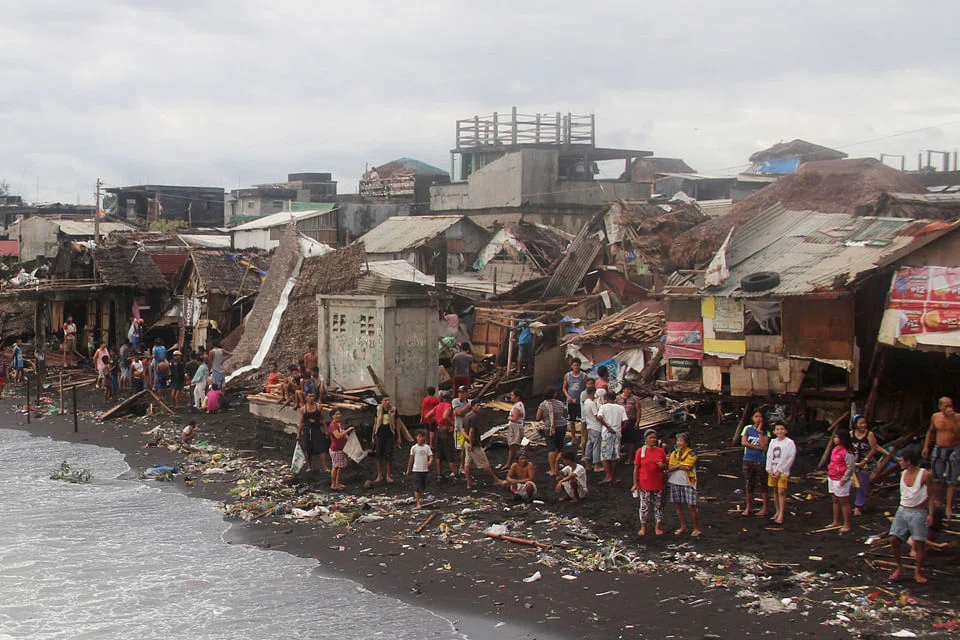
The first decades of the 21st century with Sars, the 2004 tsunami and the Fukushima nuclear disaster have somehow reinforced the feeling of living in a world where extreme events can happen more often and hit ever more strongly our societies. This is not to say that societies did not experience large catastrophes in the past. The great black pest plague in the 14th century killed a third of the whole European population in four years. Closer to Singapore, the huge volcanic eruption of the Indonesian volcano Tambora in 1815 caused global climate anomalies that included a "volcanic winter". 1816 was known as the "Year Without a Summer" in North America and Europe. As a result, crops failed and livestock died in much of the Northern Hemisphere, resulting in the worst famine of the 19th century and over 200,000 directly related deaths.
A few centuries ago, human lives were indeed uncertain, leading people to have a strong sense of vulnerability. Wars, diseases, strong episodes of random violence were constantly recurring. This environment depressed the willingness to take risks. The consequence of this general attitude was slow economic growth during most of the Middle Age and the Renaissance periods in the West. Industrialisation coupled with faith in science and progress were the drivers for the change of perception in the 19th century when phenomenal economic growth and social changes were experienced.
Managing risks has undoubtedly helped us to lead more predictable lives. Such enhanced predictability is an essential element in fostering ever more complex social and financial interactions, involving more people, across longer distances, and with innovative technologies. Society as a whole demands a world where mankind's vulnerability is diminished. Governments are made liable for the mishandling of floods or earthquakes. In every modern state, there is an administration in charge of fighting against catastrophes. In every big company, there is a risk management department.
Risk management is not avoiding risk, but making society more resilient.
In this context, the role of risk management is not to make people more risk averse, nor to impede their ability to do business, but rather to enhance awareness about the dangers they face. In financial institutions, risk management helps optimise portfolios' risk/return profiles, that is, to obtain maximum profit for the risk the firm is taking or, for a given profit expectation, to minimise the risk. This approach to risk is at the basis of an efficient financial system.
Insurances have, very early on, been one of the vehicles of risk socialisation. Through insurance, people affected by bad outcomes are compensated by those who escape them. Insurances along with governmental actions are the main actors in this important field for society. It thus makes sense to ask them to quantify the risks they carry in their portfolios to ensure the viability of their protection. Risk management becomes central to the business and pushes insurance companies to devise innovative solutions for covering their customers' risks.
Since natural disasters and their consequences cannot be avoided, the role of risk management is to minimise their impact, by putting in place prevention measures. An example of these is a set of satellites that are being launched to monitor the oceans, for providing early warnings in case of tsunamis. Risk management can foster technological developments and innovative organisational changes to cope with the challenges ahead.
The societal debate around risk has only started. It will need to deepen if risk management is to become a driver to efficiency. A society becomes more mature when it understands that taking risk is an essential constituent of progress and innovation. Risk management is not about avoiding risk, but making societies more resilient.
TRENDING NOW

Once staunchly pro-China, Malaysian Chinese businesses are now distancing themselves from Beijing
Stocks to watch: HPL, Aims Apac Reit, Zico, Advanced Systems Automation, ComfortDelGro
‘How many will survive?’: Bubble fears arise as China’s humanoid robotics face reality check
Smaller board lots can’t fix a market run by three banks

