Middle-East mess plagues US agenda
Obama is likely to find himself being forced again to invest more of his time and energy on dealing with the never-ending instability in the region.
SIX years ago when he was running for president he had made a commitment to disengage the United States from the wars in the Middle East, and later on during his first term in office he declared his commitment to "pivot" US strategy from West Asia to East Asia.
So you can certainly feel US President Barack Obama's political pain as he finds himself again and again being forced to invest more of his time and energy on dealing with the never-ending instability in the Middle East where not a day passes without a new political upheaval and threats of war that leave Washington no choice but to refocus its attention on that part of the world.
And as it gets drawn once again to the mess in the Middle East, the Obama administration discovers that its diplomatic and military responses only help to ignite anti-American backlash that leads to even more American entanglement in the region as well as to criticism back home. And with no end in sight.
One of the problems that the US is facing today in pursuing its policies in the Middle East is that unlike during the Cold War when the rivalries in the region were between the pro-American and pro-Soviet camps, and the lines of the geo-strategic battle were more or less clear, the balance of power in the region is now being shaped by a multitude of political players reflecting national, ethnic and sectarian divisions that take the forms of civil wars and regional conflicts that do not always fall into a pro-American versus anti-American, or the good guys versus the bad guys, dichotomies.
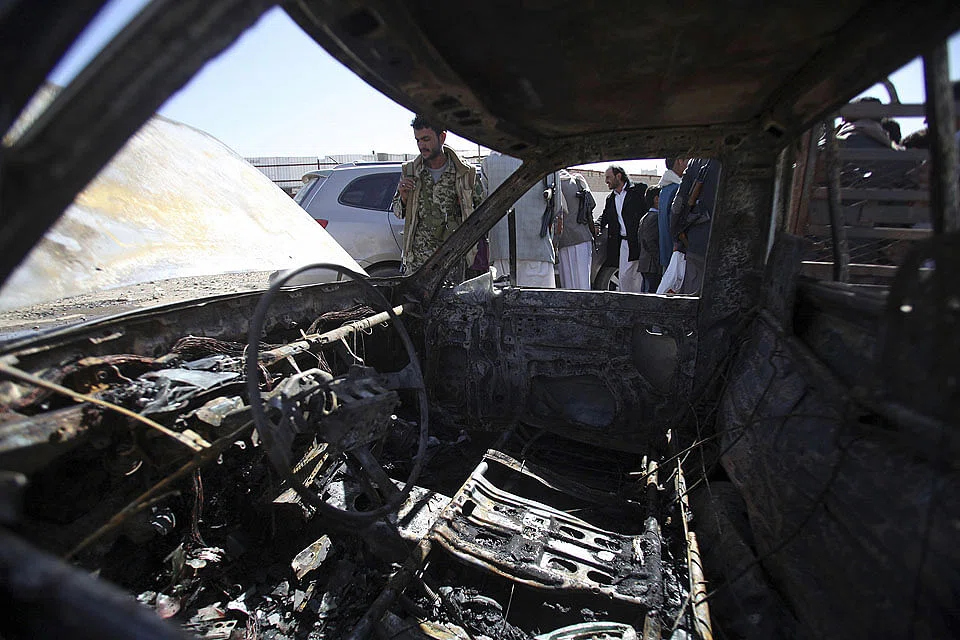
Take, for example, the recent developments in Yemen where a civil war has been taking place since the old regime there lost power in the aftermath of the turmoil of a so-called Arab Spring. Washington has been supporting through military and diplomatic assistance a weak government in the capital city Sana'a consisting of Arab-Sunni groups backed by neighbouring Saudi Arabia, which has been battling both militias with ties to Al Qaeda as well as Shiite militias backed by Iran.
But last week, the Shiite Houthi militias that are affiliated with the powerful Houthi tribe succeeded in taking over Sana'a and appeared to emerge as the winning side in the long war the Houthis have been waging against the government. Since the anti-American Ayatollahs in Teheran backed the Houthis, the latest development was seen as victory for Iran and as a loss for Washington and for its ally, Saudi Arabia. In fact, several years ago, the Saudis built a separation fence all along their border with Yemen, in an attempt to keep out Houthi militants and the militias associated with Al Qaeda.
But then the US also sees Al Qaeda and other Arab-Sunni radical groups such as the Islamic State in Iraq and Syria (ISIS) that has already taken over parts of Iraq and Syria as a threat to its interests. Indeed, the Obama administration has already deployed American military advisers to help the pro-Iran Shiite government in Baghdad and Kurdish militias to fight the ISIS.
And the Americans are also finding themselves in a tricky strategic situation when they are calling for the ouster of the secular Shiite-Alwaite regime in Damascus led by Bashar al-Assad that is backed by Iran and Russia, but that is also battling an insurgency dominated by the ISIS and other Sunni Islamist groups.
Indeed, the challenge from the ISIS was one of the reasons that led Mr Obama to advance the idea of a diplomatic detente with Iran that could create the conditions for Washington and Teheran to coordinate their strategies vis-a-vis the ISIS, the common enemy. That consideration has created incentives for Washington and its European allies to try to resolve through diplomatic means the tensions with Iran over its alleged plans to developing nuclear military capability.
But two of Washington's leading allies in the region, Israel and Saudi Arabia, regard the potential emergence of Iran as a nuclear military power as an existential threat and believe that the negotiations that the Americans - backed by the British, French and Germans, and working with China and Russia - are conducting with Iran, and the possibility of lifting the current economic sanctions on that country, will not prevent Teheran from continuing to pursue its nuclear programme.
In particular, Israeli Prime Minister Benjamin Netanyahu has been critical of the Obama administration's Iran strategy, and joining him in bashing the White House's approach have been the majority of the Republicans on Capitol Hill and many Democrats who have recently proposed legislation that would threaten Iran with new sanctions. Mr Obama has argued that passing this legislation at this juncture of the negotiations with Iran could lead to their collapse and set the conditions for a possible military confrontation with Iran.
But in a move aimed at weakening Mr Obama's status in the debate, the Republicans who now control both the House of Representatives and the Senate have taken the unprecedented step of inviting Mr Netanyahu to deliver an address before Congress on Iran in March. An angry White House has responded to the invitation by announcing that Mr Obama would not meet with the Israeli prime minister during his visit to Washington.
The address before Congress could also help Mr Netanyahu and his Likud Party when it faces an electoral challenge from the Labour Party and its allies in the coming parliamentary elections in Israel in March. Mr Obama has expressed frustration with what he regards as Israeli intransigence during the recent and failed US mediated negotiations between Israel and the Palestinians.
There is growing concern in Washington that the return to power of Mr Netanyahu and the Likud would spell an end to the Israeli-Palestinian peace process in which Washington has invested so much effort in recent years. There were also signs of growing military tensions on the border between Israel and Syria last week after the Israelis bombed a military camp in Syria operated by Hizbollah, the pro-Iranian Lebanese-Shiite militia, and in the process killed an Iranian general who was advising the Hizbollah.
GROWING TENSIONS
Adding to the anxiety in Washington is the death of Saudi Arabia's King Abdullah on Friday who had presided over years of growing cooperation as well as tensions between the Saudis and the Americans. Saudi Arabia's new king, Salman, 79, is expected to continue pursuing the policies put in place by the brother he is succeeding. But he is going to do that at a time when the oil-rich Saudis have to deal with the challenge of falling energy prices and with the growing Sunni-Shiite division in the region that pits the Saudis and its allies - including the other Arab-oil producing states and Egypt - against the Iranians and their regional partners.
Mr Obama has insisted that he has no plans to deploy US troops to the Middle East or to intervene directly in the conflict between the Sunnis and the Shiites. But there is no doubt that the region will continue to occupy his policy agenda and that of his successors in office as the Americans continue what is expected to be a long and costly "re-pivoting" to the Middle East.