Obama's visit to India more than just symbolic
IN a discussion on a recent CNN news panel, an American reporter commenting on US President Barack Obama's upcoming visit to India argued that it was the kind of non-essential foreign travel that lameduck American presidents conduct during their last months in office. "He's going to India basically for a parade and a visit to the Taj Mahal," said the reporter Julie Pace.
Indeed, it is not surprising that some observers such as Ms Pace are downplaying Mr Obama's second visit to India and describing it as nothing more than a huge media event full perhaps with symbolism, but having minimal impact on the substance of the relationship between New Delhi and Washington.
But sometimes the images produced by media events can be so powerful that they overwhelm simple policy considerations. Even if one disregards the important business deals or military agreements that are announced and signed during visits by American and Indian leaders to each other's capital, the sense of diplomatic momentum that such trips create is very powerful in terms of its impact on their respective publics and elites.
During his visit to New Delhi, American and Indian viewers would be watching Mr Obama appearing at the Republic Day parade in the capital, the first American leader to attend this event. In fact, Mr Obama becomes the only American president to make two official trips to India during his term in office.
This trip comes only four months after Indian Prime Minister Narendra Modi's five-day visit to the US that was seen as a major public relations coup for the Indian leader. During a visit to New York City, the India prime minister addressed a huge crowd of Indian-Americans at an event in Madison Square Garden that many believe marked the emergence of the Indian-American community as a major force in the relationship between the two countries, especially in the economic arena.
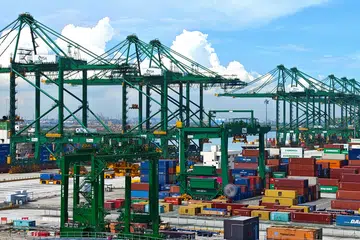
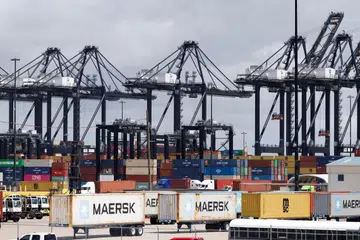
There is no doubt that trade and investment ties continue to be the driving force in Indo-American ties. Since 2001 the annual growth in US trade with India in goods and services has been 14 per cent and 17 per cent respectively. And between 2003 and 2012, US foreign direct investment (FDI) in India had grown nearly six times, while the Indian FDI in the US in 2012 was 15 times higher than it had been in 2003.
During Mr Obama's first visit to India in November 2010, he announced a series of business deals worth more than US$10 billion and similar announcements are expected during the upcoming visit.
Yet, when it comes to trade and investment, business executives in both countries have complained about the other country's policies. The American complaints centre on the issue of alleged Indian violations of intellectual property rights (IPR), while India has protested US anti-dumping measures and its attempts to link trade to labour and environmental issues.
ECONOMIC OBSTACLES
One of the major obstacles to the improvement of the economic ties between the two countries has been the pharmaceuticals sector. Indian drugmakers have been the target of investigations by the US Food and Drug Administration (USFDA), which accused them of IPR violations. At the same time, American pharmaceutical companies have been denied patents by India for their drugs.
It is doubtful that Mr Obama and Mr Modi would be able - or even try - to resolve these and other technical problems relating to their trade and investment policies during the upcoming meetings in New Delhi, although there has been some suggestions that the two parties would announce progress in the talks towards a bilateral investment treaty as well as a series of business deals.
Much of their negotiations would focus on three more areas of policy, in addition to economic partnership: defence (including cooperation in the fight against terrorism); climate change; and civil nuclear cooperation.
In a way, Mr Obama's visit to New Delhi comes at a time when the two governments are focusing on strategies aimed at reviving their economies and creating new jobs.
From the perspective of Mr Obama, one of the main goals of his visit that is taking place immediately after his State of the Union address which called for improving the lives of members of the nation's middle class, would be to demonstrate that contrary to the warnings of protectionists about the supposedly devastating effects of globalisation, America's growing trade and investment ties with India and other emerging economies is helping to strengthen the country's economic security.