Pope, Xi visits: Signs of changing times for US
Perhaps the time has come for Republicans to stop bashing Latinos and Chinese
SOMEONE has posted on the Internet a prediction that Cuban leader Fidel Castro supposedly made in 1973, that "the US will come to talk to us when they have a black president and the world has a Latin American Pope" (http:// m.snopes.com/fidel-castro-prophecy-quote/ ).
In response, many sceptics online have challenged the authenticity of this "prophecy". But even if the Cuban dictator never actually uttered those words, the notion that the decision to renew diplomatic ties between Washington and Havana was more than just a smart diplomatic move but a reflection of dramatic changes in American politics and the global balance of power makes a lot of sense.
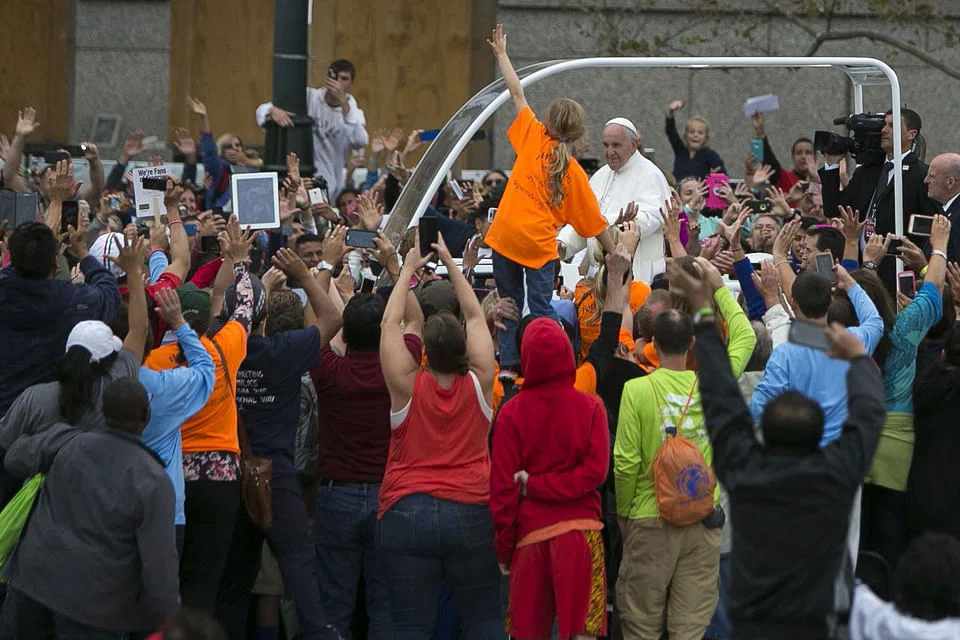
Indeed, the visit by the Latin American Pope Francis to the United States where he was welcomed by the African-American President Barack Obama and greeted by large crowds that included members of the growing Hispanic population in the country, was a sign that, as singer Bob Dylan put it once, "The Times They Are a-Changin".
It is difficult to imagine today that there was a time in America when Catholics - including immigrants from Ireland and Italy - were treated with suspicion, if not hostility, by many in the American Protestant majority. Anti-Catholic political movements that alleged that Catholics were more loyal to the Pope than to the US enjoyed support during the 19th and early 20th centuries when the Catholic Church was also identified with reactionary positions when it came to issues like religious freedom and women's rights.
But as the Catholic Church in the US went through a gradual process of Americanisation, and Irish, Italian and Polish immigrants assimilated into American society, attitudes towards Catholics changed - as was clearly demonstrated by the election of the first American Catholic President, John F Kennedy, in 1960.
These days Catholics occupy top positions in American society, including in politics and business. In fact, six of the Justices on the Supreme Court, including the Chief Justice, are Catholics (the other three are Jewish; there is not even one Protestant member of the court). Many of the leading presidential candidates, including former Florida Governor Jeb Bush, Florida Senator Marco Rubio, and Louisiana Governor Bobby Jindal, are devout Catholics, as are Vice-President Joe Biden, who is considering running for the president as the Democratic candidate, and the former and current Speakers of the House of Representatives, Newt Gingrich and John Boehner.
In fact, it was Speaker Boehner - who has just announced that he is leaving his position - who helped organise Pope Francis's historic address before Congress, the first time that any religious leader has delivered a speech in the chamber in a country where the principle of the separation between religion and state was enacted in the US Constitution.
And apropos Congress: It was a bit entertaining to watch both Republican and Democratic lawmakers being forced to resolve their respective forms of cognitive dissonance as they listened to the Pope.
Liberal Democrats were ecstatic when the Pope decried the kind of social-economic inequality that capitalism has produced and called for taking action on climate change and for welcoming all immigrants into the US; but they seemed less than excited about his conservative views on abortion and same-sex marriage.
For conservative Republicans it was the other way around: They applauded the Pope's stated opposition to legalising abortions and same-sex-marriage, but were dismayed by his progressive social-economic agenda and what seemed to be his support for legalising the status of the more than 11 million illegal immigrants - most of them from Mexico - residing in the country. A few conservative pundits went as far as bashing the Pope as - God forbid! - a "socialist".
The Pope may not be a socialist, but in the context of American politics his views on issues that top the policy agenda are clearly more aligned with that of President Obama and the progressive wing of the Democratic Party, and his call for the redistribution of wealth, the protection of the environment, is antithetical to the pro-free market positions of the GOP.
Moreover, Pope Francis hopes that providing citizenship to the illegal immigrants from Central America and allowing more Latinos to immigrate to the country will help increase the percentage of Catholics - which stand now at 23 per cent - and strengthen ties between Anglo America and Latin America. The role that the Pope had played in negotiating the diplomatic détente between the US and Cuba helped advance that goal.
And with the majority of Hispanic voters in the US backing Democratic candidates, it is not surprising that President Obama shares Pope Francis's goal of expanding the demographic and political power of Hispanics in the US, which eventually could transform the country into an Anglo-Latino nation.
And it is also not surprising that Republicans (who recognise that their electoral base consists of a dwindling demographic group of aging white Protestant voters) regard what the African-American President and the Latin American Pope see as good news - an America that is less white and more coloured - as a political nightmare.
Ironically, while the Republicans are investing their political energy at blocking the immigration of Latinos into the country, new numbers suggest that Asian immigration is now taking over as the major source of population growth.
A report from the Pew Research Centre concluded that the largest driver of US population growth over the next five decades would be immigration from Asian countries, with the expansion overtaking arrivals of Hispanics. Hence, by 2065, Asians are projected to become the largest immigrant group at 38 per cent of the immigrant population, surpassing Hispanics at 31 per cent.
Which brings us to the other important foreign figure who visited the US - Chinese President Xi Jinping - on almost exactly the same days that Pope Francis was there. Demonstrating the geo-strategic and economic significance in American global policy is the fact that Chinese President will be the only foreign leader to be honoured with two state dinners at the White House by President Obama.
And last week's state dinner attracted some of the top heads of Corporate America, including all the major high-tech titans from Silicon Valley led by Google chief Mark Zuckerberg and his (pregnant) Chinese-American wife.
It has become cliché of sorts to suggest that Sino-American diplomatic ties have become the most important bilateral relationship for the US, and that the two Pacific and global powers hold together in their hands the fate of the global economy, and that no major issue - climate change is one example; the financial system and cyber security are others - will be resolved without cooperation between the two.
In that context, the growing Asian-American immigrant population could play an important role in the evolution of Chinamerica - the evolving Sino-American economic synergy - in the same way that Latinos in the US could assist in the formation in a similar Anglo-Latino American collaboration.
So perhaps the time has come for Republicans to stop bashing Latinos and Chinese and - unlike Donald Trump - to see Hispanic immigrants and the relationship with China not as threats to American economic prosperity but as assets.
With the immigrant population rising to 78 million by 2065 (compared with 45 million today), the mostly Latino and Asian immigrants could help transform the US into a central global economic hub that connects Latin America and the Pacific and Atlantic regions.