Post-industrial capitalism calls for new economic model for Singapore
A mindset shift will be needed in order for the Republic to ride out the global and domestic trends that have rendered her economic policies outdated.
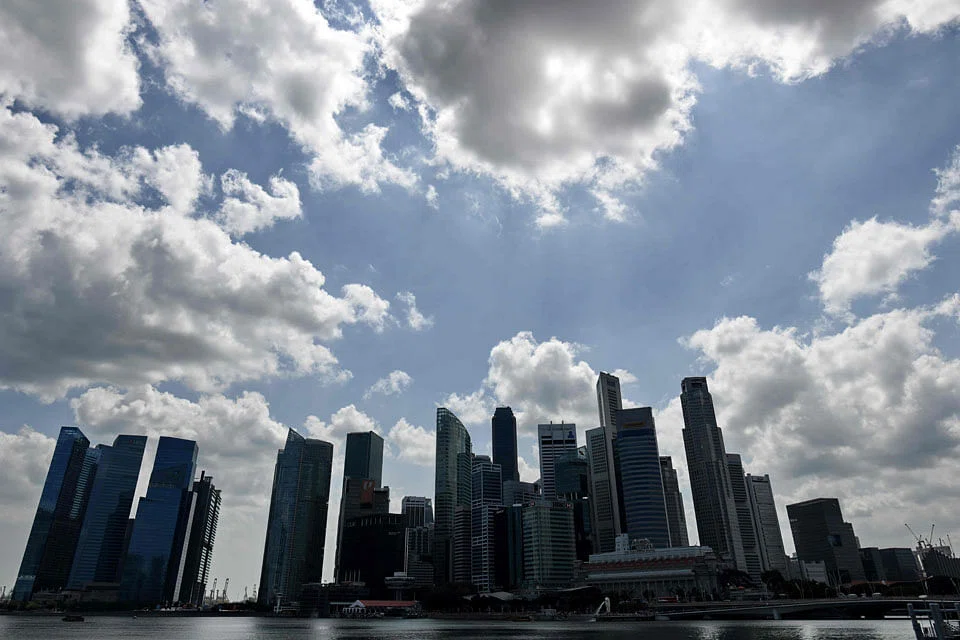
GLOBAL and domestic trends over the past several years indicate that Singapore's successful half-century of state-driven, export-oriented, multinational-led, manufacturing-focused economic growth has - or is soon to - run its course.
GLOBAL TRENDS
Recent developments reinforce this. The United States is embarked on policies - from tax reform to import tariffs and investment restrictions - that will reduce its international trade and investment.
It is particularly antipathetic to countries that operate state-owned enterprises and practise industrial policy, including targeting particular industries for subsidies, requiring foreign companies to transfer technology, giving international businesses generous tax breaks for activities that do not take place within the host country's borders, and running large trade surpluses (accumulating foreign reserves) through currency undervaluation and other "unfair trade practices".
The European Union (EU) and China protest that they, in contrast, are defending globalisation. But both also intervene in their home markets to protect and promote "national champions", with China promoting technological upgrading through its state-driven "Made-in-China-2025" initiative, and the EU vigorously curtailing tax-avoidance strategies by multinationals, and emulating the US in restricting investments and technology acquisitions by Chinese companies.
Meanwhile, manufacturing's share of the world and national economies continues to shrink, since consumption of services grows much more rapidly as incomes rise. At the same time, automation and other new technologies enable competitive production in otherwise high-cost final markets, reducing the attraction of complex globalised supply-chains.
DOMESTIC CONSTRAINTS
These external market and political constraints are not likely to diminish or disappear. But Singapore, as a now high-income developed country, also faces domestic constraints which inhibit continuation of past economic policies. We are a high-cost location experiencing slower GDP growth due to market saturation, an ageing population, diminishing returns to investment and lower productivity growth, at home and in affluent export markets.
Inequality increases in rich countries because the market returns to capital and skills exceed the returns to labour, exacerbated by skill- and capital-biased technological change, and by policies to attract global capital, which privilege capital at the expense of labour, including through pressures to reduce or restrain social spending to accommodate lower revenues.
In Singapore, additionally, a long reliance on "input-intensive" growth through adding foreign resources (labour, skills, capital) rather than increasing the efficiency of scarce domestic resources, further increases inequality by depressing wages of the lower-skilled while paying globally competitive salaries to high-skilled foreigners.
TECHNOLOGICAL DISRUPTION
Rich - and even not-so-rich - countries are also concerned about technological disruption from robotics, the digital revolution, artificial intelligence, biotech and the like, which could reduce employment, increase inequality, and already feed populist and regulatory pressures.
A growing "intangible economy" - based on value created by ideas, design, branding and software - requires heavy R&D expenditures that involve "sunk costs" (large and long-lived initial investment) and "spillovers" (benefits that the producer cannot prevent others from accessing), which increase risk and may discourage investment, lowering productivity growth.
These features privilege scale and scalability, contributing to a "winner-takes-all" economy, where technology both enables and encourages consolidation in large end-consumer markets (which Singapore is not), and facilitates rapid diffusion through distributed networks directly connecting producers and consumers, rather than hub-and-spoke arrangements (on which Singapore relies for an intermediary role).
EVOLVING ROLE OF THE STATE
With changing international policy norms, increasing national and sub-national "beggar-my-neighbour" competition for investment and lack of visibility, high costs and risks on the technological frontier, state industrial policy such as investment incentives targeted at particular sectors is no longer feasible or effective.
Instead, there are strong technocratic arguments and political pressures for states to expand and enhance social policies that can reduce inequality (thus deterring populism), help citizens transition when their jobs and lives are disrupted by technology or business model changes (deterring protectionism), and protect citizens' privacy and freedom of choice among alternative providers (preventing monopoly control).
Since innovation is the main source of growth at the technological frontier, and private entrepreneurship is the main driver of innovation in all societies, states should also refrain from "crowding out" the private sector (competing with it for scarce resources or final markets) through an expansive state role in production.
SCALE LIMITATIONS
Singapore faces added limitations due to small size. In a "winner-takes-all", platform-based tech economy with huge "network effects", the biggest companies - and countries - win. It has even been said that "China and the US are the world's only true technology superpowers; no other economies come even close", (in the view of Richard Ji, managing director of Asia All-Stars Investment, a HK-based venture fund that has invested in some of China's most successful tech companies, as reported in Fortune, Dec 1, 2017).
At the technological frontier, diversifying investments to reduce risks becomes even more necessary and costly, but Singapore's small market and talent pool mean a trade-off between scale and diversification reduces prospects of success and increases risk of failure. A small market also means increased monopoly concentration, which undermines competition, and hence innovation and entrepreneurship.
INNOVATION PERFORMANCE
www.globalinnovationindex.org regularly shows Singapore ranking No. 1 in innovation inputs, but much lower in innovation outputs (No. 17 in 2017) and even lower in innovation efficiency, or outputs/inputs (No. 63). This result holds even comparing Singapore only with other small high-income economies with similar population size and per capita income.
One possible explanation is that Singapore's home market is much smaller than its GDP suggests: indigenous GDP is only 55 per cent of the total, while household consumption was only 37.5 per cent of GDP in 2016, versus over 50 per cent for most other small high-income economies; income inequality is also much higher in Singapore, with a Gini coefficient of 46.4 versus 26 to 38 for nine other similar economies.
Another explanation for Singapore's relatively weak innovation performance is that the MNCs which dominate the economy are likely to do most of their innovation in their home countries, or in large final consumer markets, even if nominally headquartered here. Even the Economic Development Board (EDB), the government agency most responsible for attracting foreign investment, said recently that "Broadcom's CEO and leadership team have always been based in the US...for good business reasons", when the Singapore-registered company announced it was "re-domiciling" to the US.
LOCAL ENTREPRENEURSHIP
Singapore lacks the vibrant local private enterprises that elsewhere (for example, Sweden, Switzerland, Hong Kong) take the lead in driving innovation and even become global players, scoring low in the Global Entrepreneurship Monitor index (www.gemconsortium.org).
This could be due to "crowding out" by MNCs and GLCs, which are much more prevalent here. Local businesses must compete with foreign companies with scale and intangible advantages, which are preferred as suppliers and partners by other MNCs and GLCs, whose presence also raises rentals and labour costs, and diverts scarce talent into highly-paid secure salaried employment in government and corporate bureaucracies.
Lack of financing is a common complaint, reflecting: the high (nearly 50 per cent) share of corporate profits accruing to foreign entities that is not available for investment by local companies; the high share of savings devoted to home-ownership; banks' preference for funding tangible property (collateral) versus intangible ideas (risk); government agencies' preference to distribute large sums to a few established players with intangible assets they think are less likely to fail (meaning MNCs); and domestic capital's overall tendency to be rent-seeking rather than value-creating.
"Culture" has also been given as a reason for Singaporeans being less entrepreneurially-inclined than individuals in other small high-income economies: a kiasu attitude or "fear of failure" and risk aversion; social and intellectual conservatism and conformity leading to avoidance of "thinking differently", reluctance to challenge authority and established ways of doing things; devotion to hierarchy, particularly professional experts and political leaders drawn from an academic elite; an education system (high PISA scores!) geared to the past economic model; institutional inertia, bureaucratic entrenchment and complacency based on past success.
A NEW ECONOMIC MODEL
Since innovation and entrepreneurship are the only paths to advancement for mature developed (and even developing) economies, and arise from deep knowledge of the consumer and "user experience", Singapore needs to evolve a new economic model.
Most important is the need to become part of a large final consumer market, which is obviously the regional Asian consumer market, driven by consumption and services. This includes ageing high-income North-east Asia and fast-growing lower-cost South-east Asia, into both of which Singapore's increased domestic consumption would fit, stimulating innovation and stabilising our macreconomy.
Singapore's median indigenous income can approximate higher-end urban incomes in nearby megacities, while their lower productivity, middling incomes and technological leapfrogging can provide opportunities for rapid catch-up and productivity growth.
Locally-based private entrepreneurs should lead this effort. Funding needs of small and medium-sized enterprises (SMEs) and in services are affordable, while multiple startups in different businesses spread risk and raise chances of success. This will avoid the heavy "sunk costs" and big-scale-dependence of research-intensive MNCs and untested technology-oriented to competitive global markets, and mitigate rising income inequality.
Regional cultural knowledge and networks will give local SMEs an advantage over global players, and enable continuation of our intermediary role for extra-regional MNCs. I have discussed elsewhere (forthcoming in Maybank's ASEAN InsideOut, May 2018) how Singapore might go about developing capabilities to function across South-east Asia's disparate cultural and linguistic spaces.
Investments in the region by private venture capitalists can add global to regional capital, domain knowledge, experience and expertise, with a diversified portfolio of investments reducing risk.
What might be the role of the state in this new economic model?
Privatisation and downsizing of state entities would reduce "crowding out" of local private entrepreneurs and reduce the public revenue burdens and heightened risks of providing corporate subsidies in a changed global and technological environment.
A new industrial policy focused on developing (not protecting) local SMEs and facilitating their venturing out to South-east Asia - for example, by providing financing support to cover information and coordination costs - would likely not violate new international norms. And innovative new social policies - such as educational reforms, a stronger social safety net, and a reduced housing cost burden - could be devised to promote self-employment and entrepreneurship.
Above all, a "mindset shift" is required by society as a whole. To quote a successful Singaporean tech entrepreneur in Silicon Valley: "It took me about 15 years to shift out of the Singaporean safety/deference mindset. I think I have always had the abilities I have, but Singapore had suppressed it through school, national service, and the Singaporean corporate workplace ... It's hard to pick industries/sectors/regions. In five years, we will be talking about an industry we know nothing about today. New ones will come, old ones will go. I think it's more about creating a framework for innovation - they need to blow up the education system and start again. If you give people the freedom to think freely, ideas will flow. Let the people innovate and find their own niches/products/industries."