

Regime change may not be for the better
America's recent experience in the Middle East and the mess that its policies created in Iraq, Syria and Libya suggest that the conventional wisdom of ousting dictators is wrong
WHEN World War I, also known as the Great War, ended on Nov 11, 1918 the mood among members of the liberal elites in the political and literary salons of London, Paris and New York was quite upbeat.
It was true that the First World War - one of the deadliest conflicts in history, having lasted for more than four years and inflicted death and destruction across Europe and the Middle East - resulted in the deaths of more than nine million combatants and seven million civilians, including many young Brits, French and Germans.
But the war also led to the collapse of the oppressive regimes that had ruled the German, Russian, Austro-Hungarian and Ottoman Empires that were blamed for pursuing aggressive policies that ignited the costly and bloody wars.
Indeed, progressive intellectuals in the West bashed the Russian Czar Nikolai and the Germany Kaiser Wilhelm, using the same terms that American and European intellectuals apply today when they condemn the policies of Syrian President Bashar al-Assad and call for his ouster, or when not so long ago they were urging the West to overthrow the regimes of Saddam Hussein in Iraq and Muammar Gaddafi in Libya.
And the US president Woodrow Wilson - who persuaded the American people and Congress to join World War I to help the Allies, led by Britain and France, defeat the Central Powers of Germany and Austro-Hungary - pledged that the victors would rid the world of the autocrats and help usher in a new liberal order.
They would make the world safe for democracy, replace the German Kaiser with a liberal democratic government - the Russian Czar had already been deposed by revolutionaries before the United States entered the war - and allow for the subjects of the Austro-Hungarian and Ottoman Empires the right for national self-determination.
It would not be surprising if you experience a sense of déjà vu all over again after reading about Mr Wilson and his plans to remake the world along democratic and liberal lines. You are probably recalling a more recent White House occupant, former president George W Bush, who almost 100 years after Mr Wilson, made his own commitment to export liberal democracy to the world.
He launched a war to depose Iraq's Saddam as part of a plan to replace him with an elected democratic government in Baghdad, which was supposed to be the first step in advancing a Freedom Agenda in the Middle East under which the region's despots would be supplanted by leaders committed to the principles of free elections and the free markets.
Indeed, very much like the sentiments of Western liberals at the end of the Great War, the politicians and pundits in Washington were in an euphoric mood after the Americans "liberated" Iraq and ousted Saddam, and especially after the Iraqis went out to vote to elect their government in free and open elections.
In fact, there was a lot of talk about expanding the Freedom Agenda to Lebanon, the Palestinian territories, Syria and Iran, and to even beyond the Middle East through the so-called "colour revolutions" to countries such as Ukraine and Georgia, and perhaps even Russia and China.
Later on, following the start of the so-called "Arab Spring", the United States and other Western governments welcomed the collapse of authoritarian rules - that for years were considered to be America's allies - in Tunisia and Egypt, and then helped engineer the ousting of Libya's dictator Col Gaddafi - and even considered taking steps to remove Syria's Mr al-Assad from power.
We all studied in school about what really happened after the fall of the ancient regimes in Europe after the Allies defeated the Central Powers in 1918. The peoples of the Austro-Hungarian and Ottoman Empires were granted national independence, only to be drawn into never-ending conflicts between themselves, such as between Serbs and Croats, or Arabs and Jews, that continue to dominate the news today.
The fragile liberal democracies in Germany, Austria, and Italy and most of Europe were eventually replaced by authoritarian Fascist and Nazi regimes. The Russian Empire came under the control of a communist dictatorship. And those who had thought that Czar Nikolai and Kaiser Wilhelm were ruthless tyrants had to contend with new monsters such as Stalin and Hitler, and live under their horrific dictatorships. What followed was a new and more costly and more bloody world war when tens of millions were killed.
But we would not have to wait another century to figure out what would be the consequences of the crusade for democracy launched by Mr Bush.
No one would deny that Iraq's Saddam and Libya's Col Gaddafi were cruel tyrants who murdered many of their countrymen and were responsible for terrorist acts worldwide. But we also need to recognise that they and other autocrats that had ruled Middle Eastern countries - such as Egypt's Hosni Mubarak and Syria's Mr al-Assad - also helped maintain stability and ensure that radical religious, ethnic and tribal forces would not assert their power in a way that would result in domestic violence and civil wars.
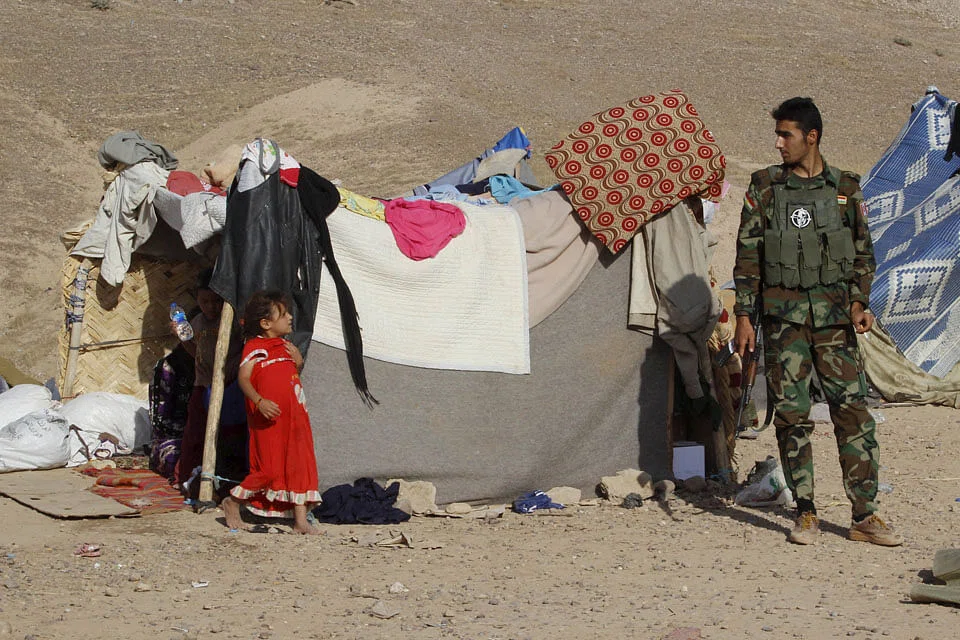
The choice in many of these countries was not between the rise of a liberal democratic leader a la Thomas Jefferson and the continuing rule of an oppressive regime. As the events that followed the Iraq War and later on, the Arab Spring, the collapse of the Arab dictators (which was engineered through either American-led regime changes or through pressure from anti-government political movements and ethnic, sectarian and tribal militias) led to civil wars between Sunni and Shiite Arabs and Kurds in Iraq and Syria and to tribal conflicts in Yemen and Libya. It also helped increase the power of various radical Islamist forces - such as the Muslim Brotherhood in Egypt, the Hezbollah in Lebanon and Hamas in Palestine, or the Islamic State in Iraq and Syria.
To put it in simple terms, the plans to democratise Iraq and the Middle East produced a strategic disaster that hurt US interests in the region and at the same time, strengthened the power of radical, violent and anti-American players that make Saddam and Col Gaddafi look like your friendly neighbourhood democrat.
In a way, that was probably the issue that the Republican lawmakers interrogating former secretary of state Hillary Clinton should have focused on during the hearing on Capitol Hill last week. The regime change in Libya instigated by the Obama administration that led to the ouster of Col Gaddafi but also led to the disintegration of Libya and detonated a tribal war that has engulfed the country and led to the killing of many Libyans and a few Americans.
From that perspective, the argument by leading Republican presidential candidate Donald Trump during a television interview this week, that the world would be "100 per cent" better with Saddam and Col Gaddafi still in power made a lot of sense.
In what could be described as the vision of a Trumpist foreign policy, the real estate magnate from New York proposed that US interests are more served by maintaining in power Arab dictators who keep order in their countries and keep Islamist terror groups in check than by a policy of regime change. Saddam "would be killing the terrorists" in Iraq today. Instead, US policy helped turned the country into "the Harvard of terrorism".
Mr Trump's comments may run contrary to the conventional wisdom that still dominates the foreign policy agendas of many Republicans and Democrats who believe that ousting dictators serves US interests and is in line with American values. America's recent experience in the Middle East and the mess that its policies created in Iraq, Syria and Libya suggest that that conventional wisdom is wrong.
TRENDING NOW

Gas Supply may pursue remedies if contract breached following Indonesia’s export cuts: Tan See Leng

Why the biggest business decision about AI isn’t which model to choose

If Europe goes to war, the fallout will be felt in East Asia
Singapore expects all parties to honour commitments, says PM Wong after Indonesia cuts gas exports

