Resilient infrastructure key to safer cities
The paradigm shift from system resistance to resilience is a move to a promising framework to cope with uncertain future shocks of unexpected magnitudes.
SINCE a power outage caused a three-hour suspension of trading at the Singapore Exchange on Nov 5, 2014, and flash floods hit Orchard Road after torrential rains in December 2011, there has been increased scrutiny of the reliability of existing infrastructure systems. In recent years, the increased occurrences of train faults have also introduced occasional episodes of inconveniences into the daily commuting lives of Singaporeans.
Of course, other parts of the world, including advanced nations, are not spared the occasional disruption to their infrastructure systems. System disruptions of substantial magnitude were recently observed in the UK in December 2014, when a computer glitch at its national air traffic control centre disrupted hundreds of flights; and in Amsterdam, when a power outage affected trains, trams, traffic, airport operations and hospital operations in March 2015.
Infrastructure is a system of networks that provides energy supply, transportation, communication, banking, finance, emergency and other services, which form the "backbone" of urbanised societies. Particularly for small, well-organised, and prosperous (Swop) and densely populated countries such as Singapore, their well-being and development depends on the reliability of the infrastructure systems.
A nation's well-being and prosperity hinges on the safety, functionality and resilience of its critical national assets; it is because of this that the inaugural Interpol World 2015, held on April 14-16 in Singapore, featured Safe Cities as one of the themes of the congress.
With rapid urbanisation, human activities are concentrated in cities and clusters that are centres of economic and social activities. The growth of economies and population has resulted in increased densities of population, infrastructure, and energy and material turnover that were never experienced before. More importantly, the increase in population density paired with the increase in the interdependency of infrastructure systems have amplified the emergence of infrastructure systems disruptions.
The increasing complexity and interdependency of infrastructure systems calls for innovative approaches to make these systems more resilient.
UNDERSTANDING INTERWOVEN SYSTEMS
An improved understanding of complex, interconnected infrastructure systems could shed light on their limit state behaviour. The industrial revolution developed an efficient transport system. By the end of the 19th century, electrification emerged in an area-wide system, supplying energy and fostering innovative methods of production and utilities management. Built upon those systems, novel types of production, financial, governance and emergency systems emerged. And since the 1980s, the information and communication technology (ICT) system has triggered a new phase of infrastructure development and emergence.
As those systems are interdependent, a trigger such as a flood could disrupt the transportation and ICT systems - which use the same physical structures - triggering a failure of the energy system, which causes a shutdown of the transportation and ICT systems, spreading to other interdependent systems such as the financial system.
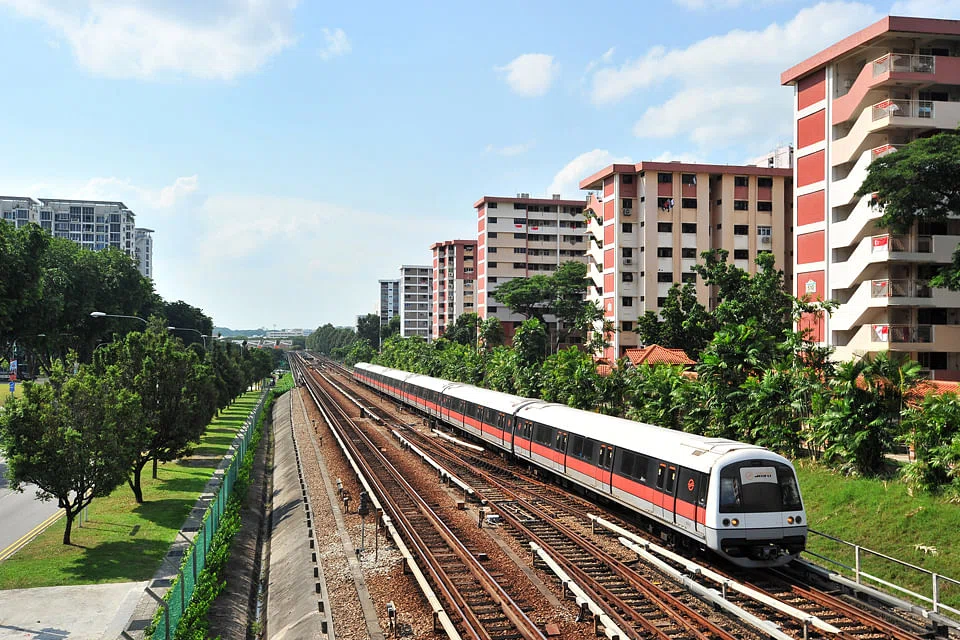
Singapore's MRT is a good example of a cluster of systems. Its foundation, or the base system, consists of the rail system that the trains run on. The energy system provides the power to operate the trains, the stations, and the facilities, while the transaction system handles automated entries and exits, and payment. The automatic control system controls when the trains stop at the stations, allows commuters to board and alight, depart and stop in an emergency, while the communication system provides operational and emergency information to commuters. The energy, information and communication technology systems link the various systems, and it is important to recognise these links.
Those systems are not only engineered systems, but are so-called "socio-technical" systems, whereby each system is made up of an engineered system, an operating organisation and the system of users. Hence, the ability to develop a robust system hinges on the ability to understand the engineered system, the interaction between systems, and the behaviour of people who operate the systems.
To validate the importance of understanding the user of the systems, analyses of large-scale disruptions - such as Nasa's Columbia and Challenger explosions, toxic leaks at Bhopal, and radiation contamination at Fukushima - have demonstrated that user sub-systems are often the weak link that triggers these catastrophic failures.
BUILDING RESILIENT SYSTEMS
The increasing range of hazards that threatens and strains infrastructure systems now extends beyond natural, technological, economic, financial, social, or geopolitical factors, but also includes cyber and political threats.
Recognising the potentially far-reaching effects of cyber threats, the Cyber Security Agency (CSA) was set up on April 1 this year. Said Deputy Prime Minister and Home Affairs Minister Teo Chee Hean : "If you look at any sector in Singapore, be it healthcare, transportation, power systems, water supply - they all are cyber enabled in one way or another. And so, the cyber world permeates many sectors in Singapore and have become increasingly interconnected."
The traditional approach to guard against external and internal disruptions has been to design a system for resistance against high magnitude-low probability disruptions up to an upper limit, based on statistical analysis. However, with the increasing uncertainty of trigger events and responses, as well as the increasing connectedness of systems in today's "hyperconnected" world, complex infrastructure systems face new challenges.
When the tsunami hit Fukushima in 2011, its magnitude was definitely beyond what Japan was prepared for. Disruptions that are beyond statistical thresholds, commonly known as "outliers", "black swans" or "dragon kings", can and do occur, and can rarely be predicted with traditional methods. Albert Einstein once said: "We cannot solve problems with the same kind of thinking we used when we created them."
Today, infrastructure system resilience is an emerging concept that enhances the "resistance" view, to enable a system to cope with increasing uncertainties. A resilient system would have the capacity to absorb shocks and recover from the effect of the disruption, learn and adapt to such disruption, and eventually self-modify such that it exceeds its original performance. Such a design would, in fact, follow the model of a biological system.
This paradigm change from system resistance to system resilience is a move to a promising framework to cope with uncertain future shocks of unexpected magnitudes. It is upon this framework, in addition to the socio-technical perspective, that the Future Resilient Systems (FRS) was established in 2014. With improved understanding of the behaviour of complex systems, the FRS seeks to develop the capability to model and predict their behavioural patterns, so as to make interdependent infrastructure more resilient.
The FRS is a project under the Singapore-ETH Centre, which is established by ETH Zurich (Swiss Federal Institute of Technology in Zurich) and the National Research Foundation (NRF) of Singapore under the NRF's Campus for Research Excellence and Technological Enterprise. The FRS brings together ETH Zurich, NUS, NTU, SMU and Swiss-based Paul Scherer Institute.