

Saudi-Iran rivalry threatens to upend Middle East politics
A shared hostility against Iran among Washington, Riyadh and Tel Aviv, along with growing domestic unrest and rising nationalism, could destabilise the region.
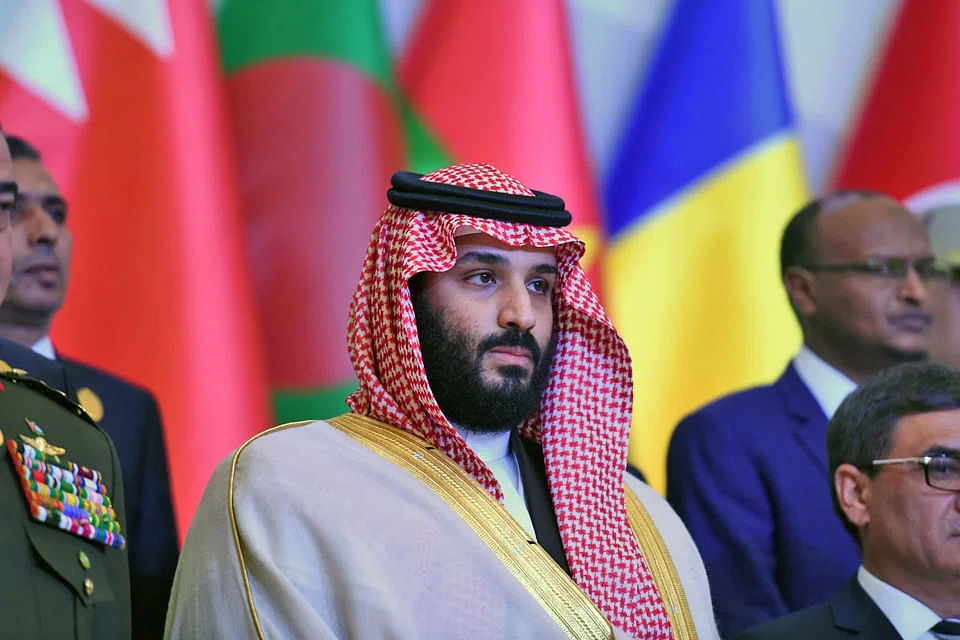
THE crystal ball for 2018 reveals that the Islamic heartland is where the winds of change now blow at gale force. Shifts in alliances around the rivalry between Saudi Arabia and Iran have accelerated change, ensuring the region will witness greater conflict and uncertainty. On one side is Saudi Arabia, the United States and Israel. On the other is Iran, Russia and Turkey.
Two historic events of 1979 continue to impact the region. First, the Islamic Revolution in Iran shifted the one-time staunch US ally to being a target of sanctions. Incipient Saudi-Iran rivalry assumed a sectarian edge. After the 1990s, the US "dual containment" policy also included Iraq, which suited both Saudi Arabia and Israel.
The second was the Soviet intervention in Afghanistan, bringing the US Central Intelligence Agency, Pakistan's Inter-Services Intelligence and the Saudi General Intelligence Directorate in a partnership that used the concept of "jihad" to raise, indoctrinate, train and equip the "mujahideen" in a generously funded covert war to fight so-called "infidel communists" in Afghanistan. The blowback created Al Qaeda just as the US intervention in Iraq in 2003 spawned the Islamic State.
The Arab Spring in 2011 created a fluid environment taking the United States and the region by surprise. The Gulf Cooperation Council and the United States were supportive when the pro-democracy movements unseated President Ben Ali in Tunisia and dictator Muammar Gaddhafi in Libya. Saudi Arabia saw an opportunity for regime change in Syria where the Alawite regime of Basher al Assad had enjoyed Iranian support. Hardline Salafi groups also emerged in the region and morphing, many with active Saudi and Turkish support.
The calculus changed when the reformist Muslim Brotherhood emerged as the biggest gainer in the region, especially in Egypt. Given the links between the Brotherhood and the Turkish Justice and Development Party, Turkish leader Tayyip Erdogan saw an opportunity, but Saudi Arabia and Israel were uncomfortable. In the back-pedalling, a military coup ousted Egyptian President Mohamed Morsi in 2013, a development viewed with satisfaction in Riyadh, Tel Aviv and Washington.
Events accelerated in 2015. In January, 79-year-old King Salman bin Abdul Aziz - the last of the Sudairi seven, a power centre of seven Saudi brothers - took over in Riyadh. His 30-year-old son Mohammed bin Salman, or MBS, became defence minister. In March, MBS launched a massive air blitzkrieg in north Yemen, alleging that the Islamic Revolutionary Guard Corps were actively supporting the Houthi rebels. 2½ years later, the fighting has claimed 9,000 casualties with seven million people facing starvation.
Notwithstanding, MBS continued his meteoric rise, becoming deputy prime minister and head of the Economic and Development Affairs Council with oversight over oil giant Aramco, deputy crown prince and crown prince, putting him next in line for the throne.
In Iran, reformist President Hassan Rouhani provided an opportunity for negotiations with the international community, leading to the 2015 nuclear deal Joint Comprehensive Plan of Action (JCPOA), which imposes strict constraints on Iran's nuclear activities while providing sanctions relief. The deal was universally welcomed. However, Israel and Saudi Arabia criticised it for ignoring Iran's missile programme and growing regional influence and for marking a break from the US containment policy.
Fast forward to 2017. In US President Donald Trump, MBS found a kindred spirit who shares his paranoia about Iran. He was quick to build ties with Mr Trump and his son-in-law, Jared Kushner. During a May visit to Saudi Arabia, Mr Trump supported the Saudi war in Yemen, backed the idea of a Saudi-led Sunni military alliance and named Iran as the destabilising influence in the region, even as Riyadh signed a clutch of defence deals worth US$110 billion.
SHIFTING ALLIANCES
MBS's efforts to rally the Gulf Cooperation Council into an anti-Iran posture have fractured the organisation. In June, together with Bahrain, Egypt and the United Arab Emirates, Saudi Arabia severed diplomatic and economic relations with Qatar, which has traditionally enjoyed closer ties with Iran and hosts a number of Muslim Brotherhood leaders in exile. Qatar also hosts the largest US military base in the region: Al Udeid has more than 11,000 US servicemen and more than 100 aircraft. On Nov 26, Nato member Turkey and Iran agreed on joint measures to facilitate transit among the three countries to ease the Saudi-imposed blockade.
Mr Trump's decision in October to withhold certification of the Iranian nuclear deal, a demand imposed by the US Congress, has jeopardised the agreement. His rationale is not that Iran is violating the JCPOA, but that the deal needs tightening and should also restrict missile development and Iran's regional role. European allies, Russia and China criticised this decision. Without a resolution, US sanctions were triggered in mid-January, placing the United States in violation of UN Security Council Resolution 2231 and freeing Iran from the onerous International Atomic Energy Agency inspection regime.
Iran could counter concerns by continuing with the JCPOA inspection regime though the hardliners would oppose such a move.
In an unprecedented move, hours after MBS was named head of a new anti-corruption agency on Nov 3, more than 200 prominent members of the royal family including ministers and business leaders were detained on corruption charges. Prince Mutaib bin Abdullah was sacked as head of the National Guard, a special force for safeguarding the regime. In June, Crown Prince Mohammed bin Nayef, also interior minister, had already been sent packing. For the first time in Saudi history, there is complete consolidation of the security agencies - the armed forces, National Guard, intelligence and police - under one faction of the royal family.
MBS opened another front in Lebanon when Prime Minister Saad Hariri landed in Riyadh and on Nov 4 announced his resignation. MBS was reportedly unhappy at Mr Hariri's soft posture on Hezbollah. After an "enforced" detainment of nearly three weeks and intervention by French President Emmanuel Macron, Mr Hariri returned to Beirut and withdrew his resignation.
Tensions escalated when a missile fired from north Yemen landed near Riyadh's airport. Saudi Arabia blamed the Iranian Revolutionary Guard and Hezbollah for smuggling the weapon into Yemen, calling it "an act of war". Iran has rejected the allegations.
Russia has meanwhile reasserted its presence in the region. Its war on the Islamic State and other Syrian rebels ensures that Mr Assad will stay for the time being. Turkey is coming around to accepting this, recognising that Mr Assad's ouster may create a Kurdish-dominated Rojava on its southern border. A Russia-Iran-Turkey axis is emerging. The Kurdish referendum in northern Iraq in September has the potential of undoing the borders created after the fall of the Ottoman Empire.
The shifting sands of alliances - a shared animus against Iran between Mr Trump, MBS and Israeli Prime Minister Benjamin Netanyahu, along with growing domestic unrest and rising nationalism - could bring the region to a tipping point in 2018. YaleGlobal
TRENDING NOW

Stocks to watch: CapitaLand Ascott Trust, Keppel Infrastructure Trust, iFast, ESR Reit, First Sponsor
Indonesia says gas export cuts to Singapore remain within contract terms

If Europe goes to war, the fallout will be felt in East Asia

Government to bring forward raising of retirement age, give employers more financial support to create flexi-load jobs

