

Singapore can shine in a post-Brexit world
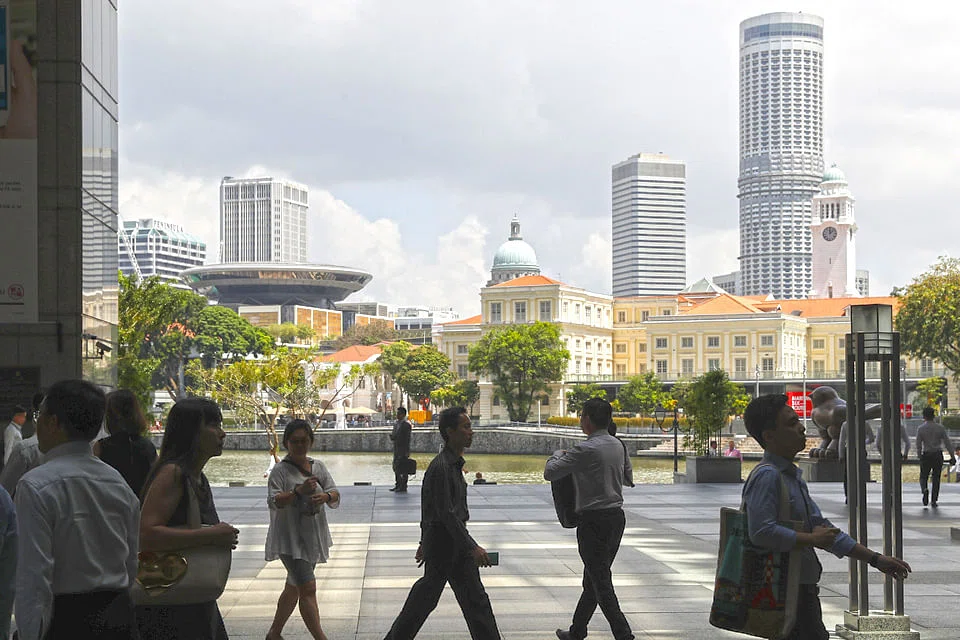
TODAY marks the mid-way point of when the United Kingdom first invoked Article 50, Britain's two-year extrication process from the European Union (EU). There is still one year left before the UK officially leaves the EU, but the looming spectre of Brexit still presents much uncertainty in global markets, lingering doubts over Britain's future and several unanswered questions over the impact on the rest of the world, including Asia.
This presents opportunities for Singapore as it looks to grow its financial and insurance sectors.
Uncertain times
The simple fact is that businesses don't like uncertainty and Brexit is one of the greatest socio-economic uncertainties in modern times. The threat of a "hard" exit from Europe for the sixth largest economy in the world creates discomfort among investors and casts a large shadow over global financial markets.
There is hope that Britain's inevitable departure will be smooth and amicable. Recent negotiations have seen the breakthrough establishment of a transitional period until the end of 2020 which should hopefully prevent the "over-the-cliff" Brexit scenario. This is a boon to businesses where now there is more time to secure the necessary rights, infrastructure, licences and contracts for business continuity.
This is particularly striking in the insurance industry which is in the business of mitigating uncertainty and protecting against risks. Through the nature of our industry, Lloyd's is one of the few global corporations that can make a strong claim of having a greater social purpose; after all, we enable human progress by insuring investments for the future. However, with no defined legal framework yet and a trepid investment outlook for a post-Brexit Europe, insurance contracts across the continent will remain at risk unless there are clear and defined agreements established post-Brexit.
The complexity of business restructuring for a post-Brexit Europe is vast. In the insurance industry, this may involve the acquisition of or the establishment and authorisation of new insurers in Europe, re-domiciliation (such as by cross-border merger or Societas Europaea transfers), and portfolio transfers. Many have already begun the process.
Ensuring our future
Lloyd's global CEO Inga Beale has been outspoken on Brexit. We recognise the need to get such issues resolved and as a hedge, we were one of the first major global financial services institutions to initiate a contingency subsidiary in Brussels (along with QBE) and take our future into our own hands. Specialist insurers AIG, RSA and Hiscox have also done the same in Luxembourg, while Beazley and Chaucer have chosen Dublin. Paris and Frankfurt seem to have less appeal in the insurance world but are nonetheless big attractions for the banks and financial exchanges.
We chose Brussels as the location for our new insurance company to provide single market passporting continuity. The new subsidiary is a significant undertaking, with 130million euros (S$211m) in capital. It is a fully-fledged insurance company, entirely capitalised and compliant with Solvency II, using a standard formula, meeting all governance requirements, with staff in Brussels, and its own C-suite and board. We can foresee a case where we actually increase the amount of business we are writing for the EU through our new subsidiary.
Singapore's opportunity
In contrast to cautious European markets, according to figures by the Monetary Authority of Singapore (MAS), Asia is likely to grow and account for almost 40 per cent of the world global insurance market by 2025. Singapore is now Lloyd's largest hub outside of London and, along with Hong Kong, is the reinsurance gateway to Asia Pacific. Singapore has also become the second largest market for structured credit and political risk worldwide after London.
Outside of Singapore but within Asia, the launch of regional development initiatives such as One Belt One Road (OBOR) also bodes well for business. You can see the formation of infrastructure consortiums bringing together Singapore-based insurers and brokers that will provide specialised coverage and risk management for OBOR projects across Asia Pacific.
Some observers have commented that before Singapore can be mentioned in the same breath as London and New York, it must build up its capabilities in specialist areas of insurance, but in fact that is already happening at a rapid pace. The MAS has addressed its catastrophe bond gap and is kick-starting the development of the city-state's Insurance Linked Securities (ILS) market by funding 100 per cent of the upfront costs through a grant programme that began this year. The MAS has also been continuously and actively putting into place policies to promote digital innovation - the country welcomes insurtech companies and encourages them to plant roots in Singapore. In addition, the Singapore government has established training programmes in different insurance specialist areas. The Singapore government should be lauded for creating an industry-friendly regulatory environment, constantly evolving to meet changing needs.
As an insurer, it is an exciting time to be in Singapore. We continue to see innovation and development of technology, expanding cross-border trade, and increased infrastructure development in Asia, all of which will drive demand for insurance solutions to mitigate a variety of growing business risks. Rising asset values, aging populations, and vulnerability to catastrophe will also increase the human need for more security. Did you know that a person in Asia-Pacific is five times more likely to be affected by a natural disaster than someone living in other regions?
It's ironic that the insurance industry, which aims to mitigate risk and uncertainty, is now faced with one of the biggest global uncertainties about its future. While London is and will remain an important global financial centre, global market changes have precipitated in new opportunities for Singapore. There is no better time than now to be in Asia, and I believe that Lloyd's, with our substantial footprint in the region, is well-positioned for growth.
TRENDING NOW

Grab CEO’s wife Chloe Tong on life with Anthony Tan and finding her purpose

Singapore-based Ryde accused of pump-and-dump fraud in class action lawsuit

Malaysia’s F1 return: A low-cost second chance, possible Singapore boost

Canada is upping oil flows to Asia, but South-east Asia’s refineries aren’t ready to handle them yet

