

S'pore's unique tack on financial globalisation
It's a pragmatic and opportunistic approach rather than ideology-driven, with a willingness to alter or even reverse policy actions if and when the need arises.
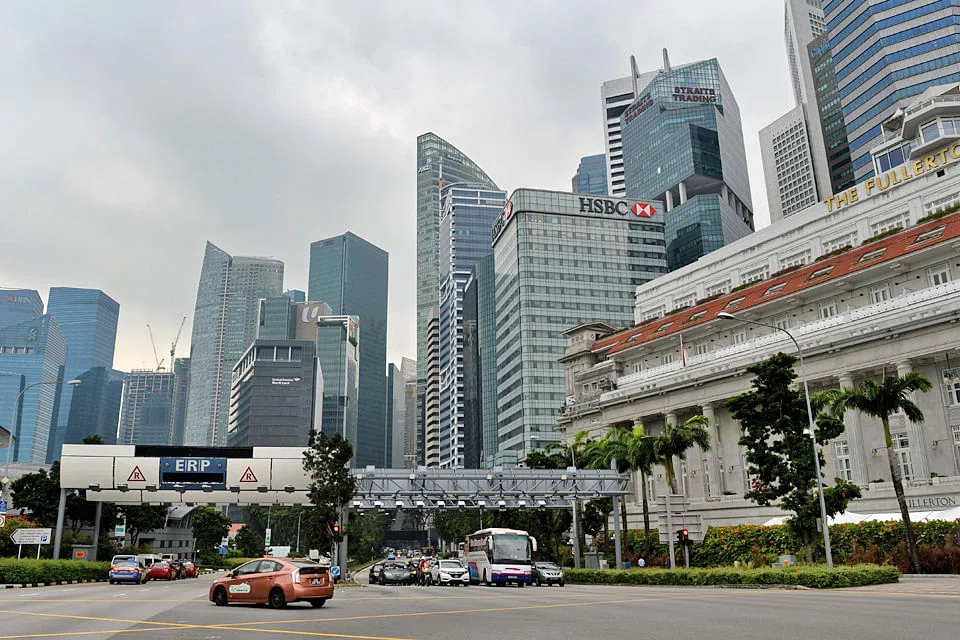
ACCORDING to the 2016 update of the Global Financial Centres Index (GFCI) compiled by the London- based research firm Z/Yen Group, Singapore is ranked third out of 86 global financial centres after London and New York, and marginally ahead of Hong Kong.
Singapore's ascendancy into the world's elite financial centres is a notable achievement, considering that it was only in the late 1960s that the Republic began to proactively establish itself as a financial centre.
Today, the financial services sector accounts for about 13 per cent of the country's gross domestic product (GDP) directly, 14 per cent of its services exports, and 6 per cent of its employment. It has also been a significant growth driver in recent times, the current headwinds confronting banks notwithstanding.
In recognition of its importance, the government has identified the financial sector as one of five growth clusters to build on for the future (along with advanced manufacturing, applied health sciences, smart and sustainable urban solutions, and logistics and aerospace).
What is also noteworthy about Singapore's rapid rise as a global financial centre is that the liberalisation process was relatively smooth without any periods of major domestic financial instability. In contrast, many other countries that have undertaken financial sector liberalisation have experienced a post-liberalisation cycle of explosive growth and eventual crash.
In view of this, it is not surprising that senior policymakers from many other countries that are keen on developing their own financial centres (especially in West and Central Asia) have made a beeline for Singapore to learn from the city state's experience.
Financial globalisation: a multidimensional concept
Looking at Singapore now, it is understandable if a casual observer of its financial sector assumes that the Republic's success is due to an aggressive and wholehearted embrace of financial globalisation. However, such a takeaway would be completely erroneous.
Singapore's rapid yet stable development as a leading financial centre has been driven in no small part by its unique approach to financial globalisation.
In particular, there appears to have been an early recognition by the Republic's policymakers that financial globalisation is a multidimensional concept, encompassing at least three important dimensions: namely capital account deregulation, internationalisation of the financial sector, and currency internationalisation - and Singapore had a set of policies to deal with each of these areas.
Specifically, while Singapore deregulated its capital account by the mid-to-late 1970s, unlike many other emerging economies, it did not face adverse consequences of such openness in the form of excessively volatile currency movements as it had put in place a policy of non-internationalisation of the Singapore dollar since 1981.
This policy - whereby banks required permission from the Monetary Authority of Singapore (MAS) for any form of lending to non-residents above S$5 million - likely helped ensure that Singapore's exchange-centred monetary policy could be effectively pursued in its early stages.
The negative side effect of such a policy of non-internationalisation, though, was that it hindered the development of Singapore's capital markets as non-residents may have been deterred from holding on to Singapore dollar- based portfolio assets overseas. Thus the policy was gradually loosened over the years and effectively removed by 2004.
Dual banking structure
Singapore also managed to avoid the other potential adverse consequence of capital account liberalisation that has plagued so many economies, including Thailand in 1997-98. The domestic economy was largely sheltered from significant short-term bank flows due to a dual approach to the banking sector.
In particular, on the one hand, the so-called Asian Currency Unit (ACU) was created in 1968, whereby banks domiciled in Singapore were allowed to deal in all currencies except the Singapore dollar (so-called Asian Dollar Market or ADM). The ACU was open to both domestic and foreign financial institutions and subject to minimal regulation as well as being excluded from needing to maintain statutory reserves for deposit liabilities in the ACU.
In contrast, MAS maintained extremely stringent controls on the domestic banking unit (DBU) to ensure that financial stability was not undermined by an open capital account. So concerned was MAS about financial stability that it made clear that not only must financial institutions in Singapore observe the rule of the law but they must also heed the "spirit of the law".
While this effectively gave MAS a great deal of power to take actions to ensure financial stability as it saw fit, it likely also stifled domestic enterprise and innovation in the financial services sector, although the tradeoff was viewed as acceptable in the Republic's nascent stages of financial development till the early 1990s.
Liberalisation of the banking sector
MAS responded to the global wave of financial liberalisation in the 1990s by implementing a carefully calibrated programme that permitted foreign banks that met certain qualifying criteria to become full-licence banks in the early-to-mid 2000s.
The fact that Singapore's banking and overall financial sector was relatively unscathed by the deep regional crisis of 1997-98 likely gave the Republic's policymakers a renewed belief in the robustness of their prudential regulations and strength of their financial institutions.
In addition, the collapse at that time of the immediate hinterland (Malaysia, Thailand and Indonesia) led Singapore to aggressively sign free-trade agreements (FTAs) with many countries including the US and the European Union (EU). These FTAs required Singapore to open up its domestic banking sector on a reciprocal basis.
The banking crises in regional countries in South-east Asia and the consequent opening up of the banking sectors to finance restructuring and recapitalisation, along with the expected eventual liberalisation of the sector in China and India, also implied that there were going to be significant opportunities for local banks to expand overseas in the new millennium.
However, the belief was that Singapore banks needed to be scaled up significantly if they were to be able to exploit these new opportunities. MAS also felt that safe and sound domestic banks with their roots in Singapore would act as bulwarks during times of difficulty, and help contribute to domestic financial and macroeconomic stability.
Thus there was a strong desire to ensure that there remained a few large, well-capitalised and competitive local banks with a significant share of the domestic market after the introduction of foreign bank competition.
Following a series of acquisitions and mergers, Singapore was essentially left with three large domestic banks - DBS, OCBC, and UOB - all of which have been able to withstand the surge of foreign banks into Singapore over the last decade. These banks have, to varying degrees, thrived in the more liberal domestic market as well as in their overseas expansions in Asia.
At the same time, many foreign banks have become significant participants in the wholesale banking market and in wealth management in particular. The early 2000s was also a period of generally greater liberalisation of all dimensions of the financial sector as Singapore's goals moved from being a regional financial centre to a global one, consistent with the Republic's ambition to become a global city.
Current challenges
Overall, as we can see, while Singapore today has a dynamic and extremely internationalised financial sector, its approach to financial liberalisation has been anything but laissez faire. The policy steps taken have been carefully calibrated, dictated by pragmatism and opportunism rather than ideology, and there has been a willingness to alter or even reverse policy actions if and when the need arises.
However, as Singapore has now fully embraced all dimensions of financial globalisation and is well positioned to benefit from new global opportunities, it is much more susceptible to the vagaries of the international financial markets.
At a micro level, this puts much more pressure on the financial regulators to uphold high standards of supervision of financial institutions, identifying and managing risks proactively without impinging on Singapore's reputation of being a business-friendly environment.
At a macro level, one can expect more frequent use of macroprudential policies, though the concern here is that such policies at times tend to be viewed as being ad hoc, rather discretionary, and can have unintended consequences.
TRENDING NOW

Once staunchly pro-China, Malaysian Chinese businesses are now distancing themselves from Beijing

Britain’s mansion tax shows the difficulty of targeting wealth

Three hats, one goal: How Ng Kian Swan runs sustainability at NUHS

COE review: The gap between luxury and mass-market cars isn’t the only one worth bridging

