

Thai unifying figure leaves lasting legacy
It was under King Bhumipol that Thailand moved from a mostly agricultural economy to a modern one of industry and commerce and a growing middle class.
 Add BT as a preferred source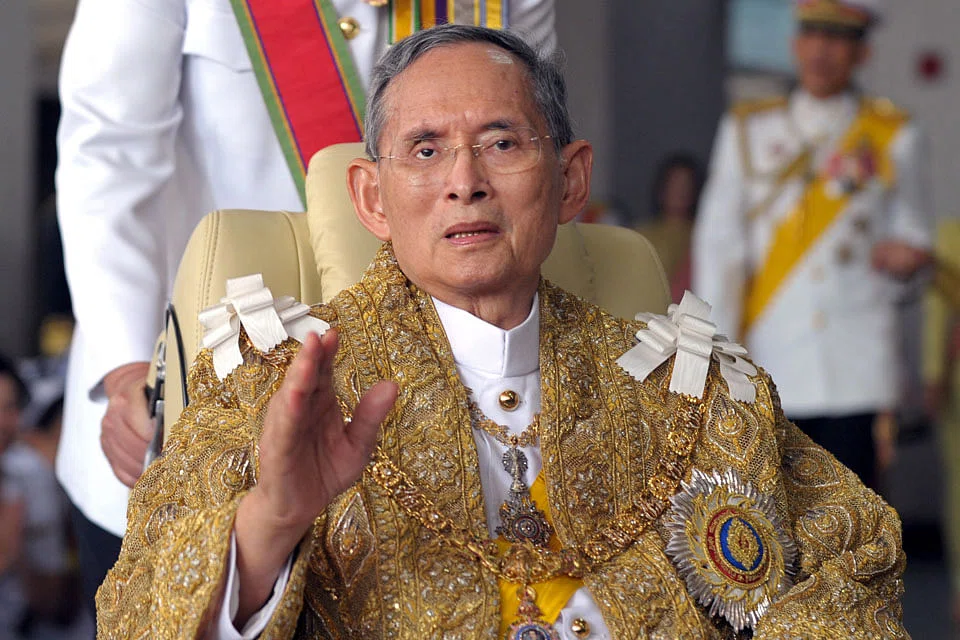
DeeperDive is a beta AI feature. Refer to full articles for the facts.
KING Bhumibol Adulyadej of Thailand, who took the throne of the kingdom once known as Siam shortly after World War II and held it for more than 70 years, establishing himself as a revered personification of Thai nationhood, died on Thursday in Bangkok. He was 88 and one of the longest-reigning monarchs in history.
The royal palace said that he died at Siriraj Hospital in Bangkok, but it did not give a cause or further details.
King Bhumibol, politically influential and highly revered, was a unifying figure in a deeply polarised country, and his death casts a pall of uncertainty across Thailand.
Share with us your feedback on BT's products and services
TRENDING NOW

‘Boring’ is the new black: The stars are aligning for a Singapore stock market revival

Near sell-out launches in March boost developer sales to 1,300 units after four slow months

China pips the US if Asean is forced to choose, but analysts warn against reading it like a sports result

Genting Singapore’s Lim Kok Thay receives S$7.5 million pay package for FY2025

