The essentials for a sharing economy
S'pore needs to draw up regulations to keep the sharing economy safe, yet business-friendly. An agency overseeing sharing and trust activities would also be ideal.
WHEN the Committee of the Future Economy rolls out its much-anticipated report later this month, the strategies and recommendations laid out will almost certainly be shaped by two global trends: the sharing economy, and trust as a measure of value.
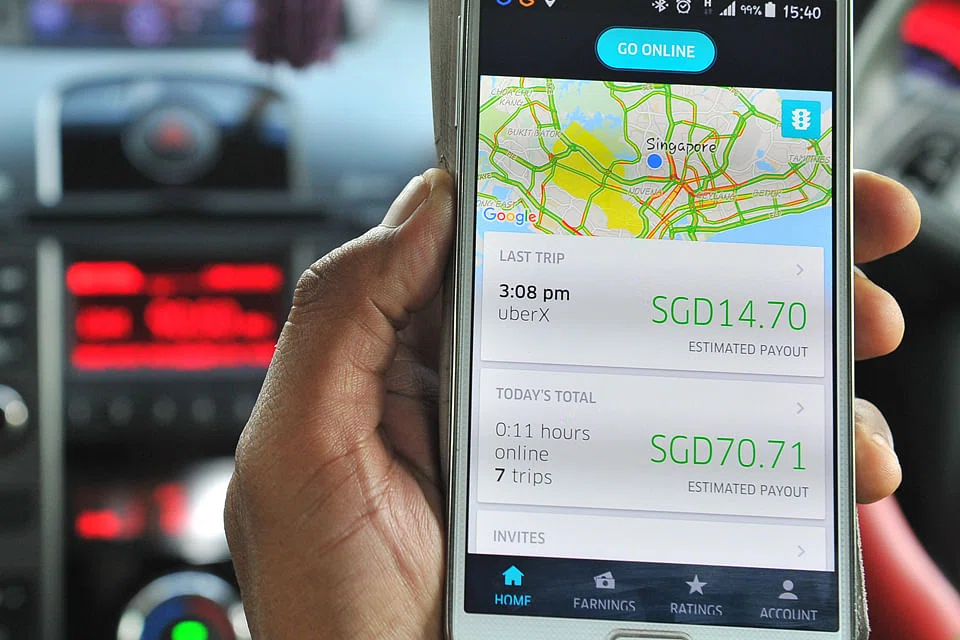
In the sharing economy, peer-to-peer lending platforms enable individuals to lend and borrow various goods and services from one another for a price. The better-known brands include platforms for financial crowd-funding such as Kickstarter and Indiegogo; accommodation-sharing such as Airbnb, VRBO and Couchsurfing; and ride-sharing via Uber or Grab.
Trust, a virtue, has become a currency in the online and sharing economy. It is the commodification of reputation, demonstrated by measurable scores of online ratings and reviews. It is facilitated by identity verification, which helps keep the providers and consumers of goods and services honest, facilitating transactions in the sharing economy.
The flipside of these two trends, however, comes in the form of safety and privacy concerns, and the impact on local communities. When an apartment or car is rented out, the owner can never be 100 per cent certain that the renters will be respectful and law-abiding, even if they have received prior positive reviews; in online purchases, there is no guarantee of the quality of the item.
Governments worldwide have begun instituting new regulations to deal with these issues. Apartment-sharing site Airbnb has been among the platforms affected, despite its claim that its service benefits the local housing market and has positive spillover effects for other sectors in the local economy. For example, Germany has banned regular short-term rentals in the most popular parts of Berlin on the grounds that such rentals are worsening the housing squeeze for locals; the London authorities have now enforced a 90-night limit for listings on the site, citing risks to housing supply in the city.
A similar problem has cropped up in Singapore. Housing and Development Board (HDB) and Urban Redevelopment Authority (URA) regulations state that when a home (HDB or private) is leased out, it must be for at least six months.
Infractions are on the rise. The URA took enforcement action against 44 unauthorised short-term sub-letting cases in private homes in the first six months of last year, an increase from the 23 cases in 2015 and 36 the year before that. In 2014, the HDB evicted two homeowners who had been caught leasing out their flats to multiple batches of tourists.
What needs to be undertaken for the sharing and trust economy to have a positive impact on the Singapore economy? First, the authorities have to expedite the development and implementation of regulations so that disruptive business models do not thrive by exploiting loopholes in laws. But apart from managing safety concerns for consumers, regulations need equally to be business-friendly to entice players, especially startups, into these emerging business niches.
The development in the transport sector could be seen as a potential way forward. Grab and Uber drivers will now be subject to new regulations - rather than punitive measures - in a move to address concerns over their skills and conduct. New drivers will be licensed under the Private Hire Driver's Vocational Licensing (PDVL) framework and go through a strict medical and background screening; they also have to attend and pass a 10-hour PDVL course and go for a three-hour refresher course every six years.
Taxi drivers, who have faced stiff competition from Grab and Uber, can switch to being private hire drivers after a two-hour briefing; they will also have to attend refresher and training courses under the revised Taxi Driver Vocational Licence (TDVL) framework.
Second, information-sharing is key. As more data is collected, especially in the marketplace, the authorities need to develop and have in place the infrastructure and analytics to safeguard information, and enable this data to be used in a meaningful way for businesses to develop. The connectivity and seamless transfer of requests, delivery and payments is at the heart of this digitised economy and resources have to be in place to ensure this.
In this area, there are already developments. When Singapore launched its Smart Nation initiative in November 2014, the ultimate aim was to create more openness of data and the notion of creating solutions. However, there is a shortage of engineers, computer scientists, cyber security experts and data analysts, which is a good indicator that this is a growing industry that would create employment opportunities.
These developments also offer fresh opportunities for those who want to switch careers and get retraining in infocomm and communications technology (ICT) skills.
In the area of trust, a greater sense of community ownership, participation and problem-solving on the Internet has come about, such as when netizens come together to deliver emergency supplies or to help in regional disasters or help those with special needs.
Third, a government agency that coordinates, promotes and supports sharing and trust economy activities is needed. One agency that could do this is the Smart Nation Programme Office (SNPO) under the Prime Minister's Office. This signals to ministries and other agencies that the initiative is vital for Singapore's continued growth.
Moreover, the Smart Nation initiative is looking for "needle movers" - big innovations that would push Singapore to the next level. One measure of how well and how fast Singapore can build smart solutions rests with a key facilitator, the Government Technology Agency Singapore (GovTech), which provides the technology know-how to the public sector in developing its own smart solutions.
GovTech drives the Digital Government, by building in-house software development capability, mobile apps and then creating the larger network and developing bigger software systems to run larger projects. Some 120 specialists in data science, engineering, coding and other areas form the central team that undertakes product design and development work. One recent example of a smart solution is the Business Grants portal, which will eventually be a one-stop shop for businesses at different stages of growth; it will list 12 grants from seven agencies.
Going forward, the government may have to take some risks, such as providing more useful decision-critical data and information for businesses to move the sharing and trust economy forward. But it has signalled in its Committee of the Future Economy and recent budgetary statements its willingness to work with other key stakeholders such as trade associations and chambers of commerce to do so. This can only mean well for Singapore's economic transformation.