The Reit market that defied the odds
Holding of properties from all over the world by Singapore property trusts means that the market has been able to grow beyond expectations.
SEVEN years ago, a senior banker predicted that the Singapore Reit (real estate investment trust) market had reached saturation as many blue-chip real estate companies had already listed their Reits and Singapore was so small. The Reit market capitalisation then was S$24 billion. Today it is S$68 billion. Life is like a box of chocolates, you never know what you will get.
How do you build a S$68 billion real estate market in 12 years, on an island that measures 50 km from east to west? By swimming out of our 193 km shoreline.
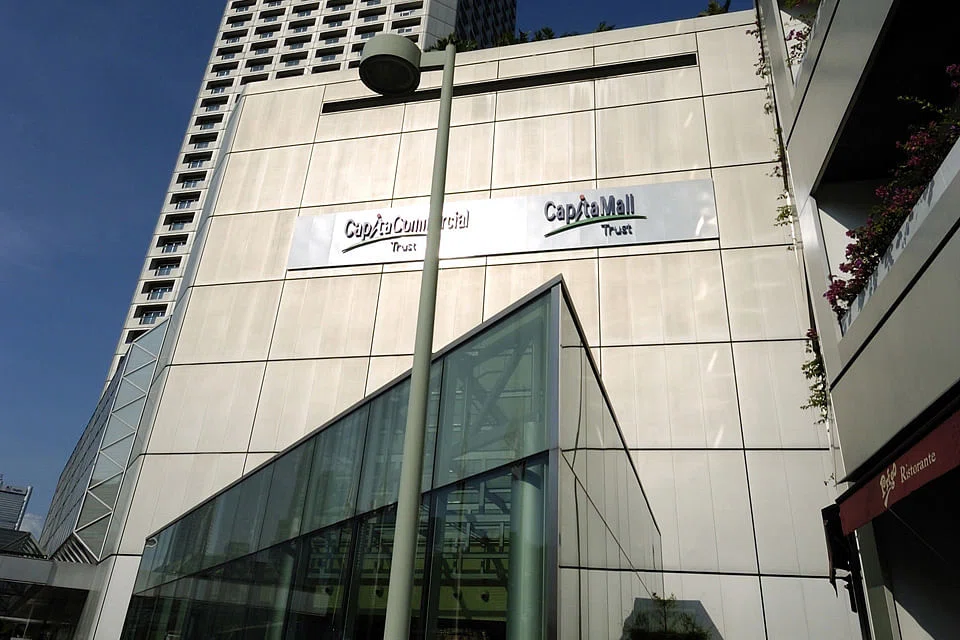
There are now 39 property trusts in Singapore, since CapitaMall Trust led the way in 2002. After Japan, Singapore is now the second largest Reit market in Asia, and twice the size of Hong Kong which ranks third.
Singapore property trusts (S-Reits) currently account for 6.8 per cent of the total market capitalisation in Singapore, with room to grow further. Unlike other Reit markets which remain largely domestic in focus, S-Reits hold properties from all over the world, including Asia, Australia and Europe.
This provides a much larger scope to grow the S-Reit market. In fact, two-thirds of S-Reits hold some foreign properties, with 12 S-Reits holding 100 per cent foreign properties. About one-third of all properties held by the entire S-Reit sector are foreign properties, and this percentage is set to grow.
The S-Reit market is still in a growth phase, with an increasing trend towards more regional and international property Reits. For example, Frasers Hospitality Trust listed this year has a global portfolio spanning Asia, Australia and Europe. The most recent Reit listing, IReit Global, broke new ground with a 100 per cent European portfolio, the first in Asia.
We continue to see new asset classes, such as data centres which are a fast-growing sector.
The investor base continues to expand in both breadth and depth. We continue to draw fresh investments from new and existing global institutional investors who have taken notice of the vibrant S-Reit market with its performance track record, active fund raising environment, sound regulatory framework, competitive tax regime and wide variety of investment choices.
With the rapid growth of Singapore as a wealth management hub in Asia, high net worth individual investors are buying up Reits in a big way and making their presence felt. Local retail investors continue to grow in sophistication and appetite.
For example, Mapletree Greater China Commercial Trust, which owns all its properties outside Singapore, attracted a whopping S$1.8 billion in application monies for its S$200 million public offer tranche in its IPO last year.
Through economic cycles, high net worth and retail investors in Singapore have demonstrated a track record of investing in Reits with a long-term view of enjoying an attractive and stable yield. They do not see Reits as speculative investments, and rightly so.
What made Singapore successful?
Singapore is fortunate to have responsible Reit sponsors which listed their best properties in a Reit IPO and were appropriately incentivised to run the Reit well and grow the Reit in both size and distribution per unit.
The early sponsors of the Reit market established a stellar track record and set the benchmark for subsequent Reit sponsors to emulate. An IPO investor in CapitaMall Trust, for instance, has seen the value of his investment grow to 3.3 times his original investment, from distributions and price appreciation.
The Reit guidelines in Singapore have been a big part of Singapore's Reit success, providing good Reit governance, balanced with scope for operating flexibility.
Over the years, the Reit guidelines have undergone gradual and modest fine-tuning. The core principles of the guidelines have nevertheless remained intact, which is important for Reit participants who require a certain degree of stability and predictability in order to operate.
Sensible enhancements were made from time to time after thorough industry consultation and broad consensus from all key stakeholders.
Tax incentives for Reits have made a big difference in Singapore's success. At the Reit level, the tax authorities have put in place an attractive tax regime for Reits to buy properties and receive foreign sourced income.
At the investor level, individual investors are not subject to tax on distributions and offshore institutional investors are subject to a reduced withholding tax rate of 10 per cent. Unfortunately, the March 31, 2015 expiry date of some tax incentives (including certain income tax, stamp duty and GST concessions, and foreign sourced income exemptions) has created uncertainty and anxiety for market participants. Early clarity on the extension of these tax incentives is needed.
The market-friendly approach of the regulators in Singapore is another critical factor in the success of the Reit market.
The Singapore regulators are open to discussions with potential Reit sponsors and consultations on interpretations or waivers of their rules. They organise regular review committees with fair representation from all key stakeholders and conduct industry pre-consultations before regulatory amendments are implemented. The signal sent is that Singapore is open for business and is always improving its market framework.
Singapore has been a regional financial centre for Reits for some years now. Just like Singapore as a tiny country is well known for punching above its weight in international circles, the Singapore Reit market has long been punching above its weight in the international Reit markets.
It may seem far-fetched now but I think Singapore has a fighting chance to grow from a regional to an international financial centre for Reits, just like Singapore is an international centre for foreign exchange trading.
But this is provided we get our formula right - continue the policies that made us successful, adopt an appropriate level of regulations for Reits that is aligned with listed companies and other Reit markets, and ultimately a regulatory and tax framework that is more transparent, robust and competitive than the rest of the world.
Only then can we attract Reit sponsors from all over the world to consider listing high-quality Reits in our Little Red Dot and attract global investors to put their money here. This is my little SG50 wish for the Singapore Reit market.
The writer is managing director, capital markets, at DBS Bank