Will Mar-a-Lago club enter history books?
It could be the place where Sino-US ties take the shape of a global duopoly or the march to war starts
Washington
IF you mention the name of the capital and largest city of the German state of Bavaria or that of the famous resort city on the south coast of the Crimean Peninsula during a conclave of historians, it is very likely that Munich and Yalta would stir more than just the images of those geographical locales.
More than seven decades after the end of World War II, Munich continues to be associated with the 1938 agreement reached in that city under which Britain and France permitted Nazi Germany's annexation of portions of Czechoslovakia, emboldening Germany's Adolph Hitler to attack Poland the next year, leading to war.
Yalta awakens memories of the 1945 conference that took place in the Livadia Palace near the city where the WWII victorious powers met and agreed to allow the then-Soviet Union to take control of Eastern Europe, and set the stage for the Cold War.
In addition to Munich and Yalta there are other towns, hotels and castles, where political leaders made decisions and reached agreements that changed the course of history.
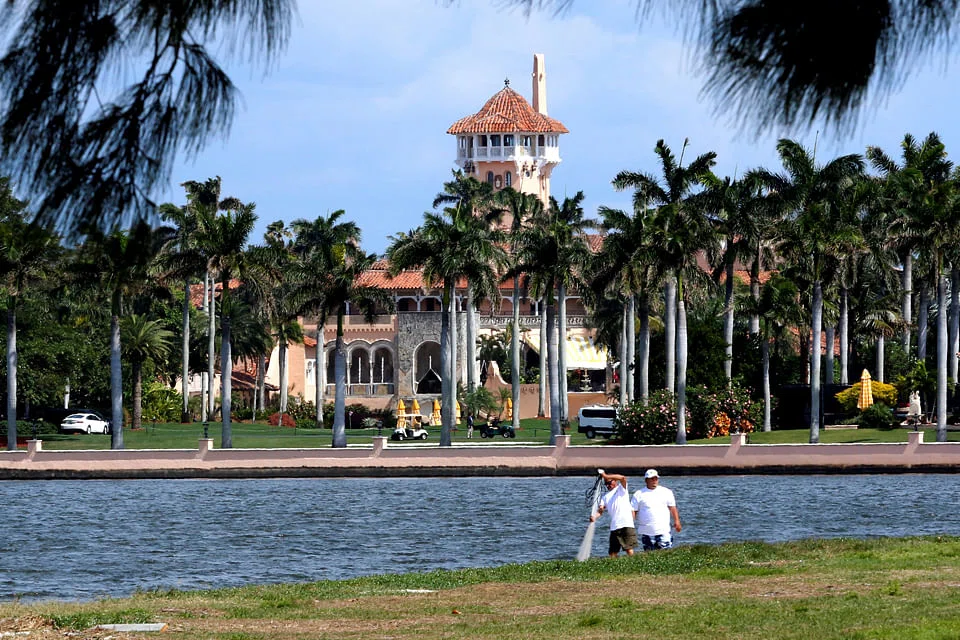
And as American President Donald Trump and his Chinese counterpart Xi Jinping meet this week for their first face-to-face-encounter, don't discount the possibility that the Mar-a-Lago Golf Club - where they will be conferring on Thursday and Friday - would one day evoke memories of a historic event that may have helped change the direction of the Sino-American relationship.
In a way, one could make the argument that all that have happened since then-president Richard Nixon's 1972 trip to China through the years of growing economic ties between the two countries following China's entry into the World Trade Organization (WTO) in 2000 to the recent tensions over China's territorial claims in the South and East China seas, were preparations for the Mar-a-Lago summit.
Under president Barack Obama, the United States embraced the so-called "Pivot" to Asia, continuing to engage with China, while preparing for strategic and economic competition with the Chinese. Washington increased its military profile in the region, opposing the use of military force in dealing with territorial disputes between China and its neighbours and insisting that the issue be resolved through peaceful means.
At the same time, Mr Obama's effort to form a regional economic bloc, that excluded China - the Trans-Pacific Partnership (TPP) - was part of an America strategy to write the trade and investment rules in the region with the expectations that China would have no choice but to adhere to them.
But hovering over all these policy moves was a growing sense that China's rising economic and military power was challenging American global supremacy that evolved after the Cold War. The US military fiascos in Iraq and Afghanistan and the 2008 financial crisis and the ensuing Great Recession helped to demonstrate that America's Unipolar Moment was coming to an end just as China was starting to gain more respect worldwide.
From that perspective, the domestic political changes in both countries reflected those geo-economic developments. Mr Xi has echoed in his policy statements the rising nationalist sentiments in his country, including the willingness to stand up to the Americans.
At the same time, Mr Trump's electoral victory exposed the outlines of an angry American national narrative - one that mirrors the mood among Americans, fearful that their nation was losing its global hegemony and that its economy was under assault by China, that was supposedly using unfair trade practices to destroy the US manufacturing sector and "steal" American jobs.
That American economic challenges have to do more with structural problems and technological changes than with China's alleged unfair trade practices or the manipulation of its currency, didn't change the fact that that was the way many Americans saw things. As a result, they were attracted to Mr Trump's economic nationalist agenda, and his pledge to punish the Chinese by imposing huge tariffs on its imports, even if that would lead to costly trade wars.
But beyond his bombastic rhetoric on trade, Taiwan, and the territorial disputes, candidate Trump never had a coherent strategy to challenge the Chinese on the economic or military fronts. And his first steps as president demonstrated that when it came to the Sino-American relationship, he and his advisers weren't ready to make major policy changes.
In fact, Mr Trump was forced to reverse his earlier hawkish comments on Taiwan and express his commitment to the One China policy, while his defense secretary insisted that Washington wasn't about to use military force to support its regional partners' territorial claims.
The new president did continue to reiterate his pledge to reshape US trade policy along the economic nationalist principles advocated by his Commerce Secretary Wilbur Ross and by two leading China bashers, Peter Navarro, director of the National Trade Council, and Stephen Bannon, Chief White House Strategist.
Hence Mr Trump signed on Friday two executive orders that initiated a large-scale review of the causes of the US trade deficits with some of its largest trading partners and order stricter enforcement of US anti-dumping laws to prevent foreign manufacturers from undercutting US companies by selling goods at an unfair price.
Vowing that the "theft of American prosperity will end", Mr Trump said that his administration "will take necessary and lawful action" to end trade abuses. "Thousands of factories have been stolen from our country", he said, promising to create a "level playing field" for American workers.
But the Trump administration, as well as the Republican leadership on Capitol Hill, also includes many proponents of free trade, including Treasury Secretary Steven Mnuchin, who are expected to oppose any move to launch a trade war with China. And there are no signs that the White House has any concrete plans to move in that direction.
Ironically, the only major decision on trade made by Mr Trump - to revoke US participation in the TPP - may actually help advance the interests of China that could take steps to create a regional trade bloc that would exclude the US.
The signing of the executive orders on trade a week before Mr Trump is set to meet Mr Xi, the largest source of the US trade deficit, should provide him with bargaining chips during his talks with the Chinese president and allow him to do what he loves doing, making "beautiful deals".
It is in that context that one should also consider Mr Trump's pre-summit tough rhetoric of expecting "very difficult" negotiations with Mr Xi and promising to "get down to some very serious business" in Mar-a-Lago.
Whatever happens there this week, the two nationalist leaders, both of whom and in their own way, are challenging the current global political and economic status-quo, would have no choice but to articulate their respective visions of the most important bilateral relationship in the world.
On the one hand, or call it the best-case-scenario, since both the Chinese and American presidents subscribe to realpolitik principles, with Mr Trump removing human rights issues from the negotiating table, it's possible that the relationship could take a shape of a global duopoly, under which Beijing and Washington leverage their military and economic power and force lesser powers to accept the deals they make over critical policy issues.
Why allow the Philippines to play Washington and Beijing against each other and squeeze concessions from the two powers? Instead, reach an agreement on mechanisms to resolve the territorial disputes and impose it on all concerned, while searching for ways to manage the presence of both American and Chinese naval forces in the region.
Similar bilateral deals could include Sino-American agreements under which each side would help tame its respective regional client states: China forcing North Korea to end its nuclear military programme in exchange for a clear US commitment to block Taiwanese moves towards independence.
Negotiating deals on the economic front could prove to be more difficult and take a long time, with each side raising its nationalist rhetoric in the process. But the common and doable goal should be to avoid sparking trade wars that would hurt both sides and the entire global economy.
And then there is the worst-case-scenario under which all of the above would not happen, and the summit ends with a growing sense of acrimony and fears that the tensions could lead to dangerous military confrontations as the nationalists in Beijing and Washington gain the upper hand.
And then instead of remembering Mar-a-Lago as the place that is associated with a historic rapprochement in Sino-American relationship, it would be recalled as the famous golf club where the march to war started.