‘A box of surprises’: A Rotterdam flat that’s only 74 sq ft
When a home is the size of a shoebox, one is inclined to mix activities in a single room
 Add BT as a preferred source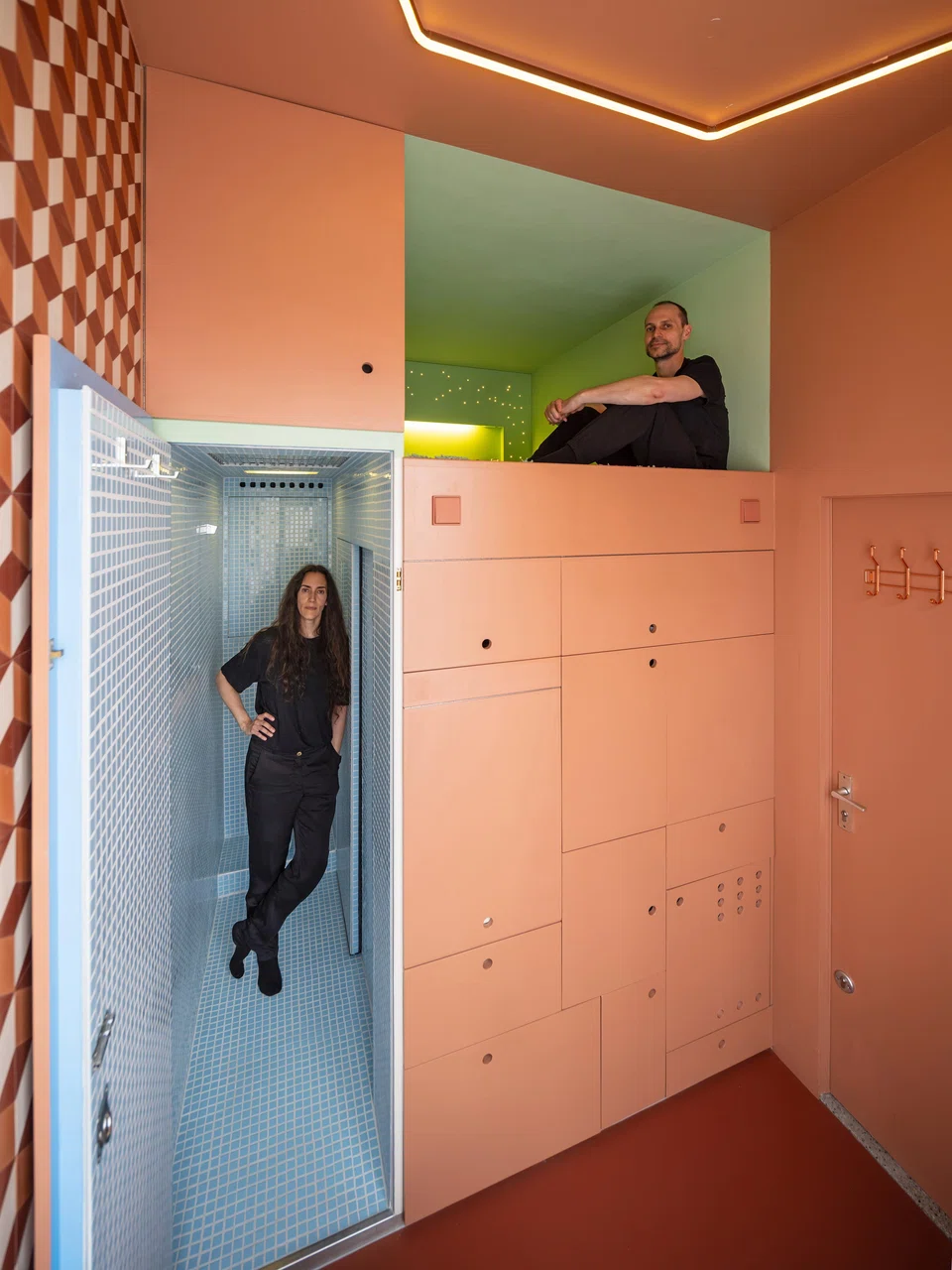
EVEN Le Corbusier appreciated cabin porn. In 1952, the modernist architect built a tiny log house on the French Riviera that he could visit every summer: 144 square feet with a Mediterranean view. Outfitted with austere custom furnishings but no kitchen (it was next to a restaurant), the Cabanon, as he called it, still stands, a work of gorgeous restraint.
“I don’t know if you have been there. He had a bed that you cannot sleep on. I mean, it’s, like, hard as hell,” said Beatriz Ramo López de Angulo, 45, a Spanish-born architect who lives in the Netherlands.
Ramo was not criticising Corbusier but explaining why she and her German-born partner, Bernd Upmeyer, 51, who is also an architect, chose a different approach for their own Cabanon – a tiny apartment in downtown Rotterdam that they designed and named in tribute to the master’s.
This Cabanon, which is on the top floor of a 1950s mixed-use building, is 74 sq ft, half the size of the inspiration. The couple live several floors below, in a one-bedroom unit of about 635 sq ft, and use the shred of extra space above as a personal retreat and for houseguests. Renovating it over a decade in their rare moments of free time, they also made it a laboratory for their ideas about comfort.
When a home is the size of a shoebox, Corbusian minimalism feels intuitive. One is inclined to mix activities in a single room, rather than chop it up for various purposes. Instead of decorating with busy colours and patterns, one defaults to soothing neutrals.
Or does one?
Ramo and Upmeyer’s Cabanon has four distinct areas, and the colours are wild. There is a 39-sq-ft saffron “living room”; a 43-sq-ft sleeping loft painted an invigorating shade of chartreuse; a 12-sq-ft, sky-blue shower room with a toilet; and a 23-sq-ft black marble spa with a whirlpool bath and an infrared sauna. (Lacking Corbusier’s sea view, the flat instead has a fancy tub.)
The couple say these little “rooms” with their elegant finishes do not make the walls feel as if they are closing in, but paradoxically create a sense of greater space. Luxurious materials lend grandeur and variety to the dollhouse proportions, Upmeyer noted.
Ramo said: “The Cabanon seemed to get bigger the more programmes we added to it. It is small, but at the end, you have a box of surprises.”
SEE ALSO
The project began in 2013, when the couple saw a handwritten notice in the lift advertising a tiny unit for sale in their building, which was hastily constructed along with neighbouring structures in postwar, bomb-savaged Rotterdam. The Cabanon is one of three stacked, residual spaces between two buildings that are perpendicular to each other. Used for storage, the spaces were nevertheless finished, with windows and heating and plumbing connections. (At one point, they served as temporary housing for nurses.)
The nook for sale was the topmost of the trio, protruding from the roof. Seeing all kinds of opportunity in this oddball, Upmeyer and Ramo bought it for 11,000 euros (about US$12,085 at today’s exchange rate). They let it languish for a few years, however, as each led their own architectural practice. (Upmeyer’s studio is called Board – Bureau of Architecture, Research and Design; Ramo’s is Star Strategies and Architecture.)
Eventually, the couple got around to the Cabanon, planning every surface and feature meticulously to squeeze the most out of it.
They thought not in terms of square metres, but cubic ones. The “living room,” which is the first room you enter and smaller than many vestibules, received the full 3 metres of height. To the left of the door is a large window with an urban view. Opposite is a wall covered in cement tile with a 3D trompe l’oeil pattern borrowed from the ruins of Pompeii that increases the sense of volume. And to the right is a saffron-painted wood wall divided into a dozen cubbies that reveal their contents like flaps in an advent calendar.
Tug on a finger pull of one of the cubbies and you find a stainless-steel sink and countertop, or a dorm-size refrigerator, or a microwave oven, or dishes. One panel unfolds to create a dining table, exposing a niche for clothes or books. (The hangers in it were a gift to Ramo’s mother, who has stayed with Ramo’s father at the apartment several times and believes that there are some items you just can’t fold.)
A tall, narrow panel looks as if it may be a broom closet. It is, in fact, the bathroom entrance. This sliver of a room is covered in blue mosaic tile and can be fully drenched (a rain shower head is embedded in the ceiling). The toilet sits at the far end.
On top of the built-in orange wall, casting a green glow, is the sleeping loft. It is reached by a ladder and partly illuminated by recessed lighting gleaming out of perforated panels like stars. The wife of the carpenter who worked on the project found the fuzzy green bedspread material at an outdoor market; kitschy, yes, Ramo said, but it evoked fond memories of a coat her grandmother used to wear.
Altogether, they paid about US$23,000 for the renovation, they said, a figure that didn’t cover the many hours spent poring over drawings or hauling marble from the port.
Ramo, whose firm is completing an experimental residential development of 288 affordable units on the outskirts of Paris for which Upmeyer’s firm did the public spaces, said the Cabanon is not intended as a solution for a housing crisis. But it may serve as a model for temporary quarters for, say, visiting professors.
“It is about optimising space, not in the sense of reducing it,” she said, “but in maximising absolutely everything.” NYTIMES
Decoding Asia newsletter: your guide to navigating Asia in a new global order. Sign up here to get Decoding Asia newsletter. Delivered to your inbox. Free.
Share with us your feedback on BT's products and services