The SME advantage in Asian markets
SMEs can draw lessons from OSIM, Ichitan and MAS, which are no longer small firms but global players that dominate markets which MNCs will find hard to penetrate
'WE are just a small local company; we can never compete with the large multinational giants." This is an oft-heard line from SME (small and medium enterprise) owners and managers when asked about their business strength. Indeed, such a self-defeating attitude pervades the SME sector. This is especially so in Asia where, for a variety of reasons (including Asian humility and a legacy of market dominance by Western corporations), SMEs lack the will and strategic intent to wrestle market power from large firms.
Yet, history shows that SMEs do often possess a number of competitive advantages over large firms. In fact, one must not forget that many global enterprises (consider Microsoft, Apple and Alibaba) began as small, entrepreneurial startups with only a handful of employees and without even a proper office. Yet, they grew into mega corporations precisely because of "SME advantages".
What are some of these competitive advantages that SMEs have and can exploit in order to successfully compete in the marketplace?
First, many SMEs still retain a founder/owner management structure. While sometimes criticised as unprogressive, the active participation of founders or owners in managing the company provides an effective way for the interests and objectives of various stakeholders in the business to be better aligned.
More importantly, the founder/owner's passion for the business, an intangible asset that serves as a powerful force that drives growth of the business, is directly injected into the company's internal environment, motivating employees to fulfil the founder/owner's original corporate vision.
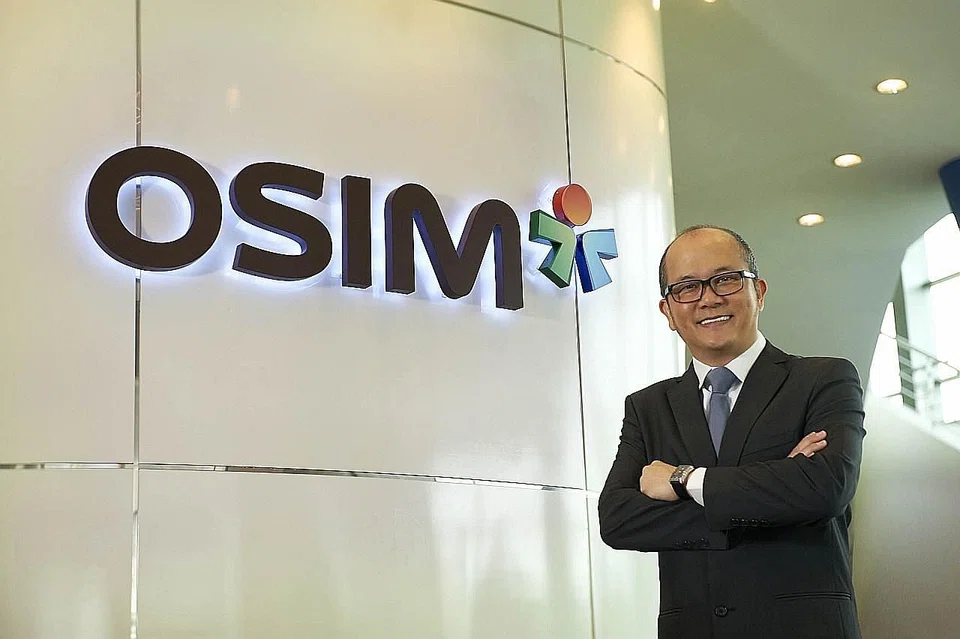
One successful SME-turned-multinational enterprise that remains very much founder/owner-managed is Singapore-listed OSIM International. For over 30 years, founder and current chairman and CEO Ron Sim has personally steered the growth of company from an appliance trader to a global household name in healthy lifestyle products.
His charismatic and entrepreneurial management style has contributed towards the creation of a youthful and energetic atmosphere within the company, inspiring its managers and staff to enthusiastically carry out the company's mission of serving the health and well-being of ordinary consumers.
In Asia especially, such active leadership by the founder/owner can be an advantage as young professionals increasingly look to homegrown entrepreneurial leaders, and not expatriate middle managers, to whom they can relate as role models. The opportunity to work closely with the company's founder/owner can be a draw for young talent who can help propel the growth of an SME.
Second, SMEs tend to have spent a great part of their corporate history serving local markets, and are generally domestically oriented in their geographical coverage. While this sometimes limits international growth ambitions, in that they are often preoccupied with local market issues and lack management resources to internationalise operations, the intimacy with local market culture and local customer needs is an effective deterrent to market entry by global competitors.
One company that has the market-intimacy advantage is Thailand's Ichitan Group, which produces bottled green tea and herbal beverages. The founder and CEO, Tan Passakornnatee, set up the company in 2010 after stepping down from his executive position at Oishi Group, which he had earlier founded and subsequently sold to the large Thai Beverage Group.
Because of his decades of business experience in the Thai beverage market, he deeply understands Thai consumer tastes and preferences and has a good sensing of the Thai concept of a "healthy drink". As a result, he has introduced several successful beverage brands that cater well to Thai consumers. Ichitan's brands, mainly healthy green tea-based drinks and "double drinks" such as Cha Yen Yen and Dragon Tea, which are combinations of tea and traditional Asian herbal concoctions, have competed very well against foreign and other Thai brands. The company launched its public listing earlier this year to great fanfare.
Third, by virtue of their smaller size and simpler organisational structure, SMEs often are nimbler and can make quicker strategic decisions in response to changing business environments. In Asia, especially, where markets are volatile and customer needs shift rapidly, such strategic manoeuvrability is critical.
Many large multinational companies, saddled by bloated organisational structures and bureaucratic decision-making systems, lose market share to SMEs that are swifter and more decisive in their moves.
One company that has grown by making a series of astute opportunistic moves is Sri Lanka's MAS Holdings, a lingerie and sportswear maker that supplies to large US and European brands including Victoria's Secret, Triumph, adidas, GAP, and Marks & Spencer.
Founded in 1986 by three brothers, Mahesh, Ajay and Sharad Amalean (hence the acronym MAS), the company started as a small, low-tech dressmaking factory that operated within the country's strict export quota system.
One day, the brothers stumbled upon an opportunity to learn to make lingerie, which fell outside the quota system, meaning they could export large quantities of the product. They subsequently secured a contract to supply to Victoria's Secret, a deal which gave them access to the large US market. Other deals came along, and the company grew rapidly by investing ahead in unique capabilities in design, supply chain management and manufacturing processes, capabilities which were uncommon among Asian apparel manufacturers but were highly valued by international customers.
Today, MAS Holdings is a large company employing over 40,000 workers, supplying a wide range of apparel products including active wear and swimwear, and boasting its own brands.
Smallness is not necessarily a competitive disadvantage. SMEs can capitalise on their management structure, intimate market knowledge and ability to make quick strategic decisions to surpass large multinational competitors. All three case examples mentioned in this article are no longer small businesses, but formidable international players that dominate market spaces that multinationals would find hard to penetrate. Existing SMEs can draw useful lessons from these cases. But they first have to adopt the mentality that they possess advantages as opposed to only weaknesses.
Dr Lim is an associate professor of marketing practice at NTU's Nanyang Business School (NBS) and deputy director of the Institute on Asian Consumer Insight (ACI). Prof Wee is head of the marketing and international business division at NBS and a senior fellow of ACI