

Europe: Stock markets extend losses at open
 Add BT as a preferred source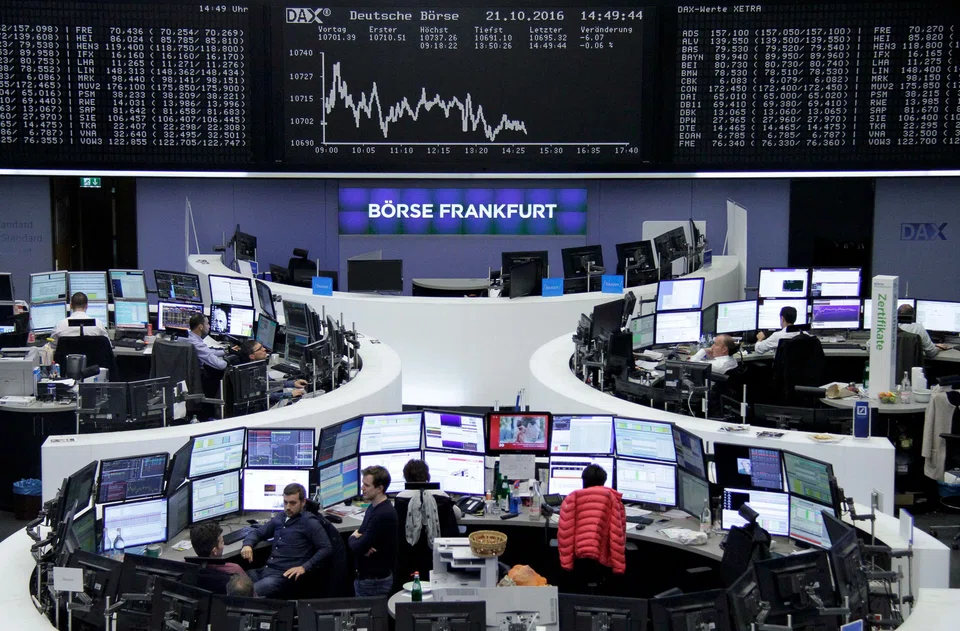
DeeperDive is a beta AI feature. Refer to full articles for the facts.
[LONDON] European stocks fell further at the start of trade on Thursday, with investors on edge over next week's presidential election, and before an interest rate decision from the Bank of England.
In initial deals, London's benchmark FTSE 100 index dipped 0.2 per cent at 6,831.20 points, ahead of the outcome of the BoE's latest monetary policy meeting on Thursday.
In the eurozone, Frankfurt's DAX 30 lost 0.3 per cent to 10,341.86 points and the Paris CAC 40 index also shed 0.3 per cent to 4,402.79 compared with Wednesday's close.
Asian stocks also struggled again Thursday as the looming US election, due on November 8, continued to cast a pall over global markets.
With a matter of days to go, maverick tycoon Donald Trump has closed what was once considered an unassailable lead over market-favourite Hillary Clinton, upending early confidence.
The former secretary of state is considered by most investors to be a safer, more stable bet than Trump, who is seen as a loose cannon.
Navigate Asia in
a new global order
Get the insights delivered to your inbox.
And while she is still tipped to win, analysts said the late run by Trump has fired uncertainty, sparking a sell-off across the world.
Amid the narrowing presidential race, markets shrugged off Wednesday's decision by the Federal Reserve to keep interest rates unchanged, as expected, and December now is in focus for an increase.
Attention now turns to the release Friday of October US jobs data, which will provide a clearer snapshot of the US economy, with analysts saying a strong reading will cement the argument for a rate hike next month.
AFP
Share with us your feedback on BT's products and services
TRENDING NOW

Autobahn Rent A Car directors declared bankrupt over S$50 million each owed to DBS

Amazon’s MGM Studios gains creative control over ‘James Bond’ franchise

UOB’s Wee Ee Cheong says S$4.9 billion Citi deal ‘paying off’ as Asean push accelerates

In taxing wealth, how far can Singapore push property owners?

