

Seoul: Won tumbles as markets trim rate hike views, stocks at 6-week low
 Add BT as a preferred source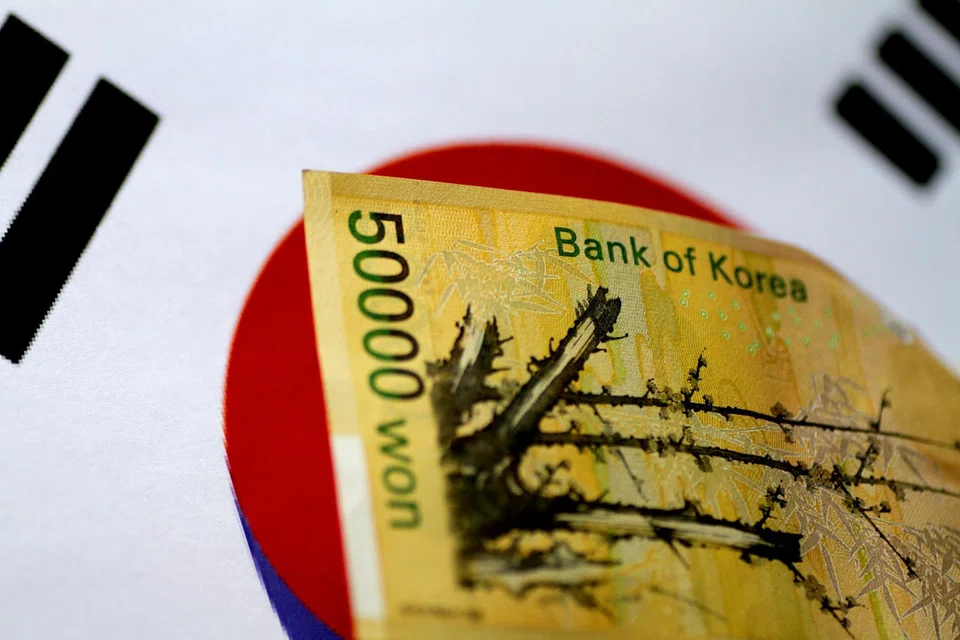
DeeperDive is a beta AI feature. Refer to full articles for the facts.
[SEOUL] The South Korean won extended losses late on Thursday, as investors dialled back forecasts for more immediate domestic interest rate rises following the central bank's first policy tightening in six years.
The Bank of Korea (BOK) raised interest rates, as expected, on Thursday but tempered market expectations for more by raising concerns about the job market and other uncertainties.
South Korean shares also slumped to six-week lows, but were more affected by a slide in tech sector shares following big losses by their US counterparts overnight.
The won was quoted at 1,088.2 to the US dollar at the conclusion of onshore trade, down 1.1 per cent compared with Wednesday's close of 1,076.8. The currency reached as low as 1,090.2 during the session.
"The won has marked strong gains recently, pricing in expectations for a rate hike. Now that the market players see the BOK will be very cautious for a next hike, the won is making a correction," said Jung Sung Yoon, a foreign exchange analyst at Hyundai Futures.
Over November, the won gained three per cent, its biggest monthly rise since January.
Navigate Asia in
a new global order
Get the insights delivered to your inbox.
The Korea Composite Stock Price Index (Kospi) closed down 1.5 per cent at 2,476.37 points, the lowest closing level since Oct 19.
The Kospi has lost 1.9 percent on a monthly basis, its largest monthly drop in 10 months.
Tech giant Samsung Electronics lost 3.4 per cent and SK Hynix fell 6.8 per cent, dragging the overall tech sector down 3.7 per cent.
Foreign investors were net sellers of local equities, offloading a 592.1 billion won (S$738.53 million) worth on Thursday.
REUTERS
Share with us your feedback on BT's products and services
TRENDING NOW

From 1MDB to ‘corporate mafia’: Is Malaysia facing a new governance test?

Higher costs, lower returns: Why are Singaporeans still betting on real estate?

South-east Asian markets account for 8.8% of global capital inflows from 2021 to 2024: report

Richard Eu on how core values, customers keep Singapore’s TCM chain Eu Yan Sang relevant

