

Shanghai: Shares produce largest weekly rise in 2 months
 Add BT as a preferred source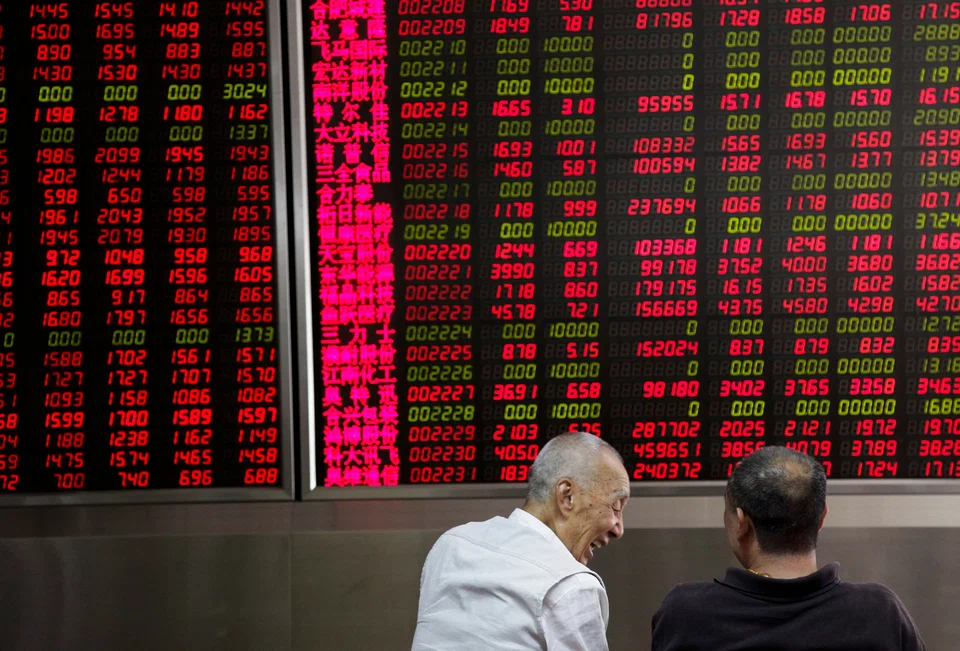
DeeperDive is a beta AI feature. Refer to full articles for the facts.
[SHANGHAI] Shanghai's benchmark stock index edged up on Friday and had its biggest weekly rise in more than two months, as investors turned bullish after concerns about the yuan's depreciation eased.
The Shanghai Composite Index rose 0.3 per cent on Friday, to 3,965.33 points, bringing this week's gain to 5.9 per cent, the largest since early June.
But the CSI300 index of the largest listed companies in Shanghai and Shenzhen dipped 0.1 per cent, to 4,073.54. It posted a weekly gain of 4.3 per cent.
Following three days of falls, the yuan held steady against the dollar after suspected intervention by the central bank, who said on Thursday there was no reason for it to fall further.
China's central bank stunned markets on Tuesday by devaluing the yuan by nearly 2 per cent. "Yuan devaluation suddenly became a concern for stock investors earlier this week, but now this issue is fading out of their radar," said Qi Yifeng, analyst at consultancy CEBM.
Waigaoqiao FTZ surged 10 per cent, the daily limit, after the Shanghai government-controlled company announced a major restructuring.
Navigate Asia in
a new global order
Get the insights delivered to your inbox.
Investor interest in listed state-owned companies was also rekindled by a stock ownership incentive plan announced by Chinese liquor maker Wuliangye Yibin.
Reform expectations pushed up prices of state firms including Luoyang Glass and Guangdong Electric Power.
Many Tianjin-based companies, which slumped on Thursday following explosions in the northeastern port city, rebounded. Nearly a dozen companies issued statements saying their losses were limited.
The companies included Tianjin Port Holdings Co, Tianjin Economic-technological Development Area Ltd and Binghai Energy.
REUTERS
Share with us your feedback on BT's products and services
TRENDING NOW

From 1MDB to ‘corporate mafia’: Is Malaysia facing a new governance test?

Higher costs, lower returns: Why are Singaporeans still betting on real estate?
South-east Asian markets account for 8.8% of global capital inflows from 2021 to 2024: report

Richard Eu on how core values, customers keep Singapore’s TCM chain Eu Yan Sang relevant

