Local telcos gear up to ride wave of Apple's latest phones
Singapore
SINGAPORE telcos are set to get a boost - even if just for the short term - with the launch of one of the biggest updates to the iPhone family announced by Apple on Tuesday (Wednesday morning Singapore time).
The three local rivals have geared up to register "expressions of interest" from among the Apple faithful.
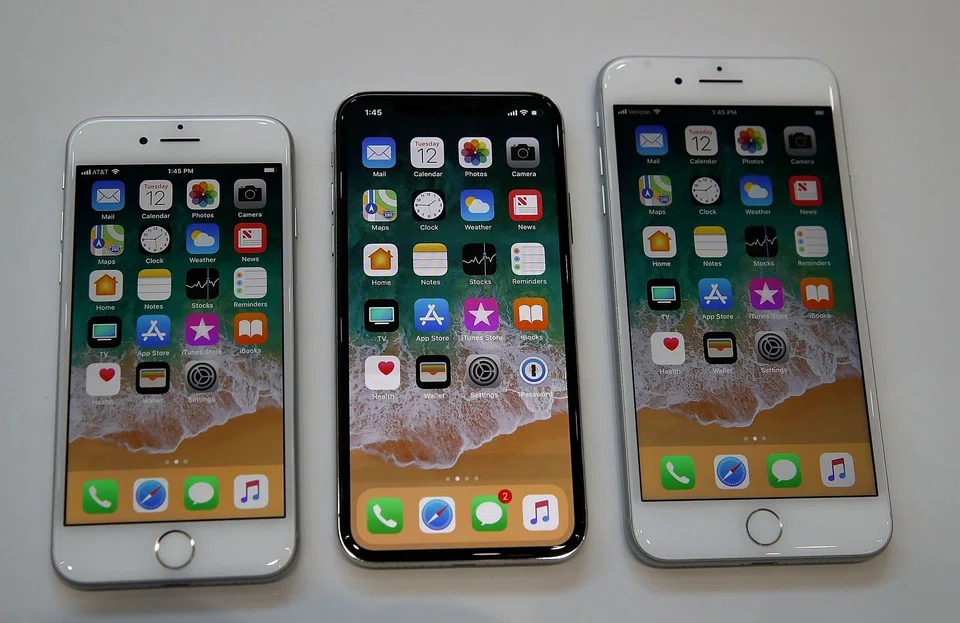
The big star of Apple's event was undoubtedly the iPhone X, which will hit the stores and the telcos only in November. The other two new phone models launched were the iPhone 8 and iPhone 8 Plus.
Apple also debuted an upgraded Watch (Series 3) and the new Apple TV 4K, which offers 4K HDR quality.
The new products were showcased in the swanky 1,000- seat auditorium of the company's newly-built "space ship" campus, Apple Park.
Singapore telcos have started registering prospective buyers on their websites, with the iPhone 8, iPhone 8 Plus and the Watch going on sale from Sept 22. Pre-orders on the Apple website open this Friday.
The Cupertino-based company is betting big on the iPhone X, which will have no home button but will come with an edge-to-edge screen and an infrared-powered facial recognition system that Apple says is 20 times more secure than Touch ID, which works by reading fingerprints.
Face ID will not only unlock the phone, but will also be used for making payments and logging into banking apps.
The iPhone 8 and iPhone 8 Plus are more traditional looking, with Apple's trademark home button. But they come with improved camera and can be charged wirelessly.
The two iPhone 8s have also been kitted with augmented-reality (AR) capability, a feature that Apple has been pushing hard this year. Many experts say AR has great potential for use in a number of applications.
None of the phones come cheap. Apple has put a starting price of S$1,648 for the iPhone X; the iPhone 8 will start at S$1,148, and the iPhone 8 Plus, S$1,308. These prices are for phones without a plan.
One major announcement about the new Apple Watch is that it comes in a version with cellular connectivity; this means it will carry an eSIM, which would allow it to make phone calls and access the Internet - without needing to be tethered to a phone.
This is a feature many smart watches already on the market have, but Singapore will not, during the initial launch, get this version. Only a GPS-enabled version will go on sale here at first. Apple said the cellular-enabled watch will be available "soon" in Singapore. StarHub and Singtel offer eSIMs from around S$10 a month.
The new devices, along with the recently announced Samsung Note 8, make their debuts at a crucial time for Singapore's three telcos, with the impending entry of new telco players MyRepublic (which is launching as a mobile virtual network operator) and TPG Telecom, an Australian company.
The popularity of iPhones and phones from Samsung thus represent the three incumbents' chance to lock in existing customers and preferably gain new ones with two-year contracts.
The head of research at Phillip Securities, noted that if demand for the iPhone is strong, "it could help mobile operators undertake some re-contracting in view of the upcoming fourth operator. Other beneficiaries will be mobile-phone outlets that assist in signing new mobile phone contracts, such as Telechoice".
Another benefit for the existing telcos comes in the form of revenue from selling these new phones. Robust demand for the iPhones and also Samsung's Note 8 are likely to plump up revenue in the fourth quarter and in the first quarter of next year.
Investment analyst Eugene Chua of OCBC Investment Research told TheBusiness Times that with the Note 8 being the best-selling phone so far, equipment sales look set to increase in those two quarters.
But he had a caveat: "That said, we expect the cost of equipment to increase as well, due to handset subsidies. In an intensifying competitive landscape, subsidies given by the telcos may be higher this time round, as a result of the pressure to secure more customers on new contracts before TPG and MyRepublic launch mobile services."
Mr Chua added that, as has been the case over the past years, the momentum whipped up by new phones hitting the market will not carry beyond a year, given that Apple and Samsung refresh their models at least once a year.
"Hence, it will take the telcos more than just new phone launches to retain their customers.
"The ability to retain customers will really be service quality, bundling options and attractiveness of the plans' pricing."
He added that over the longer term, what will matter the most is the ability of the telco to effectively monetise data usage. This "will be one of the key areas to grow their mobile business".
"We believe the telcos will compete through plans with attractive data offerings. The trend is clear - the average monthly data-usage continues to increase."
A OCBC Investment Research report released recently showed that the average monthly smartphone post-paid data usage has been increasing across all three telcos:
M1 registered an increase from 3.6 GB (gigabytes) in the fourth quarter of last year to 3.9 GB in the second quarter of this year.
StarHub had an increase from 3.7 GB in Q4 2016 to 4 GB in Q2 2017; Singtel posted an increase from 3.2 GB in Q4 2016 (Q3 of fiscal 2017 for Singtel) to 3.5 GB in Q2 2017 (Q1 2018 for Singtel).
To a question on the impact of the new phone launches on the share price of the telcos, Mr Chua said the launches during this period had been anticipated by the market, "and better earnings remain one of the key drivers to share price out-performance".