

Building leadership
Egon Zehnder chairman Damien O'Brien explains how his firm is leading the search for leadership talent in a changed world as a 'global, equal partnership'.
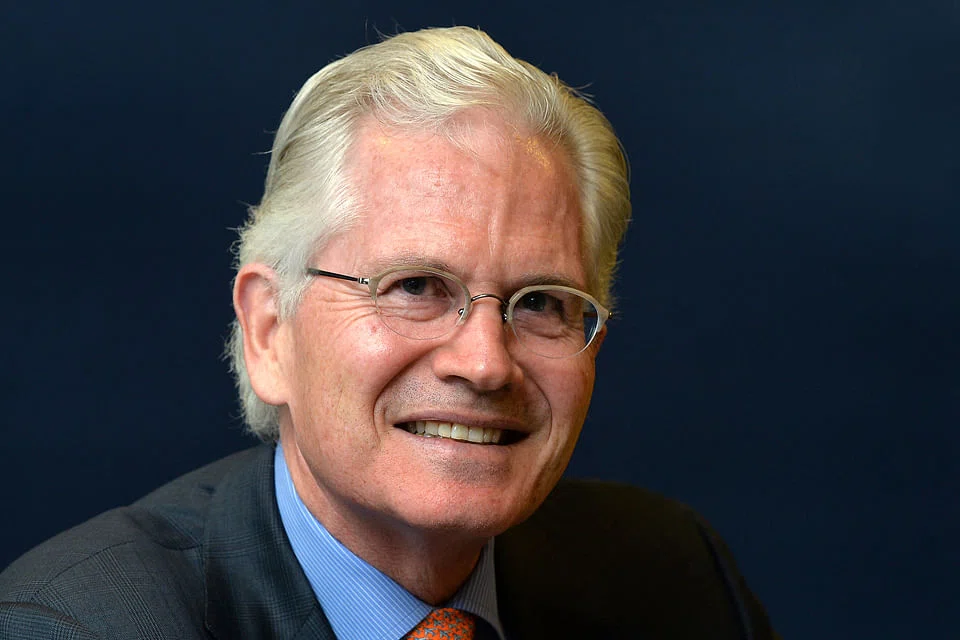
IN JUNE 1964, a 34-year-old Swiss named Egon Zehnder founded Europe's first executive search firm. Named after him, the firm went on to redefine its industry by challenging the pre-existing rules of the game. For a start, it refused to define itself as a "headhunter" - a common term for those in executive search; it sought a broader engagement with its clients that went beyond "hunting heads".
It also declined to define itself as a "business". "We refer to our firm, our profession, not to our 'business'," wrote Mr Zehnder to an incoming colleague in 1969, "and we mean it that way, because we put interests of the clients ahead of the interests of our firm".
In a major departure from existing practice, it also decided it would be an "equal, global partnership" in which all partners share equally in the firm's profits, regardless of the performance of individuals or specific offices. In this respect, it still stands apart from its industry peers.
This year, Egon Zehnder the firm celebrates its 50th anniversary. It now has 69 offices in 48 countries around the world. Mr Zehnder officially retired in 2000, but remains the revered patriarch of a professional family of some 2,000 staff, including more than 450 consultants.
After him, three others have held the post of chairman. The incumbent is Damien O'Brien, a 58-year-old Australian with an unusual background. He once trained to be a Catholic priest, attending a seminary for four years after school and even did missionary work in the Philippines before going to university. Thereafter he worked for three years as a management consultant with McKinsey & Co, before leaving to join Egon Zehnder in 1988.
Intense, engaging and bubbling with energy, Mr O'Brien explains what makes his firm unique. "To understand what we do, you have to understand why we were formed," he says.
"Our founder Egon Zehnder formed the firm not to be an executive search consultant. He formed the firm to help European companies build their leadership capabilities. It just so happened that executive search was a really important way to do that at the time."
A corporate biography of the firm A view from the Lake: The Egon Zehnder story points out that Mr Zehnder didn't like the word "strategy". He never had one - nor even thought about having one. He just made it up as he went along, seizing opportunities as and when he saw them.
But in retrospect, many of his decisions turned out to be visionary. One was to go global early on. The firm expanded to Tokyo in 1972, Melbourne in 1973, Sao Paulo in 1975, New York in 1977 and Singapore in 1981.
"We were a global firm before globalisation," says Mr O'Brien. "So we now have an extraordinary platform to serve our clients globally."
Another key decision was to make English the language of the firm from day one - "which in 1964 in Zurich wasn't so obvious".
"So clearly he had an international vision. But it wasn't about being an executive search consultancy. It was about working with clients to build their leadership capabilities. That continues to be our sole purpose."
To be sure, executive search still accounts for most of the firm's revenues (which totalled just under US$700 million in 2013). "It's a large part of what we do," says Mr O'Brien.
"But it's a bit misleading," he adds. "Our client relationships these days are embedded in a much richer relationship than executive search. What has happened is that our clients have become much more strategic about their talent requirements. They are thinking about their future leadership needs, aligning their leadership development with their strategies and developing systems and processes internally to help develop leaders. And as the world has become more competitive - including for talent - clients have realised that to just rely on executive search is a little bit irresponsible."
Mr O'Brien explains the process of identifying and developing future leaders, giving the example of how a new CEO gets chosen. "The client - which is the board - knows the incumbent will be retiring in three years' time. And it believes there are two or three internal candidates, but they're not quite there yet. So the client is keen to benchmark those internal options against external candidates."
Egon Zehnder works with its clients to first assess the internal candidates. "We've discovered that this is actually very complicated," says Mr O'Brien. "In the past we would look at competencies and experience. But now we look at what we call 'potential to lead'. In today's world, organisations require more than just competence and experience; leaders need other qualities. In assessing internal candidates, there would be gaps - there would be individuals with potential but where they need to be developed. We would help our clients identify those gaps and put in place a series of actions to help those individuals to be ready to take up the CEO appointment in two or three years.
"We do that in a way which is perceived to be credible and objective, to avoid the perception or concern that there may be politics involved, and we do it in a way that is culture-building rather than culture-destroying."
At the same time, Egon Zehnder would help the client consider external candidates. "We'd be benchmarking and mapping external candidates. As the time draws nearer, we would start to identify them. Those external candidates would then be compared to the internal options.
"In the end, the client would often choose an internal candidate. But internal candidates who are chosen having been benchmarked against external candidates are typically more successful than internal appointments where there has been no benchmarking."
Beyond competence and experience
So what's new about leadership? Plenty, according to Mr O'Brien. In a changed world, the qualities of a good leader are no longer what they used to be. "What would be a good leader 10 years ago might not necessarily be a good leader today," he says. "I think we had a bias towards strong, autocratic leaders in the past. They were very powerful and quite directive in their style. But in the era of talent that we have today, that kind of leadership is not particularly attractive.
"Today, young, talented people want to follow a leader who listens, who is more humble, more inclusive and more inviting of participation. We're seeing an evolution in the style of leadership and I think that's natural given the kind of world we're living in today. It's increasingly global, increasingly complex, increasingly fast moving. No one individual can have all the answers. Leaders these days need to create teams, and the answers come from within the teams. That's very new."
But some of the traditional qualities of leadership still endure, he says. "The first thing a leader needs to have is integrity. After integrity, leaders need to be motivated deeply by a desire to have a positive impact on others. Without that, you can't lead. And not everyone has that - there are people who are more focused on taking care of themselves. Successful leaders really need to be motivated by a desire to bring along and help others and create a better future for them. And that's true whether it's a hospital, a company or a church."
Egon Zehnder's experience with leadership also points to other attributes of good leaders, he adds.
"One of those is curiosity. The world is changing too quickly, so curiosity is fundamental. The second thing is insight. Leaders today face a tsunami of information. You need to be able to draw insights from all the information that's coming at you, synthesise it and come to conclusions.
"Another thing is engagement - leaders need to be able to engage with their followers, not only intellectually but in connecting with their hearts and minds. The fourth requirement is determination and resilience, given how tough leadership is in today's fast moving world.
"Once you've established that a leader has the integrity, the motivation and these four characteristics, then we look at the hard things, like competence and industry knowledge, which of course you definitely need. But they're not sufficient."
Mr O'Brien believes this basic template for evaluating leadership applies across cultures - even though leadership may manifest differently in different cultures. "As we go into a global world, companies are competing globally for capital and talent, we will see leadership coalesce around these attributes," he says.
"The Japanese have struggled because they have not localised their leadership capabilities as they have expanded globally. I have huge respect for the Japanese, but if you look at their companies in China or the United States, they are typically run by Japanese, and along Japanese lines. You can get so far with that, but you can also create a glass ceiling for talent - which can be problematic if you are competing for talent."
The same is true of Asian companies, he says - many of which "are still hierarchical and autocratic". If these companies want to go global and attract global talent, they would need to address this issue. "They need to create more inclusive, open cultures which would make it compelling for the best in the world to want to join them. In today's world, talent knows no boundaries. So your leadership talent should reflect the constituents that you're serving and targeting."
A contrarian way to pay
While many firms in Egon Zehnder's industry can - and do - claim to be engaged in not only executive search but also leadership development, none of them reward their staff in the same way as Egon Zehnder does. In that respect, the firm is truly unique in its industry. Typically, most of the fees of executive search firms are effectively commissions - they are based on some proportion of the salaries of the executives that they place. It's what Mr O'Brien calls the "brokerage model". Before he set up his own company, Mr Zehnder used to work for one of the industry leaders, a firm called Spencer Stuart. "The reason Egon left Spencer Stuart was on this issue of the brokerage model," says Mr O'Brien. "Egon took the view that that particular approach did not serve clients well. He always saw himself as an adviser and he saw his firm as a firm of advisers working with clients in a way that would be impartial, objective, with no financial incentives that get in the way. He had an argument with the original Spencer Stuart on this point. Spencer took the view that look, this is the industry standard. Fees are a function of compensation. Egon said, well, it might be the industry standard but I don't want to be part of that. So he established his own firm.
"Our fees are based on the complexity of the work that we do for clients, the time involved and the value of the advice we are providing."
"We are a global, equal partnership," says Mr O'Brien. "I stress each of those words because they're very important." He explains that whereas other executive search firms reward their staff based on individual performance and the profit and loss (P&L) of specific offices, Egon Zehnder gives its partners everywhere an equal share of the company's profit, regardless of their performance, adjusted only for length of tenure. Mr Zehnder elaborated on the benefits of this model in a now famous article that was published in the Harvard Business Review in April 2001 entitled A Simpler Way to Pay. He suggested that his firm's "equal share" pay model creates a bias towards hiring people who are by nature collaborative, who eagerly share information, "people who get more pleasure from the group's success than their own advancement".
For example, he points out: "If a consultant in Hamburg is paid according to overall firm performance, not her own billings, she will happily pick up the phone and call a colleague in New York to say 'I just met a candidate who isn't ideal for my client here. But he might be just perfect for your client's open position there'."
The firm's pay model, which rewards seniority of tenure, also encourages people to stay with the company for the long haul. This also benefits clients, according to Mr Zehnder because longer-serving staff have bigger networks of contacts and more finely-honed intuition - both valuable assets in a people-centric business.
Mr O'Brien believes that the equal pay model also prevents the "dysfunctional behaviour" that commission-based models create - as in the case of many banks during the global financial crisis, where commission-based incentives led to a mountain of bad loans and the mis-selling of securities. Nor are there arguments about how the pie is divided - everybody knows they get an equal share.
There is also what he calls a "portfolio" effect. "Because our global performance is a function of the performance of 69 offices in 48 countries, we don't get the big swings that you get when you operate in just one country with one office. And as individuals, because we're sharing our profits across 450 people, we also get more predictable outcomes. So there is a very low beta in terms of the earnings of our firm, which I think makes the economics also attractive."
But doesn't the equal pay model discourage individual initiative?
"That's a natural concern," says Mr O'Brien. "You could argue that there could be 'passengers' in that model. But the interesting thing is that the model generates exactly the opposite reaction. If you're an equal partner sitting in this office, earning the same as the other partners and you're not carrying your weight, the emotional pressure on you to step up is huge.
"So actually, the model is very powerful, if you have the right people with the right motivation and I think we do.
"We are able to attract extraordinary people - people self-select into our firm because they're attracted to our values-based environment: to serve clients, not for the money; the money takes care of itself. Motivating people with intrinsic motivators rather than extrinsic money motivators is much more powerful."
Recruiting for the long haul
Since it values seniority of tenure, Egon Zehnder does not believe in an "up or out" policy for its employees - a policy followed by some consulting firms, under which people either move up the corporate ladder or they have to move out. Since it hires people who may stay with the firm for as long as 30 years, Egon Zehnder's own recruitment process is rigorous. "It's not a one-office decision," explains Mr O'Brien. "People go through 30 or 40 interviews, and they go to four or five offices. There's also an incubation period of at least six months. But that is as much an onboarding process as it is a recruitment process; it's about helping the individual make an informed choice and make an emotional connection with the firm. It's a little bit like a marriage; we want people to really commit. And that's tough, because cycles are much shorter these days.
"But individuals who join us typically fall in love with the firm. They fall in love with the idea of the firm, they fall in love with our values and with the importance and impact of what we do. They fall in love with the global community they become part of.
"Although he's retired, Egon Zehnder still meets about 80 per cent of our staff candidates. Our colleagues love meeting him. He always says something that makes you think."
Most of all, the staff have bought into his basic philosophy which has guided the firm from day one. He summed it up in one sentence in a speech to the firm's partners in Zurich in January 2012: "There is no limit to what our firm can accomplish if no one cares who gets the credit."
DAMIEN O'BRIEN
Chairman, Egon Zehnder
Born Feb 1, 1956
Diploma in Theology and Philosophy, St Columban's College, Sydney
1983: B Commerce, University of New South Wales
1985: MBA, Columbia University, New York
1985-1988: Associate, McKinsey & Company
1988: Joined Egon Zehnder Sydney. Subsequently led the establishment of the firm's practice in China. Prior to moving to London in 2013, was based in firm's Paris office
2008-2014: CEO, Egon Zehnder
2010 to date : Chairman, Egon Zehnder
TRENDING NOW

Britain’s mansion tax shows the difficulty of targeting wealth

Once staunchly pro-China, Malaysian Chinese businesses are now distancing themselves from Beijing

The only common thing in S-E Asia is that we all eat rice: Cisco’s Asean president

Singapore data centre operator DayOne opts for US IPO at likely US$20 billion valuation

