Business schools upended
New IMD president Jean-Francois Manzoni finds the sea changes in executive education invigorating
Anna Teo
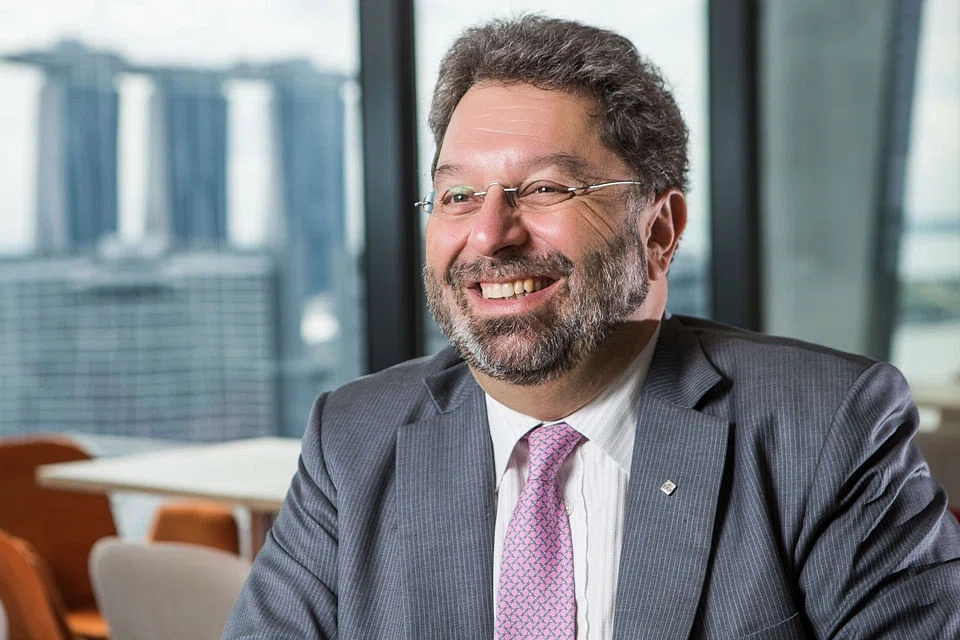
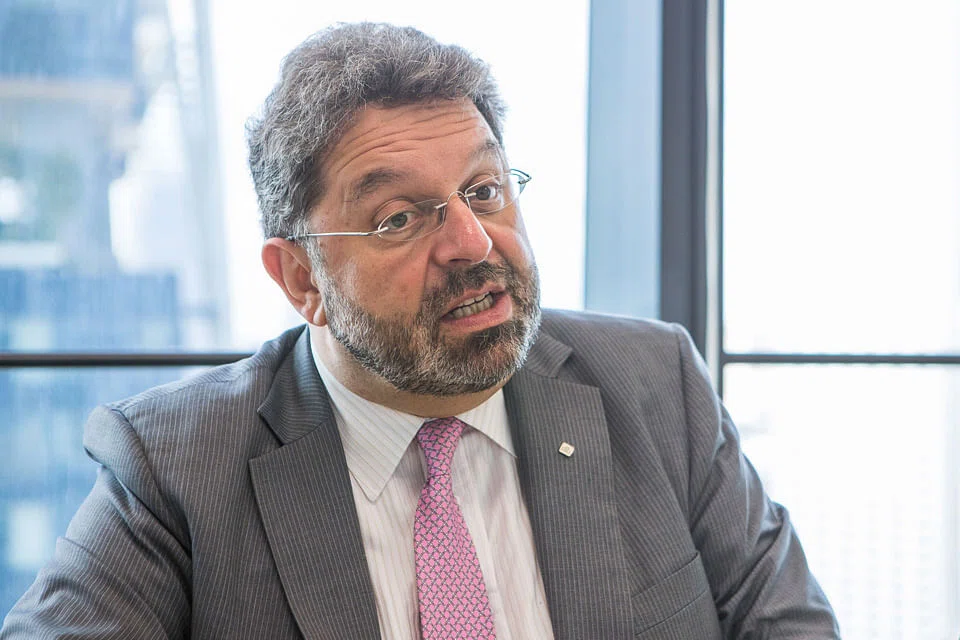
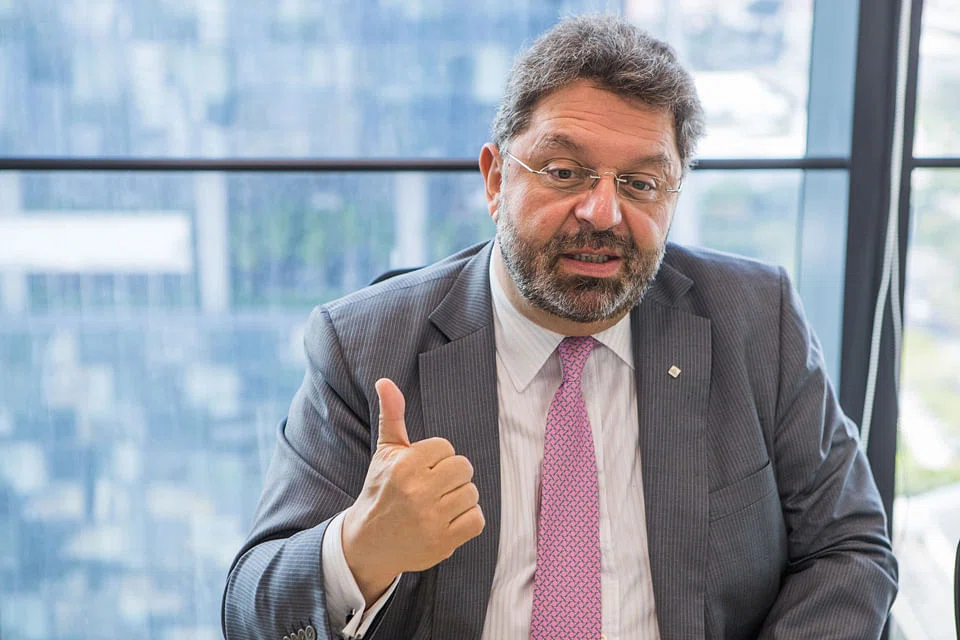
LISTENING to IMD president Jean-Francois Manzoni talk about the dramatic changes that have swept the field of executive education over the years, it's apparent that business schools themselves make a great subject for case studies. People are still pursuing MBAs, but just about every facet of the paper chase - from competition and curriculum to mode of learning and needs of "clients" - has been upended. Indeed, disruption has hit B-schools big time, not least Lausanne-based IMD which, unlike most other top-ranked schools, is not affiliated to any university and is focused on, as one of its taglines says, "developing executives, transforming organisations".
IMD and the likes of Harvard, Wharton and Insead have seen over the last decade the rise of local business schools, particularly in Europe, that "have really ramped up, have become increasingly effective, and are now much stronger competitors than they used to be", says the leadership professor, who has been at the helm of IMD since Jan 1, returning to Switzerland after five years teaching at Insead's Singapore campus. But that's "not the most dramatic evolution for us", he adds.
The change with possibly the biggest impact, he says, is "the rise of integrated providers and of non-academic providers of executive and organisational development efforts".
He names as an example of the latter, Mannaz, a consultancy specialising in organisational development that was founded in Denmark, and now has offices beyond Scandinavia, in London and Hong Kong.
As for the "integrated providers", he points to the leading executive search firms as increasingly an example, citing Korn Ferry and Heidrick & Struggles, both of which have been acquiring firms in adjacent fields, he notes.
"We've seen this coming," says Prof Manzoni, who has spent his 24-year academic career between IMD and Insead. He is speaking to BT at IMD's South-east Asia Executive Learning Center at South Beach Tower.
"The first time I presented this to the IMD board was 2007 - I was at IMD at that time - and I drew a graph and I said, here's the danger for us: You have search firms that increasingly are saying, 'look, when we headhunters search, we assess the candidate and we match the candidate with the needs of the organisation. That means that one of our core capabilities is the assessment aspect. How about we start to develop the assessment as a separate business line?'
"And of course Egon Zehnder was one of the first to start to do this on a big scale. I remember in 2007 when I was working with a very large organisation, and Egon Zehnder was doing an assessment of the (firm's) top 200."
The assessment would typically conclude with an individual professional and personal development plan. And from there, "it's a short walk to 'and how about we help you bridge those gaps'," thereby stepping into the executive development market space.
"So, it was quite clear already 10 years ago, that there was a big danger for us, for these firms to say, 'hey, we can actually move upstream on the education side, the individual development side, and the organisational development side'," he says.
While Korn Ferry and Heidrick & Struggles have "made clear decisions to go in that space by themselves", other search firms are still mulling over whether to do it themselves or jointly with a partner, he reckons.
"We're going through exactly the same discussions. We know we need to become more engaged in advisory services, we know we need to develop on the assessment side, and the question is - how much will we do this by ourselves and how much will we do this in partnership?"
And indeed, "you see this in every industry", he says of the cross-industry encroachment, as it were, that has seen, for instance, the Big Four erstwhile-audit firms turn into multidisciplinary professional services firms, notably with legal services added to their portfolio.
"Today you have pharma companies that are increasingly going onto the nutrition side, and then you have nutrition companies, like the Nestlés of the world, increasingly working upstream, on the pharmaceutical side... so the space in the middle is called nutraceuticals," he notes wryly.
"By the way, you also have the technology companies that are increasingly going with the wearables and stuff in the health space. So you see this everywhere - this convergence that leads to much more fluid industry boundaries than before."
The real world
As the new president, Prof Manzoni sees IMD building on its mission as a world-class partner for executives and organisations.
Known in full as the International Institute for Management Development, it was established in 1990 following the merger of two business schools - IMI, founded in Geneva by Alcan in 1946, and IMEDE, set up in Lausanne in 1957 by Nestlé. The two schools came about "to work with organisations", giving IMD its strong roots in practice and a "real world" raison d'etre.
So while it has a small MBA enrolment (90 graduates a year) and a mid-size Executive MBA class, the heart of IMD's activity is in developing global leaders - individuals and organisations - through a range of leadership programmes.
"And there we have carved out over the years a relatively clear positioning - our tagline on this front has been Real World Real Learning. Our differentiating factor is that we are really focused on that space as a fundamental reason for being.
"This is not something we do in addition to, it's not something we do to pay the bills or to balance the books. This is what we are created for, this is what every faculty member joined IMD to do."
Voluble and fairly ebullient ("people like me can talk endlessly", he tells BT) Prof Manzoni - who has dual French and Canadian citizenship - speaks animatedly about the changes and challenges confronting the executive education industry. "I guess on one side that's scary; on the other side that's also quite invigorating," he says of the disruptive changes.
"In 1990, the best companies in the world would call, and we'd say, we'll be able to do something for you in 18 months; in the meantime you wait. Now they don't wait for 18 months," he adds, laughing. "In fact, if you don't call them, there are 17 other folks that have already called them and are already working with them. So that's the difference in the competition over 25 years."
Then again, that's probably true in every industry, he says. "I think in every industry, what was just five or seven years ago world-class performance is now just the entry ticket."
The rise in competition - including, for business schools, the emergence of corporate universities - is simply "part of the process of creative destruction that our economy is based on", he says, shrugging.
Evolving needs and moving targets in today's world present another challenge, he says.
"So, 20 years ago we had a pretty good idea what people ought to know and I think they trusted us to tell them 'you need to know this', and they were relatively patient as well. So they would come to a programme and if at 9.30am they weren't yet fully understanding what we were talking about they would wait until 10.30... Now, by 8.40 they would be starting to look at you and go, 'hey, what have you done for me over the last 10 minutes??' "
IMD students across the board are now rather more knowledgeable than ever before. "Now, by the way, we still can help them," he quips, because there remains a huge knowing-doing gap.
"Executives know a lot more than they actually do. So they know what they're supposed to do, but they don't do it. Everybody knows that in 2016, 2017, you should be patient, empowering, nice, supportive, and so on. And then there's real life.
"So you have these folks who read a lot, so intellectually they know a lot, (but) there's still a big gap often between what they know and what they're able to apply on a daily basis."
And in terms of course content, it's not just new subjects or big changes in even established fields ("think of marketing over the last few years"); what is changing, he says, is "the speed at which we have to adapt the content of what we do".
"Right now one of the areas on which we are putting a lot of emphasis is what we call 'digital business transformation' - we have a research centre in partnership with Cisco, and this centre is producing a lot of knowledge concepts frameworks. And again, three years ago this was addressed a little bit here and there but not with the same degree of focus, and certainly not with the same speed."
And not least, technology is "an extraordinary challenge and an opportunity", says Prof Manzoni. "When you have a Coursera or (new providers) offering relatively high quality inputs at remarkably low prices, this is tempting for people, right. And for us it's disruptive."
On the other hand, technology has also enabled institutions like IMD to "reach deeper into an organisation, and also more widely across the world", as well as "customise the learning journeys more than before", he points out.
Previously, a school would put a camera in the centre of the room, videotape the instructor teaching for 90 minutes, "from one position", put the video on VHS, and then "try to sell it to people", he says. "The quality, if you will, of the final product was dreadful... if you're watching a mono-camera individual for more than five minutes, snnoooze, you'll fall asleep," he says, snorting.
"Now it's a very different proposition. Now there are four cameras, we're shifting the angle, the production value is quite remarkable. If you stumble we'll shoot it again."
And now the taped course would typically be customised content, not merely a video replicate of the class instruction. Course modules can also be designed so that "if you want to know more about this you're gonna click here, and there... that will enable you to choose which parts you're more interested in", he adds.
"So increasingly before we shoot we completely redesign the content, in order to adapt it perfectly to this new medium," he says.
"So that is obviously quite disruptive on one side. I think at IMD we're trying to look at it and say, let's not look at this as a disruption; let's look at it as an extraordinary opportunity. Why? Because now the technology is allowing us to access more people more often. So that's fantastic; it means we can have a more sustainable impact because we work with them for longer."
One focus for Prof Manzoni and his team at IMD is to deliver "real learning with impact", through its programmes and its research. "That I think is really going to be the thrust of our efforts over the next three to four years."
"I think there is a growing demand on the part of society to say, look, there's an enormous amount of time and energy - and money - that's invested in executive and organisational development efforts; what do we have to show for it? What's the payoff? So I think we are engaging in different conversations than we were years ago.
"Again, we were probably always ahead, on that front, but even for us, the level of intensity of this conversation is rising, and the pressure we're getting from our clients to ensure that there is the impact, is rising."
The tribe calls
Prof Manzoni - who has four sons between the ages of 17 and 26 - was picked for the top job in a presidency search process that considered, according to an IMD statement, "numerous internal, as well as over 60 external, candidates".
Then holding the Shell Chair for Human Resources and Organisational Development at Insead in Singapore, he was happy here, doing good work, and feeling that he was "increasingly connecting in Singapore", he tells BT.
"For me the key issue was - this is my tribe. And when the tribe calls and says, Jean-Francois, you gotta step up and you gotta come lead the tribe ... if you've got my psychological profile, it's difficult to say no."
This interview is taking place three weeks after the election of Donald Trump. As a leadership professor, how would Prof Manzoni assess the new US president as a leader?
The professor takes pains to qualify that he does not know personally Mr Trump nor people who have worked closely with him - which would usually be the case with his research subjects. But he's forthcoming enough about his grave reservations about Mr Trump, going by all that he's said and done before and since his election.
"This is a guy who's massively driven ... the reality is leaders need to have this drive," says Prof Manzoni. He also cites Mr Trump's "amazing resilience" and "amazing amount of self-belief", but makes clear he is "not exactly the role model for leaders in the future" that business schools would advocate.
"As one of my old friends, the late Sumantra Ghoshal, used to say, 'leaders are not paid to preside over the inevitable; they are paid to make happen what otherwise wouldn't happen''. And every time I pass by the Marina Bay Sands, I think of that. Because Marina Bay Sands has no business being there, and so somebody made happen what otherwise would not have happened.
"But we now live in a world where we should add - they should make happen what otherwise would not happen, and leave the systems stronger behind them."
So there is a notion of stewardship, "of leaving the social system - and also the ecological system, by the way - stronger, or at least as strong as it was before your action", he says.
"I am actively concerned that leaders like Donald Trump will not leave the social system stronger. All over the world we have business and political leaders who are losing the trust of the citizens, who are no longer able to connect with the citizens and look them in the eye and say, 'what we're doing is actually for the greater good'.
"So in business schools, and at IMD in particular, we are trying to research how leaders can make happen what otherwise would not have happened, but in a way that also leaves the system stronger.
"We're trying to train leaders that improve the performance of their organisations in a way that also makes the system stronger. It's an important subject to research, and an important reason to get up in the morning."
JEAN-FRANÇOIS MANZONI
President, IMD
1961 Born in Paris, France
1978 Emigrated to Canada
Education
1981 BBA, HEC Montréal
1986 MBA, McGill University
1993 Doctorate, Harvard Business School
Career
1992-2004 Assistant, Associate then Tenured Associate Professor, Insead (Fontainebleau)
2004-2010 Professor of Leadership & Organisational Development, IMD (Lausanne)
2011-2016 Shell Chaired Professor of Human Resources and Organisational Development and Professor of Management Practice, Insead (Singapore)
Sept 2016 Professor of Leadership & Organisational Development, IMD (Lausanne)
Jan 2017 President and Nestlé Chaired Professor, IMD
2016 Member of Board of Directors, Civil Service College (Singapore)