

Lifelong learner
Value partners chairman Cheah Cheng Hye has gone from financial illiteracy to heading one of Asia's largest fund managers.
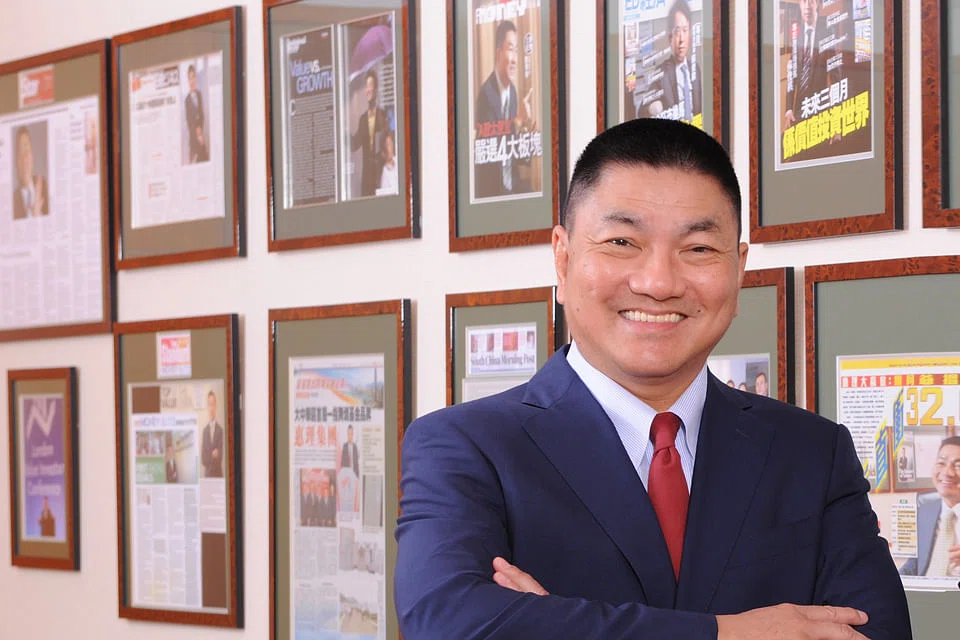
WHEN he first arrived in Hong Kong on a cargo ship in 1974, he did not even know how to open a bank account. Then, Cheah Cheng Hye was a 20-year-old journalist who had only secondary school education.
But what he lacked in financial knowledge, he more than made up for in his desire to learn and a determination that would take him out of poverty in his hometown of Penang, Malaysia, and into the throes of success he enjoys today in Hong Kong.
Now chairman and co-chief investment officer of one of Asia's largest independent asset managers by market capitalisation - Value Partners also had about US$15 billion in assets under management at the end of April - Mr Cheah says it is not ambition that drives him, but the thrill of being able to pick up something new every day.
"I am not a very ambitious guy, my idea of good fun was that I can afford to see a movie once a week, that's all I really wanted," says the 63-year-old. "The initial plan had been to spend a few years in Hong Kong, save enough money, buy car, buy house, go back to Penang and be happy."
It was a simple plan for a kampung boy who had grown up under the care of his widowed mother - he lost his father to kidney failure at age nine- with no money to pursue education beyond secondary school, despite being a top arts student in his Penang Free School class.
He stumbled into journalism when he took on a job folding newspapers for The Star at 17, and editors, noticing his writing talent, moved him into reporting. Three years later, a job offer with a much higher salary drew him to the Fragrant Harbour via second class passage in a cargo ship hold - "I couldn't even afford a plane ticket to Hong Kong" - where he first reported for The Standard.
Subsequent stints with Asiaweek, Far Eastern Economic Review and The Asian Wall Street Journal allowed him to dip his toes into the world of finance as he covered local and regional breaking news, including the string of banking collapses in 1983 and the pegging of the Hong Kong dollar to the US dollar.
"I discovered a new love in my life - I began to realise I enjoyed very much financial journalism, covering capital markets, stock markets," he says. "I taught myself accountancy. I wrote down in a book all the books I had to read to become good in accounting, stock markets and financial analysis, and then I religiously went through it. I would start reading, reread them, memorise the important parts."
He changed his signature from his name to the word "learn", "so every time I sign my name, I'll remember to learn more things".
His dedication to his newfound passion was evident in his work, and in 1989, he was approached by then-Morgan Grenfell (Asia) managing director Hsieh Fu Hua - who would go on to become CEO of the Singapore Exchange - to join the London-based investment bank's Hong Kong arm.
He seized the offer, even though he knew it meant giving up a promotion to move to New York City as a WSJ financial columnist.
As head of research and the proprietary trader managing the bank's house account, he was able to explore value investing with good results, earning him about US$1 million a year.
But it made little sense to him that an investment bank was making money through its house account instead of through clients.
"For the first time in my life I became some kind of a millionaire! I couldn't believe it," he says. "By 1991 I started wondering to myself why am I doing this? Might as well make my own money myself."
He launched independent fund managing firm Value Partners together with friend and business partner V-Nee Yeh in 1993, with the aim of honing the "craft of value investing".
They had less than US$5 million under their belts, including about US$1 million from Mr Cheah's pocket. "We were just young people having fun, we wanted to show that value investing really works in Asia... We wanted to show that our approach to investing is valid, legitimate."
Value investing, to Mr Cheah, means trying to "find businesses that fulfil the '3Rs': The right business run by the right people at the right price".
"That's all, it's simple, but difficult. For Asia, the right business and right price you can find, but right people very difficult because corporate governance in Asia is still so-so," he says.
"The key to this business model is only one thing: fund performance. If your fund performs, you're there. If your fund doesn't perform, clients don't want to know you.
"I believe that if you are a good professional person, the money will find you, you don't have to find the money."
As the head and co-chief investment officer of his firm, he remains very involved in crafting investment strategies. His performance speaks for itself - his company's flagship Value Partners Classic Fund has had a net gain of 2,828 per cent from 1993 till the end of this April, far outstripping the Hang Seng Index's 482 per cent gain over the same period.
In that time, the firm has grown from just two employees housed in a small Hong Kong office to a staff of more than 200 serving institutional and individual clients in the Asia-Pacific, Europe and the United States.
Value Partners has been profitable for 23 out of its 24 years, going into the red only in 1999 just after the Asian financial crisis.
The company also became the first asset management firm to be listed on the Stock Exchange of Hong Kong in 2007, and as at early May 2017, had a market capitalisation of about US$1.7 billion.
Among Value Partners' recent accolades are the Fund House Of The Year (Hong Kong) award from AsianInvestor's Asset Management Awards 2016, as well as the Best Equity Group (Hong Kong) award from the Thomson Reuters Lipper Fund Awards 2016.
With a solid foothold in Greater China, Value Partners is looking to grow its presence in Southeast Asia and Europe, setting up a Singapore office in 2014 and a London office in late 2016.
As successful as he may be, Mr Cheah insists he is no investing genius, and that he, too, makes mistakes. But when he does, he is quick to cut his losses.
"About one-third of everything I do is a mistake, another third is neutral and I get it right only one-third of the time, but that's enough for this kind of performance. When you get it right, you make a lot of money, when you get it wrong, cut, and fight another day."
Most of his mistakes are due to the "difficulty of evaluating management quality in Asian markets", he adds.
One such error was a decision of his in 2007 to invest in a new Hong Kong airline called Oasis, only to see the nascent company go bust the following year, resulting in more than US$10 million in losses to a Value Partners fund.
"Although we could absorb such a loss, I felt very humbled by this setback, and I have never invested in an airline ever since," he says.
He is as quick to learn from past mistakes as he is unafraid to go against the tide to make certain investment calls, a calculated strategy that has paid off.
He counts a "controversial decision in 2000 to set up the world's first fund specialising in the obscure 'B-class' shares listed in Shanghai and Shenzhen" among his best calls to date.
"The B-class shares, aimed at foreign investors, were a failed experiment and had been forgotten by most investors. The new fund quickly doubled in value because the shares had become so cheap and it helped to establish my reputation as a contrarian," he says.
While many of his peers in their 60s may have retired, he shows no sign of slowing down, and in fact is finding himself busier these days.
He started classes in May for a two-year Executive MBA course at Tsinghua University upon the institution's invitation, and also has to juggle newer responsibilities in the public service sector.
He has been a member of the Financial Services Development Council - an advisory body established by the Hong Kong government - since 2015, and was in April appointed an independent non-executive director of Hong Kong Exchanges and Clearing Limited.
"I don't see myself as anything more than a good soldier fighting as instructed for the cause, for the country, and in this case to try to further development and enhance Hong Kong as a financial centre, or to fight for stakeholders of Value Partners," he says.
Retirement is also out of the question when investing is more than just part of his job description, he adds, noting that his wife and two children have been supportive of the hours and weekends burnt as he continues to pursue the exhilaration investing gives him.
"I love it, seven days a week, I still get a kick out of it. I eat, talk, sleep, breathe investing."
Also keeping him on his toes is his belief that the financial industry is gearing up for what he calls the "golden opportunity in China", in particular for Asian fund managers such as his firm, as mainlanders become richer faster than their own financial system has developed to serve their needs.
China's huge economy combined with its "rather inefficient capital market" is "good news for us, because that means we have a role to play in helping China develop it further", says Mr Cheah.
"The capital market has been tightly controlled, and the Chinese public has suffered the phenomenon known in economics as financial repression... which means people who save money have very few choices on what to do with that money. Capital controls make it difficult for them to get their money out."
The next five to 10 years will be especially crucial and exciting for Value Partners, says Mr Cheah, as the mainland Chinese public, with one of the world's biggest pools of savings, look to better diversify their investments.
"The Chinese government's target to double the per capita income from the year 2010 to 2020 will be achieved or may be surpassed," he says.
"In recent years, the China government is very determined to upgrade the stock market, to upgrade the capital market, to be much more efficient in transmitting money from savers to users. We are part of that story."
CHEAH CHENG HYE
Chairman and Co-Chief Investment Officer
Value Partners Group
1954 Born in Malaysia
Education
Completed Form Five (secondary school) at Penang Free School
Career
1971-1989 Jounalist/editor at The Star (Malaysia), Hong Kong Standard, Asiaweek, Far Eastern Economic Review, Singapore Monitor, The Asian Wall Street Journal
1989-1993 Executive director, head of research and proprietary trader at Morgan Grenfell Group, Hong Kong
1993 Launched Value Partners Group with business partner V-Nee Yeh
1993-2010 Chief Investment Officer of Value Partners Group
Since 2000 Chairman of Value Partners Group
Since 2010 Concurrent title of Co-CIO
Recent awards
2009: Named as one of the 25 Most Influential People in Asian Asset Management by AsianInvestor
2010: Named as one of the Top-25 Most Influential People in Asian Hedge Funds by AsianInvestor
2011: Named "CIO of the Year in Asia" along with Value Partners' Co-CIO Louis So by Asia Asset Management
2016: Conferred Darjah Gemilang Pangkuan Negeri, a civil honour granted by Penang, and awarded the title of Dato' Seri
TRENDING NOW

Once staunchly pro-China, Malaysian Chinese businesses are now distancing themselves from Beijing

New launch or resale unit? Here’s a guide for homebuyers
The lesser-known prospects in the Asian chipmaking supply chain
Cliff Tan has 7 million followers and a 4-month waitlist. Why won’t he expand his business?

