The unassuming leader
Towers Watson CEO John Haley, a mathematician at the core, sums up the HR and risk management firm's story.
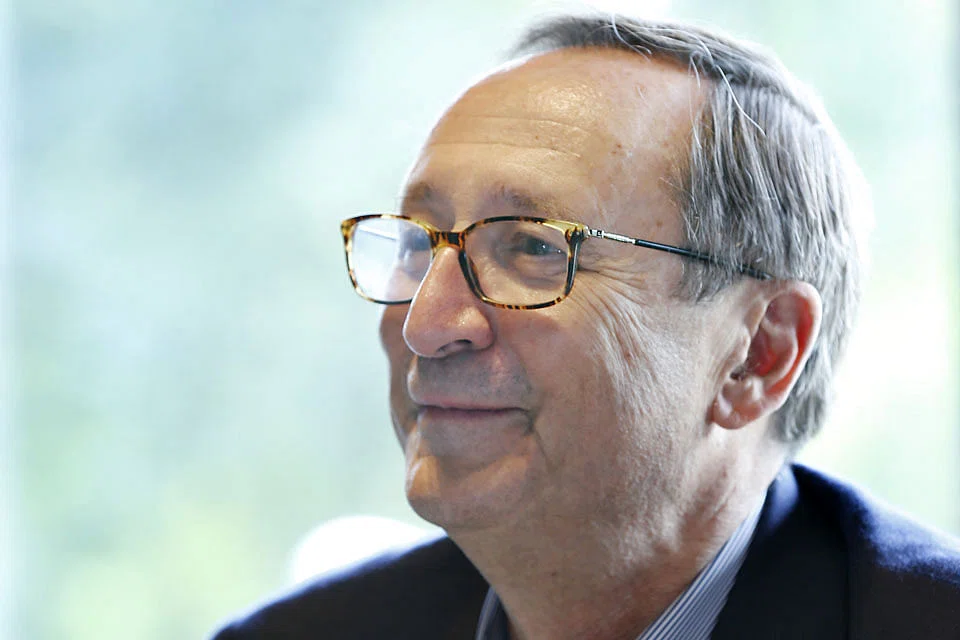
FRESH from two acquisitions in the last few weeks, human resource and risk management firm Towers Watson has had a good run, especially on Wall Street. But things have not always gone as planned. Since John Haley, 62, stepped into his role as CEO in 1998, the firm's market value has surged over 75 times. Under his leadership, Towers Watson underwent two historic mergers and several acquisitions, including the 2012 purchase of Extend Health, which owns one of the largest private healthcare exchange providers in the US.
Following the acquisition of Extend Health, Towers Watson's market value more than doubled in the year. But right before that spectacular rise, the stock price had plummeted quite significantly. The sharp valuation plunge stemmed from the fact that Towers Watson had expended more than 10 per cent of its US$4 billion market value then to acquire Extend Health, a move which proved to be an unpopular decision on Wall Street. But the exchange solutions segment is today its main growth driver.
Towers Watson, which has 100 offices across 38 countries, manages companies' human resources, from benefits and compensation, to employee engagement surveys, and helping people through its investment consulting operation, Mr Haley says in an interview with The Business Times.
To put his words into context, Towers Watson last year derived 57 per cent of its revenues from its benefits business, 18 per cent from risk management and financial services, 17 per cent from talent and rewards and 5 per cent from exchange solutions. But it is that smallest sliver of the revenue pie that gets Mr Haley at the edge of his seat.
Growth engine
If how information is presented on a financial report reflects business priorities, Towers Watson's exchange solutions business comes right after its mainstay benefits business.
The exchange solutions business mainly comprises OneExchange, a platform for employees and retirees to find a health benefit plan suited to their needs and budget. This is opposed to company-sponsored health plans.
While it accounts for just a fraction of the company's revenue pie today, Mr Haley expects the exchange solutions business to comprise half of Towers Watson's turnover by the next decade.
His optimism is not without reason. Last year, sales of the exchange solutions business had surged 79 per cent, with the platform covering some 730,000 lives. "If this were a baseball game, where it's based on a full nine innings, we're probably at the second or the third inning," Mr Haley says.
As healthcare costs continue to rise in the US and the 2018 excise tax - a tax on employers that pay a premium for employees' health benefit plans - looms ever closer, OneExchange offers companies a cost-effective way of providing health benefits.
Based on past case studies, Towers Watson has found that most employers that move to OneExchange save between 3 and 25 per cent in health benefit spending. It is for that reason that Starwood Hotels & Resort shifted 26,500 full-time employees from its in-house health plan to OneExchange.
Towers Watson is now targeting 25 per cent of market share in the exchange solutions business. But it is not the only player hoping to capitalise on this market opportunity. Aon Hewitt and Mercer are also competing in the space.In a recent results conference call, Mr Haley told analysts that growth in Towers Watson's exchange solutions business is expected to remain flat this year from 2014.
Math at work
Mr Haley is not the typical MBA C-suite guy. A mathematician by training, the first thing he does before we begin the interview is ask if he could take off his jacket: "That is how I usually work."
He graduated with a Bachelor's in Mathematics from Rutgers University in 1971, following which he pursued a fellowship at Yale University's Graduate School of Mathematics. His specialty focus was algebraic topology, which today is used in theoretical physics, but otherwise has few practical applications. But Mr Haley thinks that there is a way of thinking that mathematicians develop, as well as being at ease with quantitative analysis, which is very useful in business.
"Mathematics is evidence-based," he says. "There are things that you think might be true, but then you prove them and you decide what the results are. Over my career, I have seen that approaches that are evidence-based are the ones that are most useful."
Fresh out of college in 1973, Mr Haley joined Prudential Insurance as an actuary. At Prudential, he designed a Monte Carlo simulations programme using a compound poisson process to evaluate aviation reinsurance risk for Boeing 747s which had just been launched. The new jet airliner was significantly larger and more expensive to build than any planes that existed at that time, and in turn required much larger insurance plans.
In 1977, Mr Haley joined actuarial consulting firm The Wyatt Company, a predecessor of Towers Watson, and he never looked back. "It has been one exciting thing after another," he says.
In the first six months working at The Wyatt Company, Mr Haley got onto an IBM case, and continued consulting for the technology firm over the next 15 years. At one point, IBM had a "very complex problem" related to pre-retirement survival benefits and pension plan that was worth hundreds of millions of dollars. Mr Haley took a model from epidemiology, the study of the way diseases get transmitted, and used it to model how information was passed into pension plans and to retirement survival benefits. "They loved it so much that they gave me a special award," he says, grinning. "They did not do that very often, so that was a lot of fun."
In 1995, The Wyatt Company merged with UK actuarial firm R Watsons & Son to form Watsons Wyatt Worldwide. By 1998, Mr Haley was elected by the board as CEO. Under his leadership, the firm's market value has grown from US$120 million to slightly over US$9.5 billion today. The expansion was largely fuelled by organic growth, and a public listing that has spurred a significant merger and a slew of acquisitions.
Into the limelight
Ringing the bell at the New York Stock Exchange (NYSE) and seeing Watson Wyatt listed in 2000 was one of the highlights of Mr Haley's career. "When I joined in 1977, we were a very small company with offices in the US, and a couple in Canada, and we were in one line of business. And here we are, debuting on the NYSE," he says, beaming.
Despite the drawbacks of going public, Mr Haley felt that it could provide Towers Watson the currency to be a player in the coming industry consolidation. He also thought it would spur the company to be more forward thinking. "I think privately-held companies often have to manage through a rear-view mirror, because you are looking backwards at the company's book value. But with public-listed companies, the market is giving you an assessment on what your future prospects are, so you tend to manage for that, rather than worry about the past."
But it was no easy feat transiting to a public firm, which is typically pressured to focus on shorter term results to appease shareholders.
"We do not intend to do that," Mr Haley says firmly. "My sense of what happens when people say they react in the short run is - if there is a big surprise in the short-run, the question I would ask is: 'Do you really understand your business?' If you have a leader who does not really understand their business, maybe you do not want to invest in that."
Neither does he regard Wall Street as particularly short-term focused when it comes to Towers Watson. But the key to achieving that is transparency. Mr Haley tries to give analysts and investors the best possible look at Towers Watson and its strategy - both the good as well as the bad. "A well-informed investor is better for me and better for the company, even if some of the ways they are well-informed is about things that are not as favourable to us.
"That meant that there were times when there have been some bumps on the road, and we have been able to go to our investors and say, 'We think it is just a little bit of a blip here but we don't think this is important.' And they believe us because we are not cheerleading at other times."
The real test came when Mr Haley came aware of some billing irregularities involving a few of its clients right at the end of Towers Watson's fiscal year in 2003. Auditors could not sign off on an unqualified opinion, but the management did not want to delay the company's financial results release.
Mr Haley went home that night and mulled over the situation. "But one of the things I thought about was - and I often try to do this - let us suppose that six months down the road, I am looking back on this and I am saying, 'Wow, I am really glad that everything has worked out well.'
"If I tell people everything that I know and it turns out that it is okay, then a few months down the road I will be feeling fine. But if I don't do that, I will always worry about people saying, 'Well, you didn't disclose this, you didn't disclose that'."
The management team opted to come clean with shareholders and within a month, took care of the billing irregularities. "I think partly because we had built up a good reputation for transparency, there was not too much of a hit on our stock... But that was a time when my stomach was churning a lot," he says.
Staying grounded
After 15 years at the helm, Mr Haley remains unassuming as ever. "I think there is a healthy sense of what we do not know. Just because you have been successful in the past, do not assume that anything you are going to do is going to work. People sometimes get this notion that they just know everything due to their past successes. That is really unhealthy. That is how you run into problems."
To avoid making rash decisions for the company, Mr Haley ensures that Towers Watson doesn't get into areas off-tangent from its core competency. "I think more businesses lose money getting into little areas that are not so important ... For Towers Watson, we try to only be in businesses that are mission critical. It really makes us focus on being the best that we can be."
His strategy seems to be bearing fruit. His company is today the most profitable firm in its business. Towers Watson was formed in 2010 through a merger of Watson Wyatt and Towers Perrin. It is one of the few successful mergers of equals, says Mr Haley. Pior to the merger, he had sat down with Towers Perrin CEO Mark Mactus for a year to discuss their strategy for the merger. Both CEOs ultimately voted in favour of the merger to afford their companies new growth opportunities.
"Imagine that we had never done the merger and we had two separate companies," he says. "Either one of them would have had to spend over 20 per cent of their market capitalisation to acquire Extend Health. It would have been the same compelling value proposition, but a much bigger risk to take, and probably neither one of them would have been able to."
Work-life integration
Leading a consultancy business has Mr Haley travelling around the world 60 to 65 per cent of the time. "When you are running a firm that makes widgets, you can sit back in the office and say 'I want to make X thousand widgets and sell them for Y dollars each'. In our business, you can't do that.
"If we have a strategy we want to accomplish, you have to communicate to your employees what you would like to achieve, and how you would like to achieve that."
Given his work regime, trying to achieve work-life balance is tough, he concedes. "That is a trade-off that you have to make and you cannot pretend that the trade-off does not exist. It does." Each year, Mr Haley tries to take each of his two daughters for a trip abroad. Next month, he is heading to Israel and Jordan with his older daughter. His younger daughter is travelling with him on this trip.
To optimise his travelling time, Mr Haley does crossword puzzles on his iPad. Other times, he reads. His favourite mysteries are the old Ellery Queen novels, which have a part right at the end that says: Dear Reader, you are now in possession of all the clues and should be able to solve the mystery.
"I like mysteries that are pure deduction," says Mr Haley. "When you get to the end of most of the Sherlock Holmes mysteries, there is some surprise which allows Holmes to solve the case, where he knew something that you did not, so you could not have solved it. There is only one Sherlock Holmes mystery which is pure deduction. That is my favourite one of his."
JOHN HALEY
Chairman and CEO
Towers Watson
1971 Bachelor of Arts (Mathematics), Rutgers University
1973 Fellowship at the Graduate School of Mathematics, Yale University
Career highlights
1973 Actuary, Prudential Insurance
1977 Consultant, The Wyatt Company
1992 Board of Directors, Watson Wyatt Worldwide
1998-2010 CEO, Watson Wyatt Worldwide
2010 Chairman and CEO, Towers Watson
Co-author, Fundamentals of Private Pensions, Ninth Edition (US)
Board of Directors, Maximus Inc
Board of Directors, Hudson Global, Inc
Board of Directors, US-China Business Council
2001 Recipient, Marco Polo Award