

China's BYD opens electric car showroom to stoke public interest
Singapore
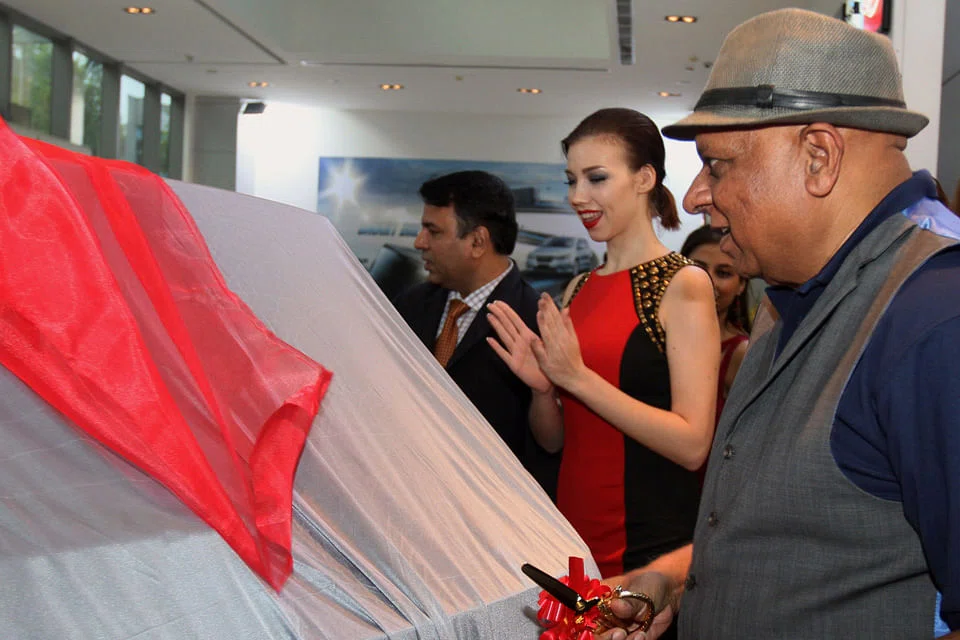
CHINESE carmaker BYD has collaborated with an India-based conglomerate to open a showroom for its electric cars here on Monday, marking a significant step in spurring public interest for mass adoption of its electric vehicles in Singapore.
The opening of the showroom is also another marker in the evolution of Singapore's fledging electric vehicle market, as public agencies and corporations pitch in efforts to grow the market here.
The "experience centre", as BYD calls it, is located in Smart Group's Smart Innovation Centre in Ubi. The India-based group counts Singapore-listed telecommunications provider SI2I as one of its subsidiaries.
The centre showcases to the public the BYD e6 - an all-electric compact multi-purpose vehicle that can cover up to 300km in a single charge, according to the carmaker. Members of the public can go for test drives in the e6 at the centre.
"Through the experience centre, we hope to let the Singapore public get in touch with our electric cars up close, and in the process, raise awareness of these vehicles for their eventual release," Liu Xue Liang, general manager of BYD Asia-Pacific told The Business Times.
Smart Group hopes to start selling the cars by September, said group chairman Bhupendra Kumar Modi in an interview on Monday.
The cars will be jointly marketed with Smart Group, which will oversee the import and distribution of the cars here, said Dr Modi.
Dr Modi is also considering selling the cars to consumers on a per kilometer basis, not unlike leasing.
BYD's Mr Liu said that this arrangement is part of the carmaker's efforts to collaborate with local companies and environmental groups to help advance electric vehicle markets in different jurisdictions.
For a company that often finds itself compared to American maker Tesla, the opening of the showroom advances BYD's battle front deeper into the electric vehicle market here.
The Shenzhen manufacturer, which counts Warren Buffett's Berkshire Hathaway Inc as a shareholder, sold 58,000 new-energy vehicles last year, and hopes to hit 150,000 this year, its chairman Wang Chuanfu had said previously. It raked in about 2.8 billion yuan (about S$594 million) for financial year 2015, while Tesla suffered US$889 million in losses.
Dr Modi is expecting that there will be further developments in Singapore's electric car market over the next two months that will spur mass adoption, and by then, Smart Group and BYD - an acronym for "Build your Dreams" - will be ready to stake its claim.
"We want to be like what Tesla was to the US. First-mover advantage counts," he said.
The government has committed itself to encourage take-up of such vehicles here. Earlier this month, Transport Minister Khaw Boon Wan said that government agencies have invited interested parties to share their ideas for 2,000 charging points around the island for car-sharing.
But even as efforts have been made to ramp up infrastructure, the fleet of electric cars here is still small, with only about 120 electric and hybrid cars here, based on the latest official data.
As such, Monday's opening could be seen as efforts on the private-sector's part to help raise awareness of electric vehicles as efforts are under way to make it easier to use such cars here, said National University of Singapore transport researcher Lee Der Horng.
But a big stumbling block that remains would be the resale value of such cars, which currently is hard to gauge. "Consumers are very calculative and if they can see that the resale value of such cars is high enough, that will justify (purchasing such cars)," said Dr Lee.
TRENDING NOW

Once staunchly pro-China, Malaysian Chinese businesses are now distancing themselves from Beijing

Stocks to watch: HPL, Aims Apac Reit, Zico, Advanced Systems Automation, ComfortDelGro
‘How many will survive?’: Bubble fears arise as China’s humanoid robotics face reality check
Smaller board lots can’t fix a market run by three banks

