

ST Electronics eyeing US$6.6b global USV market
Singapore
THE global market for unmanned surface vessels (USVs) is worth up to US$6.6 billion up until 2026.
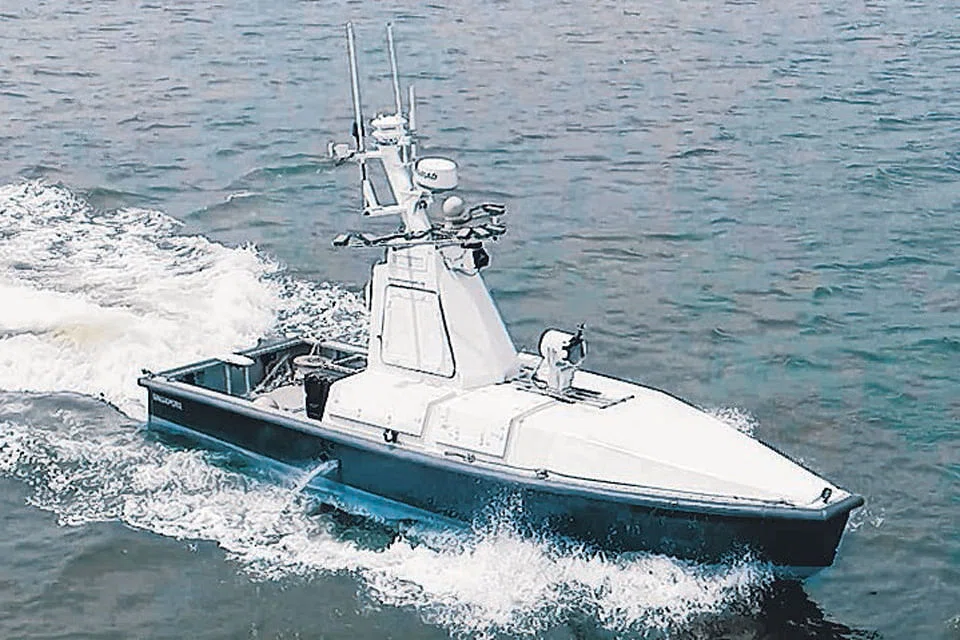
That is the value of the market the electronics arm of ST Engineering stands to unlock through its Venus USV technology, according to a forecast from Jane's, a defence intelligence provider.
By the end of 2017, ST Electronics will complete the full-scale development of the Venus USV for military and paramilitary purposes.
This puts Singapore's naval force on track to transition to fully unmanned mine counter-measure operations, a goal spelt out by Minister of Defence Ng Eng Hen last June.
The use of USVs - which are watercraft that can navigate autonomously using built-in sensors and computerised systems - will remove humans from potentially dangerous situations when carrying out the mission of locating and neutralising naval mines.
The military and paramilitary market for USVs is growing with Jane's weapons and equipment editor, Kelvin Wong, noting that most advanced naval forces and maritime security agencies have already started to look into these technologies.
The big boys in defence technology - the likes of Lockheed Martin and Boeing - are also active in this space and ST Electronics will compete in an already saturated market, Mr Wong suggested.
One further upside, however, for USV providers is that the technology has gained inroads into the commercial shipping sector.
Norwegian ferry operator Fjord1 is reported to have plans to commission in 2018 battery-operated ferries that will navigate autonomously under the captain's supervision. In this case, having a captain on board serves as a safety number and provides additional assurance to passengers who are still unaccustomed to taking a completely unmanned ferry.
Separately, UK-based Automated Ships and Norway's Kongsberg Maritime have penned a memorandum of understanding last November to build the world's first unmanned and fully autonomous ship for offshore operations.
Luis Benito, innovation strategy and research director at the leading maritime classification society, Lloyd's Register, explained that shipping companies are embracing autonomous and unmanned technologies to de-risk operations and bolster operational efficiencies.
Still, the USV technology needs to clear several hurdles before it gains more widespread market acceptance.
Maritime regulations need to be updated before both manned and unmanned vessels can co-exist in the same bodies of waters.
In April, ST Electronics penned a memorandum of understanding with the Maritime and Port Authority of Singapore, which is understood to include collaboration on developing a framework to guide the use of USVs within Singapore's maritime boundaries.
Mr Wong also noted that no internationally accepted protocols for USVs have been developed yet.
Another related concern that needs to be addressed by regulatory bodies is cybersecurity as risks of ships being hacked will heighten with increased autonomy and digital connectivity.
The International Maritime Organization (IMO), as the overarching regulator of international shipping, has to play a key role in both.
With respect to cybersecurity regulations, Mr Benito expressed confidence that "the maritime sector is getting ready or is going to get ready very soon". "The regulation might emerge sooner than we expect, driven by the IMO and the US Coast Guard," he suggested.
Watch the Venus USV in action as it navigates the open seas while avoiding obstacles in this video: bt.sg/stusv
Luis Benito of Lloyd's Register explains how cybersecurity affects every connected device. Watch the video here: bt.sg/lloydsusv
TRENDING NOW

Knight Frank’s Tan Tee Khoon leaves firm, Nicholas Keong takes over auction business
Keppel Energy, Sembcorp Utilities and Tuas Power to supply biomethane in pilot project

GovTech retrenches another 38 staff in second round of layoffs

Take-up of new private homes dives 45% in Q3 as prices accelerate with 1.4% rise

