

Catching rays while the sun shines
THIS WEEK'S TOPIC: Has the headline economic growth optimism filtered down to the business bottom line?


THIS WEEK'S TOPIC: Has the headline economic growth optimism filtered down to the business bottom line?
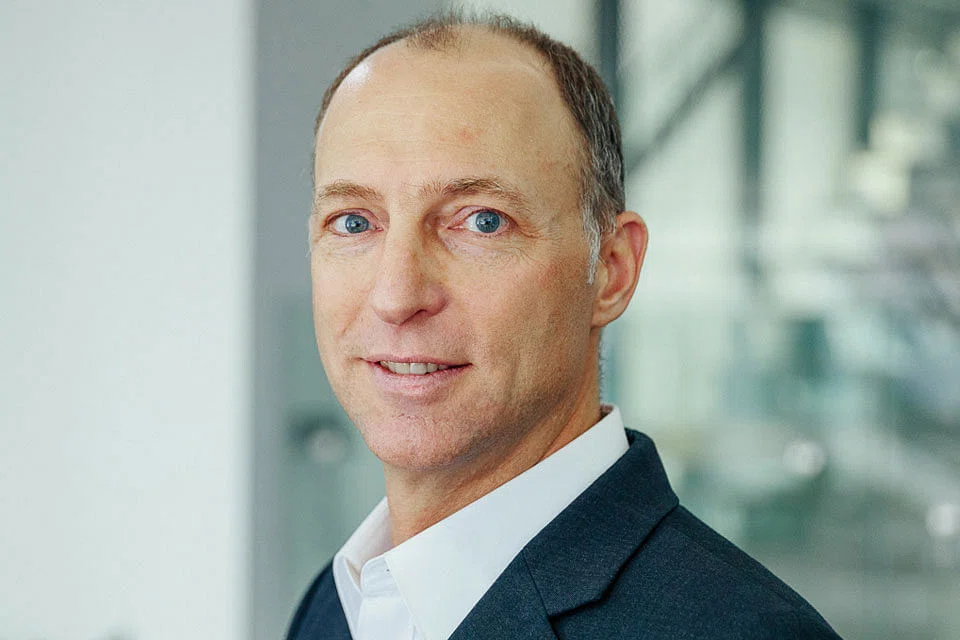
Matthew Johnston Area Vice-President, Asean & Korea Commvault
OPTIMISM has revitalised the global economic outlook and the impact is trickling down to the Asean region, driving businesses to invest in data-related technologies to stay relevant.
This data-driven economy has further spawned a myriad of opportunities to capitalise on. Thus, we see strong and consistent growth in the technology industry in Indonesia, Singapore and Thailand in 2018.
A slice of optimism should always be paired with a glass of prudence. Businesses that fail to do their due diligence can easily create vulnerabilities instead of opportunities with their digitalisation initiatives.
However, agile and information-driven businesses will be those best positioned to future-proof their investments as we wake up to a new dawn of data this year.
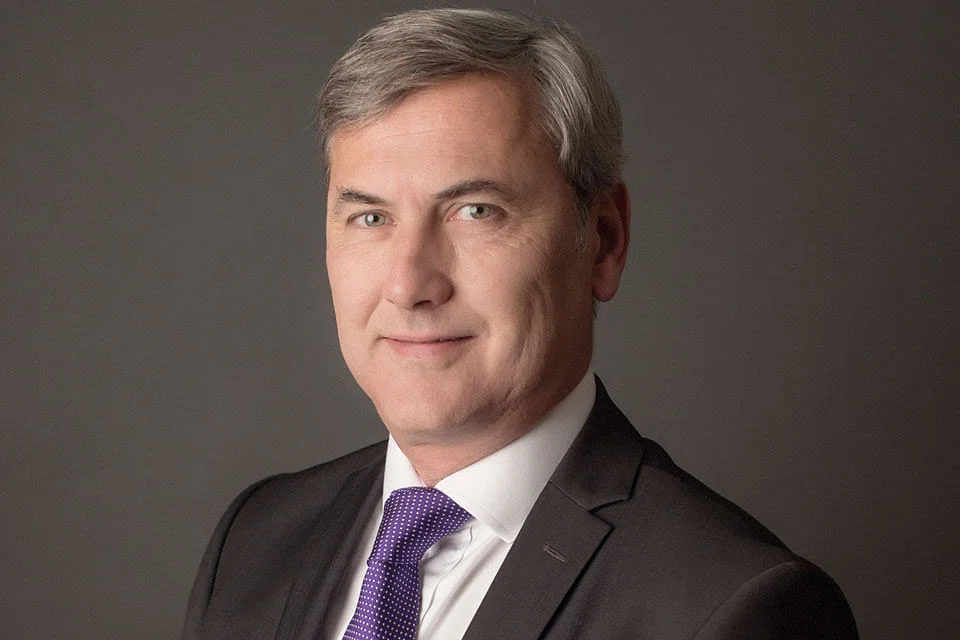
Nick Waters CEO Dentsu Aegis Network Asia-Pacific
BENIGN economic conditions do not necessarily make for easy business conditions. The rise of the digital economy, while showing growth and positive momentum, is disrupting many established industries and companies.
There are opportunities for new market entrants but it remains a challenge for incumbents to transition themselves quickly.
Currently, the dividends of the digital economy are not well distributed with the benefits enjoyed by relatively few dominant market players. A company's ability to rapidly transition itself to meet customer demands in the digital economy will be a larger determinant of business success.
Pierre Masclet Asia CEO and Singapore Branch Manager Indosuez Wealth Management
FOR 2018 we continue to be optimistic, especially after having just successfully completed the integration of CIC private bank into Indosuez Wealth Management and a strong 2017 altogether for our business. This view is shared by our clients looking at their activity levels and investment choices.
We foresee another good year for equities; we specifically like emerging markets and within these, especially Asia. We do advise our clients to keep a close eye on their portfolios, as central banks start winding down QE and reducing their balance sheets, a global uptick in inflation and (geo)political events could lead to higher levels of volatility, compared to the current ultra-low levels. We foresee an exciting and upbeat year ahead!
Max Loh Asean and Singapore Managing Partner EY
THE global economy is seeing broad-based recovery where growth expectations for most major global markets are optimistic and positive. We are at the most balanced economic recovery in more than 25 years, or what some have dubbed the "goldilocks economy".
There are nonetheless still risks, whether related to geopolitics, trade protectionism, elevated debt levels or inflation, but these have been baked into business sentiments and companies have come to accept this as the "new normal". It must follow that this optimism should translate into increased capital spending, hiring and earnings but more importantly, the focus should be on how the bottom line is reinvested to drive transformation, productivity and innovation for sustainable growth.
Pascal Lambert Group Country Head, Singapore Head of South-east Asia and India Societe Generale
CURRENT business conditions promote good revenue target expectations, particularly in Societe Generale's regional areas of focus. Energy-related activities, namely project finance, trade finance or commodity hedging, should benefit from an apparent certainty apropos slow-rising commodity prices.
Healthy economic growth in Asean and India, along with China's economic ambitions demonstrated by its Belt & Road Initiative, could also unlock significant infrastructure project needs that can be financially supported by international banks. Finally, wealth management's consistent growth in Singapore and neighbouring countries continue to see demand for diverse investment solutions that are well addressed by banks like us.
Vikram Mengi Co-Founder and CEO Latize Pte Ltd
DIGITAL transformation is one trend creating a spectre of disruption across industries. For instance a recent Bloomberg report showed 80 per cent of respondents in India and China willing to try financial products from tech companies such as Amazon and Google.
Such developments are driving investments in core business model innovation across insurance and banking. We certainly saw this coming through in our order books in the second half of 2017. And the trend looks set to accelerate.
Obviously, there are various risks. But in my opinion such investment is tied to the survival of traditional companies. Hence I am quite positive about the real economy in the near future.
Vincent Magnenat CEO Asia-Pacific Lombard Odier
THERE is no doubt that people are feeling more optimistic. From our vantage point, we are noticing that our clients have become more active in risk-taking and searching for better deployment of their savings.
Consequently, business is picking up solidly within our organisation and across different geographic markets. To us, this is indicative enough that growth is filtering down to the bottom line.
Otherwise, entrepreneurs, who constitute the bulk of our clientele, would have been far more cautious. Besides, with global growth remaining strong and remarkably broad-based since last year, people have good reason to be more optimistic.
Yeoh Oon Jin Executive Chairman PwC Singapore
IN this year's PwC Annual CEO Survey, a record-breaking 57 per cent of business leaders say they think global economic growth will improve in the next 12 months, almost twice that of last year (29 per cent).
However, most CEOs worldwide feel that growth for their own companies is no longer as straightforward as before; despite the high optimism in global economic growth, confidence in organisational growth saw only a nominal increase from 38 per cent in 2017 to 42 per cent this year.
All in all, while the macro environment is largely positive, we are still seeing both challenges and opportunities in the short run and it is not clear how to translate these to growth. Hence, CEOs are cautiously optimistic and seizing the day to make hay while the sun shines while planning for uncertain days.
Maren Schweizer Director Schweizer World Pte Ltd
WE cannot set the direction of the wind, but we can adjust our corporate sails to reach our destination.
I am optimistic on the global outlook as we enter the new year, amid robust economic growth and limited indication of a forthcoming downturn.
However, we are seeing transformations based on social, political, environmental and technological contexts, as well as consumer preferences. Each will require businesses to adapt.
Digitisation and new business models have revolutionised many industries. Automotives will be no exception. For the automotive sector, these forces are giving rise to four disruptive technology-driven trends: diverse mobility, autonomous driving, electrification, and connectivity.
I contend that growth in automotive is actually accelerating, stemming from new revenue streams, including shared mobility and data connectivity services as well as continued global macroeconomic growth in emerging economies.
The positive global outlook proves fallacious for businesses that miss out on adapting to the transformations. CEOs have to be prepared to adjust their corporate sails to gusty winds caused by accelerating disruptions. There are exciting opportunities ahead of us. 2018 will separate the wheat from the chaff.
Vipin Kalra Chief Executive Officer BankBazaar International
WE are definitely optimistic about our business outlook at BankBazaar. Growth in consumption, trade and investments is driving the recovery of the global economy and consumer sentiment has been on an upswing as a result.
More customers are leveraging online platforms for financial services and we expect further growth as personal spending improves and consumers look for paperless and instant access to financial products. As such, we plan to continue to invest in our international business and expand into new markets over the next few years.
Rathakrishnan Govind CEO, LSBF Global London School of Business and Finance
DEFINITELY not in the private education industry. While the government has been hitting a positive note for the past few months, there isn't any constructive initiative that will boost private business growth. One has to understand that many connected policies need to come together to support the business growth.
Tweaking one is synonymous to medicating to treat the symptom and neglecting the core issue. Unfortunately this has been happening, leaving a rather 'what next' question in the private sector. Policies have to be pro-private sector SMEs too, and not just broad stroked for the public and large MNCs. I see 2018 as another year of more tweaking!
Thomas Holenia President Henkel Singapore
DRIVING growth in mature and emerging markets is a key strategic priority for the Henkel Group, and a key target is to achieve organic sales growth of 2 to 4 per cent on average over four years until 2020.
In Singapore, our adhesive technologies, beauty care businesses and global supply chain hub will contribute to this performance. With our global supply chain hub in Singapore being a key initiative to improve profitability and enable Henkel to fund its growth ambitions, we are building the Singapore hub into a global centre of excellence for supply chain, talent management, digitalisation and sustainability.
Benjamin Low Vice-President, Asia-Pacific Milestone Systems
ACCORDING to IHS, the global video surveillance market was worth US$15.4 billion in 2016, with US$8.7 billion market worth in China and the Asia-Pacific alone.
The economic outlook for this industry in Singapore remains strong, due to Singapore's SMART Nation initiatives and increased market acceptance of video surveillance as a safety measure. Market pressures are balanced with more market opportunities - businesses embracing the use of video with facial recognition and artificial intelligence as a driver of business growth.
Working in strong partnership with other businesses is key to providing growth and consistency for the bottom line. The power of partnerships lead to more business opportunities as well as collaboration, which in turn leads to innovation and a stronger offering for customers in creating a more intelligent world.
Alex Campbell Managing Director Asia Xero
THE global economy looks to be on the upswing, and this is great news for Singapore's small business community. However, plenty of challenges continue to exist. For example, we recently released a study which found that small businesses here spend on average five workweeks each year chasing late payments from their customers. Aside from the productivity drain, late payments also result in cashflow issues that mean important opportunities can be lost.
Addressing these issues that are holding back small businesses is key to unlocking job creation and growth for the local economy regardless of whether the global environment remains favourable.
Terry O'Connor CEO, COURTS Asia Regional Board Member, YPO
WHILE strong consumer sentiment is pegged to economic growth, it takes a while before it translates into actual consumer spending.
Today, the retail industry is being disrupted by rising digital and mobile consumption patterns, spurring a shift to serving the omni-channel shopper.
I believe that it is important to adopt an 'invest in sustainable growth' mindset, while learning from innovation-driven peers and maintaining dialogues with the wider business community in order to better capitalise on returns during the good times and ride out the bad.
Karl Hamann Chief Executive Officer QBE Insurance (Singapore) Pte Ltd
THE short answer for us is that yes, optimism around headline economic growth often translates into a better bottom line for insurers, but what we truly want to see is a landscape well insulated from both simple and complex risks for businesses.
The ideal situation for us is to have a bottom line unaffected by broader economic indicators and especially market fluctuations and threats. We want to see firms adequately protect themselves against uncertainties in both good times and bad.
The problem for firms is that business protection solutions often come out of the bottom line. They are therefore reluctant to take them up, leaving them vulnerable to risk that could cripple long-term growth.
Damien Dhellemmes Country President, Singapore Schneider Electric
WE are optimistic about our growth, particularly in this region. In the industries where we operate, which include building technologies, IT, and infrastructure, we anticipate significant opportunities as our customers are poised to use new technologies like the Internet of Things to power their digital transformation.
Companies like ours must continually innovate and organise our business better to serve the demands of the global economy.
This means keeping our ears to the ground and our eyes on the future, staying relevant and understanding global trends like the demand for greater energy efficiency and access, as well as the need for sustainable solutions.
Naveen Menon President, Asean Cisco
THE optimism in the economy is being driven by a combination of a few factors.
Firstly, digital transformation of businesses is finally becoming a reality. Companies are incorporating digital capabilities in most aspects of their operations, which is improving productivity and supporting growth. This is true for both large enterprises, as well as small- and medium-size businesses.
Secondly, the ongoing drive to innovate and grow, especially in Southeast Asia, is seeing an increase in spending towards digital connectivity and cybersecurity from both the private and public sectors.
Finally, a business-friendly policy environment is boosting investment.
At Cisco, to sustain our growth momentum, we are focused on balancing short-term growth with longer-term investments by developing the next generation of leaders, making smart acquisitions, investing in our channel partnerships and supporting a healthy startup ecosystem in the region.
Michael Alp Regional Vice-President Pure Storage
FOR Pure Storage, increased investment for digital differentiation in Big Data, IoT, AI and machine learning is underpinning our market share gains.
Our growth comes from companies wanting to simplify and reduce their costs of running their traditional/legacy applications while putting the right Data Platform in for more advanced digitisation initiatives and that seems to be a very common strategic pursuit at the moment both in private enterprise and government.
We are seeing it from the most industrialised nations to the emerging economies that have less legacy barriers to pursuing some world-class goals in digitisation initiatives.
Dileep Nair Independent Director Keppel DC Reit Management Pte Ltd
BARRING any geopolitical catastrophes, all indicators point to steady world growth in 2018. How this benefits different economic sectors will vary but it would be a pity if Singapore companies do not capitalise on the growth in demand, particularly in the region. This requires companies to accept that our domestic market is too small and must look outwards.
Companies should leverage on the cachet of our Singapore brand recognised for quality and reliability. Adoption of the latest technology such as 3D printing, data analytics and "coworker" robots can give companies a quantum jump in productivity, particularly in manufacturing. This, of course, means having the right people and investing in retraining and upskilling of staff.
So as the signs augur well, it's for companies to seize the moment, mindful that "nothing ventured, nothing gained".
Ian Lee Regional Head, Asia-Pacific The Adecco Group
THE economic growth optimism is expected to filter down to our business bottom line on the back of stronger demand for workforce solutions.
However, we believe that this comes with a caveat: the ongoing technological and sociological disruptions leading to shifts in skillsets required by and workforce arrangements of companies.
Demand for soft skills, digital capabilities and analytical skillsets has increased across all industries while talents are embracing flexible work giving rise to diverse forms of employment relationships. This, coupled with the relatively slower pace of upskilling and reskilling, has led to a global talent and skills gap which has been cited by C-level executives as an issue that can materially impact their companies' growth prospects.
So, while the business outlook is optimistic, we need to be cognisant of, and manage, the structural changes affecting the world of work.
Sheena Chin Country Director, Singapore VERITAS
THE headline economic growth optimism is lifting spirits among CEOs. In Singapore, manufacturing, fuelled by the surging global demand for electronic gadgets, has been the key driver of growth in 2017.
Market watchers are seeing signs that growth will become more broad-based in 2018, benefitting industries such as services and signalling a strong potential for the economic growth to filter down to the business bottom line.
Beyond the usual caveats, businesses must be prepared to continue with the hard work of restructuring and innovation, such as equipping workers with the relevant digital tools and skills.
It is clear that the tech-based upheaval is no longer just a buzzword, looking at how disruptive technologies are changing the business landscape.
Foo Siang-Tse Managing Director Quann
THERE are, indeed, signs that the economy is finally on the cusp of real economic growth, sprouting green shoots. There is also a palpable sense of optimism among enterprises and employees that 2018 will be a better year with increased production, more transactions and ideally better wages.
Security is typically an expenditure that lags economic growth. As economic growth picks up, cybersecurity is set to play an even more critical role in helping companies build resilience and manage risk amid the increased level of interaction and connectivity in the market place.
The interest in and concerns about cybersecurity over the last few years are translating into significantly greater spending on cybersecurity infrastructure, products and services. We are seeing this among our customers - both existing and new - who are seriously implementing cybersecurity measures for the first time.
Helen Ng Chief Executive Officer General Storage Company Pte Ltd
GROWTH in the self-storage industry is driven by individual factors such as consumption habits and structural factors such as shrinking apartment sizes.
In a recession, individuals will consume and store less, but the reduced demand for storage space will be mitigated by shrinking apartment sizes in developed markets like Hong Kong and Singapore. A booming economy will point all factors in our favour.
I am optimistic about the industry's prospects in Singapore as demand will be buoyed by increased affluence and the proliferation of e-commerce.
Anindya Datta CEO and Chairman Mobilewalla
AS the leading mobile consumer intelligence provider, we are excited by the positive global economic outlook and our own projections for 2018.
The proliferation of mobile usage and the many economic activities around it will contribute greatly to global growth. In 2017, nearly US$100 billion was spent on mobile advertising.
The world of mobile presents tremendous opportunities for marketers, especially if data is leveraged effectively. Businesses now realise that mobile data enables them to identify new customer segments.
We believe the demand for data science, especially in mobile marketing, will not only continue to soar, but also become an essential for any business to stay ahead of the curve.
Chris Foster Regional President Y&R Asia
OUR clients who have embraced the power of AI and the creative intelligence it unleashes for their customers are the ones able to experience growth and capitalise on the optimistic outlook for 2018.
This fundamentally involves giving over some control to the consumer, behaving more like a platform-based company versus a manufacturer, and embracing the world of new technology.
Clients that remain inwardly focused on their own transformation and approach the brave new world with fear and trepidation are the ones missing the boat.
Imad Abou Haidar Managing Director, Asia-Pacific Finastra
GLOBAL economic optimism creates a positive momentum to kick start the year. Singapore reported 3.5 per cent growth in 2017, and we anticipate that the demand for digital transformation and digitalisation in the financial services industry will continue to accelerate too.
While offering seamless online services to enhance customer experience has been a priority in the retail banking sector recently, banks and financial institutions are also placing more emphasis on transforming digital capabilities across corporate and institutional arms, driving towards a connected corporate banking platform that allows them to enjoy operational efficiency as well as create new revenue avenues.
Andrew Chan Founder & CEO ACI HR Solutions
MY general sense of the economic environment is one of cautious optimism as I am still concerned about the uneven labour market growth and the possible escalation of geopolitical tensions.
The rise of the gig economy had resulted in higher demand for contract, part-time and freelance positions in the areas of operations, technology and business support which increase the uncertainty of the market.
However, I also see some relief from the uneven labour market from the government's Smart Nation initiative which will increase the demand for IT professionals as we go digital and become more productive.
Overall, I am slightly upbeat about the business outlook and I expect positive sales momentum for the mid-tier property market to rise steadily as the mass affluent market benefits from the recovery.
Praveen Kumar General Manager, Asia-Pacific ASG Technologies
WE are in the age of the data-driven enterprise and companies are making sizeable investments in technology amid the current economic optimism, hoping to impact the bottom line.
However, our experience has shown that companies that achieve high returns on IT investments focus their spending on the capabilities that can differentiate them in the market - be it automating operations to improve reliability and response times or improving business visibility, or investing in data management solutions for long-term Big Data strategies.
To directly reap the benefits of a positive economy, businesses must focus their IT investments on distinct opportunities that will give them an edge in the new year.
Stephan Neumeier Managing Director, Asia-Pacific Kaspersky Lab
AS economic optimism soars, more businesses are likely to invest in new technologies to improve productivity and efficiency. The adoption of cloud automation processes and Internet of Things (IoT) exposes businesses to sophisticated attacks such as mobile malware and ransomware. Examples are last year's WannaCry and NotPetya attacks.
In 2018, companies could be increasingly vulnerable to cyber attacks which will adversely impact the business bottom line. Our research shows that a single cybersecurity incident can cost enterprises an average of US$861,000. To ensure positive growth in the new year, business owners must implement holistic cybersecurity measures to protect their customers and their business future.
Erich Gerber General Manager, Asia-Pacific and Japan TIBCO Software
THE positive economic outlook and digital revolution in South-east Asia provide a unique opportunity for businesses to embark on digital transformation initiatives. We expect technology to play a significant role in improving business intelligence, efficiency and agility.
To reap the benefits of a healthy digital economy, organisations must use data to fuel real-time decision making and learn to intelligently connect their products. Technology will also allow businesses to diversify their avenues or channels to access overseas markets, providing tremendous potential to directly impact the bottom line.
Vincent Goh Vice-President, Asia-Pacific and Japan CyberArk
AMID a positive economic outlook and steady investments in technology and innovation across South-east Asia, businesses can reap the benefits if they remain cautious about the changing business landscape.
The increasing popularity of cryptocurrencies, artificial intelligence and machine learning is allowing attackers to develop new tools and find new and vulnerable targets.
To ensure the business bottom line benefits from this year's positive economic sentiment, business leaders must ensure an effective cybersecurity programme that protects the most critical assets in the organisation against the emerging risks in the cyber world.
Lieu Yew Fatt Managing Director Omron Electronics Singapore
SINGAPORE is a testament of how high-end manufacturing can be an economic pillar and optimism can certainly be felt by the companies engaged in it.
However, less agile businesses may miss leveraging this growth and be plagued by high operating costs. Businesses must innovate, enhance their operations with technology and even change business models to capitalise on opportunities.
We see automation, robotics, and technological advancements creating more efficient and cost-effective factory floors, while also helping to address subdued productivity and ageing workforce issues - the World Bank's key concerns.
Our shared optimism is evident in our investment in a new automation centre in Singapore - an innovation cum "live lab" for proof-of-concept development. As our key values include contributing to economic growth through productivity, this is our focus as we embrace innovation and strive to solve today's pressing economic and social challenges.
Jasmmine Wong Managing Director Inchcape Singapore
INCHCAPE ended last year on a high with sales performance exceeding expectations, mirroring Singapore's economic boom. As we enter 2018, we are already seeing some positive results in January following the Singapore Motorshow and remain optimistic in continuing this strong momentum.
We cannot ignore the potential headwinds that will impact the automotive sector as a whole, but we can ensure that we continue to bring the right mix of models to meet consumer demands and Singapore's green mobility agenda, while keeping innovation at the forefront of everything we do.
Tan Mui Huat President and CEO, Asia International SOS
TWO major aircraft manufacturers, Airbus and Boeing, recently forecast that the number of aircraft and air passengers will double in the next 20 years.
Employee mobility will also grow with increased positivity in the economy, driven by globalisation, China's Belt and Road Initiative and renewed optimism in the oil and gas sector. These factors will definitely contribute to International SOS's growth as our business is very focused on helping organisations to protect and prevent health and security risks for their mobile employees.
With innovation through digitalisation of our travel risk solutions, we are able to meet the growing needs of the millennial employees of organisations. They can receive up-to-date medical and travel security information, one-click dial to our assistance centre via our assistance app or access medical expertise through live chats. By delivering innovative and cost effective solutions to our growing client base, we are confident about delivering improved profitability to clients and our business.
Ana Dhoraisingam Chief Executive Officer, Singapore PineBridge Investments
2018 will continue to see strong synchronised global growth, led by the US, Europe and China. We expect to see increased capex investments being made by companies, who are channelling these new investments into areas that improve efficiencies and productivity.
Technology will play a pivotal role in reducing costs and thereby improving corporate earnings. Equities should continue to do well this year and as investors continue to hunt for better-yielding fixed income, EM debt should also do well.
We expect to see bouts of volatility this year in all markets and that underscores the importance that PineBridge Investments places on robust, bottom-up analysis of companies and securities.
Shahzad Nasim Executive Chairman Meinhardt Group
THE outlook for 2018 is favourable. The world economy is looking promising. Major economies like the US, China, Europe and Japan, are faring well.
The Middle East, despite political volatility, is expected to perform better as oil prices stabilise and countries focus on infrastructure development.
Governments are spending record amounts of money on infrastructure to modernise their economies and respond to population growth.
China's Belt & Road Initiative (BRI) is ramping up. Meinhardt is well placed to ride this wave as we have over 30 offices along the Belt & Road. We secured our first BRI project in 2017 and are optimistic about winning more projects. BRI is a great initiative to connect Asia with Europe and Africa.
Jayaprakash Jagateesan Chief Executive Officer RHT Holdings Pte Ltd
MY overall expectation is that the GDPs of major developed and developing economies will grow at a good clip in 2018. Tightening capacities show that the years of excess supply driven by quantitative easing have been replaced by broad-based growth in demand.
Consumer confidence has returned and inflationary expectations are high. The US Federal Reserve will take this opportunity to raise rates to a more normalised level and prompt many major economies to follow suit. China will continue its Belt and Road policies and drive investment into emerging economies. As an open economy, we in Singapore will benefit from broad-based global growth.
Vincent Tang Regional Vice-President Asia Epicor Software
THE manufacturing sector is going through a significant period of change, and the current economic environment means that manufacturers must embrace innovative technologies to respond to these changes and remain competitive.
As an enabler of growth, technology such as embracing smart manufacturing and predictive analytics will play a key role in empowering businesses to innovate and embrace the bottom line opportunities that will present themselves in 2018.
Kamal Brar Vice-President and General Manager, Asia-Pacific Hortonworks
WE see the economic optimism as a positive indicator for our businesses. There has been greater demand from our customers for technology in the field of data analytics and big data. Ultimately, having the right technology in place to understand, manage and grow the business is crucial for riding on the strong economic growth.
This ultimately will affect their bottom lines. From our perspective, we anticipate the demand for such technology to grow for companies in order for them to remain relevant and competitive.
Leong Boon Hoe Chief Operating Officer List Sotheby's International Realty
THE recovering Singapore economy still faces challenges ahead such as a slowing electronics manufacturing sector. Nevertheless, the stronger GDP growth in 2017 has led to a return of confidence to the property market.
Singapore's new role as Asean Chair in 2018 will see it lead the neighbouring economies in harnessing technology and promoting regional economic integration and growth. With economic stability in the region, investment in real estate will remain an attractive option to foreign investors.
Edwin Khew Teck Fook President The Institution of Engineers, Singapore
THE string of positive predictions from economic bodies has done its part in lifting business optimism but it could take time for it to show up in the bottom lines of businesses.
Sentiments aside, global economies can only translate prospective into actual growth if technologies continue to rapidly advance. This would consequently drive up the demand for new high tech goods and services.
Locally, initiatives like Smart Nation and high-tech manufacturing or Industry 4.0 will also fuel this need. This will translate into the need for more good engineers and technology professionals. A major concern is the lack of interest among Singaporeans to take up engineering which may lead to the increase in the need to bring in foreign engineers and professionals to support our economic growth.
Robson Lee Partner GIBSON DUNN
THE sanguine global economic forecasts for 2018 by the World Bank, the IMF and private sector analysts should be regarded as nothing more than preliminary weather forecasts for the year. We all know that weather forecasts are never quite accurate and sudden climatic alterations can jettison all bellweather predictions.
We live in a very uncertain world after the turn of the millennium. The world has become increasingly geo-politicised with forces of protectionism, threats from religious extremism and terrorism, and economic disruptions and seismic structural unemployment caused by tsunamic technological forces precipitated by Fintech, Regtech, artificial intelligence and robotics.
The potential fallout from Brexit is still to be reckoned with if and when a hard exit happens. At the economic grassroots level in Singapore, SMEs are facing challenges from all fronts from rising costs, the lack of foreign manpower to undertake jobs that are difficult to attract Singaporean workers, and technological advances.
Driverless cars could soon make inroads into the transportation industry and sideline even the likes of Uber and Grab in time to come. We live in a very exciting and challenging world and how 2018 eventually pans out will portend the vision for the global economy in 2020 and beyond.
Ronald Lee Managing Director PrimeStaff Singapore
THE demand for human resources and manpower services is a strong indicator of positive business sentiment and we have been seeing a pickup in business activity in recent months.
Therefore I believe there is a compelling case for the headline economic growth optimism, at least in the short to mid-term.
A recent PwC survey underscores this notion, with 57 per cent of global CEOs polled believing that worldwide economic growth will improve in the next 12 months. This is almost twice that of last year. Beyond that, global growth prospects are of course susceptible to downside risks such as a sudden tightening of monetary policy, rising debt levels and mounting geopolitical tensions. "Cautious optimism" is therefore still advised.
Carl Freer Founder Watstock Artificial Intelligence Networks Ltd
MY opinion is that private companies are a leading economic indicator of where the economy is headed, especially when it comes to economic growth, hiring, and wages. For example, high levels of optimism among private companies is a solid one-year leading indicator of US GDP growth.
If this higher optimism among private companies can be sustained, it could translate into an increase in business activity, including hiring and expansions in the next few months. For these higher levels of optimism to continue, however, the developed world leaders must deliver on promises of tax reform and decreased regulations, two of the driving forces behind this renewed sense of optimism among businesses of all sizes.
It's also important to note that not all of the economic indicators show such positive trends for the economy. Revenue forecasts are notably lower and economic growth forecasts remained relatively flat. Skyrocketing economic optimism is a good sign, but we're going to have to wait and see if this optimism turns into economic growth.
Martin Mackay President and General Manager for Asia-Pacific & Japan CA Technologies
WHILE we certainly have much to be optimistic about with the global economy picking up, and investment and trade rebounding, it is imperative for businesses to look beyond the immediate impact on the bottom line and decipher the trends driving this upturn in order to formulate sustainable growth strategies.
In terms of trends, one cannot overstate the impact of technology. Technological innovations, such as automation and machine learning, can give rise to new revenue streams and business models as well as boost productivity and efficiency, further bolstering economic growth.
To thrive in the long run in this digital economy, enterprises need to always put their customers at the heart of their business strategy as well as continually invest in the reskilling of their employees, promote STEM education for a new generation of diverse talent, and embrace diversity.
Besides talent, it is also vital for businesses to adopt agile processes so that they are better equipped to keep up with evolving market demands and take advantage of new opportunities. Key steps to achieving this agility is to transform their software development and delivery by building a Modern Software Factory while strengthening their security posture with identity-centric security and DevSecOps practices.
Wong Heng Chew Country President Fujitsu Singapore
AS a regional hub for businesses, Singapore will eventually feel the local impact from the positive global economic outlook. This optimism will encourage bold investments now for the future which can have a domino effect on the economy in general.
Organisations will continue to focus on strategic investments that serve to support long-term business growth and performance, and lay the foundation to weather market changes. For instance, strengthening or developing a digital strategy will likely see increased momentum, as Singapore continues its drive to be a Smart Nation.
We can also expect more confidence in growth areas including AI, IoT, security, blockchain, and looking into ways to economy-proof the business - such as talent management and co-creation of new business values.
Pierre Veyres Regional Head for South-east Asia and CEO, Singapore BNP Paribas
THE global environment is positive, with global growth forecasts stronger than expected and importantly, projections of well-synchronised and sustained economic expansion across regions. Among them, Asia-Pacific is projected to outperform the world.
While downside risks include tightening US monetary policy, trade tensions and persistence of geopolitical risks, levels of business and consumer optimism are higher, and investment seems to be picking up thanks to better prospects and favourable global monetary policy.
This has the potential to translate into increased business activity across the corporate, institutional and wealth management clienteles. We are confident directionally and will continue to pursue our sustainable growth model in partnership with our stakeholders.
Jessie Xia Managing Director - South-east Asia ThoughtWorks
Fuelled by global economic growth, the overall business outlook for the tech industry is looking positive. An increasing number of our clients are focusing their spend on digital transformations, customer journeys, and operational efficiency. This has been a key driver of topline growth for the ThoughtWorks Singapore office over the past five years - from just 11 employees in 2012 to over 100 employees today.
A key challenge in the tech industry however has always been the acute shortage of tech talent. In order to address this problem, the government and private sector are actively collaborating to invest in programmes and initiatives to build a pool of talent in Singapore.
As the tech industry continues to benefit from economic growth optimism, we intend to invest heavily in driving recruitment and steer more offensively towards growth.
Toby Koh Group Managing Director Ademco Security Group
THE global economy does seem to be steadily improving. However, across the seven countries that we operate in, we see the most positive prospects in Indonesia, the Philippines, Vietnam, India and China. Singapore and Malaysia are still sluggish. Companies are generally still very cautious about spending.
2017 saw Ademco Security Group growing to record revenues. This was largely due to contributions from the five markets as mentioned. We continue to view these markets as key drivers for our business in 2018 and strongly encourage all Singapore companies to consider the opportunities there.
Lim Soon Hock Managing Director PLAN-B ICAG Pte Ltd
THERE is much consensus, including in Singapore, that the global economy is turning around. Businesses, however, should remain optimistically cautious, given that the upturn is at an early stage, and any sustainability would depend on many of the downside risks - such as the tightening of global financing conditions, escalating trade restrictions, rising geopolitical tensions and high debt levels around the world - being managed or mitigated.
In the marine industry, which has been severely affected by the downturn in the oil and gas industry, the company that I consult for, has seen a 20 per cent growth in business last year over the previous year. The company is optimistic about business prospects this year. This is a positive sign, but it cannot be representative of headline economic growth optimism filtering down to all industries.
The best insurance a company can have is to build resilience in the business, much like the company that I consult for, to be able to continue to do well in both good and bad times.
Chris J Reed CEO, Founder, Entrepreneur Black Marketing
YES without a doubt. The fact that my main business, Black Marketing, has doubled sales quarter on quarter answers that question. I feel a real optimism as we enter the Year of the Dog that 2018 will be a fantastic year for Singapore, Asia-Pacific, Australia, New Zealand and Europe where all our clients come from.
Businesses are reinvesting into marketing again and especially measurable social media platforms like LinkedIn and content marketing. These are both cost-effective marketing strategies.
The real challenge here in Singapore is not finding clients; it's finding and retaining talent to service these clients. I employ 20 Singaporeans and PRs and cannot get an EPass or SPass approved! Why?
I know of other entrepreneurs and SMEs that are having similar problems. I know of many MNCs who are not. There needs to be more support in this area given to SMEs and entrepreneurs like myself in capitalising on the growing economies across Asia-Pacific when these clients are all being serviced from Singapore.
Olive Tai Co-founder and Managing Director Beautiful.me & Synagie.com
EMERGING trends such as the global technology cycle and Internet of Things will be key drivers of 2018's growth prospects. These sector activities, which benefit business owners for being less labour-dependent, are fuelling optimism for their strong contributions to better bottom lines.
While there is pushback from some traditional industries unable to pivot to the online space, Singapore brands that can embrace healthy risk appetites can expect stronger showings.
A new engine of growth in the online space is the increasing popularity of O2O - online to offline - where e-commerce platforms head back to old fashioned offline spaces to sell their products, thus reinventing traditional income lines to further drive margins. In short, to be upbeat about your corporation's outlook and survival, look to digital disruption.
Zaheer K Merchant Regional Director (Singapore & Europe) QI Group of Companies
WHILE there has clearly been abundant optimism and enthusiasm about the headline economic growth, it will still take some time for businesses to feel any actual positive impact.
Often, economic growth optimism is fuelled by the stock market's instantaneous reaction to policies; it is actually policies that drive the economy. Still, it takes some time for policies to translate into jobs, and for external demands to seep in.
Hence there should be caution, as the geopolitical environment - which is currently unstable - might prompt central banks to tighten monetary policy. All in all, sentiments seem to be upbeat, which should translate into business benefits in terms of profit and growth.
David Leong Managing Director PeopleWorldwide Consulting Pte Ltd
THE headline economic growth figures excited the market but may not have trickled down to the businesses. The growth may have been selective and the growth numbers are cold figures that do not impact many businesses. Employment is not rising in tandem with the growth exuberance. Even at the end of 2017, from our conversations with our clients, not many are paying out bonuses, reflecting the muted sentiments.
The macroeconomic factors are not particularly encouraging, with the tightening of credit and possibly further interest rate hikes. Indeed the recent economic growth is not felt equally by all; we hope for better times.
Derrick Chang CEO PSB Academy
PSB Academy has enjoyed a resounding trajectory of growth and profitability for consecutive years. Since 2016, we've seen double-digit growth in our student population.
Today, we are in a strong position to take the Academy into its next phase while remaining committed to our vision of helping workers and fresh school leavers thrive in the New Economy.
We see talent development as a marathon. Which is why, on the back of a well regulated sector and positive headline economic growth this year, PSB will remain dedicated to fuelling growth sectors for the region by equipping these talents with the right skillsets.
Instead of resting on our laurels, we will be investing in another multi-million-dollar campus in Singapore this year, that will feature advanced engineering, life and sport sciences laboratories and facilities.
Annie Yap Managing Director AYP Group
THE pickup of investment, manufacturing and trade, coupled with decreasing price volatility of commodity markets in developing economies, underpins the optimistic global economic growth in 2018.
As well, a pickup in economic growth in the US and EU can offset the effects from a slowdown in China's economy.
Singapore - a skills and knowledge hub, and having key competencies in the services sector - is well positioned in this current economic climate. Business outlook remains optimistic.
In addition, the improving property market, booming electronics production and strong export growth are expected to strengthen the economy and business confidence. That said, companies still have to be agile and progressive.
Over at AYP, we have also experienced a ramp-up in hiring for our Singapore and regional business, particularly for our clients in semiconductor manufacturing and financial services.
TRENDING NOW

Singapore identifies 7 firms responsible for haze fires, notices issued urging action: Grace Fu

‘How many will survive?’: Bubble fears arise as China’s humanoid robotics face reality check
GIC-backed Bank Jago sees wealth management as next growth engine as Indonesian investor base grows

Ageing in Asia: Huge potential for the consumer economy

