

Fostering future growth
THIS WEEK'S TOPIC: Apart from the five growth clusters outlined in the 2015 Budget speech, what are other promising areas in which Singapore is well poised to excel?
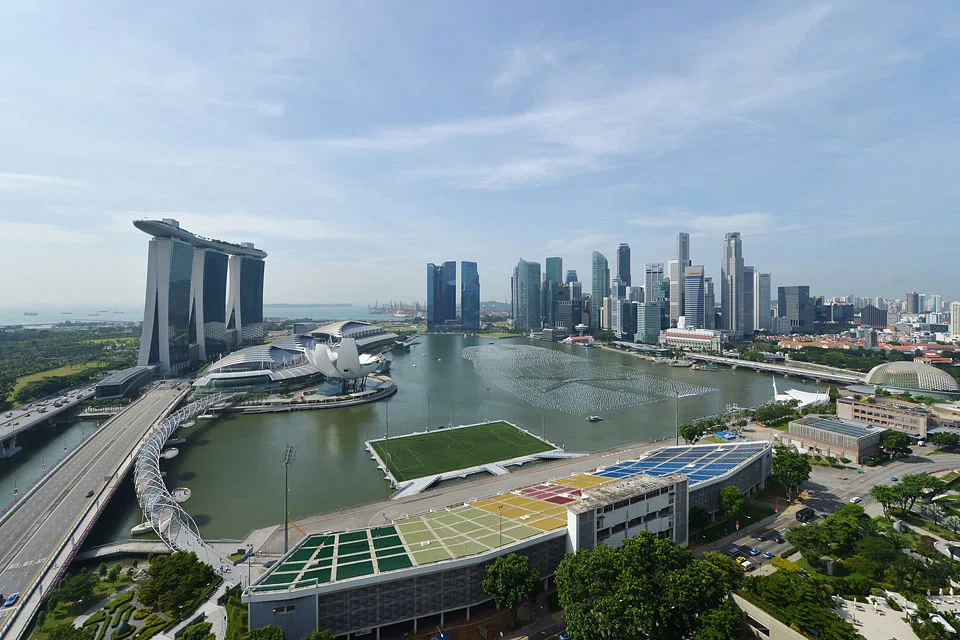

THIS WEEK'S TOPIC: Apart from the five growth clusters outlined in the 2015 Budget speech, what are other promising areas in which Singapore is well poised to excel?
Ang Thiam Guan
Managing Director for Singapore and Brunei
Cisco
DATA & Analytics will be an important growth sector for Singapore as we continue to aggressively roll out Smart Nation initiatives to connect the unconnected. By embracing the Internet of Everything, we will enable billions of new connections between people, processes, things - and each of these connections will produce data. Combining this rich pool of data with analytics will provide our public and private sectors with insights that can empower them to change behaviour, improve service delivery, create original applications, and drive innovations.
Singapore recognises Data & Analytics as a valuable emerging industry and aims to become an international Data & Analytics hub that is capable of serving the needs of enterprises and users locally and around the world. Cisco is augmenting this effort by bringing analytics from the data centre to the edge to administer near-real-time insights. This will allow organisations to perform analytics at the speed that business demands and act on the most relevant data while it is still in motion.
As data becomes the lifeblood of our increasingly connected nation, this speed and intelligence will enable businesses to achieve their desired outcomes while helping Singapore to unleash the transformative potential of our Smart Nation vision.
Annie Yap
Managing Director
AYP Associates Pte Ltd
THE five growth clusters identified are all understandably high value added and have relatively minimum usage of lower-skilled workers. The retail and F&B industries still have important supporting roles to ensure that Singapore is able to portray the attractive lifestyle in our country to attract or retain people in Singapore. More of such companies can be assisted to go regional and global.
Another possible cluster would be that of traditional medicine. Brands such as Tiger Balm, Axe Brand Universal Oil, etc, have been sold in many countries successfully for many years. These brands are also surprisingly popular among shoppers from Hong Kong and Malaysia. Furthermore, companies such as that producing Axe Brand Universal Oil can be considered high value-added and they employ a significant number of senior workers as well. Perhaps more support can be given to these companies to do more R&D, further enhancing their products.
Lim Soon Hock
Managing Director
Plan-B Icag Pte Ltd
THE government should not just focus on developing advanced capabilities and capacities to service the named five growth clusters of the future for Singapore. Instead I would argue for an IP-centric approach, which is cluster agnostic.
The current cluster-centric strategy is inward-looking. It serves mainly MNCs and our local companies in Singapore. An IP-centric strategy is outward-looking. The world is our market for Singapore-developed IP. We are no longer a follower, but a leader, in an application or product which an IP has been developed for.
The risks are high, but the returns are huge, in building IP. IP can provide the accelerator to push Singapore to greater heights of excellence and economic success. As an example, Singapore can develop disruptive apps taking advantage of the ubiquitous smartphone - the Internet of Things - for the named clusters, here and the world. Pursuing an IP-centric strategy also supports Singapore's goal of becoming an IP hub in the region.
Ehsan Mesbahi
Dean (Singapore), Chief Executive Officer
Newcastle University International Singapore
THE growth clusters highlighted in the 2015 Budget speech demonstrate the solidification of Singapore as a knowledge-based and high-tech economy.
Along these lines, in addition to the five sectors outlined, Singapore is ready to serve as a vital nerve centre in other value-adding clusters such as marine and offshore engineering, smart energy, pharmaceuticals, nutrition and food technology. Specialist higher education is needed for harnessing skills and talent to further support growth in these sectors.
It is also imperative that R&D investments continue to drive change and transform the nation into a world-class research-influenced, creative and entrepreneurial economy.
Newcastle University International Singapore provides undergraduate and post-graduate degrees, and research capabilities in many of these areas, preparing Singapore's stakeholders to grow the economy and address emerging challenges.
Tim Moylan
President
Infor Asia-Pacific Japan & Middle East
SINGAPORE's position as a regional hub across the Asia-Pacific has been established because of its culture of transparency, adaptability and innovation. Singapore also excels in manufacturing, research and services because of its early adoption of technology, including solutions like the Cloud that enable greater productivity and enhanced flexibility for businesses.
These core strengths allow Singaporean businesses to lead across a wide variety of sectors beyond traditional manufacturing and logistics. Based on this foundation, Singapore will continue to develop as a regional innovation leader as the government pursues the establishment of a Smart Nation, in which businesses, government and citizen services are interconnected through technology and data. With new advances in R&D and innovation, the country will also become the regional leader in education and innovative tourism.
Singapore's niche strengths are its business culture of inclusion, its commitment to industry transformation, its adaptability, and its regional focus. As Singapore turns 50 this year, and as the economy continues to mature, Singapore's strength and leadership in both traditional and new industries and services will remain ahead of the curve.
Jason Ogden
Vice-President
Curvature in Asia-Pacific
SINGAPORE's strategic decision to identify promising vertical sectors and prime them up for further development is a welcome move. As the global economy and the Singapore economy continue to evolve, new growth areas will emerge. As this change happens, it is vital to keep an eye on technology as it provides the enabling framework for economic transitions.
At Curvature, we believe in the paradigm that businesses which succeed in the future will be those which emphasise innovation, rather than those which continue to stick to past approaches. As Big Data and the Internet of Things become more prevalent in business, a shift in thinking is necessary in order to keep up with the different trends disrupting areas like the IT infrastructure. Technology companies which help businesses to achieve both long and short-term cost savings while staying ahead with the needed innovation would thrive.
Curvature believes that a re-think of the status quo will lead to more agile businesses, by differentiating between what drives innovation versus simply keeping the lights on, avoiding ad-hoc cost-cutting from time to time that hurts competitiveness and strategically investing only in what will move business forward.
Lee Fook Chiew
Chief Executive Officer
Institute of Singapore Chartered Accountants
SINGAPORE is regularly voted one of the best places to do business in globally, and has built a strong reputation as a trusted business hub with robust corporate governance practices and regulatory environment. Our status as a global hub is underpinned by a strong eco-system of professional services.
Among these, a vibrant accountancy sector that meets high professional and ethical standards is an important contributor. Accounting professionals play a vital role in economies as their work gives investors and the public the confidence and assurance that financial reports and corporate disclosures are reliable, and truthfully prepared.
Todd Arthur
Managing Director Apac
HRS
ASIA's strong economy has accelerated Singapore's thriving in business and Leisure travel sectors. Singapore has recently garnered international accolades from Lonely Planet (World's Top Country to Visit in 2015), CNN (Top 10 Destinations to visit in 2015) and New York Times (top six out of 52 places to go in 2015). In addition, Singapore remains a leading global MICE (meetings and incentive) destination with a robust calendar of events and international recognition as a top business city. The launch of the MICE 2020 Roadmap from the Singapore Tourism Board also serves as a blueprint charting the industry's further growth.
As a global leading hotel solutions provider, HRS is encouraged by the promising prospects in the travel sector in 2015. With the emphasis on economic contribution and innovation, we will continue to work towards developing sustainable solutions to enhance business travel accommodation management, and play our role in building Singapore as the vibrant business/tourist destination.
Robin Johnson
Country Manager Singapore
XL Group
I HAVE no doubt that Singapore's insurance sector will continue to excel. Over the past decade, Singapore has swiftly and deliberately transformed itself into the pre-eminent hub for insurance in Asia. Its success has derived in part from a progressive approach to insurance regulation, coupled with a predictable legal system and a highly educated workforce, and these factors have attracted leading industry players in insurance, reinsurance and broking.
The way the insurance industry operates means the bigger a regional hub becomes, the more efficient and effective it is at underwriting risk and attracting business. The insurance industry in Asia is projected to grow at about 8 per cent per annum, and by 2020 is likely to account for almost 40 per cent of the global market. So Singapore's insurance sector is certainly poised for further growth.
Growth can be accelerated if our industry collaborates with this country's advanced eco-system of industries, public bodies and academic institutions to find solutions for the risks and challenges of the future. If we can achieve this, then Singapore will transform itself further - from Asia's regional insurance hub, into one of a handful of global hubs for insurance.
Serene Lam
Managing Director
CareerBuilder Singapore
WE BELIEVE that the niche areas were not chosen randomly but are actually a reflection of how Singapore has made exceptional use of its resources.
Challenges such as having a small land mass and limited resources have led us to maximise land use through careful urban planning, and streamlining manufacturing practices. Through transparency and ingenuity, our financial and aerospace industries have also achieved global recognition and trust.
A common denominator to these successes is none other than our human capital.
As age diversity continues to grow in Singapore's workforce, organisations have a chance to build on our past accomplishments. Pioneers in these five niche industries should be given every opportunity to pass valuable skillsets, perspectives and knowledge to the next generation.
CareerBuilder Singapore hopes that with the recently announced schemes such as SkillsFuture and the Special Employment Credit, Singapore will continue to keep lifelong education a priority. By upgrading our human capital and tapping a multi-generational workforce, we will continue to stay competitive in these five growth clusters.
Craig Charlton
Senior Vice-President, Asia Pacific
Epicor Software Asia Pte Ltd
AS SINGAPORE continues to invest in the growth of the five highlighted clusters, supporting industries and infrastructure are well placed to grow and adopt leadership positions alongside them. A prominent example of this would be the IT industry. Advancements such as Cloud and mobile technology present opportunities where applications and solutions can be deployed in almost all of the identified clusters, and can serve as catalysts for the businesses adopting them.
Another sector that has great potential is the Engineering, Procurement and Construction (EPC) sector. With the influx of developments expected in the coming years, we foresee growth in this area.
As such, it is important that businesses remain vigilant and control costs and resources to remain competitive. The enterprise IT sector is an area in which Singapore can develop advanced capabilities, to help individual companies from the five main sectors and other promising industries to increase productivity and efficiency and become global market leaders.
Bryce Boland
Chief Technology Officer for Asia Pacific
FireEye
AS THE nature of geopolitical conflict has rapidly become digital, Singapore has embraced the opportunity to become a global leader in cyber-security. A Smart Nation must excel in cyber-security or be damaged by a lack of it. Singapore has made investments in cyber-security skills development to support this innovative industry which safeguards people, infrastructure and intellectual property. Many businesses, including global banks, leading security vendors, and even Interpol are already focusing their cyber-security efforts in Singapore, creating a natural incubator for tomorrow's cyber-security talent.
Singapore can lead in cyber-security, particularly in securing the critical infrastructure for the Smart Nation, and exporting the best ideas to the rest of the world. Singapore should continue to encourage cyber-security skills development, innovation and investment.
Chrisol Correia
Director, Global AML
LexisNexis Risk Solutions
SINGAPORE has an international reputation as a centre of excellence for private banking and fund management, with high levels of financial inclusion, a flexible, well-educated workforce, international accessibility, innovative products and an ambitious domestic banking industry. This is all framed by a rigorous and effective governance and compliance framework that gives confidence and stability, which in turn fosters opportunities such as offshore renminbi trading as well as new opportunities in Islamic finance.
Singapore is also an active member of the international money laundering regulatory community with a high degree of cross-border collaboration, and has been at the forefront of many new AML initiatives in recent months. Its prominent role in this area helps to sustain regional thought leadership and the protection of investors through best-of-breed risk and compliance management. All these factors make Singapore well-poised to become a true leader in the fight against money laundering and terrorism financing in this region.
Paul Lim
Chief Executive Officer
Soverus Group Private Limited
CYBER-SECURITY and its related fields constitute another promising industry in which Singapore is well-poised to excel. Both the government and private sector have recognised the growing importance and demand in this sector and several new initiatives have already been announced such as the setting up of the CSA, the partnership between Singtel and FireEye to set up the Advance Security Operations Centre, and other similar collaborations between cyber companies, audit firms, polytechnics and universities. Cyber-crimes are a new generation of crimes that do not respect physical boundaries and country jurisdictions. They sit high in both the probability and impact axis of any risk management matrix for both governments and large corporates.
The world is in a race to create cyber eco-systems that can continuously produce both the hardware and human-ware to sustain capabilities to service the new borderless, cyber world. Soverus has established cyber-security capabilities in partnership with top cyber companies in the US and will be launching our own R&D in this field later this year, to ensure we are well-poised to be part of the Singapore cyber story.
Gerald Foo
President
Walton International Group (S) Pte Ltd
DEPUTY Prime Minister and Finance Minister Tharman Shanmugaratnam pointed out five future growth clusters for Singapore in his Budget 2015 speech. It is important for Singapore and our workforce to continually develop skills and technical know-how in order to move up the value chain and meet the challenges of tomorrow's economy. The highly-globalised economy means that the main drivers of our economy today may easily be replicated in other countries and at a lower cost tomorrow. As a small nation with no natural resources, Singapore has to rely on its people to develop a knowledge-based economy.
Singapore's education system is highly regarded around the world for its rigorous methodology. Our universities are also ranked among the top in the world. Numerous schools in the West are already adopting our textbooks, especially in maths and science. We should further develop this capability and transform Singapore into an education hub. Singapore's water treatment solutions and careful urban planning have helped us overcome our natural shortcomings and become self-sufficient in securing our water resources. Our expertise can and have already been exported to other countries which face similar challenges in their management of water resources.
We must be forward-looking and dynamic in our quest to remain relevant in an increasingly competitive global economic landscape. Thus, we should not let our current success breed complacency. With this in mind, I am sure we will continue to be a thriving metropolis for years to come.
David Keith
President, Asia Pacific
Garner International (S) Pte Ltd
AS SINGAPORE celebrates its Jubilee year, the 2015 Budget emphasised the need to look at the new frontier. An era where firms are driven by innovation, higher incomes based on deep skills and expertise in every job. It may be sheer coincidence that this vision is exactly where the IT segment is heading. Singapore is aligned and correctly positioned to exploit this huge market, especially in the Cloud industry and the cyber-security market.
Recently a six-year-old company, Zopin Technologies, which was incubated by NUS Enterprise, was acquired by Zendesk, a US-listed and Cloud-based customer service software solution company. This is testimony of the innovation and skill level available in Singapore. The announcement by the government to establish a Cyber Security Agency to provide oversight of Singapore's national cyber-security function, is clearly a step in the right direction to establish Singapore as a source of technical innovation and excellence.
Raed S Haddad
Managing Director, Asia Pacific
ESI International
THE 2015 Budget focus on accelerating the growth potential of the identified five clusters is very forward-looking and will ultimately bring significant benefits to the wider economy. Hence, astute focus on enhancing productivity and developing skills and expertise will play a key role in realising this endeavour.
With industries engaging state-of-the-art technologies and the capabilities to operate this on the rise, organisations should maintain focus on effective training and learning practices in order to equip their workforce with essential skillsets to manage high-end multi-faceted projects. Projects are getting more sophisticated and thus, project management will play a bigger role in driving business strategy. This year, programme management and project portfolio management are gaining prominence. Adopting effective strategies for these two areas will help organisations meet the growing demands of their business.
Pierre-Jean Chalon
Vice-President & General Manager
Sonus Networks Asia Pacific
ONE of the things that make Singapore such a great place to work and do business in is its abundant and highly reliable telecommunications infrastructure. As part of its Smart Nation vision, Singapore has continually invested and leveraged industry expertise to improve service delivery to citizens and enterprises, making the country one of the most connected places in the world. The rapid technological developments and innovations in Singapore have in turn created a slew of new business opportunities as well as new value-added services.
Complementing these opportunities is a ready and qualified pool of tech talent with the right skills to realise Singapore's Smart Nation vision. Given the above, it is clear that Singapore is ready to push the boundaries of ICT and pave the way towards becoming a true leader in the telco industry, both regionally and globally.
Robin C Lee
Group COO
Bok Seng Group
PRODUCTIVITY and efficiency are the bedrock of our economy, allowing us to thrive despite our scarcity in labour, space and natural resources. Naturally, the growth clusters should and must embrace these merits as well as constraints in their development process. Correspondingly, these clusters must eventually create not simply more jobs, but more jobs for Singaporeans with locally initiated products and services that can be exported worldwide.
A look at these growth clusters points to big players which are foreign MNCs or GLCs with very few local SMEs. Therefore, we need to be cautious not to overemphasise to the extent that all governmental agencies only focus their support and resources behind these clusters. We should never neglect the local SME-led clusters which need even more attention to develop their products or services, to a level where they are at least competitive in the region, if not the world.
Being stranded in a country with very finite consumption and resources already puts most local SMEs in a very challenging position, unlike MNCs from larger economies that already enjoy massive economies of scale even when dealing in their own territory before coming here. The government should zoom-in on clusters that consist of fragmented local SMEs and incentivise them to band together to form more powerful companies to secure their and our place in the world.
Chris Comer
CEO and Property Developer
Castlewood Group
AS SINGAPORE continues to assert itself on the global stage as an exciting vibrant tourist destination, the tourism sector is set to see further development. Singapore's prime location in the middle of South-east Asia, combined with its strong targeting of the luxury market, makes the industry likely to stay resilient even through difficult times.
However, the tourism sector cannot rely solely on organic growth from a few existing highlights. Sentosa is set for a major facelift which will take place over the next five years in three phases, but it is inherently challenging to establish itself as a primary beach destination when faced with beachside tourist centres in the region such as Thailand. Last year, the government set up a S$1 billion Tourism Development Fund to develop new tourism concepts and events for leisure and business, and emphasised the need to enrich the skills and knowledge of workers in the tourism industry through training and skills development. Through innovation and reinvention, promising times for growth await.
Michael Anderton
Managing General Manager & Managing Director, Building Efficiency Singapore
Johnson Controls (S) Pte Ltd
AS A global leader in cooling and controls solutions for mission-critical facilities including data centres, Johnson Controls believes that Singapore is in a good position to be the Big Data hub for Asia. The fundamentals are already in place: global connectivity, robust infrastructure, stability and a proven track record. With analytics fast becoming key enablers for businesses looking to maintain a competitive edge, bolstered by economic growth in the region, there is a need to facilitate data-centre development to meet this demand for Big Data.
However, it would be prudent to note that data-centre reliability requires specialist support, taking into account other considerations such as energy efficiency, performance and scalability. To ensure that customers receive the best support in this area, Johnson Controls has invested in dedicated data-centre certification programmes for its specialists to cater to the unique needs of data-centre customers.
Lukas Raska
Chief Operating Officer
ESET Apac
THE five key growth areas identified by Deputy Prime Minister and Finance Minister Tharman Shanmugaratnam in his 2015 Singapore Budget speech all depend a great deal on innovation, increasing connectivity, and the adoption of Internet-based technologies and processes.
In this hyper-connected era, Singapore is well-placed to be a regional leader in proactively tackling the burgeoning threat of cyberattacks through public education and the creation of best practices. The cyber-security industry is seeing a great deal of investment from both privately held companies as well as the government, with widely-welcomed steps such the launch of a National Cyber Security Agency, taken to protect the online assets of businesses. As Singapore builds advanced capabilities in these growth clusters, we should simultaneously stay at the forefront of proactive data protection and develop resilient cyber-security policies in order to further cement Singapore's position as a safe and progressive regional business hub.
Ronald Lee
Managing Director
PrimeStaff Management Services Pte Ltd
THE five growth clusters outlined in the 2015 Budget are quite comprehensive and integral to Singapore's economic development strategy of restructuring and moving our economy up the value chain. This will be achieved by focusing on knowledge and strategic innovation, through the adoption of new technologies.
In addition to these five clusters, another area of growth is in Big Data and Data Analytics. We should aspire to position Singapore as a ''data capital'' and digital hub of Asia in terms of safety, storage and security, due to the country's natural advantages of a sophisticated economy, geopolitical stability, and highly skilled talent pool.
As for cultivating Singapore's talent pool, there is still much room for the deployment and adoption of basic HR best practices and practical know-how as well as high-level HR strategies and solutions across industries and organisations, to help address Singapore's tight labour market and manpower challenges.
Thomas Jakob
Regional President Asia Pacific
Bosch Software Innovations
SINGAPORE is recognised as Asia's leading business hub, with companies setting up their regional headquarters here in light of the country's strong economy and stable socio-political environment. Superior infrastructure, a technologically-savvy population and high penetration rates for digital devices, have also defined Singapore as a base for software innovation, positioning it well for the growth of the Internet of Things.
The government's support in developing a Smart Nation blueprint has encouraged businesses across various verticals to develop tools and technologies to improve the city's operations and overall standard of living. This broad, integrated approach is cultivating an environment of innovation where new technologies are being adapted quickly, improving efficiency and lifestyle conveniences, while also offering new opportunities to enhance Singapore's status as a thriving international business hub.
Rahul Shinghal
General Manager, Southeast Asia
PayPal
BEYOND 2015, Singapore is only going to solidify its position as an entrepreneurial hub with a key focus on leveraging technologies that will improve existing sectors like financial services. Several entrepreneurs whom we work with, are using Singapore as a base to launch innovative new services across the region. The Singapore government has shown much foresight in detecting new market trends and business models supported by pragmatic regulations and policies.
With a strong physical and financial services infrastructure, availability of world-class payment solutions, access to high-quality manpower, and funding support for homegrown entrepreneurs, we are seeing a very vibrant startup culture emerge in Singapore. A strong government commitment to continued investments on the startup and technology scene will only continue to grow the local entrepreneurial environment in Singapore.
Chong Kee Sen
President
The Institution of Engineers, Singapore (IES)
WE, at The Institution of Engineers, Singapore, are pleased to see that the government is continuing to emphasise growth in areas that rely on our existing pool of talented engineers and researchers. Singapore already leads the region in areas such as biomedical research and engineering, aerospace engineering and advanced logistics. As a Smart Nation, we will be able to build upon the built environment to make it more resilient to an ageing population and retain Singapore's competitive edge in advanced manufacturing and precision engineering.
It is imperative that our top students choose engineering to sustain Singapore's growth in these areas of national importance. The National Engineers Day is one such programme to inspire the next generation of talent to go into these much-needed fields and the Chartered Engineer programme will be tailored to these emerging areas to ensure that competence and high standards are attained.
David Leong
Managing Director
PeopleWorldwide Consulting Pte Ltd
THE Global Schoolhouse initiative was launched in 2002 to develop Singapore into an education hub. It was an ambitious aim then and it is still an alluring initiative for Singapore.
In terms of educational pedagogy and impact, Singapore's educational system is comparable to the best in the world and is in fact quite progressive, with its recent continuous education and training (CET) thrust based on modularised deep-skills training. Our education system can be an economic growth engine. We can train talent for Asia and the world. This is the first premise.
Second, this engine of growth can build industry-relevant manpower capabilities for Singapore economy and developing countries in Asia; and third, this can help attract, develop and retain talent for the economy and possibly for them to become residents and citizens to maintain our population parity.
Singapore should feature our strength in our education strongly and attract Asian students to study here and re-export them back to their home countries to spur growth. It is the trans-shipment story but this time, it is trans-shipment of human capital resource. We add value by educating generations and cohorts of Asians.
Stephen Hamill
Managing Director
Adobe Southeast Asia
AT ADOBE, we believe that Singapore is poised to excel as a hub for interactive digital media. Over the past few years, we have seen Singapore take great steps towards enhancing these areas. From an economic perspective, we've seen a welcome influx of leading digital media companies like Lucasfilm, Electronic Arts, and Ubisoft setting up base here. Combined with one of the best IP protection laws in Asia and proximity to markets that have a tremendous appetite for interactive media and entertainment, this sector is well-positioned to grow in the years to come.
To support this growth, what Singapore needs to build up are its creative capabilities - ready the talent to fuel demand. This starts with driving innovation and creativity in the classroom and ensuring our curriculum evolves to incorporate the usage of the most widely-used creative tools, such as Adobe Creative Cloud. Other initiatives such as Noise Singapore and Matchbox are more steps in the right direction and will ensure that Singapore is able to supply a steady stream of talent for the years to come.
TRENDING NOW

Far East Organization’s The Serra Residences sells less than a quarter of units released at average S$3,460 psf

Philippine power giant First Gen rebuffs foreign offers, plans up to US$2.6 billion in expansion

Once staunchly pro-China, Malaysian Chinese businesses are now distancing themselves from Beijing

Is stagflation returning? That mostly depends on the Iran war

