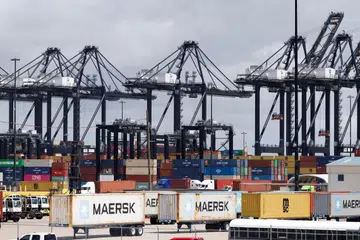
Looking towards 2016
THIS WEEK'S TOPIC: What are the main challenges that businesses will face in 2016? What opportunities, if any, could arise?

THIS WEEK'S TOPIC: What are the main challenges that businesses will face in 2016? What opportunities, if any, could arise?
Judy Hsu Chief Executive Officer, Singapore Standard Chartered Bank
WE are likely to encounter short-term macroeconomic challenges as we move into 2016. The headwinds from a slowdown in China and our neighbouring markets, as well as risks from potentially lower margins and higher business costs are real.
Faced with challenges brought about by a fast-changing landscape, we need to shift to a higher gear, adapt and innovate for longer-term growth and opportunities.
Opportunities there will be, as Asia remains one of the world's fastest-growing regions. The recent regional developments, from China's ''One Belt, One Road'' initiative to Singapore's strategic partnership with India, bode well for our future. The upgraded Asean-China Free Trade Agreement is also expected to boost bilateral trade.
Staying nimble and agile while keeping a tight hold on risk management will be important in 2016 as businesses turn adversities into advantages.
Michael Zink Head of Asean and Citi Country Officer for Singapore
I SEE tremendous opportunity in this increasingly networked world. Over 12 billion devices are connected to the Internet in the world today, and that number is projected to reach over 20 billion by 2020. The potential of the network is huge if we are able to capitalise on business opportunities that arise in the changing landscape across Asean, where mobile and Internet users are among the most active in the world.
Despite the environmental challenges, I believe new business models and alternative ways of customer engagements through The Internet of Things will fuel growth in a slowing economy.
Tim Condon Chief Asia Economist ING Bank
THE global economy will be climbing out of the hole it fell into in 2015. Base year effects will flatter growth rates but the feel-good effect may be mitigated by the fact that the economy is still in a hole.
The two main sources of uncertainty for financial markets in 2015 were Fed policy and China growth. The first will persist and, as this year, trigger episodes of risk-off when investors sell risky assets for safe-havens like US Treasuries and gold. In China, however, policy stimulus will kick in and hard-landing fears will not be the overhang they were this year.
Restrictions on capital flows insulate China's financial markets from US Fed policy uncertainty. The Chinese authorities are implementing economic reforms and the central bank is still biased towards easing monetary policy. These economic and policy fundamentals argue for Chinese equities being a top-performing asset in 2016.
Victor Mills Chief Executive Singapore International Chamber of Commerce (SICC)
THE main challenge for business everywhere in 2016 and beyond will be growth. There are so many factors in our increasingly dangerous and volatile world outside our control. While we review our business continuity plans, we should keep our focus firmly on those issues we can influence and control.
The key opportunity for all businesses in Singapore in 2016 is to develop more engaged employees who care about the job they do, the quality of their output and the customers they serve. While more employees need to step up, gain and practise relevant skills, more employers need to raise their game too. Business leaders have a duty to ensure that they create a positive organisational culture and sustain it by consistently walking the talk.
This is possible. Selfless leadership and engaged teams always result in significantly better outcomes for both as well as for their customers and for our economy.
Lee Fook Chiew Chief Executive Officer Institute of Singapore Chartered Accountants
AS a small and open economy, Singapore is dependent on external demand, and is vulnerable to continued weakness in the global economy. The US is expected to wean off its expansionary monetary policy in 2016. Economic growth of our other major regional trading partners such as Malaysia, Indonesia and China is likely to remain slow in 2016.
Moreover, the government's tight foreign labour policy will continue to affect sectors that remain highly dependent on them. Geopolitical risks arising from terrorism could also increase the cost of international trade and travel.
Despite this, there are still opportunities businesses could capitalise on. The launch of the Asean Economic Community will, over time, provide Singapore businesses and professionals more opportunities to export their products and services in areas such as accounting, engineering and architecture to other parts of the region.
There will also be better investment prospects in a significantly larger and more integrated Asean market. The government's strategic direction of enhancing productivity through innovation and capital investment will take time, but will ultimately also help Singapore businesses move up the value chain.
Hans Hanegraaf Country Executive ABN AMRO Bank NV Singapore and Chief Executive Officer ABN AMRO Private Banking Asia & Middle East
ALL eyes continue to be on the Federal Reserve (Fed). We believe the pace of rate hikes will be slow after the first US Fed rate hike this December which is already priced in by the market. The subsequent hike is only expected to be in June next year. Such a gradual and managed normalisation by the Fed, bodes well for the US and global economy.
At a time when many are revising growth predictions for the United States, China and emerging economies downwards, ABN AMRO is reaffirming its view that a cyclical uplift may occur. The slowdown in China is a concern, but should pose no risk to global growth, and any temporary correction offers opportunities to re-enter markets.
In fact, we expect the emerging economies to accelerate in the course of next year, and foresee stronger growth in developed economies in 2016. While we recognise there may be weak spots in the global economy, we still expect it to grow by 3.5 per cent in 2016.
Overall, ABN AMRO suggests that investors build a diversified investment portfolio that can withstand short-term volatility and is flexible enough to capitalise on emerging opportunities in 2016.
Nigel Fox Vice-President and General Manager, Global Corporate Payments American Express Singapore
THE current economic outlook indicates that companies will face the threat of flatlining or faltering growth next year. Coupled with intense competition and tight manpower conditions, innovation and good financial management will be critical for the survival of Singapore SMEs.
The good news is that Singapore SMEs are confident but not complacent about their competitive advantage, as demonstrated by our survey which indicated that 83 per cent of CFOs believe their companies have a compelling competitive edge, while 67 per cent acknowledge a risk of failure. This mindset means that Singapore SMEs are always on the lookout to ''future-proof'' their business.
In looking at future-proofing businesses through innovation, companies can look to leverage their expertise and experience to bring in new and additional sources of revenue. The government's recent push for food & beverage companies to explore offering hot food purchases from vending machines is one such example.
Investing in alternative ways of doing business to move away from the high-cost, traditional brick-and-mortar business model is also important. For instance, going digital and facilitating business via e-commerce should be part of every SME's business strategy.
With the advent and formation of the Asean Economic Community, Singaporean companies must also look to the region to leverage growth opportunities, and the digital route is an effective way of reaching out to a wider consumer group.
Good financial management is especially important for Singapore SMEs. The cashflow squeeze as a result of potentially slowing sales and tighter payment terms by suppliers and creditors will no doubt impose a larger burden.
SMEs must look to adopt big business solutions to increase productivity and cash flow visibility so as to navigate their businesses through a rougher ride in 2016.
Tan Mui Huat President and Chief Executive Officer, Asia International SOS
SINGAPORE'S growth outlook in 2016 remains modest, as economic growth is likely to be hampered by subdued trade growth amid China's economic slowdown.
However, all is not gloomy. Singapore, as the region's most open economy, is poised to benefit from greater economic integration between Asean nations - a region whose combined GDP makes it the world's seventh-largest economy. Businesses which can leverage internal strengths for innovation and mitigate external threats are in good stead to capitalise on emerging opportunities.
With the rising threat of terrorism, natural disasters and emerging pandemic diseases, companies are hard-pressed to take stock of their business continuity strategies. The ability of organisations to manage their global talent efficiently and exercise their duty of care to employees will be a game-changing factor, especially when global mobility levels are predicted to double by 2020.
More companies have approached us to help them place travel risk prevention and employee traveller education at the top of their boardroom agenda. More than ever, it is paramount that companies have robust programmes in place to protect their people, especially from a medical and travel security perspective.
Terry O'Connor Group CEO Courts Asia Limited
AS one of the leading home electronics and furniture retailers in South-east Asia, our business is susceptible to spillover effects from global developments. For most of 2015, the retail landscape was under tremendous pressure, treading water on the back of subdued consumer sentiment as well as social and political challenges. This year, the Singapore government was focused on social policies driven by nation-building.
Moving into the new year, we hope for that focus to progressively swing towards shaping economic policies that will make local businesses more resilient to macroeconomic challenges.
In Malaysia, the government made strides with necessary fiscal moves in the form of GST and the removal of fuel subsidies, amid a clear backdrop of political tension, which we would like to see ease.
Meanwhile, Indonesia's growth has been on hold with recent political changes, which we foresee will be put behind us in 2016, with the emergence of a burgeoning consumer economy.
Wong Heng Chew Country President Fujitsu Singapore
THE world will continue to see more organisations leveraging digital technologies to increase operational efficiency and be more agile in this rapidly changing business environment. While the benefits are obvious, the challenge will come from the organisation's ability to commit to a long-term plan to see through the digitalisation journey, be flexible in the course of it to make changes and adapt, and have a robust security plan to protect their businesses from cyber criminals and attacks.
As organisations continue to rely on digital technologies, it is essential that they are able to safeguard their IT systems, allowing them to fully harness the power of technology in growing their businesses.
At Fujitsu, we believe that modernisation and a hybrid IT environment deliver the robust IT environment that is essential in today's business landscape. In fact, we have helped a number of organisations in their digital transformation journey through our cloud computing, big data and mobility solutions.
Mark Billington Regional Director - South-east Asia ICAEW
WE can see five key challenges that have affected the global economy this year. These include: uncertainty over when the US Federal Reserve will begin hiking interest rates, disappointing growth in major export markets, weak world trade, low commodity prices, and a sluggish Chinese economy.
Although we expect the current economic challenges to continue into the New Year, ICAEW does foresee opportunities for businesses to stimulate growth. In our Q4 Economic Insight: South East Asia report, we talk about how Asean nations can offset their reliance on commodities and maximise growth potential by building knowledge industries and offering products and services with clear differentiation and added value.
Increasing domestic consumption through improving social security coverage for citizens is also one way of tackling the problem. This is a source of demand yet to be fully tapped especially in Singapore, where households alone keep 45 per cent of GDP. An increase in consumer spending will also create a knock-on effect on businesses as it boosts domestic consumption.
This will present more opportunities for Singapore businesses to grow their presence in the region, particularly with the establishment of the Asean Economic Community (AEC) at the end of 2015.
Natalia Shuman Senior Vice-President, General Manager - EMEA & APAC Kelly Services
TALENT will continue to be the biggest challenge for many businesses in Singapore in 2016. With dampened economic conditions and a tight labour market going into the New Year, firms must review their talent management strategy in both attracting and retaining talent and, developing talent to fill leadership roles.
The opportunity we recommend all companies to tap into is the government's plans to continue to invest in equipping local talent with the skills for tomorrow, to ensure that Singapore has a robust talent pipeline. In addition, the government is also investing to help companies improve their own human resources capabilities through the Human Capital Movement. This will ensure that Singapore companies recruit more efficiently, but also retain their talent better, which will ultimately help boost productivity for the country.
With the region's leaders establishing the Asean Economic Community, now more than ever will there be greater regional workforce mobility opening up Singapore's talent pool and access to the best talent and business practices from across the region. Additionally, with more women moving into senior management and board member roles, workplace diversity is another opportunity to improve business performance.
Adaire Fox-Martin President SAP Asia-Pacific Japan
WITH the establishment of the Asean Economic Community (AEC), 2016 is set to be an exciting and challenging year for businesses across the region. Multinational companies already accustomed to operating across borders will face stiffer competition from nimbler small and medium enterprises.
In addition, South-east Asia becoming a single market will unlock the ambition of Asia's family-owned businesses to expand across borders. This will help level the playing field between small and large enterprises but will also pose unique operational challenges with new layers of business complexity.
Eliminating this complexity will enable businesses to run simpler and compete effectively in this new economic landscape. Simplicity starts with building a flexible, digital core at the heart of the company, providing real-time visibility into all mission-critical business processes. This will give businesses the advantage of speed, agility and intelligence to capture the many new opportunities AEC has to offer.
Scott Burnett Managing Director for South-east Asia Towers Watson
WITH a more subdued economic outlook and greater competitive pressures in view for 2016, businesses must, now more than ever, innovatively differentiate their talent management practices to keep high performers motivated and retained.
Towers Watson's research suggests that competitive base salary, career advancement and relationships with immediate managers are the top three drivers of retention. These are areas that organisations will need to prioritise as top performers become ever more critical. Retention of key/critical talent - always important irrespective of economic cycles - will be truly differentiating in these uncertain times.
Furthermore, the Asean Economic Community will present both opportunities and challenges in 2016, potentially enabling increased mobility but also adding complexity to matching talent demand to supply. To develop a talented workforce while maintaining business continuity in this context, businesses could consider employee demands for broadening development opportunities by including deployments across the Asean region in their Employee Value Propositions.
Peter Allen CEO Grant Thornton Singapore
SINGAPORE remains a low-unemployment economy and therefore a priority for all businesses is to maximise talent retention and enhance the accuracy of recruitment, while watching recruitment costs. I expect local GDP growth to remain constrained, with asset values continuing to fall, and therefore businesses will choose areas for investment very carefully.
Cost optimisation, including offshoring, remains an important option, as does increasing use of technology to control costs. As interest rates start to rise and exchange rates remain volatile, companies - particularly those with operations in multiple countries - will want to manage debt very cautiously.
Public markets remain very subdued, adversely impacting private M&A values, and only shareholders with an urgent need to exit choose to do so at this point.
Political, regulatory and legal risks remain very low in this jurisdiction: a point that in global organisations local CEOs can usefully continue to make to their colleagues elsewhere.
Ang Thiam Guan Managing Director for Singapore and Brunei Cisco
WE predict a ''digital vortex'' of disruption, sweeping all industries towards digitalisation of business models, offerings and value chains next year.
If you look at a regional startup like GrabTaxi that doesn't own vehicle assets, the most valuable ''asset'' is the customer data collected to improve their service offerings and offer new services that are market disruptors.
The networked interplay of people, processes, data and things is disrupting old business-as-usual in favour of smart, actionable business processes, and businesses which fail to adapt will be displaced.
The opportunity for all of us is to embrace this digital transformation and to re-invent existing processes, workflows and revenue models. Digitalisation offers companies the chance to improve productivity and discover new efficiencies, allowing them to stay competitive, stay productive and stay efficient.
Andrew Wildblood Head of Asia-Pacific Telstra
NEXT year will see digital technology continue to transform the way we all live and work, disrupting industries and well-established businesses in the process. Across our enterprise customers and the markets they operate in, we see the pervasive impact of technology playing out on a daily basis.
Businesses will need to have a clear technology strategy to keep up with the pace of innovation and to meet the needs of the 'always-on' customer, or risk being left behind.
An opportunity here is the emergence of partnerships between companies to enhance their digital capabilities. Our recent research report, ''Connecting Companies'', found that many firms driving innovation are relying on partnerships, rather than traditional R&D or acquisition strategies. Such partnerships make it quicker and easier to access the latest technologies and develop new products.
Increasingly, to succeed in a time of transformational technological change, businesses must be open to experimentation and cooperation.
Teo Lay Lim Senior Managing Director, Asean, and Country Managing Director, Singapore Accenture Pte Ltd
1. THE war for talent continues to stay top of the mind for most businesses as they need to attract and secure the skills and talent required to innovate and build the workforce of the future. We believe that businesses should fully realise the opportunities of having a diverse workforce, where organisations become smarter and more relevant through varied experiences and perspectives.
2. Businesses which face challenges to deliver their offerings across our physically diverse landscape or are trying to win and retain the loyalty of their rapidly evolving consumers will turn to digital technologies to gain agility, deliver better experiences and drive profitable growth.
3. Operationally, organisations which are demanding more speed to market and flexibility will look towards new ways of service delivery that could be game changers.
Chris Fossick Managing Director, Singapore & South-east Asia JLL
IN 2016, the government expects the Singapore economy to grow by just 2 to 2.5 per cent as the regional economy remains weak. Residential, commercial and industrial markets are expected to continue to soften in the face of high supply.
I believe the subdued outlook presents an excellent opportunity for the Singapore government to change gears yet again, to give the economy a much-needed boost. After the breakneck speed of growth in the last decade, the economic restructuring, infrastructure build-out and inclusive social spending in the last five years are indeed appropriate.
I hope 'The Future Economy' committee led by Minister for Finance Heng Swee Keat will put forth bold changes to the regulatory regime, to allow companies to re-organise their land and human resources more creatively. New developments where commercial, retail and logistics uses are integrated could be encouraged as omni-channel retailing grows.
The myriad of property cooling measures could perhaps be replaced by more progressive property taxes and less frictional transaction costs. More flexibility for efficient companies to bring in manpower needed for value creation will also enhance the new economic eco-system we are trying to create.
Jack Van Der Velde Managing Director Unit4 Asia-Pacific
AS businesses grow and competition intensifies, companies will continue to turn to technology and increasingly invest in modernisation. However, this process can be fraught with complications as the business landscape, technology and talent evolve at a rapid pace.
Companies looking to stay ahead must ensure that their enterprise systems are self-driving, agile and scalable in order to handle the fast changing organisational demands. It is also essential that the advancements are seamless and undertaken keeping the users in mind.
When done right, this will allow companies to reduce business disruption, minimise manual effort and increase employee satisfaction. With smart, integrated enterprise systems employees can really focus on delivering results and driving growth. The capability to not only effectively manage business change but also turn it into a competitive advantage will be a key driver of success.
Ron Sim Chairman & CEO OSIM International
HIGH costs in rentals and wages will continue to put stress on companies. Productivity here is also low compared with places like Hong Kong, Taiwan, Korea and Japan.
This is a huge concern for Singapore. Without policies and incentives to build more pride in our work, better performance and more productivity, our future will not be sustainable.
Singapore companies must expand regionally and beyond, and create scale. Local government-linked companies should also increase their overseas sales and profits and rely less on the domestic market.
Mike Ansley President, Asia-Pacific Avaya
WHILE the Asia-Pacific region has seen its share of ups and downs in the last year, milestones like the Trans-Pacific Partnership and formation of the Asean Economic Community leaves 2016 with much to look forward to. For businesses, especially small and medium enterprises, technology has become a key enabler to automate and simplify processes for greater productivity and cost efficiencies.
The majority of businesses, particularly in emerging markets, face the challenges of enabling this agility despite constraints of tight budgets and existing legacy systems. The pace of change and growing customer demand challenges the status quo with analysts predicting that by 2025, many traditionally run businesses will either merge or cease to exist.
Technologies available today can help ''future proof'' a business with the right connections, insights and analysis that can enhance productivity and competitiveness - the must haves for Singapore's continued success in 2016 and beyond.
Marc Mathenz Managing Director Asia-Pacific Fiserv
IN 2016, businesses will continue to face challenges associated with fluctuating economies and unstable demand from global markets. However, business leaders who continue to focus on innovation and developing disruptive technologies will secure greater opportunities as digital platforms and solutions become increasingly popular, particularly in Asia-Pacific.
These same challenges and opportunities exist for banks and payment companies. As more consumers are looking for banking services that are accessible away from the typical brick and mortar branch, banks need to become innovators and further develop disruptive technologies that distinguish their services and open new markets.
In 2016, banks should continue to partner with startups and payment technology companies to deliver innovation, and leverage new solutions from emerging fintech players, particularly as mobile penetration rates and the use of smart devices grows in Asia-Pacific.
In 2016, banks and financial firms need to continue to move beyond offering just bricks and mortar and online banking to provide more intuitive mobile banking solutions. By embracing changes in how consumers access financial data and services, businesses involved in finance will access greater opportunities.
Lim Soon Hock Managing Director PLAN-B ICAG Pte Ltd
THE repercussions of the increasing divide between the haves and have-nots will remain a major show-stopper for businesses. This reduces the disposable income and purchasing power of consumers. Inflation and slower economic growth are expected to compound this problem going forward.
When we can create more wealth, more opportunities will follow, not just for the short term, but over the longer term as well. In this regard, government and key stakeholders such as businesses and social organisations should continue with the efforts to develop and create a sustainable and vibrant culture of entrepreneurship.
It is not just about creating more entrepreneurs and SMEs. More importantly, it is about developing more SMEs, which can become global companies.
Halogen Foundation Singapore is one social organisation which seeks to transform the lives of youths from poor and needy families to give them a better head start and to build their futures.
Halogen hopes that more of our youth will contribute to more wealth creation as our future entrepreneurs, not just to create more jobs for Singaporeans but also to open up more opportunities for businesses.
(Note: Lim Soon Hock is also chairman of Halogen Foundation Singapore)
Robin C Lee Group COO Bok Seng Group
THE current outlook for 2016 is not cheerful, as all signs point to a rough financial year ahead. Despite all the troubles in Europe and the volatility bought about by the oil crisis in the last 24 months, the global economy continues to hum along, bolstered by all the liquidity injected into the market.
However, all this will soon change as most of the quantitative easing by central banks have run their course and higher interest rates are foreseeable in the very near future, as early as this December.
It is not possible to predict exactly how the world economy is going to play out. The only thing that we can really do is to continue focusing on making our operations lean and productive, supplemented by the generous support and schemes that the government has provided.
Extra resources and people will be needed to establish and grow businesses in the expanding regional market while taking advantage of consolidation opportunities that may arise in 2016.
Patrick Liew Managing Partner Global Enterprise Exchange
IN 2016, it is unlikely that the government will withdraw the property cooling measures unless there is a sharp drop in demand and property prices. The authorities will prevent a steep decline in transaction volumes and prices because that would cause a cascade of negative effects on the economy, property market, and consumers.
Property developers with completed but unsold units will undergo increasing pressure to pay hefty Qualifying Certificate (QC) charges. They will be forced to provide more buying incentives or lower their prices to stimulate demand.
Sellers will have to deal with lower rental demand, increases in mortgage rates, and higher property tax. They may be also challenged by a potential slowdown in the economy and an increase in unemployment.
The forces of the property market are increasingly converging to herald a perfect spring for property buyers and investors.
Warren Hayashi President Adyen Asia-Pacific
ACCORDING to industry analyst firm IDC, Asia-Pacific will contribute US$10 trillion to the global retail industry by 2018. To gain a larger share of the wallet, merchants will feel the pressure to deepen their understanding of cross-channel customer behaviour to compete for the consumer's attention. Understanding, managing and exceeding the end-to-end customer shopping experience will be key to success.
Our region is unique with many consumers turning to their mobile phones as their first (if not the only) access to online retail, travel and financial services. In 2015, we saw the spotlight shine on an increasing number of online and mobile marketplaces, breaking borders and enabling easy exchange between merchants and consumers regardless of currency or location. Shoppers have never been more spoilt for choice.
Even as opportunities for omni-channel, cross-border commerce allow for a more vibrant and diverse market, challenges for businesses to give their customers safer, more secure and simpler ways to purchase will rise. The businesses that offer the best frictionless, seamless customer experience coupled with easy payment options - whether in-store, on mobile or on the Web - will get ahead.
Asian businesses that understand the opportunity are uniquely placed to secure more global customers while retaining their grip on what local customers want. For e-commerce businesses with international ambitions, the payments function is not just important, but should be a top consideration in global expansion - even before website localisation or setting up local entities.
2016 will be a thrilling year for Singapore and the rest of the Asia-Pacific region as businesses and consumers alike continue to ride the wave of digital change.
Paul Lim Chief Executive Officer Soverus Group Private Limited
2015 has taken its toll on many business sectors in Singapore as the global economy slowed down. Trade numbers and inflation figures retreated over several months in the year. The carnage would have been worse if not for ''cheap money'' from artificially low interest rates.
Two phenomena in 2016 will have significant contagion impact across many industries.
Firstly, the gradual interest rake hike starting in December 2015 will increase the costs of funding for businesses and home owners. Businesses will be hard hit as they face the double whammy of a slow-down in global demand coupled with increased costs of business financing. Property investors who had over-stretched themselves before the Total Debt Servicing Ratio (TDSR) kicked in will be in negative equity and forced to sell, exacerbating the fall in property prices.
Secondly, there will be a spike in cyber terrorism as the developed world transforms into smart cities riding on the Internet of Things (IoT). Interconnectivity will grow exponentially. Terrorists will leverage on this to carry out attacks from remote locations throughout the world, using boundary-less cyberspace to penetrate systems that control activities in the physical space.
As a cyber security company, we have been providing cyber solutions to help our clients mitigate such risks. 2016 will be an exciting year indeed.
Debjit Rudra Area General Manager South-east Asia GSK Consumer Healthcare
RISING urbanisation, income growth and health issues will continue to have a dramatic impact on South-east Asia's healthcare landscape in 2016 and beyond.
Governments are increasingly looking to individuals to take more responsibility for their own health, and consumers are searching for convenient and accessible ways to manage their healthcare needs. As a result, the consumer healthcare category - what we call Fast Moving Consumer Healthcare (FMCH) - is growing at a healthy pace.
This plays to GSK Consumer Healthcare's strength - combining our pharmaceutical expertise and consumer goods excellence, we develop products that effectively tackle everyday health conditions.
We are also optimistic that the formation of the Asean Economic Community and the creation of a more unified market will improve ease of doing business through harmonised regulations.
Challenges remain, but at GSK we're excited about the opportunities in 2016 as we continue on our mission to help consumers do more, feel better and live longer.
Rohan Mahadevan Senior Vice-President, APAC PayPal
RECENT economic forecasts are predicting a slower global growth. In 2015, we have seen global market volatility impact local economies in Asia-Pacific. Businesses need to consider a de-risking strategy that hedges them from dependencies on local or macro-economic effects such as currency valuation changes.
As a global payments company, we have seen how our merchants successfully achieve this by shifting to a mobile strategy, and expanding their commerce reach to a global audience.
The online commerce is a huge opportunity in itself - online sales across Asia-Pacific are predicted to reach US$1.3 trillion by 2019. 35 per cent of Chinese online shoppers now buy cross-border. Next year, in Singapore, we expect to see a rise of 33 per cent in mobile commerce spending to S$1 billion.
Advancements in technology are giving merchants the right tools to open up commerce opportunities across borders, anytime and via any device, and businesses should capitalise on this trend to build resilience.
Sanjay Aurora Managing Director Darktrace Asia-Pacific
IN 2016, cyber attacks will continue to be frequent and sophisticated, executed by a broad range of attackers - criminal gangs, state-sponsored groups or even corporate spies. The same open Internet and global networks that enable our countries, societies and businesses to grow and prosper, leave us increasingly vulnerable.
Organisations of all sizes must therefore acknowledge that they will, at some point, suffer infiltration. To safeguard revenue, reputation and intellectual property, in 2016, companies should expand their focus from solely defending network perimeters to identifying threats that are already inside company systems. The earlier these threats are identified, the greater the likelihood of isolating them before they cause lasting damage.
The emergence of ''immune system'' technologies that automatically look for unusual and suspicious activity within complex networks offers a solution to this problem and we should see more of this deployed in 2016, as IT security is now about visibility, prioritisation and mitigation.
Saw Ken Wye CEO CrimsonLogic
THE challenges of 2015 will spill over to 2016. Has China's economy finally bottomed out? Will oil prices rebound? And when will terrorism rear its ugly head again?
In times of uncertainty, companies will need to create their own destiny and take charge of their future. We see the silver lining in the clouds with economic integration initiatives like TPP, the Asian Infrastucture Investment Bank and also ''One belt, one road''. Furthermore, opportunities in Africa and Latin America look promising.
As one of the first Singapore companies to enter these new markets, CrimsonLogic has managed to enjoy an early mover advantage. Leveraging on the Singapore brand name and our strengths in trade facilitation and e-government solutions, we have made inroads with significant wins overseas. We would like to encourage other Singapore companies to follow us and take the less well-trodden path.
Tan Choong Seng Managing Director, Asean Genesys
THE impending launch of the Asean Economic Community will create greater business opportunities and freer flows of information and people between the 10 Asean countries. This opens up the vast Asean regional market of 625 million people to local businesses looking to neighbouring countries for future growth.
The challenge lies in ensuring that they offer the same, if not even higher standards of customer experience when dealing with an exponential increase in new customers, while continuing to retaining their current customer base.
Today's customers, especially in Asean, are used to using multiple communications channels from SMS to Web and mobile, and these will become the new frontier for businesses as they attempt to maintain their unique branding and positioning, what makes them so successful in their home markets, in their journey of growth.
Kevin J Kirkpatrick Director, Aftermarket Operations Singapore & Managing Director, Eagle Services Asia Pratt & Whitney
BUSINESSES may continue to face headwinds due to lingering concerns about the health of the global economy. That said, we believe that the aviation sector remains one of the bright spots for Asia-Pacific economies. With demand for air travel growing faster than the global average, there are opportunities for Singapore to reinforce her position as a regional aviation hub.
2016 will be a momentous year for Pratt & Whitney as our new manufacturing facility at Seletar Aerospace Park becomes fully operational. The facility will contribute to the global supply chain of our revolutionary Geared Turbofan engines.
More importantly, we believe that the introduction of value-added manufacturing will serve as an impetus for the transformation of the industry and will help to propel the aviation sector to greater heights.
We are confident that these key developments will stand Pratt & Whitney in good stead come next year.
Gery Messer Managing Director, Asia-Pacific CenturyLink
2015 has been a year plagued by a global economic slowdown, exposing the fragility of many emerging market economies amid steady recovery of the larger markets. The IT industry was not spared either. Against the backdrop of a gloomy economy and evolving security threats, businesses are increasingly rethinking business continuity plans and loss prevention strategies.
At CenturyLink, we have seen how many business leaders struggle in trying to compete in a crowded market while still keeping up with business demands. But all is definitely not lost.
As the region advances, the pursuit of smart technologies and connected things, opportunities for growth, innovation and collaboration within the community have also opened up. Businesses in the region are turning to service providers that can support a truly hybrid IT environment with tailored solutions that can reap maximum business outcomes.
With outsourcing fast becoming a topic of interest, we foresee business leaders capitalising on this to ride out the storm and get their business back on track.
Jaya Dass Country Manager Randstad Singapore
GLOBAL economic conditions are expected to improve in 2016 and it is anticipated that Asean economies will remain resilient, especially with the establishment of the Asean Economic Community at the end of this year.
With this expected recovery and the signing of new trade pacts such as the Trans-Pacific Partnership, the prospects for businesses are positive. The increased connectivity in the region means that businesses can enjoy lower trade barriers and higher trade flows, as well as access to bigger markets.
This can help create new jobs for locals and residents, giving the workforce more opportunities in the workplace. As a result, this is expected to keep Singapore's labour market tight and unemployment low.
Nonetheless, as volatile oil prices continue to pull prices down, businesses should remain cautious and be prepared for any potential downturns. At the same time, employees should continue to upskill in a bid to remain competitive and relevant during times of moderate economic growth.
Stephen McNulty Managing Director, Asia-Pacific and Japan Progress
THE proliferation of digital technology will continue to alter the way we do business. As a result, in 2016, more enterprises will invest in 3rd platform technologies such as mobility, cloud, social business and Big Data. In order to ensure success, there will be a need for a cohesive strategy to tie digital initiatives together and ensure they align with the overall goals of the company. Enterprises will also need to enhance their software capabilities and build agile and flexible solutions to respond to the evolving needs of customers in the digital age.
While digital transformation requires an overhaul of operations, it presents many benefits including increased employee productivity, improved efficiency and most importantly, enhanced customer experience.
Through successful digitalisation companies can reduce manual input leaving employees to focus on critical business matters. Companies are also able to better cater to customer needs through more targeted and personalised services over multiple channels.
Vinod Kumar Managing Director Tata Communications Limited and CEO of Tata Communications Group
ENTERPRISES globally will continue to navigate the challenges economic volatility will present. Macroeconomic factors should stabilise in the second half of the year. Technology will demand a change in business models and mandate a need for self-disruption.
Enterprises in developing nations stand a chance to be the first to develop a host of emerging technologies that could be leveraged globally. Smart cities will move from concept to reality and have the added benefit of producing tangible solutions for addressing many economic, social and environmental challenges the world faces.
The medium term macro-economic picture is very exciting and presents many opportunities for inclusive growth.
Dirk Dumortier Vice-President of Sales Development APAC Alcatel-Lucent Enterprise
ONGOING enterprise trends such as Bring Your Own Device (BYOD), Big Data and the Internet of Things (IoT) have placed increasing levels of stress on the enterprise network. Network limitations, security and the move to the cloud, will remain some of the main challenges businesses face in 2016 with the proliferation of personal devices, security challenges to business operations and the resultant data deluge.
At the same time, both public and private organisations are struggling with enabling their networks or moving to the cloud to quickly respond to public or business needs and manage the various new technologies.
As businesses continue to face the challenges presented by the connected world and new technologies, more will begin to recognise the need to invest in flexible and scalable technologies to generate competitive advantage. Automated and intelligent network technologies will become the way forward for businesses to future-proof themselves, and to better dedicate resources to pursue business growth.
David Low CEO Futuristic Store Fixtures Pte Ltd
THE main challenges businesses will face in 2016 will be a slower global economy, talent retention and acquisition from the millennial generation, and shifting expectations arising from the cross pollination of consumer market trends and business market trends.
With uncertainty in the markets affecting business and consumer confidence, companies will need to know when to adjust strategies to assimilate new innovations in the market and when they should stay the course. The ability to sieve out white noise, as the barriers to entry to certain industries come down resulting in higher levels of competition, will be a crucial skill to have.
Increasing consolidation in different industries will see many smaller businesses either merging with others to survive or closing down, leaving the marketplace to fewer players which are more agile and sensitive to market trends.
Opportunities in the form of global collaboration arising from providing total value chain solutions will abound. With globalisation and the Internet shortening communication, companies which are positioned to offer solutions that increase efficiency, save cost and inventory, will definitely get an edge in 2016.
Gavin Selkirk President, APAC BMC
FACED with competition from new disruptors in the industry, traditional businesses are making digital transformation a top priority, and this will only intensify in 2016. While the digital enterprise wave will open new markets and create new revenue streams, businesses need to be aware of the challenges that may arise in the transition to the digital economy.
Security and data protection will remain a key challenge as customers demand complete transparency and knowledge of how and where their data is being stored and used. In the data-driven economy, businesses will need to have higher standards on how they handle and protect data privacy and IP protection on network and devices - from customer, employee and shareholder information.
What will also accelerate in 2016 is the pace of change and the adoption of technology trends such as the Internet of Things, Big Data and the cloud. Businesses will have to create value through digital-enabled operating models or lose out. This means embracing automation and real-time data monitoring and analysis.
Joseph Lim Vice-President, Asia-Pacific FNT Software
IN times where there is a growing quest for productivity and greater efficiency in organisations, technology will become a key differentiator when it comes to business performance. Hence, there is impetus for technology companies to build, test and deploy faster and better IT infrastructure, hardware, software and applications. The latest technology is no more than mere technology, when viewed in its most discrete form.
When different technology components begin interacting and delivering on their underlying value, the system becomes more intelligent and alive. The biggest challenge for business today is to deploy and benefit from greater intelligence embedded in IT.
From FNT's perspective, we envision an evolving scenario where we enable forward looking organisations, such as co-location providers, large enterprise IT departments, managed service providers and telecommunication operators to centralise their infrastructure and service delivery chain in a holistic and unique approach.
When this unfolds, businesses will be able to take advantage of state-of-the-art tools to do real-time monitoring to aggregate and analyse data to drive efficiency, creating a virtual IT organisation.
Christophe Duchatellier CEO Adecco Asia-Pacific
HUMAN capital forms the basic foundation for economies and companies should ensure that they have the best teams in place to succeed. Organisations today operate in a highly competitive environment where large, small and new companies seek to attract and retain the top talent.
The landscape continues to evolve in today's world of complex relationships and technology disruption. Besides understanding the psyche of employees for better talent management, companies should also appreciate the factors which shape today's environment and the implications on people in order to adapt or to be the driver for change.
Michael Jenkins Chief Executive Roffey Park
FIRST: low productivity. Labour productivity fell this year and will continue to experience slow growth in 2016. We could blame this on sluggish global growth, but studies have found that productivity growth this year was affected by a slowdown in investments in machinery and equipment and an increase in the number of low-skilled workers relative to skilled workers, not helped by the shrinking labour force plus talent shortages, as the population ages. Manufacturing, construction, pharmaceuticals, information technology, customer-facing roles - all will require a harder sell to attract talent.
Second: Overall, companies are still weak at succession planning and leadership development. Many talent development programmes just aren't delivering the right outcomes.
Third: HR needs to be more strategic and less focused on operational issues. Using people analytics - leveraging data to make people decisions - needs closer attention.
Clement Goh Managing Director Equinix Singapore
THE Internet of Things is set to become even more entrenched in our lives in 2016. We will be taking one step further into the interconnected era, where anytime, anywhere, any device connectivity is the standard.
The enterprise of the future is increasingly interdependent and requires real-time collaboration. Further organisational expansion, ubiquitous user access and sourcing of external business and IT services to cloud-based providers will force enterprises to have multiple points of engagement with more end-users and business partners. However, existing IT architectures are not built to support this level of engagement.
By shifting towards distributed, interconnection-centric infrastructure, companies can directly and securely connect to cloud providers, bypass the public Internet and ease response-time and security concerns. This interconnection further facilitates the creation of unique ecosystems that allows organisations to directly connect to each other and form synergies for new business offerings.
George Chang VP for South-east Asia & Hong Kong Fortinet
JUDGING from the macroeconomic forces at play today, 2016 is likely to be another slow year. Businesses need to get more creative and customised with their products and services, improve customer experience, and control cost without compromising quality.
They may also want to think about increasing their share of revenue coming from overseas markets. Several Singapore brands have successfully established a foothold in emerging economies in the region, and those firms stand to reap dividends next year as growth rates in those countries will remain significantly above the global average.
Specifically in our area of business - cyber security - it's interesting to note that any recession will probably spare the hackers and crime syndicates. There's even a chance that some of them will intensify their nefarious activities to make up for income losses from legitimate sources.
Cyber attacks are becoming more frequent and sophisticated. Enterprises and individuals need to become more proactive in protecting themselves. Companies need to educate their staff on IT practices, invest in technologies that can help them block advanced threats, and enforce greater discipline and vigilance across all aspects of their operations.
Doug Farndale Vice-President Asia-Pacific Silver Peak
DESPITE an overall slowdown in the pace of the global economy, Asia remains an attractive region for businesses with more satellite headquarters and branch offices moving here in the upcoming year.
Yet, old and new businesses alike will continue to grapple with high costs of establishing and maintaining optimal network connections for transferring data over distances. In 2016, we expect the adoption of Software-Defined Wide Area Networks (SD-WANs) to go mainstream. Firms will be able to leverage any form of broadband connectivity to rapidly and non-disruptively transform current multi protocol label switching (MPLS) networks to achieve reliable, always-on connectivity.
The rise of SD-WAN brings tremendous benefits to service providers and enterprises. Forward-looking telcos can reinvigorate the market and tap into offering SD-WAN managed services for customers.
Enterprises can easily deploy and enhance user-application relationships across multi-branch locations with zero-touch provisioning. This improves application performance, customer responsiveness, and significantly reduces capital and operational expenses, giving businesses increased efficiency and the opportunity to discover and develop new business capabilities.
Adam Judd Vice-President, Asia-Pacific and Japan Brocade
IN 2016, one of the core challenges for businesses would be talent attraction and retention. This is especially acute in the ICT industry where there is a limited pool of talent who possess the right technical skills that are aligned with the rapid development in next-generation technologies.
The Singapore government has been playing an active role in developing talent and enhancing employability through education and incentive programmes, and businesses should take advantage of these available initiatives to fortify their human resource and talent retention strategy.
We particularly welcome the iPACT (Partnership for Capability Transformation for the Infocomm Sector) scheme that encourages large enterprises to mentor and collaborate with local technology firms and startups on innovations, which is a good move towards addressing the talent crunch issue facing businesses today.
Kenneth Arredondo President & General Manager, Asia Pacific & Japan CA Technologies
TO thrive and survive in 2016 and beyond, businesses need to quickly embrace digital transformation. Among the key reasons driving this urgency is the establishment of the Asean Economic Community (AEC) and the demands of the application economy. While the AEC will give greater access to a market of over 630 million people, it also means greater regional competition and the need to address a population half of whom are under the age of 30 - the millennials.
Consumers are increasingly experiencing brands through apps with little or no tolerance for delays or downtime. The opportunities are there for the taking - by adopting a software-driven business model and embracing an agile management approach. The competitive advantages will be the delivery of superior user experiences and the ability to operate in a more iterative way that can constantly adapt, adjust and pivot based on changes in the market.
Mao Gen Foo Vice-President, Asia OpenText
THE Asean Economic Community will see the integration of the current economy into a single market, resulting in the free flow of goods and services. This will present both challenges and opportunities for companies based in Singapore. Those who can leverage the integrated market and lower the cost of production to innovate will strive; while those who fail to will face falling behind.
With the growth of technology and the hyper connected nature of today's Digital Era, organisations with little or no legacy can leapfrog into the Digital Economy and disrupt traditional players.
Having said that, expertise of their core business is imperative; they must be able to connect to the digital ecosystem of partners to optimise their supply chain to deliver services at a lower price and at the shortest time.
To achieve this, organisations will need to build a Digital Platform to engage with their stakeholders. 2016 will see the disruption of traditional business models as Digital Business grows, and that having a Digital Strategy will be key because it is no longer business as usual.
Chua I-Pin Managing Director, South-east Asia Polycom Asia Pacific
TECHNOLOGY can unlock productivity and deliver bottom-line benefits to help companies stay competitive. Collaboration technologies will become mission critical to businesses as they can harness workforce mobility and flexi-work practices to ensure business continuity.
Companies can identify efficiencies as they integrate technology in their workflow and enable their workforce to be agile in adapting to market demands with the launch of the Asean Economic Community.
By leveraging video collaboration for training instead of cutting back on training during tough times, businesses can also benefit with a more competent and engaged workforce which is vital to overall performance. This will no doubt allow the business to ride out a tough economy and emerge stronger.
Dhirendra Shantilal Board Director Fircroft Group
THE IMF, OECD and World Bank have all forecast slowing global growth this year, possibly the slowest growth since the dawn of the 'great recession' with little prospect of recovery in 2016. Given a constrained global picture, local businesses too will struggle to expand.
Slowing global growth will have a strong impact on global trade flows which are essential for an entrepot economy like Singapore. Despite a difficult environment, there will always be opportunities in the region for those leaders willing and able to seize them.
Myanmar is open for business, growth in the Philippines and Indonesia should remain robust and India's revival offers vast opportunities. A number of fields - education, digital technology, automation and health care will continue to present opportunities.
To make the most of these opportunities, businesses will need to be lean and agile with a focus on bringing real value and expertise to the table. For the truly specialised and able staff who make the difference between profit and loss in a tight environment, we predict a boom year.
Rosalynn Tay CEO Dentsu Aegis Network Singapore and Dentsu Singapore
A NEW year brings new opportunities, a fresh start - a time to reassess and regroup. Business owners have predicted another year of doom and gloom - from economic stability to acts of terror and environmental issues, to unethical business practices. The challenge is having to dig deeper to accomplish just the same results.
This however, can be an opportunity for those who are innovative and forward thinking in finding the right opportunity at the right time - and striking while the iron is hot - From taking a cost crunching situation and turning it around with smarter solutions, in a shorter time.
Businesses should look at switching to alternative modes or economies. Industries that can decipher convergence and offer products and services will definitely have an advantage at being ahead of the curve.
Abhijit Banerjee Vice-President, Asia-Pacific Servion Global Solutions
AGAINST the backdrop of a generally dampened economic forecast, we expect some positive changes in the regional business landscape due to the establishment of the Asean Economic Community (AEC). If implemented well, AEC will boost competitiveness within Asean by integrating our diverse economies into a single market bloc and can potentially offset the negative fallout from the slowdown in China.
With the AEC induced market integration, the diversity in the Asean region - language, culture, disparate economic status of each country, disparate labour and production costs - would pose several challenge for businesses, especially SMEs to jump into cross border transactions.
However, this region also boasts of a rising urban young digitally savvy population, which values customer experience and is eager to spend. Businesses can therefore turn this challenge into opportunity by investing in digital and mobile technology platforms to boost online business, create a robust regional supply chain and increase customer experience, fuelling business growth.
Shinji Tada Managing Director, Asean Brother International Singapore
AS 2016 approaches, companies must keep abreast of global developments to ensure that they provide relevant services, especially with such an interconnected global economy at play.
In these times, companies have taken the opportunity to innovate. Some provide technological support to small and medium-sized enterprises (SMEs) in their ongoing efforts to increase productivity - an important task since SMEs play a vital role in Singapore's economic growth.
At Brother International Singapore, we strongly believe in complementing SMEs in their efficiency goals. We strive to achieve this by offering value-added services previously available to corporate accounts only, as well as the best available technology so that they can be more cost-efficient in their scanning and printing.
This empowers SMEs to better focus on their operations, and creates an environment that encourages businesses to work alongside other entities. By adding value to each other's business, companies can collectively overcome challenges and reach success.
Jane Lau Managing Director Starbucks Singapore
BEING a leader in the specialty café sector does not mean that we are immune to wider macro-economic business challenges. We pride ourselves as a people's business and will continue to attract and retain the best talents by investing in the growth and development of our partners (employees), while ensuring that every Starbucks Experience stays delightful and authentic for our customers.
We have also invested in coffee-forward initiatives such as the recent opening of three new Starbucks Reserve stores, as well as donating a coffee tree to farmers in Latin America for every bag of whole beans purchased.
As we approach our 20th anniversary in Singapore in 2016, we will be laser-focused on building deeper moments of customer connections through our unique loyalty and digital assets, including the ''My Starbucks Rewards'' programme.
Starbucks will continue to grow with discipline as we believe we are still in the early days of making unprecedented cultural and social impact in communities beyond our own.
Sam Yap Group Executive Chairman and Co-Founder Htwo Education Holdings Pte Ltd
A NEW year means new opportunities and challenges to every business. Depending on your core business, you may need to relook and re-strategise your business plans to capitalise on new opportunities the new year brings to you or prepare and brace yourself for new challenges.
For 2016, the main challenges will be the overall outlook for the economy which will be predicated by critical events affecting the world and hence the ''mood'' for business and its general landscape. As we are expanding and trying to scope our growth in China, we are concerned with the continuing economic slowdown in China. It may have some effect on our expansion plans and our targets may be adjusted accordingly.
However, we are optimistic that the economy will pick up gradually and envisage our plans will go through as envisaged especially with the recent signing of bilateral agreements with China.
We anticipate that the launch of the Asean Economic Community may spin off some good tidings to businesses in the Asean region. We look forward to this and will take advantage of such opportunities.
As much as we should stay focused on our core business and be aware of new innovations and technology that will affect our flow of business, we should be ready to adapt and revise our systems to embrace some of these inevitable changes and continue to be relevant and stay competitive.
Annie Yap CEO AYP Associates
DUE to the slow growth in China and Europe, 2016 is forecast to be an even more challenging year for Singapore. Many companies are very cautious and taking a longer than usual to make hiring decisions.
However, with the AEC starting to take shape from 2016 onwards, we see it as a silver lining for Singapore. AEC areas of cooperation include human resources development and capacity building; recognition of professional qualifications; closer consultation on macroeconomic and financial policies; trade financing measures; enhanced infrastructure and communications connectivity; development of electronic transactions through e-Asean; integrating industries and enhancing private sector involvement for the building of the AEC.
Also, the US economy is gaining strength, therefore demand from the Americas might bring a turnaround to a potentially sluggish year.
Rohith Murthy Managing Director SingSaver.com.sg
WE see three Ts which double up as both challenges and opportunities for us to continue delivering in 2016: Talent, Technology and Throughput. We will need to continue to develop and attract top talent and build a talent pipeline despite a tight labour market. We must invest in and adopt the latest digital technologies to strengthen our customer interactions, improve business agility and competitiveness. We must show relentless focus on productivity and better utilise available resources to manage rising costs and geo-political uncertainties.
Success in these areas will in turn drive innovation and create more economic opportunities to make businesses, our nation and the economy more resilient.
Manfred Schmoelz Executive Vice-President The Warranty Group (APAC)
FROM commodities to currencies, forecasting is a challenge and assumptions about markets need to be re-examined on an ongoing basis. China is even more important in the context of the global economy, not only as an exporter as we know it, but also as a major market of more and more sophisticated consumers.
Our business, be it in the field of warranties or loyalties, is driven by consumer sentiment expressed in car sales or appliances sales. Tougher or more volatile times ahead might see shifts from high quality to ''cheaper'' products or total reduced spending on the consumer side overall.
Hence, our biggest challenge remains consumer sentiment that can change at any given point of time. This is not just driven by economic or commercial considerations, but also by political distortions as we have seen in recent tragic events.
Terry Smagh Managing Director and Vice-President Qlik Asia
CONSIDERING the vital role data plays in driving agility and success for businesses, more companies are expected to embrace visual analytics in 2016 to help them see the whole story in their data. Despite global economic uncertainty, analysts predict that IT spending will continue to increase - and so will the deluge of raw information.
Being able to visualise the information is no longer enough. Enterprises need a platform approach to visual analytics that addresses all possible use cases in order to turn data into useful information.
Self-service analytics will become the new normal - but that doesn't mean anarchy. Governed data discovery is becoming a top priority. More users will be empowered to combine both internal and external data sources to gain additional context around their data, to help them better make data-driven decisions.
Mobility is also becoming more important for data users so enabling multi-device lensing of BI and analytics is key. But it doesn't mean providing one software per device; solutions need to support users moving from device to device often and quickly. All these will greatly drive better decision making in 2016.
Chung Tze Khit Managing Director Gold's Gym Singapore
2016 is going to be an exciting year for all health and fitness related businesses. Globally as well as locally, we can see a sharp increase in take-up for fitness services. There seems to be a trend leaning towards a more holistic approach to health & fitness. Not only wanting to look good, nowadays people also want to feel good, both physically and mentally. For Gold's Gym Singapore, we foresee the opportunity of adding more services such as healthy food catering, yoga and so on.
Despite a not-so-positive global economic outlook, fitness businesses are typically recession proof. When the market quiets down, many high level executives take the opportunity to take a step back and refocus on their health and wellbeing. Our sign-up rates actually increase during an economic downturn! As well, property rental rates might fall and that can aid in our plan for a more rapid business expansion.
Michael Lok Managing Director, South-east Asia Ruckus Wireless
THE growing propensity for mobile usage as we enter 2016 against the backdrop of an increasingly competitive business landscape can be viewed as both an opportunity and a challenge. Much has been said about harnessing large sets of information to drive business insights, yet data is most valuable only once it is ultimately applied.
Customer-focused businesses such as retail and hospitality in particular, stand much to gain from location-based services to drive customer engagement by harnessing the power of wireless technologies in order to maintain their market relevance through these insights. Insights-driven strategies can then be implemented to ensure that product and service portfolios meet customers' requirements, driving overall efficiency and productivity.
Ruckus believes that businesses of all sizes across various industries can turn to wireless technologies to tap into the opportunities offered by data-driven insights. Wireless technologies not only provide employees the ability to be productive beyond their desks, but also offer opportunities to improve business intelligence and deliver value-added services.
Aaron Hung Director of Partnerships, Asia-Pacific TripAdvisor
THE global travel community continues to grow and Asia-Pacific is expected to become the largest online travel market in the world by 2017.
In 2016, nearly one third of the region's travel will be booked online. Currently, 27 per cent of TripAdvisor's global traffic is from Asia-Pacific and this has seen year-on-year growth of 55 per cent in July. Mobile usage already makes up more than half of our traffic globally and we've seen strong double digit year-on-year growth in our mobile audience across most of our Asia-Pacific markets. Our content on TripAdvisor also continues to grow at a record pace of 190 pieces per minute.
With the rapidly growing user base, fresh content pool, innovative online services, as well as the increasing ability to manage our lives digitally and while we're on-the-go, we can be assured that planning and booking for travel and hospitality will continue to migrate online.
Kim Douglas Managing Director and VP, SEA SapientNitro
THE greatest opportunity in 2016 will continue to be technology. I think all companies, regardless of industry, should be diligently focused on using tech in a way that will improve the experience they offer their customers.
More relevant, more timely and more rewarding experiences for customers will be the best chance companies have to restore margins and build value into same-same products and services. But this demands companies change. And by change I mean at the speed of consumers not stakeholders.
To develop truly great experiences, requires commitment, resource, time and energy, and the right technology to bring it to life. That takes a change in the way companies think, a change in the way companies invest. It can even mean companies have to change what they actually do for their customers.
In 2016 we all need to start innovating with more heart, more conviction; building, testing, rolling it out, failing and improving and going again. Obvious to most of us, but practised by few of us.
David Siah Country Manager, Singapore Trend Micro
DIGITAL transformation as an irreversible trend will continue in 2016. Companies are increasingly embarking on cloud and mobile, which will result in huge treasure troves of data online, leaving companies more vulnerable to cyber attacks.
In 2016, cyber security will remain one of the biggest issues facing CIOs and CEOs. Trend Micro's research indicates that attackers will continue to use fear as a major device of attacks, since it has been proven effective in the past. Cyber extortionists will innovate new ways to make each attack ''personal'' by targeting a victim's psyche. We will also see more hacktivists breaching systems of high-profile targets to steal data for lucrative returns.
Corporations today continue to struggle with instilling employees with knowledge on phishing attacks and malware, employing the most qualified IT professionals, and understanding emerging cyber security technologies and solutions. 2016 will be a year for organisations to turn these weak links into their strongest assets, and start fortifying their cyber security frontline.
Gerald Foo President Walton International Group (S) Pte Ltd
THE global economic recovery in 2016 will be uneven and it is likely that the Fed will hike interest rates soon. A stronger US growth will lead to further dollar appreciation against the euro and the yen. The renminbi is also expected to weaken albeit modestly.
Given this scenario, Singapore businesses will face currency fluctuations in their business dealings and these will affect the bottom line.
Most economists are predicting slow growth in the global economy. Investment growth is also projected to be on a downward trend. Due to the ageing population and slow-growing labour forces across the major economies, productivity will also be lacklustre.
For Singapore, we are confronted with a rapidly ageing population and a tight labour market. In addition, businesses in Singapore have to grapple with the high costs of doing business.
In order to overcome all these, businesses have to remain nimble and increase productivity through innovation and training. Companies ought to put their employees through upskills training and adopt multi-tasking.
Although the outlook does seem challenging, there are still pockets of opportunities in various countries or business sectors. It is up to companies to go after them in order to ride through these turbulent times.
Frans Kok General Manager AEB (Asia Pacific) Pte Ltd
GLOBAL trade faces an uncertain 2016 due to the threat of terrorism, economic instability and even environmental disasters, which seem to have become more frequent and severe. These complicate the already challenging landscape that businesses face in managing their supply chains, increasing supply chain risk, complexity and compliance requirements.
To meet these challenges, businesses need have more well-integrated supply chains in order to respond more quickly to potential disruptions, and be more adaptable to changes in regulations. Better collaboration within the supply chain also allows for more effective decision making, and can help mitigate economic and environmental risks.
While the launch of the Asean Economic Community will bring about new opportunities in this fast growing region, companies that are able to leverage on automation and intelligent processes will reap the most benefits.
Hence, a focus on upgrading logistics systems and an adoption of the latest technologies will put businesses in the best position to manage the challenges and capture the opportunities that are coming in 2016.
Bala Swaminathan President and General Manager International Westpac
2015 proved to be a year of continued volatility and uncertainty for financial markets with declining commodity prices, depreciating emerging market currencies, China's downswing, and continued geo-political pressures.
Moving into 2016, businesses must be able to efficiently manage performance amid uncertainty, by developing the ability to respond to volatility and velocity of change. With further changes on the horizon, such as the impending Fed rate hike, a changing workforce and record low commodity prices, businesses must respond swiftly to inevitable changes.
Global trade flows have fallen dangerously close to levels usually associated with a global recession, although actions taken by China and increasing capacity in the US should ensure a pick-up in 2016 which looks optimistic.
Another major shift in 2015 was the rise in digitalisation and technology with regards to payments and cyber security. This environment calls for more sophisticated IT. Banks are developing new technologies to keep up with more adept consumers who are quick to switch behaviours for technology that supports a better quality of life.
Toby Latta CEO, Asia-Pacific Control Risks
CONTROL Risks publishes its RiskMap for 2016 in December. On the horizon:
2 - 'frontier' markets open up as serious investment destinations to watch: Iran, post-nuclear deal, and Myanmar, after the NLD's election win, emerge from decades of global isolation.
0 - chance of the Syrian conflict being resolved, increasing regional instability and threatening geo-political repercussions.
1 - hundred per cent certainty there will be new terrorist outrages around the world, similar to the recent Paris attacks.
6 - C's to look out for impacting the business environment in the year ahead: China and its slowing economy; Commodity prices squeezing budgets; Corruption rises in the corporate risk register and causes instability in some emerging markets; Cybercrime poses a serious challenge to business; Competition among big states vying for geopolitical influence causes growing global tension; and Conflict in the Middle East spills further outwards - mass migration threatens European unity and returning jihadis spread militancy globally.
Craig Nielsen Managing Director, South-east Asia Intel Security
IN 2016 in the area of cyber security, businesses will continue to improve their IT security posture by implementing the latest security technologies, working to hire talented and experienced IT security professionals, creating effective policies, and remaining vigilant.
Attackers are likely to shift their focus and increasingly attack enterprises through their employees, by targeting, among other things, employees' relatively insecure personal gadgets to gain access to corporate networks.
To win battles against future threats, businesses should consider adopting the strategy of ''protect, detect and correct'' - a connected approach that brings IT networks and endpoints together through an extensible framework, centralised management and offers visibility across all threat vectors.
Sean Treacy Managing Director Royal Caribbean Cruises Ltd, Singapore and South-east Asia
MARKET conditions may be more challenging for the travel and tourism sectors globally next year, but we can expect the cruise industry to be resilient as cruising is the most value-for-money travel option.
The cruise market in particular is tipped to continue growing with new players and ships entering Asia, and Singapore rising to become the busiest port for cruising in Asia according to the Cruise Lines International Association. Our company, for instance, will increase its sailings from Singapore and bring our revolutionary new Quantum Class ship Ovation of the Seas here.
The upcoming formation of the Asean Economic Community (AEC) should also have a positive impact on our industry. As a cruise industry player in the region, we look forward to the harmonisation of customs policies and the streamlining of inspection processes at national borders, as well as increased cooperation on port infrastructure development under the AEC.
These much needed enhancements will greatly benefit businesses in the region's tourism and cruising industries, especially with the many initiatives and plans being made to review the Asean Tourism Strategic Plan beyond 2015. With such plans under way, 2016 and beyond will see an exciting period for the rise of the cruise industry in South-east Asia.
Michael Au President South Asia & Japan Gemalto
THE Internet of Things is set to grow even further in 2016 with 5.5 million new ''things'' expected to be connected - the amount of data that organisations will have at their fingertips will be enormous. Businesses will be able to identify valuable details about their customers, business operations, and market sectors seamlessly.
Before that, trust needs to be established in the ever-evolving digital ecosystem, be it between machines, or between machines and humans.
In 2016, data protection will be a priority for businesses and governments alike as we have witnessed a number of high-profile data breaches in the past, affecting multiple verticals. Data will continue to be vulnerable as connectivity becomes more ubiquitous.
At Gemalto, we think it is instrumental for businesses to think about data protection more prominently next year and start implementing technologies and policies that protect the connected future.
Tom Evrard Managing Director FTI Consulting Strategic Communications Singapore
GEOPOLITICAL unrest and volatile economic conditions in select global markets pose the greatest threat to businesses in the coming year.
The negatives, however, pale in comparison to the potential that abounds against the backdrop of global economic growth, the proliferation of trade agreements and expansion opportunities for MNCs in emerging markets.
Beyond the economic and political landscape, technological advancements offering the free exchange of creative ideas and innovations also provide myriad opportunities across an increasingly diversified global workforce.
In Asia while companies will need to take into consideration China's lower economic growth, volatile capital flows and increasingly complex regulatory environments, they should also be enthused by the launch of the Asean Economic Community as it sets the stage for further financial integration, inclusion, and stability in the region.
Singapore lies at the heart of our positive outlook, where entrepreneurship and a highly-skilled and motivated workforce paint a picture of a bright long-term future for businesses in 2016 and beyond.
Bryce Boland APAC, Chief Technology Officer FireEye
THE cyber threat landscape continued to change through the year, and we can expect further changes through 2016. China has struck agreements on limiting commercial cyber espionage with several countries, and the US created a framework for sanctions against those who conduct cybercrime from other countries.
I expect to see more high level political moves such as treaties and diplomatic arrangements to handle cybercrime between countries, and the first testing of sanctions by victim counties.
Regulators in industries outside of financial services and health care are starting to take data privacy and cyber security seriously, and in 2016 you can expect to see business regulators start holding boards accountable for oversight of cyber security effectiveness.
This will help ensure that well run companies have adequate protection in place commensurate with the risks, and will also mean that acquisitions will need to consider cyber security implications as part of their due diligence.
There have been several high profile cases this year of companies acquiring breached companies and finding out about it after the acquisition, impacting the shareholder value of the deal. 2016 is shaping up to be the year when boards of directors need to get their cyber game up to speed.
Emmanuel Bonnassie Senior Vice-President, Sales, Asia-Pacific F5 Networks
USING technology as an enabler has become an imperative rather than an option. In 2016, businesses will continue leveraging technology strategically in order to be more productive and agile while surviving an increasingly competitive environment in today's mobile and app-driven global economy. There certainly will be ample opportunity for Singapore companies to leverage the latest in technology developments to transform their businesses.
Innovations that hyper-connect people and information will continue to prevail but Singapore companies must move quickly to seize the opportunities that have arisen as a result of the recently concluded Asean Summit. In fact, I believe companies here have the best ''at-home'' conditions to test their innovations.
As globalisation narrows the distance between businesses and people, cyber security threats, which are getting more dynamic and complex, loom low. Businesses will need to focus on their security strategy to minimise risk and safeguard their brands, reputation, intellectual property, as well as protect their users on all fronts. It is important for businesses to pay higher attention to cyber security.
When it comes to fighting cyber security threats, there is no one-size-fits-all solution. A multi-pronged approach allows tight protection, and this is as important as quick mitigation when attacks happened.
Jessica Ang Director CareerBuilder Singapore
2015 has been a year of challenges in the local HR industry, with talent acquisition, retention and development being the key issues. These issues look set to continue into 2016, as open vacancies continue to outnumber jobseekers.
To address these, organisations need to stay relevant. One way to do so is to move away from legacy practices, relook at their current employment cycle and adopt efficient HR solutions that will allow them to maximise resources.
Within a company, HR departments should also no longer be seen as an administrator, but as a business partner. By digitising administrative tasks such as payroll, HR professionals can then take on advisory roles, providing council to C-level executives on potential talent gaps, retention strategies and market trends.
With the right combination of technology, HR departments can transform themselves from being a reactive component, into a business partner that has the foresight to make better talent-related decisions.
Wong Ka Vin Managing Director 1-Net Singapore
AS industries continue to be disrupted, it is important for companies to stay agile in this ''always-on'' state that we are in. It is an exciting time to be in as we launch the Asean Economic Community soon, and we look forward to better integration and cooperation between countries. Business will continue to expand in the region, but at the same time may also face challenges like new regulations on data sovereignty in markets.
Last year, we announced our ''Data Centre Corridor'' initiative to interconnect data centres in Singapore and Asia. Today, we have established 14 interconnected data centres in Singapore and we will be connecting more strategic data centres to allow our customers to drive more business transactions across key cities in Asia.
In 2016, companies must look out for partners that complement their businesses as they continue to expand strategically and technologically, and those who are able to identify the right partnerships will thrive.
Alex Littlejohn SVP Amobee
TO stay ahead, forward-thinking brands are prioritising data-centric strategies to engage with their customer base, working with partners to implement marketing automation which integrate their sales and service channels to give a seamless experience. To win, brands must:
1. Solve the TV to digital conundrum: make a decision; invest and commit to digital first models or believe in alternative strategies for the long term versus short term ''fixes'' and monetary savings.
2. Have a robust creative and content strategy that is connected across marketing channels and touch points, online and offline.
3. Have a measured vendor selection approach; how to best use the big 2 (Google and Facebook) and form key partnerships with the right agency, technology or consulting firms that can deliver a customised marketing technology stack, specifically designed to execute the goals of the business.
Nandita Pal General Manager (SEA & Hong Kong) Near.co
COMPETITION for all industries has been fierce in 2015, and we don't anticipate that changing or slowing down in 2016. For us at Near, our focus and challenge for the coming year will be to help our clients, brands and companies to truly ''Go Mobile'', helping them be where their customers are all the time.
Using location data from mobile enables easy access to behavioural insights and provides a platform for real-time analysis about a user to garner actionable intelligence; a powerful tool to drive the right message at the right time to the right person.
A significant strength for competitive advantage is to be able to navigate through and effectively use the massive data that will be made available to companies and brands. We see it as a tremendous opportunity for companies to understand how to manage and structure this data in order to use it effectively, even strategically.
For mobile, it's about channelling the information into a path best suited for the business. This influx of data, location especially, is going to provide companies with a wealth of knowledge, periphery information that you never thought you'd obtain, and mobile is going to be the key driver of this. It will provide a strong competitive advantage that will drive their business to success.
JY Pook Vice-President, Asia-Pacific Tableau
2015 has been a year of transformation for businesses as organisations opened up to the idea of utilising data as a tool to find answers.
In 2016, the slowdowns in the Chinese economy, uncertainty with the US elections, and Singapore becoming more embedded in the Asean Economic Community as well as the need to keep up with the shift towards becoming the world's first Smart Nation, will see businesses looking to further expand their capabilities. Once again, utilising data effectively and intelligently comes to the forefront for businesses.
We expect to see an even deeper cultural shift in this regard as data will increasingly stand at the heart of business decision making. In fact, data analytics will no longer be confined to a single department or to skilled data scientists only.
With the availability of more easy-to-use, self-service analytics tools, and the coordinated support from IT, employees of all levels will be able to easily see and understand their data, creating an opportunity to derive even greater insights and make more informed business decisions to stay competitive amid all the upcoming uncertainties of the new year.
Bjorn Engelhardt Senior Vice-President, Asia-Pacific and Japan Riverbed
INDUSTRY disruption through technology has turned the music, TV and camera industries upside down; now the hotel and taxi industries are being shaken by the ''sharing economy''. Companies must innovate rapidly through technology, finding new opportunities to grow and prosper. The proliferation of business applications that are driving this industry transformation not only presents an opportunity but a challenge.
Asean integration will see increased trade and flow of services which will require closer collaboration but bring greater complexity across different networks, systems and markets.
While company performance depends on the applications used to run the business, that performance is only as good as the user experience of the employees. As thousands of apps are deployed, the productivity and end-user experience challenge from network and application complexities is critical.
In 2016, overcoming these challenges and optimising business applications for quality end-user experience will lead to success in the ''Disruption Economy''.
David Khoo Senior Vice-President and General Manager, APAC and SWA XURA
All industries and sectors have been hit by the digital transformation, and no more so than in the last year. Smarter objects became actual reality and our world took another step closer to being interconnected with ever-advancing applications, the Internet of Things (IoT), and Machine-to-Machine all trending and presenting new business opportunities.
IoT, for example, has seen substantial growth, with a recent enterprise survey from Ovum finding that over 35 per cent of respondents were already using or deploying M2M/IoT.
This trend is set to continue into 2016 and beyond, particularly as the Asean Economic Community provides regional organisations with the platform to expand operations. This expansion will be supported by harnessing new digital technology such as WebRTC, for better globalised, unified, real-time communications. The challenge of privacy/security will also be top of the mind as data breaches and hacking activities continue.
However, new technology to protect networks and secure data will mean enterprises can do more to prevent attacks. As these technologies mature, enterprises will rely more on them in 2016 for secure connectivity and collaboration.
Daniel Rudolph President Henkel Singapore
THE interconnectedness of economies around the world, coupled with geopolitical crises, slowing growth of emerging countries and foreign-currency fluctuations, means that the global market situation will continue to be challenging.
Despite these volatile market conditions, we believe emerging markets will continue to play an important role in the global economy moving forward because of population growth and a rising middle-class in these countries, which will lead to an increase in consumption.
One particular area we are optimistic about is the launch of the Asean Economic Community (AEC). It will provide us with growth opportunities as the AEC - home to more than half a billion people - is one of the top 10 economies worldwide.
Having already taken steps to expand our brand investments in all the Asean countries, we believe that our investments will accelerate once the standardisation and harmonisation of AEC's tariff efforts are realised, and the flow of goods within the Asean region increases.
Reuter Chua Head ACCA Singapore
WITH the fruition of the Asean Economic Community (AEC) and the expected rise of cross-border transactions, organisations will find themselves addressing new governance, controls, compliance and risk management concerns in the new year, as well as the need for implementing cost-saving initiatives and increasing efficiencies across markets in the region.
These challenges to businesses can be a bountiful source of opportunities for accountants. Professional accountants are well-poised to step up and assist businesses in improving controls, productivity and risk management. It will be profitable for accountants in Singapore to consider stepping out from operating within the constraints of the domestic market and to make an attempt to seize these opportunities. Accountants who look outwards can expect to reap significant benefits from regionalisation.
Conversely, countries in the region that open up their borders to incoming professionals will also benefit, as their businesses move up the value chain through a cross-fertilisation of ideas and adoption of best practices from Singapore. The various initiatives under the AEC will act collectively as a catalyst for the accountancy profession and business community to become more integrated across the region in the years ahead.
Yuko Saito Managing Director Criteo South-east Asia
THE consumer's path to purchase has become more complex than ever before. E-commerce now involves PCs, smartphones and tablets, used in a variety of combinations to find products and make purchases.
In the third quarter of 2015, Criteo's State of Mobile Commerce report found that 45 per cent of e-commerce transactions in South-east Asia were completed on mobile devices, up from 27 per cent in the previous quarter. More than half of e-commerce traffic was also generated from mobile devices.
In 2016, to leverage the mobile commerce opportunity, businesses must invest in mobile optimisation and personalisation to better understand and engage users across multiple devices. Customers who can't access a brand's products via a mobile website or application will likely shift to a competitor with readily-available mobile assets.
Analytics and performance advertising can help businesses keep up with the dynamic behaviour of consumers and drive sales by delivering personalised ads in real-time.
Rohit Gandhi President Tech Mahindra in Asia-Pacific, India & MEA
WE see businesses facing the challenge of increasing productivity and efficiency in the year ahead. Take the manufacturing industry for example - businesses see the problem of incorporating technologies to optimise operations and drive innovation while complying with increasing regulation and balancing this with customer demands.
There is an opportunity here for enterprises to disintermediate through the use of digital enterprise solutions such as the convergence of networks, mobility, analytics, cloud, security, social and sensors.
With the demand picking up for businesses to digitise their existing assets, there are also increasing opportunities for the use of automation and analytics to help quicken the Go-To-Market (GTM) timelines for clients.
Katherine Cole Regional Director (Singapore, Australia & NZ) Hotels.com
THE travel industry has changed over the years, with travellers now incorporating technology to book trips. They are in the hunt for cheaper deals that can be found online and via mobile applications. Globally, one in three bookings via Hotels.com are made using mobile, unsurprising given the rise of mobile adoption in today's society. This trend is highly visible among the millennials as they are more tech-savvy and find mobile applications more engaging and easy-to-use.
We foresee in the coming year, more online booking sites establishing new ways for people to travel through the use of technology. People are getting smarter in searching for travel deals, and with the rise of the millennials it's imperative that we continue to be tech-savvy and customer conscious.
Online portals would not just focus on accommodation or flight bookings, but provide a holistic service that includes information about a destination, activities, excursions, discounted prices, even security updates.
I see 2016 as an opportunity to focus on innovation to better serve our customers. An ideal modern travel platform should consist of both customer service and innovative technology. There appears to be this belief that you either deliver on technology or in service. I think the real winners are those who realise the importance of combining both.
David Emery Founder and Chairman Reciprocus International Pte Ltd
IN this open economy, it is nearly impossible for businesses to stay insulated from political, economic, social and technological disruptions.
With all that is happening and speculated to happen, business optimism has sharply plummeted. Many companies are hesitant to make any major decisions during this period. The ''wait-and-see'' attitude has become more pronounced which is against the nature of the merger and acquisition business, which Reciprocus focuses on, and thus 2016 will be challenging for us.
On the other hand, some see this as an opportune time to get ahead of the pack. As others are precariously treading water, the smart business leaders are seizing the opportunities that may not be apparent to their competitors.
At the end of the day, the companies that are most nimble, adaptable, far-sighted, and possess a derring-do attitude will triumph against all odds and these are the ones we will focus on and encourage to make strategic moves, within and well beyond Singapore's borders.
Michelle Lim Managing Director Reed Exhibitions
WITHIN the exhibitions industry, high operating costs and talent crunch remain key challenges in 2016. For trade show organisers such as Reed Exhibitions, we ensure that our trade shows connect people and present business possibilities. In fact, the best trade shows are often curated by a team of skilled professionals with the drive and passion to advance the business.
While global economic sentiments have been conservative, Asia continues to be one of the brighter spots amid the slowdown. This in turn offers opportunities for trade show organisers as more brands and companies outside of Asia are keen to explore business possibilities within this region.
One good example is the Asia-Pacific Maritime exhibition that is happening in March next year. While the maritime industry is experiencing turbulent times, the exhibition and conference remains a highlight for industry players as we see active participation from foreign exhibitors.
The downturn will therefore present businesses a timely opportunity to re-position themselves and find new possibilities to prepare for the new year.
Cássio Vaquero Regional Director, Information Management division, for APAC and Latin America Kodak Alaris Asia-Pacific
THE main problem businesses are and will continue to face is not being able to let go. I'm referring to the amount of data residing on paper.
Despite the wide use of digital devices and solutions, many law firms, government organisations, financial, healthcare, and customer service institutions still rely heavily on paper documentation. Crucial information is trapped on paper. The key challenge businesses will have to grapple with is the capturing of information trapped in physical documents, merging it with digital data, and efficiently categorising and managing information workflows - fast.
Today's customers expect close to real-time response. Companies cannot afford to have gaps in information at the frontline. The speed and accuracy of updating and integrating physical documentation with digital records makes the difference between whether customers stay, or walk out the door.
We are closer to achieving a paperless office, however, till then, businesses need to be able to blissfully marry paper information with digital data for the birth of business growth.
Pierre-Jean Chalon Vice-President and General Manager Asia-Pacific Sonus Networks
CYBER attacks have increasingly grown in sophistication over the years, and in 2016, security will continue to remain a challenge for most enterprises. As companies and their employees become more mobile and depend on cloud based communications, hackers gain another door to access their confidential data. For enterprises, the security stakes are especially high as compromised customer data can generate stiff penalties and losses totalling millions of dollars.
As organisations come to rely on real-time, session-based communications, they must also practise real-time security. Enterprises must be careful to protect both their internal and external borders, as privacy attacks are as likely to come from internal sources, including employees and partners, and outside the corporate network.
While tapping on the right technology provides enterprises with visible opportunities, such as an increase in employee productivity and reduction of cost, security should never be sacrificed.
Jessica Tan Managing Director Microsoft Singapore
AS the saying goes, ''the only thing that is constant in life is change''. While economic uncertainty and shifting global landscapes await, we need to be confident and excited about the new opportunities that need to be discovered, and take definite steps that will build on current success and strengthen the Singapore core.
Singapore's push towards becoming a Smart Nation is inspiring government and businesses to move up the value chain, and to innovate and create value for business ecosystems here and around the world.
While the infrastructure is being laid, and partnerships are being forged, a key success factor will be our ability to ready the minds of our people to collectively take the vision forward.
Specifically, we need to immerse ourselves in ''hacker'' mindsets that will allow us to take new ideas and launch them in the new world. We need entrepreneurs who can embrace uncertainties in this ever-changing world, and are not afraid to take risks that will allow us to reap successes. The year ahead will be a crucial one for us to ready ourselves for ''the future of us'', for the future of Singapore.
Matthew Talbot Senior Vice-President, Emerging Solutions, BBM BlackBerry
THE ability to target an audience ever more engaged with their smartphones drives massive opportunity - but creates challenges for businesses in reach and effective influence.
New mobile advertising technologies are becoming increasingly sophisticated in the way they enable brands to reach customers - and in measuring the effectiveness of the message.
However, ad-tech for mobile is still evolving on all fronts, despite there being robust solutions for delivery into a Web browser. We are seeing publishers like ourselves being forced to address this shortcoming by working with multiple ad-tech providers, instead of being tied to one platform right which would prevent collaboration with other industry players.
Another key challenge businesses will be striving to address in 2016 is in managing multiple data silos, billing types and ad formats. Mobile technology presents an opportunity to measure success at multiple levels, but can lead to numerous reporting solutions, attributing partners to support, and different models are emerging all the time. Businesses can address this by adopting industry standards, and being ready to evolve according to market conditions.
Foo Siang-Tse Cyber Security Group
The macro fundamentals of the economy will present uncertainties for businesses. However, what is certain is that cyber-security challenges will continue to present a real and present danger for businesses in 2016 as barriers to entry for cyber-criminals continue to be low.
Leaner corporate budgets necessitate a much smarter, tighter and more collaborative approach between businesses and security providers to develop solutions that effectively protect and create value for businesses. Within the cyber-security sector, the ability to recruit, retain and develop skilled manpower will continue to be a challenge and be the differentiating factor between those who can and those who can't.
Melissa Ries VP and GM Pivotal, Asia-Pacific and Japan
THE pace of change across all industries in 2016 and beyond will be more dramatic than what we have known over the past 50 years. Digital disruption is changing industries and business models and software is now the differentiator. Organisations need to accelerate their time to market for products and across channels. Ideas need to be executed on faster than we have done before.
This digital revolution, while a threat to companies that do not keep up, also presents an opportunity for businesses to ensure they elevate their game by leveraging data and cloud technologies to predictively spot new opportunities, and innovate. Just as how Silicon Valley is no longer a place, but a mindset, businesses need to embrace this new way of thinking, and leverage new technologies as part of their new digital business strategy for competitive advantage.
Paul Henaghan President EMC SEA
THE rapidly evolving business and technology landscape has brought about major changes, and businesses are now in the midst of a digital revolution. With the digital universe predicted to double in size each year and to grow tenfold from 4.4 trillion gigabytes in 2013 to 44 trillion by 2020, businesses will face major challenges in storing, managing and extracting useful insights from this data.
The digital deluge however also brings huge opportunities for businesses to improve their overall customer and partner experience.
The winners in 2016 (and beyond) will be companies that put data analytics at their core, enabling the delivery of more personalised, relevant experiences to customers, while operating with speed, efficiency and agility.
Businesses which succeed in doing so will gain an edge over their competitors as they respond to their customers' needs in real-time, ultimately providing their customers with an unparalleled experience that fosters long-term customer loyalty.
Timothy Low Chief Executive Officer Farrer Park Hospital
Economic uncertainty affects not only organizations but ultimately consumers. Farrer Park Hospital strives to keep healthcare accessible, affordable and sustainable over the long term. Our focus is to provide an option for people in Singapore and in the region, who want the comfort and expertise of private healthcare at fair value. To this end, private sector continues to draw top medical talents who are seeking to start their own practise. As the newest private tertiary hospital in Singapore, with a medical centre and hotel within the same complex, we are well placed to meet this need.
Julian Neo Head of Commercial DHL Express Singapore
A slowing China will not entirely hinder the growth momentum in the rest of the world. Closer to home, the fast developing markets such as Myanmar, Vietnam, Laos and Cambodia are presenting business opportunities as their economies grow steadily. In Singapore, sectors including financial technology, health care, retail and creative industries, to name a few, may well be the next pot of gold.
In 2016, while businesses focus on strengthening their fundamentals to tide over the slowdown, identifying new growth markets is the top priority for Singapore SMEs to pursue sustainable revenues.
Singapore's strategic location, coupled with economic integration initiatives including the Asean Economic Community (AEC) and Trans-Pacific Partnership (TPP), will provide businesses with the stimulator required for internationalisation.
While seeking growth overseas, Singapore businesses have to be thoroughly prepared to overcome great barriers such as the lack of a strong brand identity and the limited local market knowledge. SMEs specifically should collaborate and recognise the importance of having right business partner for expansion as a key factor for success.
Damien Wong Senior Director and General Manager, Asean Red Hat Asia-Pacific
TECHNOLOGY innovation is occurring at an exponential rate and this innovation has proven that it can be a primary driver of profitability and market differentiator in every industry. Today, businesses are looking to technology shifts including cloud, mobility, social and big data to help them find new sources of competitive advantage.
Additionally, uncertainty in the global economy has challenged many companies to reimagine and reinvent their business models for the digital era.
At Red Hat, we strongly believe that innovation is not negotiable. We also believe that choice (technology) and collaboration (ecosystem) are core tenets of the future of technology. In fact, open source technologies - built on the tenets of choice and collaboration - are driving many of the most significant innovations from cloud and mobile to social, big data and beyond.
As a result, we believe this is a great time for us to showcase our services and offerings that can help customers create a flexible, agile, secure and reliable foundation to address escalating business demands and complex workloads.
In 2016 we expect open, hybrid technology to garner more mindshare. We are also optimistic about the opportunities the Asean Economic Community will bring for the region in the new year.
Vaughan Woods Regional Vice-President of Sales, South Asia Akamai Technologies
SECURITY remains an ongoing pain point for most businesses but going by the threats we've seen in recent months, we can expect larger scale and more sophisticated attacks by increasingly connected and more adaptive cyber criminals. To overcome this challenge, businesses need to be able to analyse and have greater visibility of their threats.
As more businesses in Asia conduct e-commerce, there are also the rising expectations from customers for the websites to respond instantly, no matter what device they use or where they are. To engage, retain and attract more customers, businesses need to ensure that they provide responsive and dynamic online platforms for customers.
Online video is also another major opportunity for Asia in 2016. OTT (over-the-top) and 4K content are gaining popularity here in Asia and so are the growing expectations for a seamless online viewing experience. Businesses can stay ahead of the competition if they are able to scale to meet the demands of multiple devices to view and deliver broadcast-quality video content.
Given that every customer is unique, Akamai champions the use of innovation to address businesses' challenges and opportunities in order to deliver a fast, reliable and secure online experience.
Joshua Yim CEO Achieve Group
2016 will be a slow growth and cautious year for the business community. Since Q3 of 2015, we already could feel the corporates slowing down their investment in human capital through recruitment initiatives .
Yet, there are several areas that the business community can take advantage of in 2016. Infrastructure building could be more buoyant due to low commodity & oil prices. As people are becoming affluent and ageing as a population, the healthcare and pharmaceutical sector is poised to be a sure growth area. With the depreciation of currencies in Asean countries, manufacturing export has potential growth just like the Japanese manufacturing companies when Japan depreciated its currency three years ago.
Overall, 2016 will be a less optimistic year for the business world but I believe it will also an opportune time for company to re-strategise, realign and retool for the next wave of growth ahead .
David Leong Managing Director PeopleWorldwide Consulting Pte Ltd
THE business horizon ahead does look gloomy with 2016 being a very uncertain year. The sentiments are dull, pessimistic and as recruiters, we are witnessing headcount freeze or even contraction at many levels. The employment rate is a good gauge on companies' confidence of the economy. Judging by the flow of businesses in our recruitment, we feel that the pulse of the economy is weak and do expect lower employment rate and even lay-offs.
Opportunities are present in the multilateral trade agreements framed in Trans-Pacific Partnership (TPP) and the Asean Economic Community (AEC) and both will provide Singapore space to do more deals with the participating countries in both frameworks. However, such trade liberalisation and porosity in the flow of capital, people, goods and services may take some time to trickle down. When the flow is slow, even if we have built multilateral pipes and waterways, the low tides may still not lift up the boats.
We expect the first half of 2016 to be slow and we are bracing for tough times in the recruitment businesses.
Jia Jih Chai Managing Director, South-east Asia and India Airbnb
THE hospitality industry has certainly evolved more in the past year than it has in the last decade or so. Alternative accommodation models are taking off, and consumers now have more options for local and authentic travel experiences.
Home-sharing helps showcase authentic local cultures, attract new traveller segments and benefit locals. However, outdated regulations can constrain home-sharing. We see this as an opportunity to partner with governments to create fair and progressive rules for home-sharing, a chance to commit to benefiting cities and strengthening communities.
Additionally, 2016 is sure to see further influx in mobile-savvy consumers. From booking to browsing, they want everything on-the-go. This offers businesses a great opportunity to tailor their offerings to ensure seamless mobile access that is also efficient and reliable.
READ MORE: Growth amid uncertainty seen in 2016