When a giant sneezes
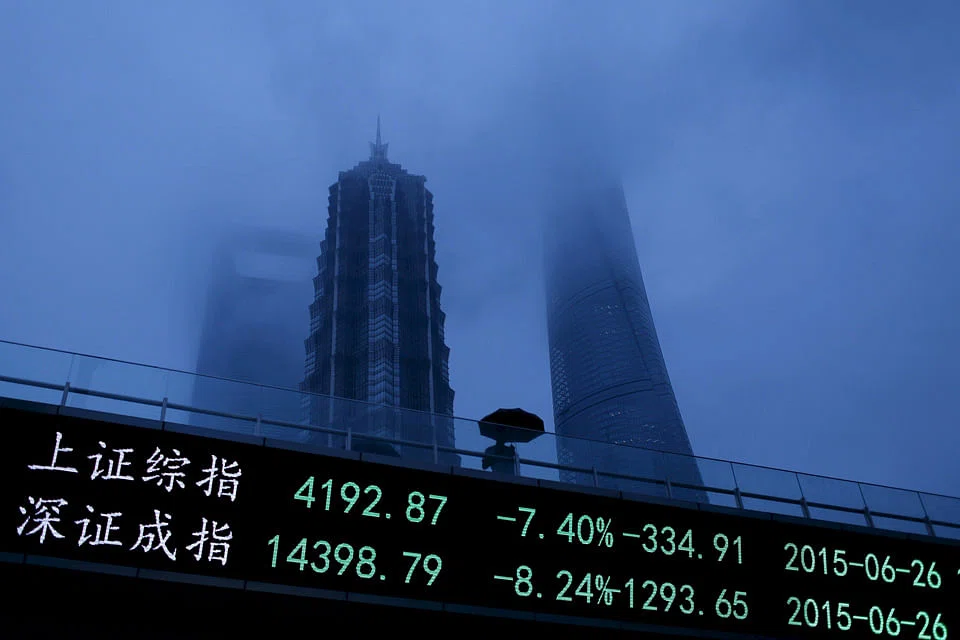
THIS WEEK'S TOPIC: What are the consequences of China's recent stock market crash - for the Chinese economy and for businesses in the region?

THIS WEEK'S TOPIC: What are the consequences of China's recent stock market crash - for the Chinese economy and for businesses in the region?
Toby Latta CEO, Asia-Pacific Control Risks
WE should worry about the Chinese economy but the stock market is a side-story; people are reading too much into it. To see implications in perspective, focus on fundamentals: Mainland bourses are speculative beasts which do not play the same role as "normal" stock markets. Chinese companies don't depend on them for funding, movements have little to do with real company value and performance, and relatively few Chinese households own shares.
Mainland markets do not reflect or affect the wider economy the way they do in most countries. Their slump might reinforce the wider economic slowdown but is a minor factor compared to manufacturing and construction.
Foreign businesses should be more focused on the 2015-16 five-year planning cycle - we need more "rebalancing" freedom for the private sector and services, but instead may get disappointing SOE (state-owned enterprise) reform, renewed emphasis on "made in China" industrial policy, and more regulatory scrutiny of multinationals.
David Emery Chairman Reciprocus International Pte Ltd
CRITICS qualify China's recent stock market crash as "doomsday" for the Chinese economy as well as for the region. In my opinion, however, this decline won't do much damage to China's economy on the whole.
A few reasons why I am not bearish about this situation:
* China's total stock market cap is only one third of its GDP compared to 100 per cent or more in other developed countries.
* China's economy is largely bank financed unlike others where the equity markets play a more important role in corporate finance.
* Foreign investors are not likely to be hit as foreign investments are capped and thus represent only 1.5 per cent of Chinese shares.
In addition Chinese citizens are also unlikely to be badly affected since stocks constitute only about 15 per cent of their portfolios. That's why overall consumption did not soar when shares peaked and therefore consumption won't now be crippled.
As a result the predicted 3 per cent decline in the net worth of households is a much smaller figure than most would have expected.
John Bittleston Chairman Terrific Mentors International
STRICTLY speaking it wasn't a stock market crash, more a severe correction. It was overdue and follows the pattern of most stock markets in their nascent years - boom and bust being a feature of herds of people chasing up prices and the savvy few knocking them down.
The impact will be felt throughout the region and the world but only for a while. The main impact will be to strengthen the US dollar as a haven of experience and consistency. Investors will be wary of China for a time and the world's economy is fragile enough to delay the next rush but not for long. China has now to prove that its stated intention to reduce corruption is working. When it does, the market will overheat again. Watch this race!
Yash Mishra Managing Director Taurus Wealth Advisors
CHINA is now the second largest economy in the world and therefore the recent correction in its stock market has impacted other markets, particularly in Asia. Chinese authorities have introduced more than 25 measures to prevent further declines and this underscores the importance of the equity sell-off.
China is trying to rebalance its economy from an export-led model and shift towards a domestic consumption model that benefits from the "wealth effect".
We believe, however, that the consequences of this selloff are very limited. In fact, data released over the past month suggests a cyclical pickup in the Chinese economy, rather than a further slowdown. Retail sales and industrial production were strong with the real estate market showing signs of picking up. The Shanghai market is still up 18 per cent year to date despite the correction and the Chinese government authorities have enough fiscal and monetary firepower to prevent any significant damage to the economy and businesses.
At Taurus, we continue to highlight these macro risks and monitor risks constantly across investment portfolios.
Peter Allen CEO Grant Thornton Singapore
SHORT-TERM, I am pessimistic. Surveyed in Q2 for our International Business Report, even before the collapse in equity market confidence, Chinese exporters and employers were among the gloomiest globally. More ominously, Chinese investors were also among the most negative globally, and this had deteriorated badly from Q1. One awaits the Q3 findings with concern.
Currently No 90 in the global ranking on ease of doing business, sandwiched between Namibia and Serbia, China is however improving. The transition from heavy manufacturing, real estate and equity market speculation, towards sustainable domestic demand will take time and will produce lower growth.
One area for real optimism is the focus and drive seen from Chinese policymakers. They have worked hard to cool the equity and real estate bubbles. Inflationary expectations are moderate; we expect real wage and employment growth to remain stable; and exchange rate fluctuations are not a negative factor on business sentiment.
Gerald Foo President Walton International Group
THE Shanghai Composite went from just above 2,000 points to a high of 5,178 (on June 12, 2015), in just under a year. It has since corrected to around 4,000 points (at the time of writing on July 21).
The impact of this correction is likely to be transmitted via several channels.
* In terms of wealth effect, it is likely that individual investors who got burnt playing the market are likely to cancel or postpone big-ticket purchases - for example, apartments and cars - and reduce discretionary consumption, such as drinking of expensive liquor and purchases of luxury goods. Nevertheless, it should be noted that even after the correction, the Shanghai Composite is still up 100 per cent from last year; the wealth effect may hence be overall positive.
* Owners of listed companies who borrowed money by pledging their shares as collateral may be subject to margin calls, which may hurt future business-related investment spending.
However, estimates of stock-based collateralised borrowing total only 0.7 trillion yuan (versus current A-Share total market capitalisation of6.04 trillion yuan), and not all of the loan proceeds would have been channelled into stock speculation.
* Banks are the dominant form of credit intermediation in the Chinese economy; if they are exposed to severe stock market losses, their lending ability would be impaired. From estimates, Chinese banks have an exposure of 1.6 to 2.1 trillion yuan to the stock market, most of which is via bank wealth management products that they have sold, and which are not on their balance sheets. Taken against total bank loans of 88.7 trillion yuan, Chinese banks' exposure to the stock market is very small.
Therefore, the fallout of China's recent stock market correction (not crash) is likely to be limited, on the whole.
Goh Yang Chye Managing Director GYC Financial Advisory
THE Chinese stock market does not play a big role in many households, making up an average of 15 per cent of total assets. In comparison, US households have 50 per cent holdings in stocks.
While the sell-off is likely to have hurt sentiment, it should not detract from the fact that recent data releases suggest that growth is stabilising. Retail sales, industrial production, harbour and freight traffic, and leading indicators suggest a broadly improving economic environment.
In addition, total social lending increased and real estate picked up around the same time the market was doing poorly; all these show that the central government's efforts to stimulate the economy has had positive effects.
With homeownership at 90 per cent, a real estate collapse would have far wider implications than a stock market rout. We should not take the Chinese for granted and remain confident that they can achieve their targeted growth rate for the year.
David Pugh Director - Singapore The Fry Group
AMID worries over the integrity of the eurozone, we have also been keeping a close eye on the turbulence in China's domestic equity markets. We believe the volatility, at this stage, does not pose a major threat to the Chinese economy or global markets.
Chinese citizens hold just 20 per cent of their financial assets in equities, suggesting that the market slide should not have a major impact on consumption.
Chinese domestic shares also only account for around 1 per cent of international portfolios.
Furthermore, the Chinese authorities have repeatedly shown they are willing and able to respond quickly and flexibly to the situation. We believe, in this context, aligned with the recent policy decisions in Europe, China and the US, there are sufficient supports in place underpinning the Chinese equity market.
Chris Comer CEO and Property Developer Castlewood Group
THE recent China stock market crash caused panic and impacted millions, the majority being domestic investors from working class families who invested their savings on stocks. A significant number of these investors are new to investment and not entirely savvy, hence this has resulted in a herd mentality of buying and selling stocks.
This means volatility in the Chinese stock market can be blown out of proportion very quickly, causing market rallies and dips within a short time.
The major restrictions on trading, efforts to buy stocks, and halted IPOs, have calmed the markets somewhat, though it may also spell a delay in getting yuan into the International Monetary Fund's SDR (Special Drawing Rights) basket. China will remain a hotspot that doubtless will still lead the global economy.
However, for businesses, this is another hit during a period of uncertainty starting with oil prices, Greece, and now the China stock markets - and as we know, markets dislike uncertainty.
Chrisol Correia Head, Global AML LexisNexis Risk Solutions
THE volatility of the stock markets will lead to further regulatory controls to ensure that requirements concerning corporate governance are observed. Companies which will be particularly affected are those which are already listed, or those which are planning to list on the US or other stock exchanges. Companies which are not able to demonstrate high standards will find it more difficult to attract investment and to avoid long-term regulatory scrutiny.
Apart from this, additional controls will be placed on consumer credit lines which might have been diverted to provide funds for speculation. Companies will need to take greater care of their credit score by improving their means to identify potentially risky activities. As a consequence, there will be less investment in companies or verticals with poor reputations for governance, risk management or compliance.
Mike Buffini Associate Partner St James's Place Wealth Management (Singapore)
CHINA will soon be the largest market on the planet. Nearly every trading company wants to be involved and access the billion-plus consumers with more cash to spend than ever before. The recent market fallback is almost irrelevant in the long term, despite the Chinese government's manipulations. It will settle down, and with projected annual GDP growth of over 7 per cent, the Chinese A shares market will thrive.
APAC region businesses will want to continue trading and this market scare will not put them off. New companies will want access to all those buyers, and Chinese companies will want access to the rest of APAC. They are keen to expand out of China and grow their businesses. Restrictions and impositions make life a little harder for them to do business but will not stop them. Businesses operating in China will need to be there for the duration. They will also have to keep their wits about them to adapt to changes and new regulations imposed by the Chinese authorities.
Lim Soon Hock Managing Director PLAN-B ICAG Pte Ltd
INITIALLY the stock bubble and crash were limited to just China, but given how interconnected markets are in the region, the effects can be seen in countries which do a lot of business with China. For example, Japan's stock market took a hit.
It is probably bad news for companies that rely on growing the Chinese market for sales in the near term. General Motors said its auto sales in China were flat in June, even after it slashed prices by 20 per cent on many models. It is another strong sign yet of the slowing Chinese economy.
Australia's key exports of iron ore and coal might be affected, which will put further downward pressure on the Australian dollar. This will adversely affect Singapore companies doing business with Australia. The repercussions of the stock crash are therefore not limited to China's domestic economy.
I think the Chinese government will allow consumer spending to be curtailed for a short while, to prevent things from getting out of control, arising from the overheated stock market, and easy access to liquidity and bank loans.
They see this as a short-term disadvantage for a longer term larger benefit of a more stable stock market as well as that of the property market and a more balanced economy.
In other words, the correction is needed for the economy to assume a more steady course, which will happen, given that all the growth drivers - large domestic market, infrastructure developments, foreign investments, healthy exports, and so on - are still all in place. As for its "old playbook" of export and investment-led growth, that is and always will be a key component of China's economic strategy, as a rising economic power.
Tan Mui Huat President and Chief Executive Officer, Asia Region International SOS
IN its last five-year plan, the Chinese government clearly stated its desire to reduce the country's reliance on export manufacturing, while encouraging domestic consumption and growing the service industry.
I believe the Chinese economy is stronger than its stock market and more dynamic than it is given credit for, and that foreign direct investment will remain robust. The market crash has not had a measurable impact on our business; in fact, it could actually be a force for good, as investors will now focus on companies with strong fundamentals and a solid track record, to ensure prudent fund allocation.
We entered China in the 1980s and began by providing assistance services so that foreign companies could perform their duty of care obligations to their employees. We showed them how on-the-spot care could save lost time and costs.
Today, our mission of protecting our corporate clients' travelling employees and expatriates in China, and keeping them healthy and safe, remains unchanged.
Conversely, we believe in making it easier for Chinese companies to work and grow on an international scale. The stock market crash will not deter their expansion goal and we will continue to help them prepare their employees for travel, and supporting them while they are in unfamiliar and remote locations.
The bottom line is that changes taking place in China may be painful for some, but as with all economies, they must take place for progress to continue.
Christopher Fix Managing Director, Head of Asia Pacific CME Group
IN the past year, we have seen the Chinese stock market soaring, and then falling, all within a period in which a fundamental market driver - Chinese exports - was slowing. The cause of this is partly due to slow growth in China's trading partners, but the bigger challenge has been the strength of the yuan. The yuan is managed within a range against the US dollar, and US dollar strength has led to yuan strength when compared to the euro, yen and most emerging market currencies.
At the same time, Chinese holdings of US treasuries are stagnant, and foreign reserves have started to shrink a little. It is conventional wisdom that foreign reserves are the tools of the trade to manage a currency, and reserve outflows are an early sign of downside pressures building on a currency. When we put all the factors together - weakening exports, a decelerating economy, outflow of reserves, stock market fragility - the yuan is likely to face considerable headwinds.
Risk management will be critically important. Derivatives markets play a key role in allowing market participants to manage their risks, and exchanges such as CME Group are here to serve the real needs of the economy, offering the widest range of global benchmark products across all major asset classes, including FX.
Bala Swaminathan President Westpac International
PLUNGING Chinese stock markets have shocked financial markets, but for Chinese households, investment in equities is not as widespread as one might think.
A key economic indicator for China is consumer confidence. There are roughly only 29 million active stock accounts in China - equal to about 4 per cent of the urban population.
Despite the massive stock price appreciation in 2014, low returns on deposits and poor performance of the housing market, over the past year, only 5 per cent of respondents to the Westpac MNI China Consumer Sentiment Survey said the stock market was the "wisest place for their savings".
That compares to savings deposits accounting for 54 per cent of GDP, while household equity holdings are less than a third of that. If the stock market turbulence doesn't leave a significant dent in consumer confidence, the impact on the economy and business performance will be less pronounced.
Christophe Duchatellier CEO Adecco APAC
THE volatility of the stock market and its negative effects on the Chinese economy could worry some Asian companies. However, the relative isolation of China's stock market and a small recovery sparked by drastic Chinese government intervention have kept immediate global damage to a minimum. The actual effect may be less than analysts are expecting. The stock market wealth effect in China is smaller than many assume: it represents less than 15 per cent of household financial assets.
There remains optimism on China's long-term stability and investment prospects. Indeed, investors in China and Asia consider the stock market as a place for short-term profit-taking, but also see it as an indicator of China's well-being.
Thus it is too early to tell, but it is likely that China's recent stock market crash would not impact directly the labour market in Singapore unless it becomes a prolonged situation, which is unlikely.
Mark Billington Regional Director - South-east Asia ICAEW
AT first sight it seems puzzling that Greece's crisis and Iran's deal have been overshadowing the Chinese stock market's recent ups and downs: at one point losses in the latter amounted to over US$3 trillion, 14 times the value of Greece's GDP. It's partly because this "epic" fall is only a correction from the "epic" rise that preceded it. The Shanghai Composite remains 85 per cent above its reading a year ago. But even a sharper correction shouldn't be a big blow on the economy at large in the short term: equities represent less than 15 per cent of Chinese households' financial assets.
Furthermore, policymakers have rushed to support the market, and maintain tools to control a broader economic slowdown. What's of greater concern is the precedent this sets for the long run: policymakers' reluctance to break away from intervention now raises questions around their commitment to the reforms that China needs to successfully rebalance, mature, and develop.
Zaheer Merchant Regional Director (Singapore & Europe) QI Group of Companies
OF the some 1.35 billion people in China, only 50 million households are invested in the China stock market. And out of that, perhaps 10 to 15 per cent of their assets are in the stock market.
These interesting statistics, including the speed with which the Chinese government stepped in, reflect a need to maintain social stability in the course of economic transformation.
Regardless of the reasons why the market "ran"- including theories such as the money flow having gone away from the "real economy" - it's evident that China seeks first and foremost to impose stability and control.
Businesses can take stock, regulators critically will do the same with oversight and then weed out sham stocks, and create a platform with greater transparency for more value and long-run returns and reduced volatility. Businesses benefit as the overall social fabric is maintained by reducing the chaotic furore a market crash generates.
Regionally, a measured and reconciled China market allows for greater resource allocation in terms of capital and finances in both its domestic economy as well as overseas. This creates the "economic key", as I'd term it, of generating consumption and progress which generates demand and supply and hopefully fuels the overall 7 per cent growth predicted annually.
It's a perfect win-win scenario with only one caveat - that global external forces not overly impact China's economic regeneration!
Annie Yap Group Managing Director AYP Group
THE impact of the recent stock market crash in China may not be as significant as expected. On average, about 10 to 15 per cent of the peoples' assets are invested in the stock market. This is an insignificant amount in a country with a population of 1.35 billion.
Also, many businesses in China are not dependent on the stock market; they turn to bank lending rather than the stock market for financing. Based on economic data so far, we can expect China to remain on track for 7 per cent GDP growth this year.
At the same time, the strong US dollar would mean that there could be an increase in exports for China as many countries' currencies are pegged to the US dollar; this increase in exports would be positive for businesses in China and the region.
David Leong Managing Director PeopleWorldwide Consulting Pte Ltd
THE Chinese economy is going through bouts of expansion and contraction in quick succession. The recent stock market crash saw valuations fall by more than a third since their mid-June peak.
In China, central control is very visible as the government imposed several measures to stave off further plunges, such as freezing trading altogether and reducing trading margin requirements. While these actions did stop the slide for many speculators, it is obvious that China is vulnerable to spasmodic market convulsions that can literally wipe out trillions of value off the market.
China's bubbling market leading to astronomical rise in valuations over the past year to June is simply not sustainable. And unless brakes are applied to cool the economy, rampant speculation on the premise that stock prices can only go up will result in epic disaster.
If China cannot sustain economic growth by domestic consumption and growth in its service industries, maintaining 7 per cent annual growth would be a huge challenge.
The erstwhile "factory of the world" is becoming an expensive place to manufacture goods. It needs productivity growth and investments in high-tech sectors. It must continue to grow in sustainable businesses and "real" GDP-contributing activities, rather than in frothy rises in stock market values which are not real.