Singapore's largest 'pioneer companies' among those with strong stocks
There are about 50 stocks on SGX with business foundations dating back to the beginning of 1960 and the end of 1969
STOCK exchanges play a critical role in the development of a country's financial centre, and this has been no different in Singapore.
The evolution from the Stock Exchange of Singapore (SES), Singapore International Monetary Exchange (Simex) and Securities Clearing and Computer Services Pte Ltd (SCCS) to the Singapore Exchange (SGX) has been a story of the development of the world's most pan-Asian and best-connected exchange.
As we celebrate the nation's 50th birthday, it is timely to look back at some of our leading listed companies that have been around since the days Singapore gained independence.
Today, we examine the 20 largest capitalised stocks listed on the SGX, which have evolved from businesses established in the 1960s. They represent more than a tenth of the combined market capitalisation of all stocks listed on the SGX.
Among the 20 stocks are four components of the Straits Times Index (STI) - DBS Group Holdings, Keppel Corporation, City Developments and Sembcorp Marine.
The fifth largest, UOL Group, is one of five stocks that make up the STI reserve list.
It will be of little surprise that more than half the 20 stocks represent the financial sector, mostly through real-estate development and diversified real-estate activities.
A quarter of the 20 stocks represent the industrial sector, through maritime, construction machinery, engineering and materials. The other sectors with representation are stocks in the healthcare, consumer discretionary and materials sectors. The majority of these 20 stocks are multinational corporations.
This was not always the case.
The Economic Development Board (EDB) notes in its online history page that in the 1960s, Singapore was a third-world nation with poor infrastructure and limited capital. The gross national product per person was less than US$320, and low-end commerce was the mainstay of the economy.The handful of industries that existed produced only for domestic consumption, which left no room for direct foreign investment.
Today, things are quite different.
For example, two stocks in the top 20 with histories dating to the 1960s have evolved to take an international focus: Cosco Corporation (Singapore), which is in China, and Yoma Strategic Holdings, which is in Myanmar.
There may be more companies with relevant market capitalisation that have evolved from businesses in the 1960s, but which are not included in this list. The year of foundation is based on information sourced by S&P Capital IQ, which also provides the stock information provided by SGX StockFacts. Some of the above 20 stocks may have also been formed by assets that were operational before their founding or incorporation date.
For instance, Keppel Corp was corporatised in 1968, with Keppel Shipyard (Pte) Limited formed to take over from the dockyard department of the Port of Singapore. Yet, the first dry dock in Keppel Harbour, renamed from New Harbour, was established in 1859. Keppel Corp was listed on SGX in 1980.
In total, there are about 50 stocks that are listed on SGX with business foundations dating back to the beginning of 1960 and the end of 1969. This includes three stocks listed on Catalist.
However, stocks that had established businesses in the 1960s but were incorporated outside Singapore, such as Mandarin Oriental and GuocoLeisure, are not included.
Performance-wise, these 20 stocks have averaged 10 per cent annualised returns, inclusive of dividends, over the past 10 years ending July 31. In total, there were 17 gainers and three decliners over this period.
The five best performing stocks over the past 10 years were Low Keng Huat (Singapore), Far East Orchard, Hong Fok Corporation, Hotel Grand Central and NSL. These "pioneer companies" have survived the test of time and delivered significant value to both their shareholders and Singapore.
Low Keng Huat (Singapore)
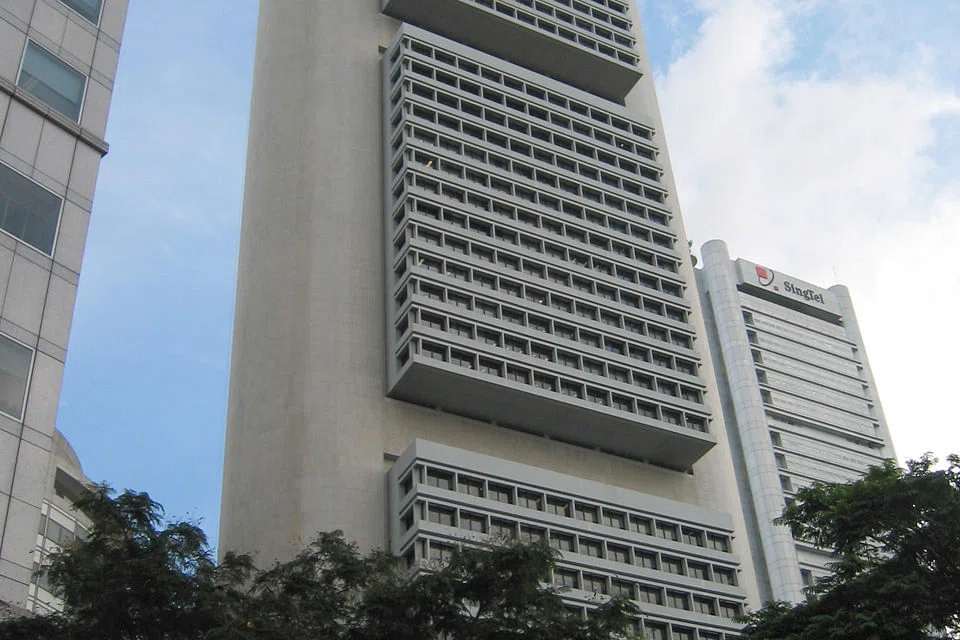
Established in 1969, Low Keng Huat (Singapore) is a builder. The company built the 52-storey OCBC Centre in 1976, which was then the tallest office building in Singapore. Six years later, the company built the nine-storey SIA Engineering Hangar at Changi International Airport.
Today, Low Keng Huat has grown to encompass building, construction, property development, hotels and investments. The company's online profile page notes it is one of the largest general building and civil engineering companies in Singapore in terms of capital employed.
The company also has a property development business in Singapore and Malaysia. In addition, the company owns and operates deluxe hotels in Perth, Australia and Ho Chi Minh City in Vietnam under the in-house brand, Duxton Hotel. Its other hospitality-related business is in food and beverages in Singapore.
SGX StockFacts says that shares in Low Keng Huat trade at a price to earnings (PE) ratio of 3.4, with a price-to-book (PB) value of 0.81 and a dividend yield of 4.4 per cent.
The stock ended last month at a price of 69 Singapore cents, a cent higher than at the end of July 2014. Coinciding with its six-month volume-weighted average price of 73.6 cents, the stock paid 5 cents per share in dividends that went ex-dividend on May 28. Over the past 10 years, the stock generated an annualised total return of 33.5 per cent.
Far East Orchard
Far East Orchard is a member of Far East Organization, Singapore's largest private property developer. Incorporated as Ming Court Limited in 1967, the company came under Far East Organisation in 1987 and was renamed Orchard Parade Holdings Limited in 1991. In July 2012, it adopted its new name of Far East Orchard Limited to better reflect its close alignment with its substantial shareholder and to leverage the "Far East" brand.
Far East Orchard has been listed on the mainboard of the Singapore Exchange since 1968. Over the years, it notes on its online page, it has developed a strong track record in property development in residential and commercial properties, having successfully developed numerous projects in Singapore. These include The Nexus, Glendale Park, Regent Grove, Seasons View and Seasons Park condominiums, as well as landed properties such as Kew Green, Kew Residencia and The Manor Houses.
Today, Far East Orchard has a diversified portfolio focusing on property development, hospitality real-estate development and management and health-care real estate.
SGX StockFacts says Far East Orchard trades at a PE ratio of 24 with a PB of 0.57 and a dividend yield of 3.6 per cent. The stock ended last month at a price of S$1.65, which was 25.5 cents lower than the year before. Over those 12 months, the stock distributed a six-cent dividend per share that went ex-dividend on May 13. The stock's six-month volume-weighted average price as at the end of July was S$1.677. Over the past 10 years, the stock generated an annualised total return of 22 per cent.
Hong Fok Corporation
The business of Hong Fok Corporation was incorporated in 1967. Today, Hong Fok Corporation is an investment holding company that engages in the investment, development, construction and management of properties in Singapore and Hong Kong.
Its major investment properties in Singapore include the 12-storey International Building in Orchard Road, the 30-storey YOTEL Singapore Orchard Road, the 41-storey Concourse and Concourse Skyline and the 50-storey International Plaza and in Hong Kong, Magazine Gap Towers and Magazine Heights.
Its major development properties in Singapore include Concourse Skyline, the Jewel of Balmoral and ten@suffolk and in Hong Kong, The Icon.
The company develops retail and residential units, as well as sells residential units; it also provides property maintenance and management services. It is involved in investment trading, holding and management businesses, as well as the provision of horticultural services.
SGX StockFacts says that Hong Fok Corporation trades at a PE ratio of 12.6 with a PB of 0.40 and a dividend yield of 1.2 per cent. The stock ended July 2015 at a price of 84 Singapore cents which was 22.5 cents lower than at the end of July last year.
The stock paid two cents in dividends per share that went ex-dividend on May 11. The stock's six-month volume-weighted average price as at the end of July was 90.7 cents. Over the past 10 years, it generated an annualised total return of 17 per cent.
Hotel Grand Central
Hotel Grand Central was incorporated on June 13, 1968, and listed on SGX in 1978. The company's founding hotel, the Hotel Grand Central, first opened its doors in 1968 and closed for redevelopment in 2012 with a schedule to re-open this year.
The group now owns and operates hotels and properties throughout Singapore, Malaysia, Australia and New Zealand.
Its online corporate profile says that it owns, operates, manages or has equity interests in 11 hotels throughout Malaysia through a wholly-owned subsidiary and associated companies. Hotel Grand Central expanded its hotel and commercial property interest into Australia and New Zealand in the early 1990s, with further expansion in 1995.
SGX StockFacts says Hotel Grand Central trades at a PE ratio of 8.8 with a PB of 0.89 and a dividend yield of 3.7 per cent. The stock ended last month at a price of S$1.34, which was eight cents lower than at the end of July 2014. The stock paid 10 cents in dividends per share that went ex-dividend on June 2. The stock's six-month volume-weighted average price as at the end of July was S$1.417. Over the past 10 years, the stock generated an annualised total return of 16.6 per cent.
NSL
NSL was incorporated in the early 1960s as The National Iron and Steel Mills to support Singapore's nation-building efforts in infrastructural and residential development.
As noted online, the group began to diversify into related areas in the 1980s to broaden its earnings base. It began by expanding into steel fabrication and construction-related products and services. In the early 1990s, in tandem with product diversification, the group regionalised and expanded into electronic businesses. It also changed its name to NatSteel.
In the new millennium, the group maximises value for shareholders by unlocking the value of its businesses. The group sold its electronics businesses in the 2000s, and its steel businesses in 2004. With its exit from the steel business, the company assumed its present name of NSL from October 2008.
Today, NSL Group has sizeable businesses in industrials, comprising the precast and prefabricated bathroom unit division, dry mix and environmental services, with operations in nine countries.
SGX StockFacts says that NSL trades at a PE ratio of 55.0 with a PB of 0.99 and a dividend yield of 3.5 per cent. The stock ended last month at a price of S$1.45, which was 26.5 cents lower than at the end of July 2014. The stock paid eight cents in dividends per share that went ex-dividend on May 6. The stock's six-month volume-weighted average price as at the end of July was S$1.57. Over the past 10 years, the stock generated an annualised total return of 16.1 per cent.
Three of the five stocks discussed in detail represent the real estate sector: Low Keng Huat (Singapore), Far East Orchard and Hong Fok Corporation. Hotel Grand Central is a consumer discretionary play and NSL is a materials play.
The five stocks that performed the strongest of the relevant 20 companies averaged a 21 per cent annualised total return over the past 10 years.
The five least performing stocks of the 20 stocks averaged a 3.3 per cent annualised decline in total return over the past 10 years.
GET STARTED NOW
Be a young investor
Do you aspire to be a successful young investor? Are you keen on taking the first step towards achieving that? The BT-Citibank Young Investors' Forum is no typical page extracted from a financial textbook. This forum will present step-by-step guides on how to start investing, feature stories of peers who have made some headway with their investments, and provide answers to your burning questions on investing. First, we need you to invest - not your money, but your time - in reading The Business Times every Monday. You need not be an armchair reader either - write in to btyif@sph.com.sg now!