
My Fair Lady comes a loverly circle
The beloved musical based on the play Pygmalion returns to Broadway and its progressive roots
 Add BT as a preferred source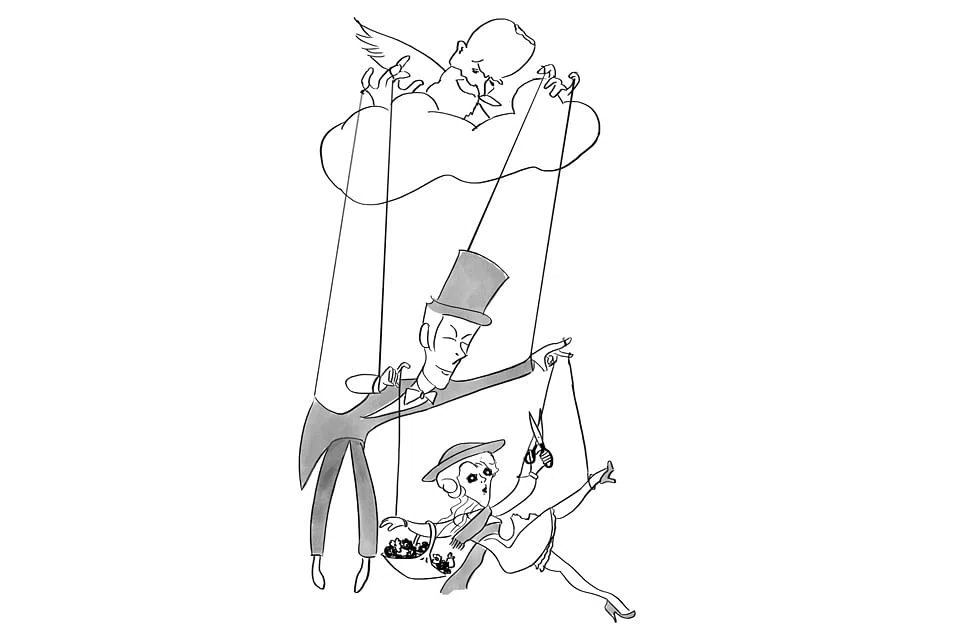
SHE was rather confused. Not Eliza Doolittle, mind, but another fair lady who had come to watch the musical re-staged 25 years after its last appearance on Broadway.
Turning to me at the end of the musical, she asked why in the final scene, Eliza, the female protagonist in My Fair Lady, walked out on Henry Higgins, the uppity phonetics professor who gives speech lessons to Eliza - a Cockney flower girl - on a bet that she would pass as a lady at a high-society gathering. "That's not how I remembered it," she quizzed.
Indeed, those who have watched the original 1956 musical starring Julie Andrews as the precocious flower seller, or the 1964 film featuring Audrey Hepburn in the same role, would recall the closing scene of the professor - or 'enry 'iggins as Eliza would sing of him - being smug as punch as Eliza returned to his house following their fight. "Where the devil are my slippers?" he wondered out loud as the scene drew to a close, suggesting that Eliza would stay on and possibly marry him, and in doing so, settle for his curmudgeonly and condescending ways.
The modern-day decision by Eliza to walk out of Higgins brings the musical to a full circle, and back to the true intention of the playwright, George Bernard Shaw.
A critique of a class consciousness
Written in 1912, Pygmalion was meant as a critique of a class consciousness that was defined by accents and dialects - a societal division layered on by the devaluation of women. To have Eliza "marry up" to boost her social standing after being dressed up with fancy clothes and a new speech pattern, was quite the opposite from Shaw's conclusion.
Navigate Asia in
a new global order
Get the insights delivered to your inbox.
But bowing to audiences' pressure for happy endings, the stage actors in 1914 improvised scenes to tease the possibility of courtship. And later, as the play was adapted into its first film in 1938, and for a second time in 1964, the romantic ambiguity was dialled up several notches.
The revisions to Shaw's play, considered his most famous, were consistently objected to by the playwright himself. Shaw insisted that Eliza must "retain her pride and triumph to the end", as did the most fervent Shavians.
In 1916, Shaw added a sequel as an explainer to his original play. He put on record his disapproval that Eliza would ever wed the cantankerous professor who, despite acknowledging her quick wit and humour, calls Eliza a "heartless guttersnipe" among other derogatory terms.
"The rest of the story need not be shown in action, and indeed, would hardly need telling if our imaginations were not so enfeebled by their lazy dependence on the ready-mades and reach-me-downs of the ragshop in which Romance keeps its stock of 'happy endings' to misfit all stories," Shaw huffed.
"The true sequel is patent to anyone with a sense of human nature in general, and of feminine instinct in particular . . . Eliza, in telling Higgins she would not marry him if he asked her, was not coquetting: she was announcing a well-considered decision."
To add, the lofty attitude of the upper class was also a point of critique for the playwright; Shaw was hardly fond of the privileged in My Fair Lady. (For a modern-day comparison, Crazy Rich Asians skewered the outsized mania of keeping up with high-society appearances.)
Shaw concluded that Pygmalion - the name of a sculptor out of Greek mythology who fell in love with one of his creations, Galatea, that came to life - had no final dominion. "Galatea never does quite like Pygmalion: his relation to her is too godlike to be altogether agreeable."
The glaring irony is that this latest re-staging provoked debate again. The Broadway return was criticised by certain segments of the audience who were accustomed to the romantic undertones. These critics slammed the revisionist hand taken by the current production, when it has, in fact, reverted to its roots. In this information age, there is little excuse for ignorance and more broadly, anti-intellectualism. Yet, hysteria persists.
As Fintan O'Toole, an author who wrote about the legacy of Shaw's writing, put it, Shaw's brand of social criticism is all the more relevant today amid "Victorian levels of inequality". It also comes as an increasingly tribalist world has, perhaps, lost part of the Shavian social criticism that once sharpened modern thinking. "What Shaw injected into modernity was not just a set of ideas - it was a way of thinking. He democratised scepticism," said Mr O'Toole in a column only last year. "He embodied a zeitgeist of positive doubt - people learned from him that all assumptions are lazy."
Eliza's emancipation is here - albeit a hundred years postponed
It takes a play that is over a century old to speak truths of this modern season: the world is on balance better open than closed; women should not be tokens for trade; class divides are a mockery in themselves.
Had he been a man of our times, perhaps Shaw might observe the world's patchy progress in inequalities, governance, and environmental protection, with some dismay.
But he might well chime too that Eliza's emancipation is here - albeit a hundred years postponed - so damn, damn, damn, damn, the nihilists.
On that note, it seems only right to kill off one last bit of romance. The rain in Spain stays mainly in the plain, so they sing. But in truth, precipitation falls aplenty on the mountains and coasts. Did I speak out of turn, now?
Copyright SPH Media. All rights reserved.

