
US debt crisis looms with solution elusive in deeply divided Washington
Government is likely to run out of cash on Oct 18, unless Congress raises federal borrowing cap, warns Dr Yellen
 Add BT as a preferred source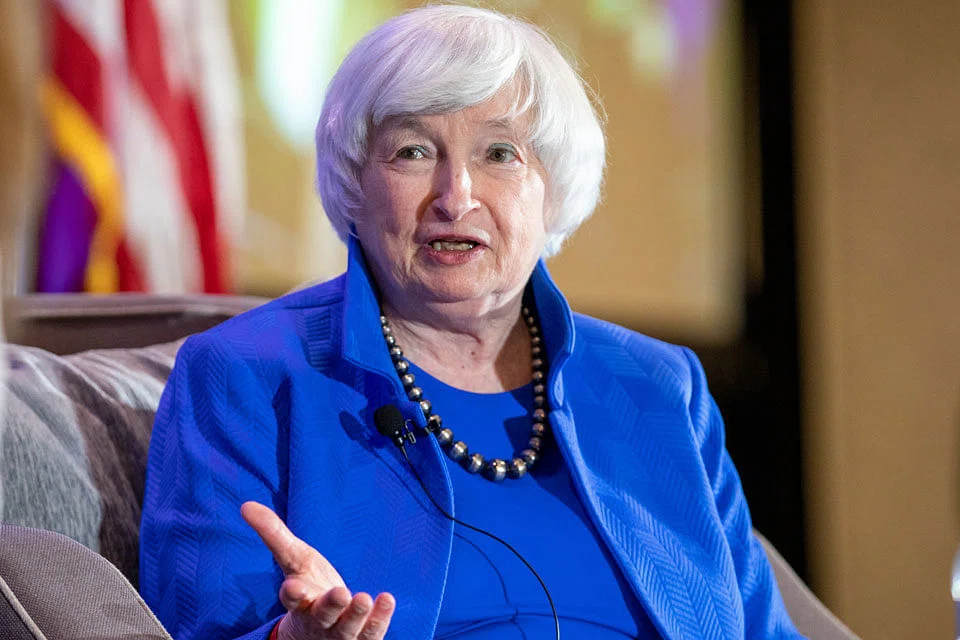
Washington
US lawmakers scrambled on Tuesday to break a deadlock on Capitol Hill over the prospect of a first-ever US debt default that would plunge the economy into a death spiral, alarming investors as the cliff edge draws closer.
The government is likely to run out of cash on Oct 18, Treasury Secretary Janet Yellen warned, unless Congress raises the federal borrowing cap.
After that date, the Treasury's funds "would be depleted quickly" and "it is uncertain whether we could continue to meet all the nation's commitments after that date", she said in a letter to congressional leaders.
The impasse fuelled a selloff on Wall Street, with the benchmark Dow Jones Industrial Average closing 1.6 per cent lower after Dr Yellen warned of dire consequences, including debt default if lawmakers fail to act quickly.
But Republicans say they will not help raise or suspend the debt limit, despite having pressed for it under former US president Donald Trump, because they want no part in Democrats' spending plans, including a historically large US$3.5 trillion package of social reforms.
Navigate Asia in
a new global order
Get the insights delivered to your inbox.
Senate Majority Leader Chuck Schumer, whose Democrats occupy half the 100 seats in the upper chamber, attempted to raise the borrowing cap until December 2022 without any Republican votes.
The New York Democrat asked for the unanimous consent of the Senate to bypass the usual 60-vote threshold required for most bills to be debated and instead move straight to a vote.
"Republicans said they want to get it done with only Democratic votes. Democrats are ready to do it and let's have that vote today," Mr Schumer said.
But Mr McConnell refused, insisting there was "no chance the Republican conference will go out of our way to help Democrats conserve their time and energy so they can resume ramming through partisan socialism as fast as possible".
The cap was reinstated on Aug 1 with the country's debt at US$28.4 trillion.
Mr McConnell has repeatedly argued that the political burden of raising or suspending it again should fall to Democrats because they control the House, the Senate and the White House.
But Dr Yellen told the Senate Banking Committee the debt limit increase was a "shared responsibility" that both parties should support.
Without an increase, the government would be unable to pay salaries of public workers or service the nation's debt, while confidence in the US dollar as a reserve currency would be undermined, she said.
With no sign of a way out of the impasse on Capitol Hill, the debt crisis may now be kicked into next week, with lawmakers facing a more immediate deadline on funding the government past Thursday night, when the fiscal year ends.
Failure would shut down the government, which typically leads to hundreds of thousands of workers being sent home as public services are closed.
The House has passed a "continuing resolution" to keep the lights on until Dec 3. But the Senate shot down the plan on Monday, with Republicans objecting to a debt ceiling hike that was included in the wording.
Raising the debt limit does not increase spending, but simply allows Treasury to finance projects already approved by Congress, including trillions of dollars in aid rolled out during the pandemic.
"Only three per cent of this is about Joe Biden's presidency. The bulk of it is under the previous president's administration," Democratic House Speaker Nancy Pelosi told reporters.
"We don't share responsibility for a (Trump) tax scam that gave 83 per cent of the benefits to the top one per cent and added US$2 trillion to the national debt."
In her latest letter to lawmakers, Dr Yellen said prompt approval is critical since "waiting until the last minute can cause serious harm to business and consumer confidence, raise borrowing costs for taxpayers and negatively impact the credit rating of the US for years to come".
Raising the debt ceiling has been a contentious issue in Congress for the past several years, and a 2011 standoff caused S&P Global Ratings to downgrade US sovereign debt from its coveted AAA rating. AFP
Decoding Asia newsletter: your guide to navigating Asia in a new global order. Sign up here to get Decoding Asia newsletter. Delivered to your inbox. Free.
Share with us your feedback on BT's products and services

