A Gojek-Tokopedia merger would give fillip to Indonesia's startup ecosystem
Jakarta
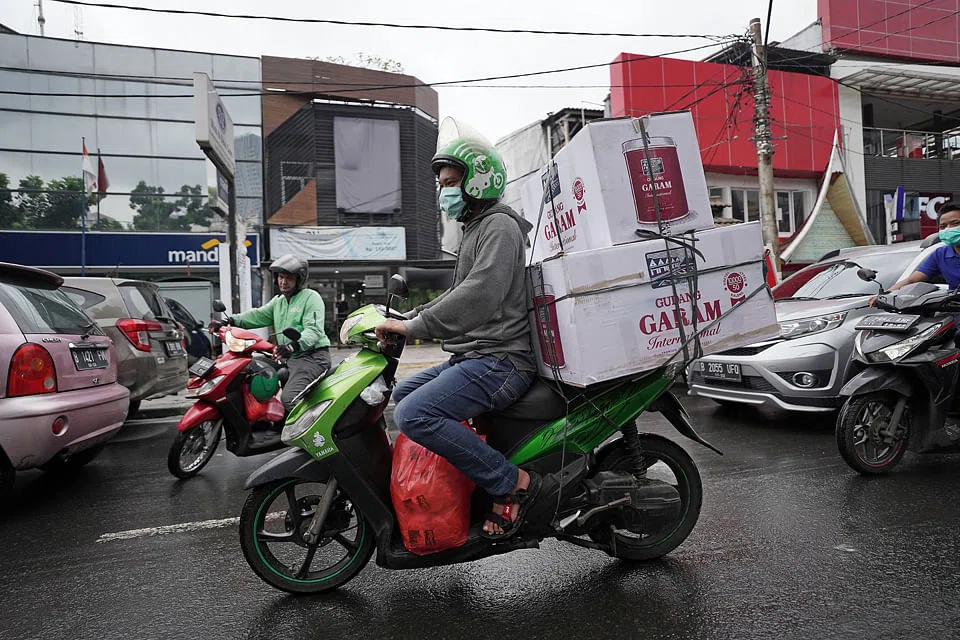
THE potential merger between Gojek and Tokopedia - the two poster boys of Indonesia's digital economy - has been hailed by the country's investment community as a move that would bolster its fast-growing tech eco-system.
On Tuesday, it was reported that ride-hailing firm Gojek was exploring a US$18 billion merger with e-commerce giant Tokopedia, and eyeing an initial public offering (IPO) of the combined entity in Indonesia and the United States.
The news put paid to an earlier report of a potential merger between Gojek and its arch-rival Grab in Indonesia, South-east Asia's largest economy.
Talk of that merger had run into strong opposition by the more than four million riders and drivers that service both firms in Indonesia; they had banded together to threaten nationwide demonstrations if regulators gave their go ahead.
Patrick Yip, the co-founder of Jakarta-based Intudo Ventures, said the start-up community is excited about a Gojek-Tokopedia merger as it would be healthy for the eco-system.
"With a combined value of US$18 billion, it makes them a very credible acquirer of younger start-ups, which gives them a better chance of being successful," he added. "With Pandu Sjahrir encouraging tech companies to list on the Indonesian Stock Exchange, the merger news will also be welcomed by the authorities."
Mr Sjahrir, the founding partner of AC Ventures, was appointed a commissioner of the Indonesia Stock Exchange for the 2020-2023 period to help Indonesian tech start-ups go public. He also sits on the board of Gojek and is chairman for Indonesia for Sea Group.
Industry sources told The Business Times that Indonesian regulators are more comfortable with the idea of merging Gojek and Tokopedia, given that both firms are Indonesian and would therefore be seen as nationalistic. Grab is Singapore-based and would thus be seen as a foreign entity taking over an Indonesian firm, they noted.
The Gojek-Tokopedia merger also makes greater commercial sense as the parties complement each other and can thus expand their respective markets: Tokopedia can use Gojek to provide last-mile delivery services for its customers; Gojek can leverage Tokopedia's data points to expand its reach within Indonesia.
Edward Chamdani, managing partner of Ideosource Venture Capital, said: "If I were an investor looking at the two companies in the same space such as Gojek and Grab, adding one plus one would not add up to three or five, but perhaps only 1.8.
"That deal was lacking competitive eagerness as it would not have been complementary. (The Gojek-Tokopedia deal) makes a lot more sense for both sides and if I were Softbank, it is a good strategy because Gojek provides greater synergies."
Japan's Softbank is a major investor in both Tokopedia and Grab, but does not have a stake in Gojek.
"If the merger leads to an IPO, it will be able to attract a much larger investment pool," Mr Chamdani added. "The US$18 billion valuation could easily grow 10-fold in the near future."
Backed by Softbank and Alibaba Group, Tokopedia has been facing increasing competition from Shopee, which counts Sea Group as a major shareholder.
Its potential merger with Gojek will give the e-commerce platform additional gunpowder to take on its rivals. For Gojek, the merger provides a path to future profitability and an opportunity for its investors to cash out.