



As KL probes poultry cartels, Malaysia firms are feeling the pain too
By Chong Pooi Koon
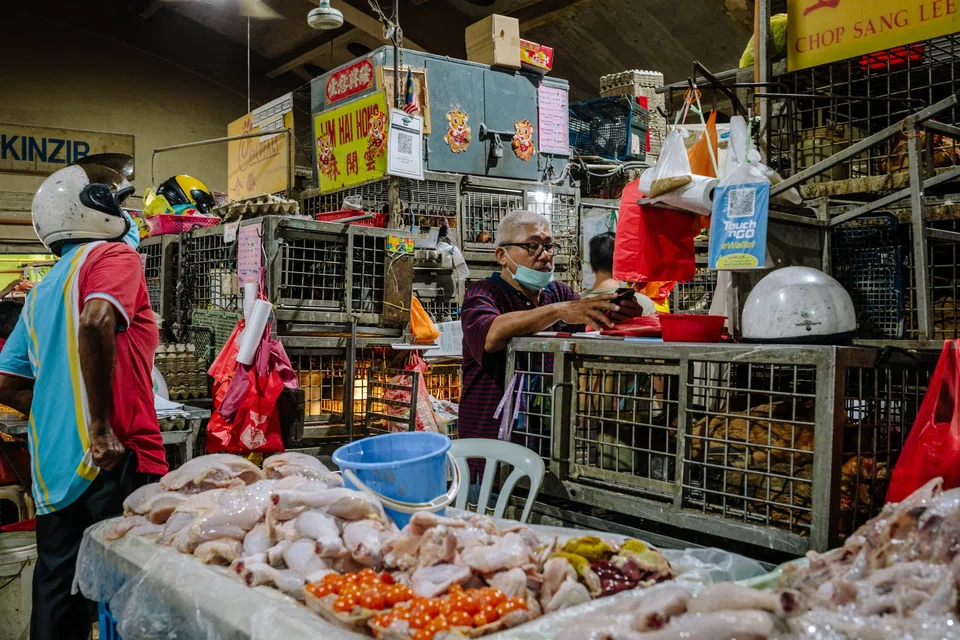
MALAYSIA will begin a suspension on chicken exports from June 1, a move that affects scores of countries including neighbouring Singapore.
The surprise announcement came as the Malaysian government seeks to contain spiralling chicken prices amid a supply shortage. Countries globally are taking action to secure their domestic needs for foods and commodities to contain inflation, which was made worse by the ongoing Russia-led war in Ukraine.
As a net importer with about 60 per cent of its food needs coming from abroad, Malaysia has been affected by higher import prices and a weakening ringgit.
While there is no fixed timeline for the chicken export ban, Malaysia’s Prime Minister Ismail Sabri Yaakob has said that it will be in place until the domestic supply and prices of chicken are stabilised. About 3.6 million chickens are exported from Malaysia each month.
At the same time, the Malaysia Competition Commission is investigating reports of various cartels controlling the price and supply of poultry, with its report due in June. Here is the crux of the matter:
What prompted this market manipulation probe?
In a statement on May 23, Ismail Sabri said the government has allocated RM729.43 million (S$228.1 million) in subsidies to cap local chicken prices at RM8.90 per kg under a price control scheme. This is currently in force until June 5.
However, he said several big companies were not interested in applying for this subsidy. Instead, they want the government to allow prices to be determined by the market. To date, only RM50 million of subsidies has been paid out so far, mainly to small producers.
Ismail Sabri said several companies have halted their supplies of chicken, resulting in a price increase and a lack of supply in the market.
On the other hand, major industry players have blamed rising costs of chicken production, disease infection and weather conditions as contributing factors to the supply crunch. These issues were raised in a meeting with Malaysia’s Agriculture and Food Industries Minister on May 23.
Other concerns affecting supplies include the rising cost of chicken feed due to the Ukraine crisis, as well as a much weaker ringgit.
How bad is the supply crunch for businesses?
Over the past few months, there have been reports of fast-food chain KFC running out of chicken at several outlets in Malaysia. This has led to some of the chain’s restaurant operators tweaking their menu and dropping some items to cope with the shortage.
KFC Malaysia’s brand head Stephen Chew told local media earlier this week that it is still facing a lack of chicken and most of the menu items are limited in stock. He said the Covid-19 pandemic has led to global supply chain disruptions, with Malaysia’s poultry industry being affected.
Texas Chicken Malaysia’s head of public relations Junaidah Mazlan said the chain may soon run out of bone-in chicken, depending on how the daily supply and demand pan out.
Nando’s Malaysia has reportedly said that the company has been facing shortages and tight supply for more than half a year. It has turned to introducing vegetarian options to diversity the menu.
Is the chicken shortage due to artificial manipulation or other reasons?
A clearer picture of the situation should emerge when the competition agency completes its investigations around the end of June.
Marimuthu Nadason, president of the Federation of Malaysian Consumers Associations, said the government has taken too long to start investigating claims about the existence of chicken cartels.
He also urged the Malaysian public to refrain from consuming chicken for a month to stop prices from spiralling further, adding that have long been at the mercy of people manipulating the price of chicken. He noted that as chickens and eggs are the cheapest and most widely available sources of animal protein, market prices are naturally more sensitive to manipulation.
Bumiputera Retailers Association president Ameer Ali Mydin lauded the government’s efforts to call out the chicken market manipulators. Even as chicken prices are not expected to go down any time soon, he said the move signalled that the alleged controlling of poultry supply will no longer be tolerated.
“(What the manipulators) simply want is for the government to remove price controls so they can set their own. With the current subsidy mechanism, they can only cover their costs and make a slight profit,” Ameer Ali, who is also managing director at Mydin Mohamed Holdings, was quoted as saying in a report in The Vibes on May 26.
TRENDING NOW

Despite the de-dollarisation debate, demand for dollar liquidity in Asia is growing
URA to review guidelines on floor space to give developers more design flexibility: Chee Hong Tat

He built the Vingroup empire. Now South-east Asia’s richest man is handing some key roles to his sons

Can a first-time homebuyer couple earning S$18,000 a month afford a new EC unit?

