Asean offers silver lining for logistics players as global trade slows
US-China trade tensions rerouting flow of goods and services in region; bright spots include Asean 'big six', India and Bangladesh

Mindy Tan
Singapore
SOUTH-EAST Asia has emerged as a key investment target for logistics players as US-China trade tensions reroute the flow of goods and services in the region.
Take for instance Janio, which offers international e-commerce shipping services to and throughout South-east Asia. The startup is enjoying double-digit, month-on-month percentage growth in volume trade flowing into Asean from the north.
Co-founder and chief operating officer Syed Ali Ridha Madihid noted that focus has shifted to the South-east Asian market, predominantly the "big six" of Indonesia, Thailand, Philippines, Vietnam, Malaysia and Singapore.
"Indonesia, Thailand and Philippines lead the way with regards to being a huge destination market, with Vietnam gathering pace. However interestingly enough, other than being importing countries, these countries are also starting to export, and we see intra-Asean trade growing in the next few years," he said.
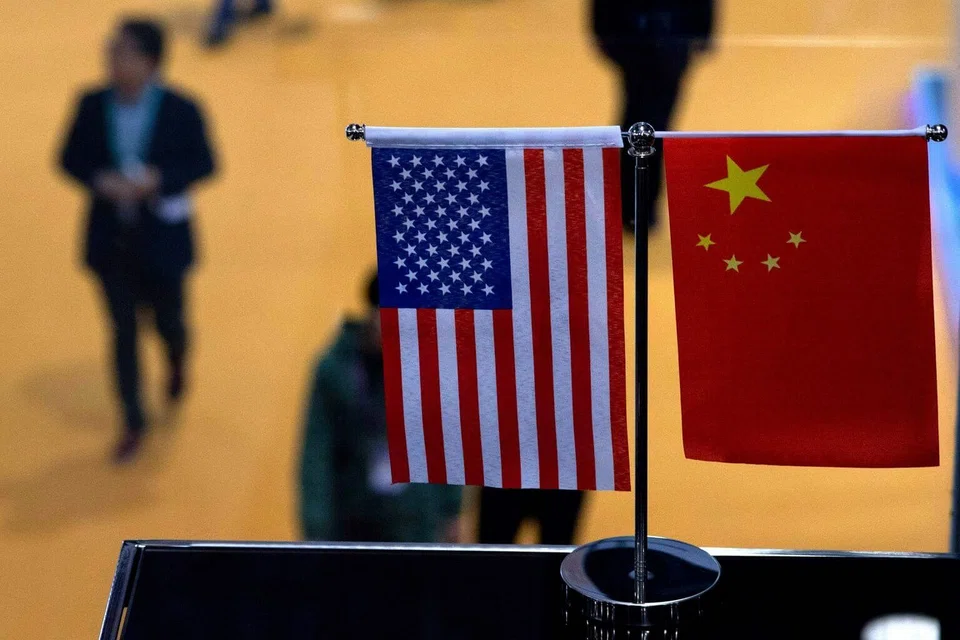
The regional buzz has a markedly different tone from global sentiment, which has been dampened by the US-China trade conflict.
DHL's Global Trade Barometer indicates a slight contraction for global trade between June and August this year. This comes on the heels of a multi-quarter slowdown in the pace of global trade growth since mid-2018.
The current contraction will be the first since 2015 when the barometer measured more than a month-long decline of global trade volumes in the middle of the year. Although the barometer was launched in January 2018, it takes into account historical data from 2013.
Despite these findings, Sean Wall, executive vice president, network operations & aviation at DHL Express Asia Pacific, said he expects trade volumes in Asia will be bolstered by markets looking to diversify foreign sourcing.
He also cited multilateral trade agreements like the Comprehensive and Progressive Agreement for Trans-Pacific Partnership, and bilateral free trade agreements such as the Japan-EU Free Trade Agreement, EU-Vietnam and EU-Singapore as encouraging trade growth within the region.
"We see bright spots of growth from countries such as India and Bangladesh, where the manufacturing sectors are booming. Vietnam and Thailand continue to attract investors with the government's focus on technology and infrastructure upgrades, while high-tech markets like South Korea and Japan are also well positioned to benefit from technologies like 5G and IoT," Mr Wall said.
Year-to-date intra-Asia volumes for Vietnam, Malaysia and Thailand shine as growth pockets driven mainly by SMEs, he added.
Kevin Leung, CEO of DHL Global Forwarding Asia Pacific, also noted an outperformance by the high-tech industry in the Asia Pacific. DHL Global Forwarding focuses on rail, road, air and sea freight, whereas DHL Express specialises in door-to-door deliveries.
Homegrown logistics player YCH Group is also upbeat about opportunities in the region, which includes both China and India.
"Asean and India trade has crossed the US$80 billion mark last year, the highest volume of trade in goods that Asean and India have ever witnessed since the signing of the FTA in 2010, which shows growing confidence of India's market," said Jeffrey Tan, head of network and connectivity, corporate development at YCH.
The growth and opportunities are driving an investment drive into the region.
Mr Tan said YCH expects to continue expanding its footprint in Asia in the next five to ten years.
DHL Express deployed its first passenger-to-freighter plane in the first quarter of 2018. The aircraft, the first of four to join the DHL Express fleet, allows for 33 per cent more freight capacity per flight, caters specifically to regional e-commerce activity, and services the "fast-growing" markets of Malaysia, Vietnam, and Hong Kong.
Subsequent aircraft which were fully deployed over the course of last year also focus on intra-Asia connections.
"Since the start of this year, DHL Express has opened many new service centres in Asia, including Australia, China, Indonesia, Japan, New Zealand, Sri Lanka, India, Taiwan, and Vietnam," Mr Wall said.
UPS has also been working to reduce transit times across 2,300 trade lanes - up to four days for intercontinental shipments and up to two days for destinations in Asia. It also improved the geographic reach of its express services. Customers in the Chinese province of Xi'an and certain provinces in Vietnam are now able to access this service.
The logistics firms are also staying the course on investments in China, although many of those were planned before the escalation of current trade tensions.
UPS, for instance, announced earlier this month that it had upgraded its Shenzhen Asia Pacific Air Hub to increase the hub's processing capacity by nearly 50 per cent in preparation for volume gains in the coming three years.
DHL Express, in the same vein, invested 335 million euros to expand their Central Asia Hub in Hong Kong in November 2017. They expect the expansion to be completed within the next three years.
YCH meanwhile announced it had signed a memorandum of understanding (MOU) with Yanglin Economic and Technological Development Zone Party to further explore collaboration on developing a YCH Kunming Modern Logistics Park Project in Songming Yanglin Economic Development Zone.
This came about three years after the firm signed a separate MOU with Y3 Technologies and the Chongqing government to establish Chongqing as Asean's logistics hub in China.
In December 2018, YCH welcomed the first successful completion of the China-Asean express regular shuttle service. The 45-foot container left Chongqing and passed through Guangxi Pingxiang Friendship Pass and a few Asean countries such as Vietnam and Thailand, before arriving in Singapore.
Janio's Mr Syed said that while the his firm remains asset light, they are exploring acquiring or investing in key assets.
"We believe that eventually the supply chain will change significantly and rapidly within the next three years as rules and regulations are being updated and adapted to meet the dynamic needs of the market."