Big G20 year for Indonesia
This year’s G20 is being held in Indonesia, yet it is developments some 6,000 miles away in Ukraine that are most shaping the multilateral body’s 2022 agenda.
THIS Friday and Saturday, G20 finance ministers meet in Bali after their foreign minister counterparts convened last week. Tensions over Moscow’s invasion boiled over in that latter session with Russian Foreign Minister Sergei Lavrov walking out of meetings at least twice, and there was none of the usual customary group pictures of the so-called ‘G20 family’ taken.
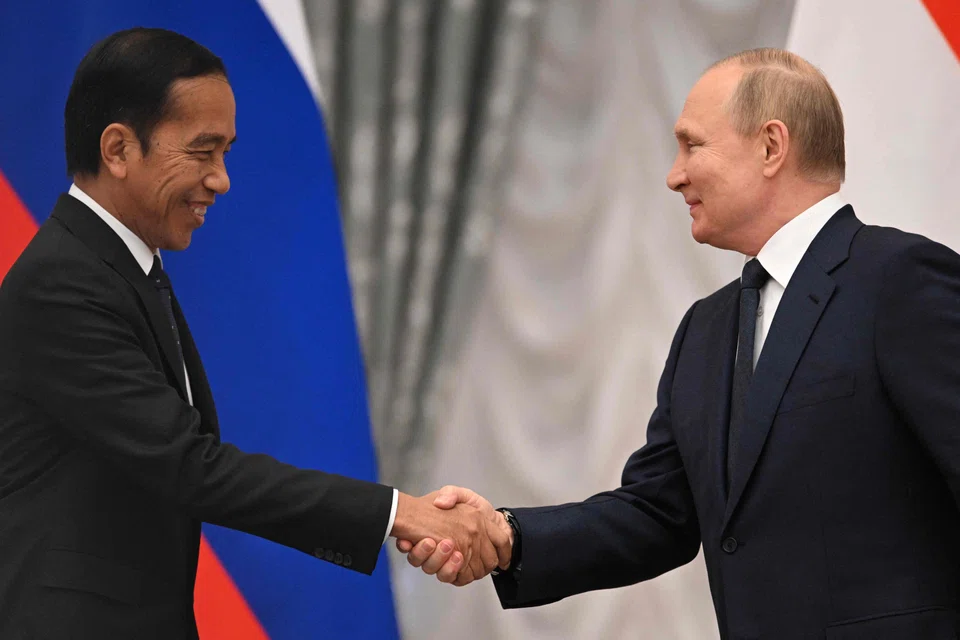
With the longevity and outcome of the Ukraine crisis unclear, this year’s G20 events have the potential to become the most important since the 2009 meeting in London during the storm of the international financial crisis. While Indonesia is one of the club’s least prominent states, Indonesia’s President Joko Widodo is determined to try to stamp his mark and is engaging in extensive shuttle diplomacy, including to Moscow to see President Vladimir Putin this month.
According to Widodo, Putin will not attend this year’s leadership summit in person. However, other presidents and prime ministers will do so from China, India, Japan, Australia, Brazil, the United Kingdom, Saudi Arabia, South Africa, Turkey, France, Germany, Italy, Canada, South Korea, Argentina, Mexico, the European Union (EU), and the United States. Collectively, these powers account for some 90 per cent of global gross domestic product (GDP), 80 per cent of world trade, and around 66 per cent of global population.
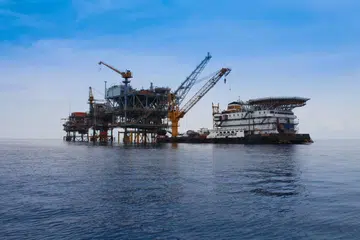
At this week’s finance minister meeting, perhaps the hottest topic will be the outlook for the world economy, with growing concerns that significant chunks of the globe may be heading for recession. In part, this is because of surging energy prices which have hit the European continent particularly hard.
Following Russia’s invasion of Ukraine, energy security has become as important as net zero for some European governments – and this may be the case not just in 2022, but also into the medium term. This is because there is a real danger of energy blackouts in Europe, so securing alternative supplies to those of Russia is mission critical for EU leaders.
The World Bank has forecast that energy prices will remain higher for longer, rising more than 50 per cent in 2022, and remaining historically high through to at least end-2024. Some private forecasters have similar assumptions. Wood MacKenzie forecast crude oil prices being elevated with Brent only pulling back to US$85 to US$90 per barrel by 2025.
In this context, the long-term energy transition will probably be set back not just in 2022, but potentially into the medium term.
To be sure, investment in oil, gas, coal and low-carbon fuel supply is, in aggregate, almost 30 per cent below the amount when the Paris deal was signed in 2015.
However, while the International Energy Agency forecasts global energy investment will increase by 8 per cent in 2022 with the rise mainly via clean energy in renewables and grids, this is far from enough to tackle today’s energy crisis and hit Paris Agreement climate targets, with little sign of a transformative investment change happening in the short to medium term.
Another issue on the G20 agenda this week is food security. Following Russia’s invasion, director of the United Nations (UN) Food Programme Patrick Beasley asserts a global hunger catastrophe will explode over at least the next 2 to 3 years. With Black Sea agricultural export routes not fully normalised, Ukraine is exporting a fraction of the 6 million tonnes a month of grain it did before the war. Since March, there has been a maximum of 1.5-2 million tonnes of grain a month.
Wheat prices rose 45 per cent in Q1 2022 year-on-year on the UN's wheat price index. Vegetable oil jumped 41 per cent, and sugar, meat, milk and fish prices rose by double digits. The real impact of the conflict, however, may only manifest towards end-2022 as it takes 7 to 12 months for producer cost rises to filter into final consumer prices.
Despite efforts of third parties, including Turkey, for a big breakthrough to fully normalise Black Sea shipping carrying Ukraine grain, there remains heavy disruption. Typically, 90 per cent of wheat and other grains from Ukraine are shipped by sea.
Twenty million tonnes of such grain is currently lying in stockpiles, and 60 million tonnes of harvest in coming weeks faces a similar fate. Moreover, millions of hectares of winter crops will not be harvested, and Ukraine’s Agriculture Minister says there will be a global wheat shortage for 3 seasons.
The Western powers increasingly recognise that Russia is ‘weaponising’ food supplies. Around 180 million people in some 40 countries face a food crisis or even outright famine in 2022. This is a playbook Putin used in the 2015 Syria war crisis when EU instability was fostered via North Africa and the Middle Eastern refugees travelling to the continent.
All of this highlights why this year could be one of the most consequential G20s since the 2009 meeting in London amidst the global financial crisis. Then, the multilateral forum, with UK Prime Minister Gordon Brown in the chair, coordinated an approximately US$1 trillion stimulus package to bolster the global economy at a time of troubles.
Widodo is well aware that since then, while the G20 is widely seen to have seized the mantle from the G7 as the premier forum for international economic cooperation and global governance, it has failed so far to realise the full scale of the ambition some have thrust upon it. In part, this is because it has no formal mechanisms to ensure enforcement of agreements by world leaders.
Moreover, there remain concerns by states outside the club about its legitimacy and composition, given that it was originally selected in the late 1990s by the US along with G7 colleagues. While states were nominally selected according to criteria such as population, GDP, and so on, criticism has been made of omissions such as Nigeria, sometimes called the ‘giant of Africa’, which has 3 times the population of South Africa.
However, important as this issue is, how much the Indonesian presidency will now deliver on its potential to be one of the most important G20s since 2009 will now depend much more on whether post-Ukraine conflict divisions between the West and Russia ameliorate, or grow, in the weeks ahead.
The writer is an associate at LSE IDEAS at the London School of Economics.