



Cambodia and Myanmar race to become the next apparel manufacturing hub
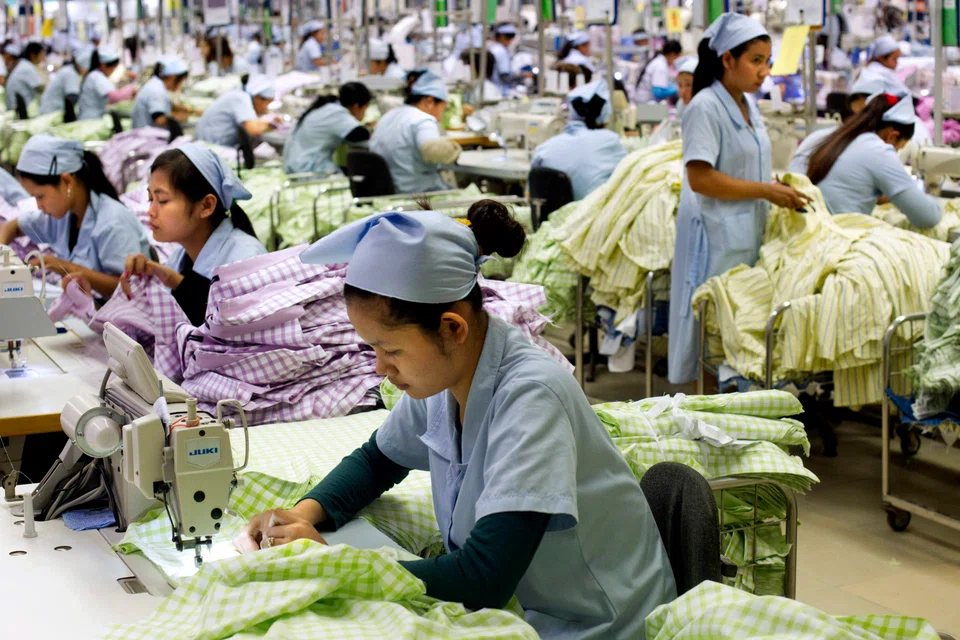
AS CHINA battled a wave of Covid-19 flare-ups over the past few months with strict control measures, the widespread disruption of business operations fuelled concerns over an accelerating exodus of manufacturing.
From October 2021 to March 2022, China lost around 5 per cent of its textile export orders, 7 per cent of its furniture and 2 per cent of its mechanical and electrical export orders from the United States to the 10-member Association of Southeast Asian Nations (Asean), especially Vietnam, according to US customs data.
A shift of factories away from China has been underway for years as China’s labour costs rise. Countries in South-east Asia and South Asia such as Vietnam and India have become the top alternatives for their abundant and cheap labour forces.
“Vietnam has been a very popular destination to take over export orders (from China), but Myanmar and Cambodia are catching up in recent years,” said Wang Huanan, an industry insider with 20 years of experience in shipping and world trade.
The relocation has been driven by lower costs and the trade war between China and the US. However, it’s barely dented China’s manufacturing base as the moves mainly involved low-end processing, experts said. Meanwhile, Chinese companies and investors have been deeply involved in manufacturing relocation, which will in turn support the country’s industrial upgrade at home.
According to research by Everbright Securities, the factory relocation to South-east Asian countries — Vietnam in particular — is largely concentrated in textiles, furniture and low-end consumer electronics assembly. Vietnam has become an obvious alternative to China for the production of clothing and furniture.
Authorities in the Cambodian and Myanmar governments have spared no effort in the race to attract foreign investment, introducing tax reductions and exemptions while offering policy incentives. In Cambodia, foreign companies are exempt from import and export taxes for 1 year and corporate income taxes for 3 to 5 years if they meet requirements set by the Cambodian Investment Board. The tax exemption period can be extended to 9 years if the company is set up in the country’s special economic zone.
The Myanmar government since 2012 has adopted a series of tax exemptions and preferential rights to foreign investment projects.
Despite its low base, Cambodia’s export growth has accelerated and outperformed that of Vietnam so far this year. According to the country’s customs authority, Cambodia’s total trade volume reached US$22.47 billion in the first 5 months of 2022, an increase of 19.7 per cent from the same period last year. Total exports topped US$9.41 billion, up 34.5 per cent year on year. The top export goods were garments, leather goods and footwear.
The US is Cambodia’s largest export destination. From January to May, Cambodia shipped US$3.73 billion of goods to the US, 57.7 per cent more than a year ago. China is the country’s top source of imports. Shipments from China reached US$4.47 billion, up 31.5 per cent from the same period last year.
After Vietnam, Cambodia has become the next popular destination for China’s processing trade business. It is following a development trail that Vietnam blazed almost a decade ago — taking over more low value-added manufacturing business from China to power rapid economic growth with strong exports.
“Before 2018, there were only 190 Chinese apparel factories in Cambodia,” said He Enjia, president of the China Textile & Garment Association in Cambodia. “In 2019, about 40 new ones were set up, followed by roughly 75 more in 2021.”
Although the growth of new Chinese-funded apparel factories is declining this year, the expansion of Cambodia’s garment industry continues, He said.
Cambodia’s apparel industry has benefited from the trade war between China and the US, in which special tariffs were imposed on Chinese textiles in 2018. Chinese textile enterprises have since accelerated the relocation of production to Cambodia to avoid the extra duties.
Since 2021, Cambodia has experienced the arrival of another wave of Chinese-funded garment and textile factories due to political turmoil in neighbouring Myanmar and the severe pandemic situation in Vietnam.
In 2007, Cambodia’s exports to the US were US$1.88 billion, according to UN Comtrade. By 2021, the total nearly quadrupled to US$7.49 billion, according to Cambodian Customs. Exports including leather goods, footwear, furniture and electronics have grown from almost zero in 2007, according to Zhang Huafeng, Los Angles chief representative at Transfar Shipping Pte Ltd.
“Many industries in Cambodia started from scratch and have developed rapidly in recent years,” Zhang said.
Myanmar is another popular destination for Chinese garment factories shifting production. Shi Kun, president of the Chinese Textile & Garment Association in Myanmar, said that 70 per cent of garment factories in Myanmar are Chinese-funded.
Myanmar’s access to preferential tariff treatment from the US, the European Union and Japan has attracted Chinese enterprises. The number of garment factories in Myanmar increased from fewer than 100 in 2012 to more than 500 in 2019, according to Shi. Between 2012 and 2019, average annual growth of Myanmar’s garment exports exceeded 18 per cent and topped 50 per cent in some years. The country’s garment exports totalled more than US$5 billion between 2018 and 2019, according to Shi.
The rapid growth was interrupted by the pandemic in 2020 and political turmoil the following year. According to Myanmar’s Ministry of Commerce, Myanmar’s total foreign trade value dropped 19.5 per cent year on year during the 12 months since October 2020. The processing trade sector, including garments, luggage and travel bags, shoes and hats, fell by 21.4 per cent.
But signs of recovery appeared after October 2021, and the growth of Myanmar’s garment trade is resuming, Shi said. “With the political situation stabilising, Myanmar will see more investment in the garment industry,” Shi said.
Despite the rapid growth of garment manufacturing in Cambodia and Myanmar, the 2 countries still mainly focus on the final portion of a long industry chain by making clothing from imported materials.
“Garment factories in Cambodia and Myanmar import 95 per cent of their raw materials from abroad, of which more than 60 per cent are from China,” He said. By comparison, Vietnam has established a more complete chain of business including weaving, dyeing, printing and garment making. More than 40 per cent of the fabrics and accessories are already available locally in Vietnam, He said.
Compared with garment production facilities, investment in the upstream portions of the clothing industrial chain such as textile and dyeing is much more expensive in terms of equipment and workforce. Some Chinese textile and garment accessory manufacturers visited Myanmar in 2019 to consider investment, but the plans were dropped due to concerns over the pandemic and political risks, according to Shi.
“From a short-term perspective, apart from the garment manufacturing industry, Myanmar is not an ideal destination for most other industries, since the entire economic base and environment are not yet ready,” Shi said.
The high cost of water and electricity in Cambodia is another concern blocking upstream manufacturers from moving productions there, according to He. Electricity costs about 14 US cents per kilowatt-hour (kWh) in Cambodia, compared with 7 to 9 cents per kWh in Vietnam.
As labour costs in Vietnam rise, Cambodia and Myanmar have become increasingly popular candidates to take over manufacturing capacity. But costs in the 2 countries are also rising.
“Before 2012, Cambodia’s labour costs were much lower than Vietnam’s, with a basic salary of US$61 a month,” He said. “It has now risen to US$194 a month, tripling in 3 years.” He said wage increases in Cambodia, largely driven by political factors, are irrational and may have affected Cambodia’s competitiveness. CAIXIN GLOBAL






